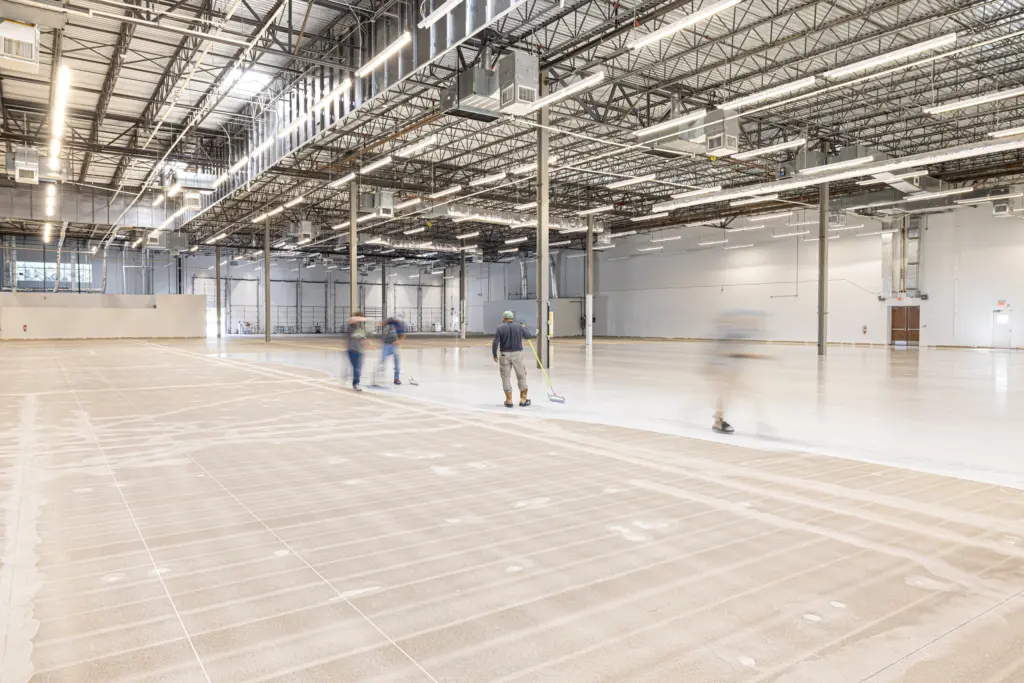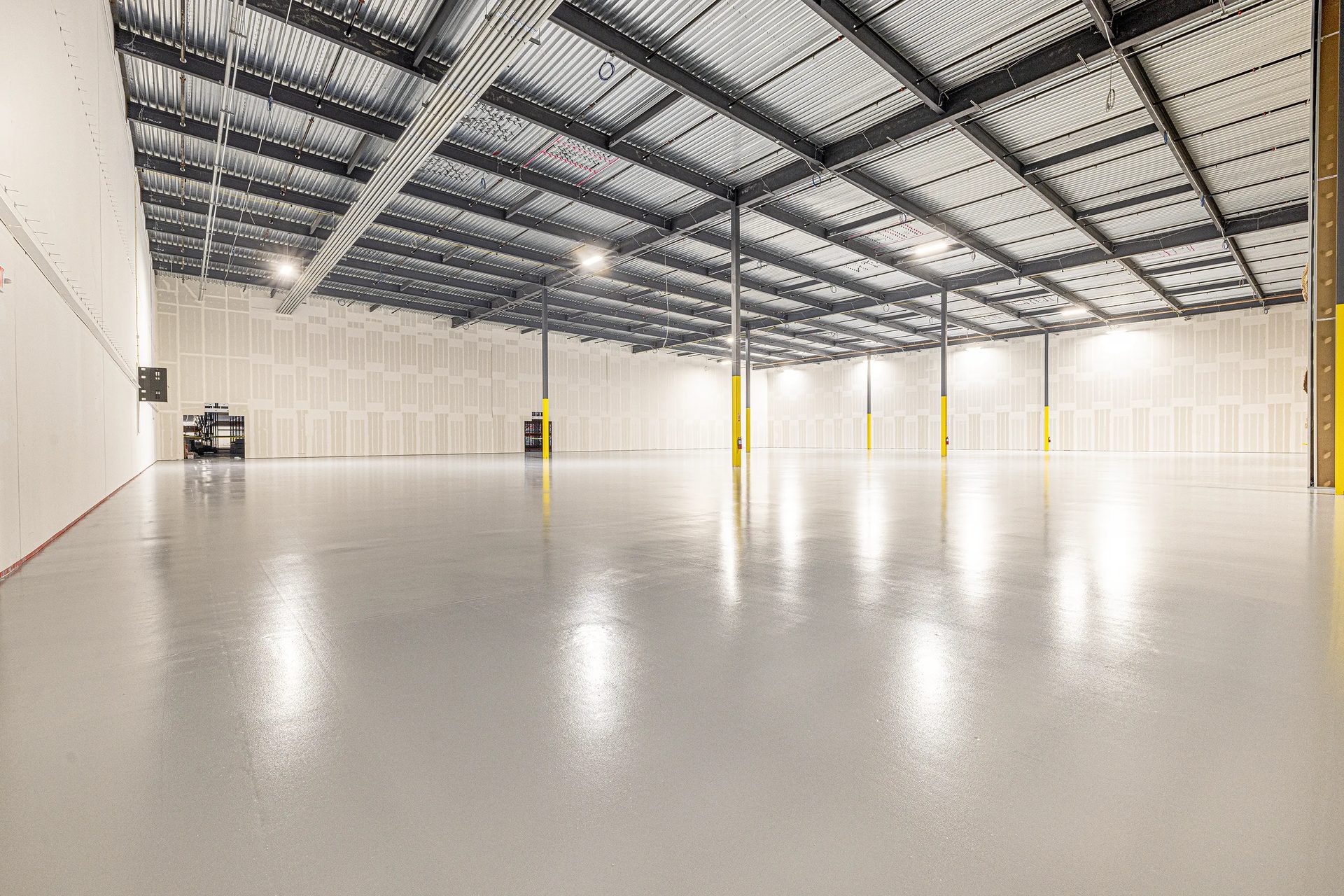
- Failure Modes Solved: epoxy delamination from lactic acid (dairy) and brine/blood exposure (meat); tile and grout joint failure under daily caustic CIP; floor-to-wall seam failure where cove base was caulked instead of poured monolithic
- USDA-FDA Compliance: USDA acceptance for federally inspected meat, poultry, and dairy plants; FDA 21 CFR 175.300 for incidental food contact; cleanable, non-porous surface meets FSIS sanitation standards
- Thermal Shock: UC accommodates 150°F+ differentials from caustic CIP washdowns hitting cold-room substrate; standard for kill floors, evisceration lines, fabrication, and pasteurizer rooms cycling between production temp and 160°F+ sanitation
- Chemical Resistance: lactic acid, whey, milk fat, blood, brine, animal fat, and the caustic and quat-based sanitizers used to clean them; the urethane-mortar matrix tolerates the full sanitation chemistry without degrading
- Integral Cove Base: poured monolithic with the slab to 4-6 inch height; no caulked seams, no quarter-round, no harborage points for USDA inspectors to flag
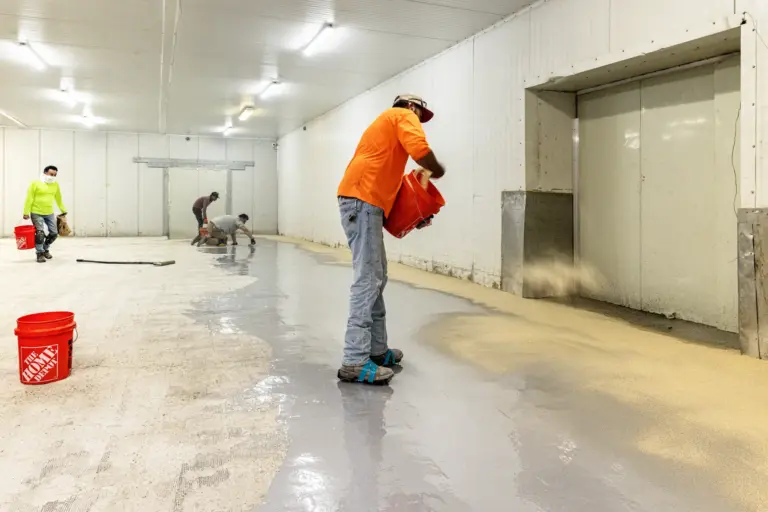
- Slip Resistance: broadcast aggregate sized to the area — coarser on kill floors and evisceration lines, finer on packaging and dry-process zones; wet-work safety built into the floor, not added later as a coating
- HACCP Color Zoning: pigmented topcoat in different colors for raw, RTE, and packaging zones; supports HACCP traffic flow documentation and visual separation auditors expect
- Surface Preparation: shot blast or diamond grind to ICRI 310.2 CSP 4-5; ASTM F2170 in-situ moisture probe testing before primer; ACI 302.1R substrate tolerances verified
- Phased Installation: 3-5 day install windows per production area, sequenced around USDA-mandated sanitation cycles; foot traffic returns at 12-24 hours, full chemical service within 72 hours
- Applications:
- – kill floors, evisceration lines, fabrication, further processing
- – RTE, packaging, brine rooms, smokehouses
- – pasteurizer rooms, tanker bays, cheese vat rooms
- – yogurt and ice cream lines, cold storage, rendering
- Crews: in-house W-2 crews mobilized from Dallas; same foreman on estimate and install; no subcontracted mortar placement
- Pricing: $8-15/sqft installed depending on system thickness, cove base linear footage, drain count, and whether the project includes epoxy or tile demolition
Phone: +1 (844) 687-1961
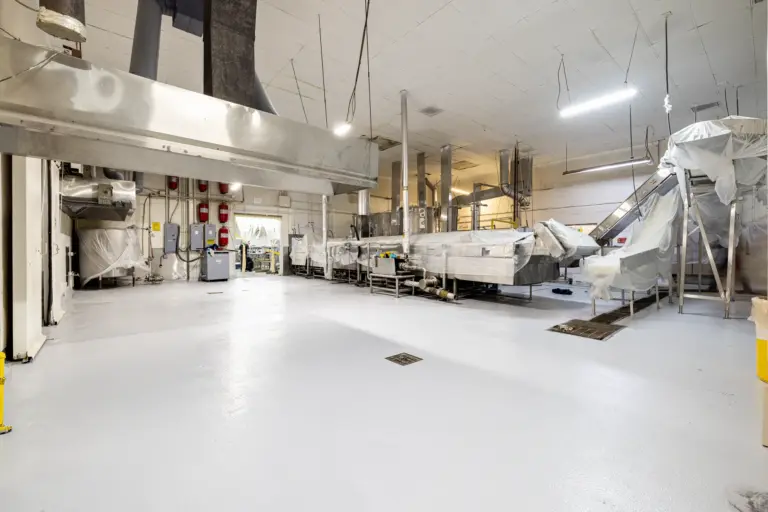
Meat processing flooring fails on a predictable timeline. Beef, pork, and poultry plants run hot caustic CIP across the floor every shift. Brine, blood, and fat hit it during production. The slab itself cycles through 40°F production temperatures and 160°F+ sanitation washdowns multiple times a day — the same 150°F+ thermal differential that pulls epoxy off concrete inside two years. Tile cracks, the grout fails, and the joints become the harborage points the USDA inspector flags. Dairy plant flooring runs a parallel failure pattern — lactic acid from milk, whey, and cream attacks the epoxy resin matrix; CIP cycles from pasteurizers and tanker bays drive thermal shock; and the floor-to-wall seam fails wherever it was caulked instead of poured. Cementitious urethane handles both environments because the mortar matrix tolerates organic acids, accommodates thermal cycling, and breathes well enough for the moisture vapor drive coming off cold-process slabs.
USDA inspection sets the bar for both verticals. The floor has to be cleanable, non-porous, free of joints and harborage points, and constructed to FSIS sanitation standards. UC systems meet USDA acceptance and FDA 21 CFR 175.300 for incidental food contact. Integral cove base poured monolithic with the slab to 4-6 inches up the wall eliminates the floor-to-wall seam — bacterial audits flag caulked seams every time. Drains are sealed to the membrane with terminations that hold under washdown. Slip resistance is built in with broadcast aggregate on the kill floor, evisceration line, and fabrication areas — anywhere blood, fat, or cleaning chemistry creates a fall hazard during a wet shift. Color zoning supports HACCP traffic flow — different colors for raw, RTE, and packaging give auditors the visual separation that HACCP documentation requires.
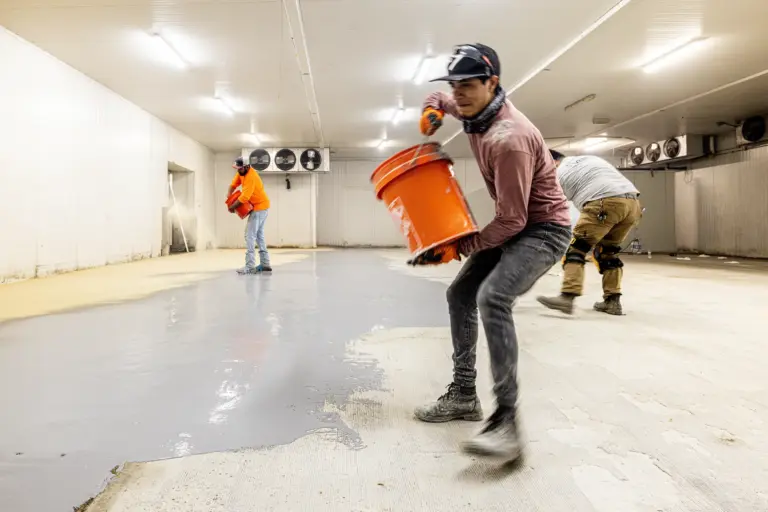
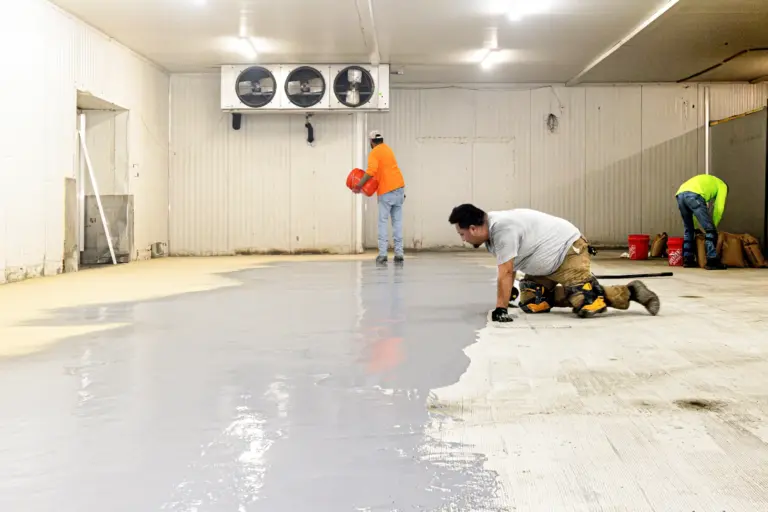
Craftsman has been installing industrial flooring since 1999. We place urethane cement in beef and pork plants, poultry processing and further-processing facilities, fluid milk and cheese plants, ice cream and yogurt operations, and the cold storage and rendering areas attached to them. In-house W-2 crews mobilize from Dallas to project sites nationwide. Surface prep is shot blast or diamond grind to ICRI 310.2 CSP 4-5. Slab moisture is verified with ASTM F2170 in-situ probes before primer goes down. Same foreman walks the estimate and runs the install — no subcontracted mortar placement, no rotating crews. Installation runs 3-5 days per area, with foot traffic returning at 12-24 hours and full chemical service within 72 hours of final coat. Pricing for installed UC sits in the $8-15/sqft range depending on system thickness, cove base linear footage, drain count, and whether the project is replacement or new construction.
For active facilities, meat processing flooring installation is sequenced one production area at a time around USDA-mandated sanitation windows. Kill floor today, fabrication next weekend, packaging the weekend after — coordinated with plant maintenance, sanitation leads, and USDA on-site inspection so the line keeps running while the floor goes down.
Our Clients




















urethane Cement Installation Gallery
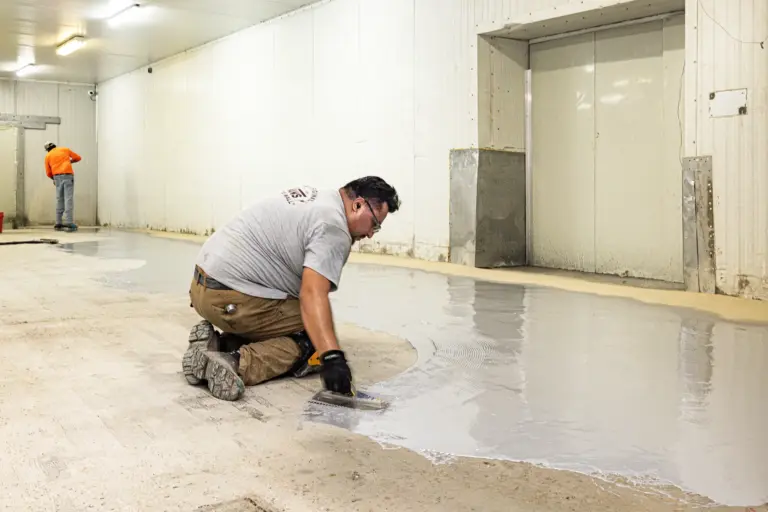
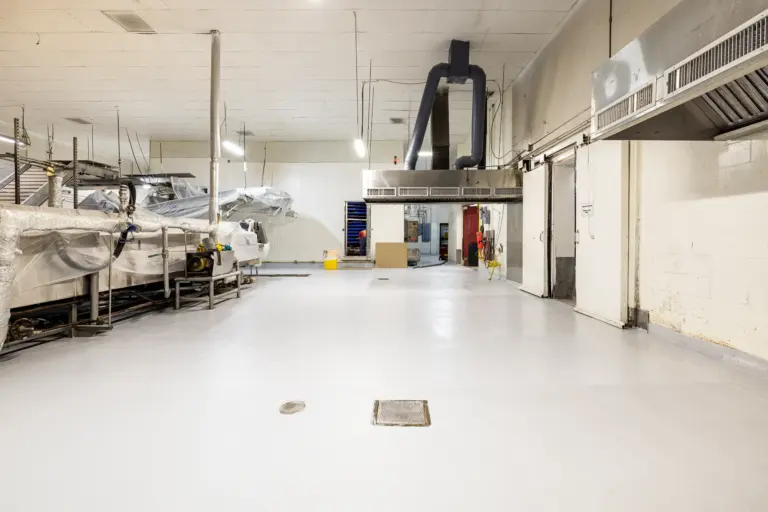
Request a Proposal
Submit project parameters for preliminary analysis. Commercial estimates typically returned within 24 hours.
Frequently Asked Questions
Installed UC pricing runs $6-15/sqft for both verticals. The drivers inside that range are system thickness (kill floors and evisceration lines typically spec 3/8″ mortar with broadcast aggregate, dry packaging areas can run 3/16″), integral cove base linear footage, drain and floor sink count, and whether the substrate needs repair or epoxy/tile demolition before primer. A meat plant with heavy cove footage, high drain count, and a tile rip-out lands at the upper end. A new-construction dairy plant with simple geometry and minimal cove lands at the lower end.
Three failure modes drive epoxy out of meat and dairy plants on a 24-30 month timeline. Lactic acid from milk and whey, plus organic acids from blood and animal fat, attack the epoxy resin matrix over weeks to months. Thermal shock from 160°F+ caustic CIP washdowns hitting cold-room substrate cycles the floor across temperatures the rigid epoxy cannot accommodate, pulling the bond apart at the interface. Moisture vapor from the slab blisters the impermeable epoxy from below, especially in cold storage and pasteurizer rooms with high MVER. Cementitious urethane resists all three because it is a mortar system, not a film coating.
Yes. UC systems meet USDA acceptance for federally inspected meat, poultry, and dairy facilities and FDA 21 CFR 175.300 for incidental food contact. The seamless, non-porous surface meets FSIS sanitation standards and supports HACCP, SQF, and GFSI program requirements. Integral cove base poured monolithic eliminates the caulked floor-to-wall seam that USDA inspectors and third-party auditors flag in tile, epoxy, or quarter-round installations.
Yes, in most facilities. We sequence the install one production area at a time around USDA-mandated sanitation windows — kill floor one weekend, fabrication the next, packaging the one after. Each area returns to foot traffic within 12-24 hours and full chemical service within 72 hours, so the rest of the plant keeps running. Drain protection, equipment isolation, and air handling are coordinated with plant maintenance, sanitation leads, and the on-site USDA inspector before crews mobilize.
Wet-process and sanitation-heavy areas first. In meat and poultry: kill floors, evisceration lines, fabrication, further processing, RTE, packaging, brine rooms, smokehouses, and rendering. In dairy: pasteurizer rooms, cheese vat rooms, yogurt and ice cream lines, tanker bays, and cold storage. Dry warehouse and admin areas don’t need UC — those zones can run a standard epoxy or polyaspartic system at a fraction of the cost if the facility wants to spread budget.
Nationwide installation. Estimating and scheduling coordinated through Dallas headquarters. In-house W-2 crews mobilized to project sites. Craftsman Concrete has been installing industrial flooring since 1999.
Blog
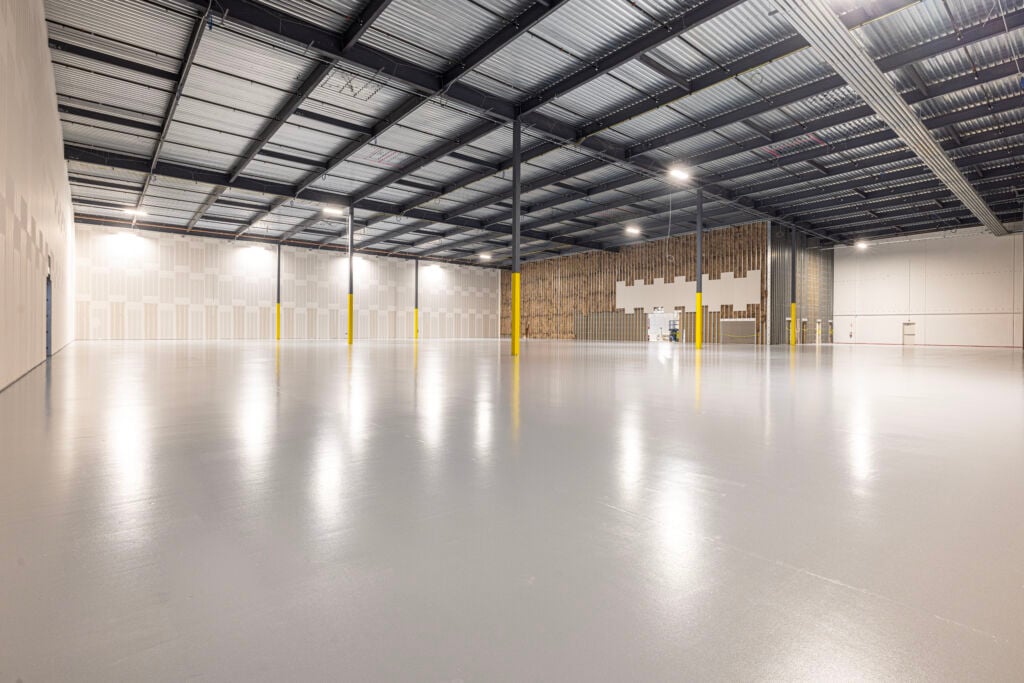
ESD Epoxy Flooring Case Study: 34,000 SF Dallas, TX
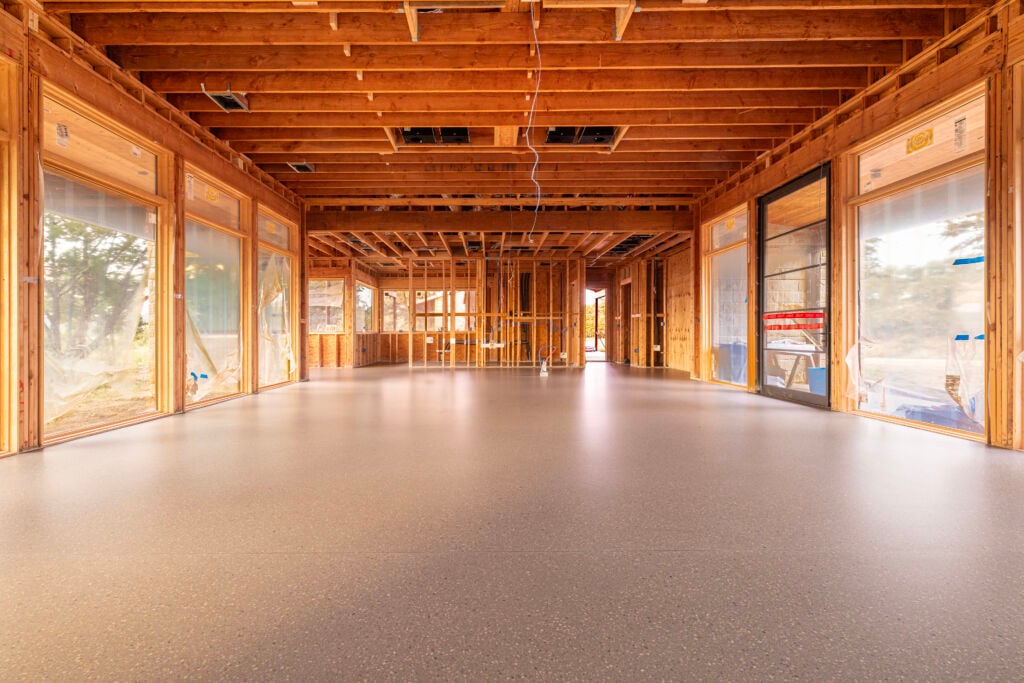
Residential Terrazzo Floors in Fort Worth, Texas