- Beverage Chemistry Resistance: citric acid from juice and citrus products; phosphoric acid from cola; malic and tartaric acid from fruit juices; sugar slurries (sucrose, HFCS, fructose); preservatives and acidulants in shelf-stable formulations
- Thermal Profile Handled:
- – hot-fill and aseptic-fill at 185-205°F product temperatures with floor splash and overflow exposure
- – CIP cycles at 180°F+ caustic followed by acid rinse running multiple times per day
- – cold-fill lines at 35-40°F product temperature
- – 150°F+ differential when hot sanitation hits cold-fill substrate
- Epoxy Failure Modes Solved:
- – acid degradation of the topcoat from citric, phosphoric, malic, and tartaric exposure
- – sugar crystallization at drain edges harboring microbial growth
- – thermal-shock delamination at hot/cold transitions
- – conveyor lubricant pooling at line transitions softening the coating
- – bottle rinser splash zone erosion
- – filler bowl perimeter failure from continuous chemistry exposure
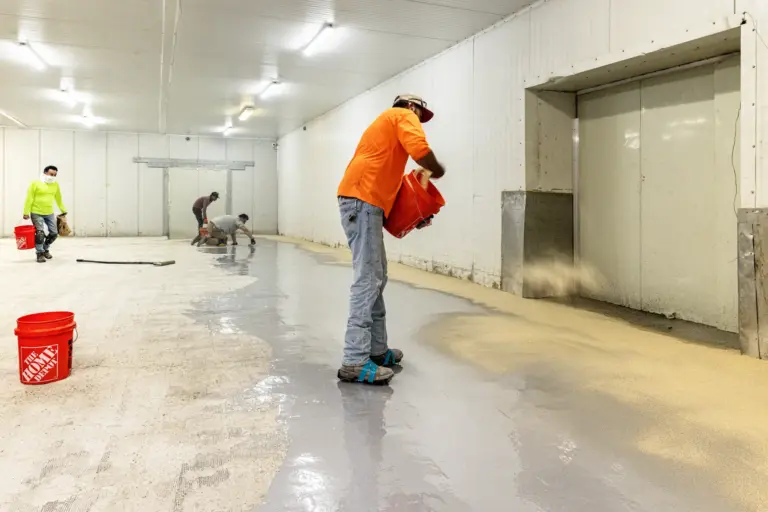
- Slip Resistance: broadcast aggregate sized for continuous wet operating conditions and conveyor lubricant exposure; integral to the body coat, not a topical coating that washes off under bottle rinser overspray and CIP runoff
- Drain Coordination & Slope: drains sealed monolithic to the floor membrane; slope to drains specified to move water and CIP chemistry off the floor before it pools at line transitions; re-slope integrated with system installation where existing slope is inadequate
- Integral Cove Base: poured monolithic with the slab to 4-6 inch height; no caulked seams for sugar slurry, acid, or conveyor lubricant to find their way under; no harborage points for sanitation audits to flag
- Compliance: FDA 21 CFR 175.300 incidental food contact; FSMA preventive controls baseline; SQF, BRCGS, GFSI program support; USDA acceptance for dairy beverage and nutritional shake production; NSF certification support for bottled water facilities
- Surface Preparation: shot blast or diamond grind to ICRI 310.2 CSP 4-5; ASTM F2170 in-situ moisture probe testing before primer; ACI 302.1R substrate tolerances verified
- Phased Installation: 24/7 bottling line production sequenced around 4-6 hour overnight CIP windows; 3-5 day windows per area, one line section at a time; foot traffic returns at 12-24 hours; full chemical service within 72 hours
- Applications:
- – syrup rooms and batching
- – blending and mixing tank areas
- – pasteurization and hot-fill lines
- – cold-fill lines
- – bottle rinsers and inverters
- – fillers and cappers
- – labelers and packaging
- – case packers
- – warehouse and palletizing
- – lab and QA
- – allergen-segregated and allergen-free zones
- Pricing: $8-15/sqft installed depending on system thickness, cove base linear footage, drain count, re-slope scope, and substrate condition
Phone: +1 (844) 687-1961
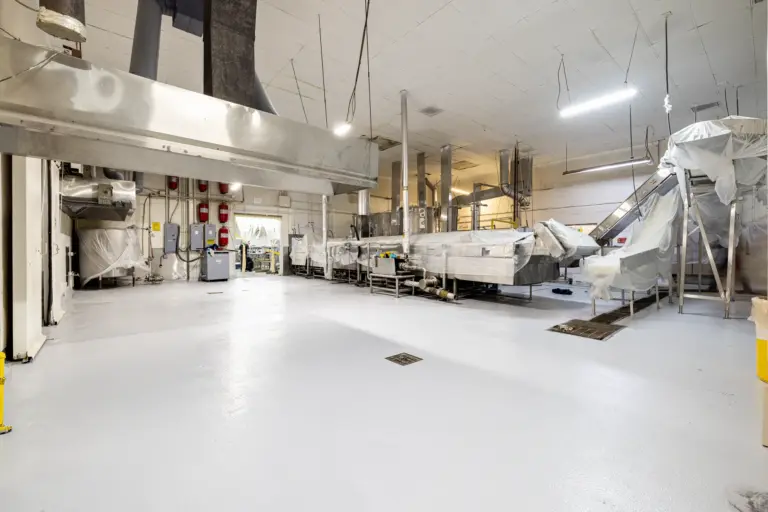
Beverage processing flooring takes a chemistry, thermal, and operational beating that most resinous systems weren’t formulated for. Citric acid from juice and citrus-based beverages attacks epoxy resin matrices the same way fermentation acids attack brewery floors. Phosphoric acid from cola adds the same load. Malic and tartaric acid from fruit juices stack on top. Sugar slurries — sucrose, HFCS, fructose — pool at low spots and crystallize at drain edges, where they then harbor microbial growth that sanitation has to chase. Preservatives and acidulants used in shelf-stable formulations accumulate at low spots over time. Standard epoxy in a juice or citrus bottling facility fails inside 18-30 months. The failure typically shows up first at the bottle rinser splash zone, around the filler bowls, or at conveyor-lubricant transitions, where the topcoat erodes from acid degradation and sugar crystallization at the same time.
Cementitious urethane handles the beverage chemistry stack because the urethane-mortar matrix is structurally resistant to organic and inorganic acid exposure, sugar crystallization at the seams, and the preservative chemistry that accumulates over time. UC also handles the beverage thermal profile, which carries two distinct loads. Hot-fill and aseptic-fill processes run at 185-205°F product temperatures with adjacent floor splash and overflow continuously hitting the surface. CIP cycles at 180°F+ caustic followed by acid rinse run across bottling lines several times per day. Cold-fill lines run at 35-40°F product temperature, and when hot sanitation hits those cold floors the 150°F+ differential delaminates rigid coatings at the bond line. UC’s coefficient of thermal expansion matches concrete and the mortar matrix absorbs the cycling without delaminating — the same structural property that holds up under acid exposure holds up under thermal cycling between hot-fill and cold-fill conditions.
Beverage compliance varies by product and market. FDA 21 CFR 175.300 covers incidental food contact for all beverage sub-segments. FSMA preventive controls apply to all beverage processors as the regulatory baseline. SQF, BRCGS, and GFSI certification programs drive third-party audit requirements. USDA inspection applies where dairy beverages or meat-containing nutritional shakes are produced. NSF certification covers bottled water facilities at the equipment and surface level. The seamless, non-porous, monolithic-cove-base construction supports all of these programs from the same UC system, with documentation in the closeout package matched to the facility’s audit framework.
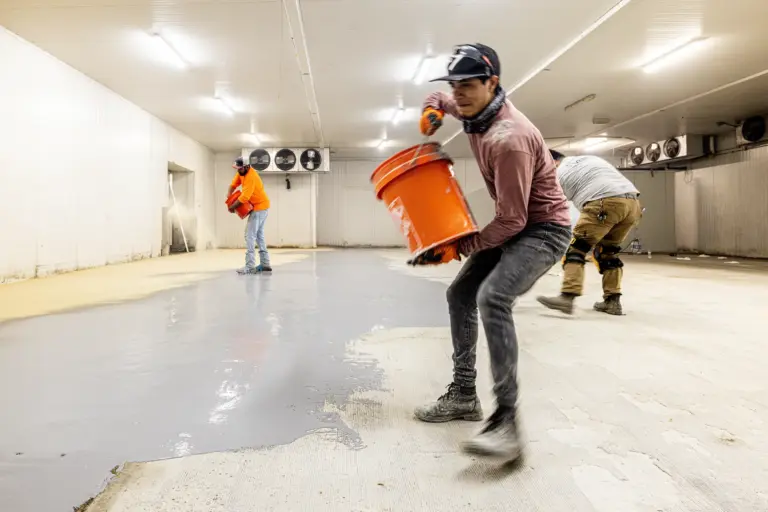
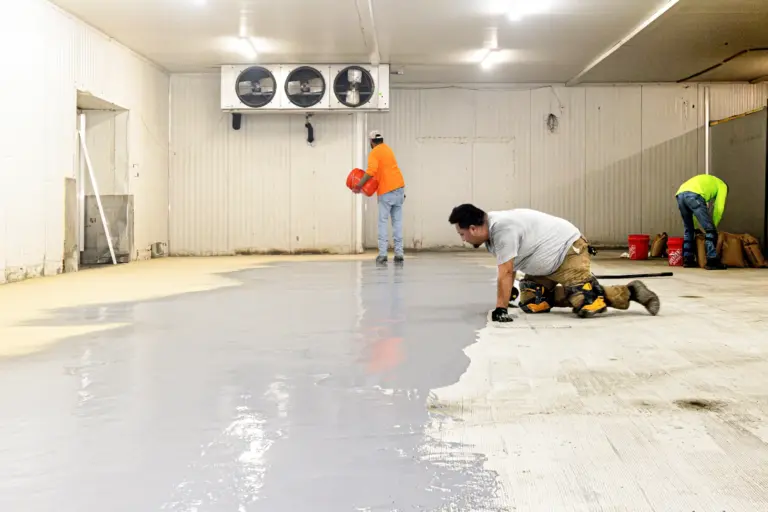
Craftsman has been installing beverage processing flooring since 1999. Projects across batching and blending — syrup rooms, blending tanks, pasteurization — and across the production floor, from hot-fill and cold-fill lines through bottle rinsers, fillers, cappers, labelers, case packers, palletizing, lab and QA, and allergen-segregated zones. In-house W-2 crews mobilize nationwide. Surface prep is shot blast or diamond grind to ICRI 310.2 CSP 4-5. Slab moisture is verified with ASTM F2170 in-situ probes before primer goes down. Slip resistance comes from broadcast aggregate sized for the wet operating environment — beverage facilities run water on the floor continuously from bottle washing, rinser overspray, conveyor lubrication, and CIP runoff, and topical anti-slip coatings strip off within months of that exposure. Bottling lines typically run 24/7 with 4-6 hour CIP windows overnight, which means phased installation is the standard scope — section by section around the production schedule, not full facility shutdown. Installation runs 3-5 days per area, with foot traffic returning at 12-24 hours and full chemical service within 72 hours of final coat. Pricing for installed UC sits in the $8-15/sqft range.
Our Clients




















urethane Cement Installation Gallery
Request a Proposal
Submit project parameters for preliminary analysis. Commercial estimates typically returned within 24 hours.
Frequently Asked Questions
Installed UC pricing for beverage facilities runs $8-15/sqft. The drivers inside the range are system thickness (1/4″ mortar in most production areas, 3/8″ heavy-duty mortar at hot-fill lines and high-traffic filler zones, 3/16″ slurry in lower-load areas like labeler bays and palletizing), integral cove base linear footage, drain count and slope correction scope, and substrate condition. Bottling plants with extensive drain coordination work or re-slope requirements land toward the upper end. Cold-fill and dry-process areas land lower in the range.
Standard epoxy in juice, soft drink, and beverage facilities fails inside 18-30 months from a combination of acid attack, sugar crystallization, and thermal cycling. Citric acid from juice and citrus products attacks the epoxy resin matrix continuously. Phosphoric acid from cola, malic and tartaric acid from fruit juices, and preservatives and acidulants from shelf-stable formulations add to the chemistry load. Sugar slurries crystallize at drain edges and harbor microbial growth that sanitation has to chase. Then hot sanitation at 180°F+ caustic hits cold-fill floor substrate at 35-40°F, generating 150°F+ differentials that delaminate rigid coatings at the bond line. Cementitious urethane handles all three failure mechanisms because the urethane-mortar matrix is structurally resistant to acid exposure, sugar crystallization, and thermal cycling.
Yes. UC systems meet FDA 21 CFR 175.300 for incidental food contact across beverage processing. FSMA preventive controls baseline is supported by the seamless, non-porous, monolithic-cove-base construction. SQF, BRCGS, and GFSI third-party audit programs are supported with the documentation in the closeout package. For dairy beverages and meat-containing nutritional shakes, USDA acceptance applies. For bottled water facilities, NSF certification support is part of the system. The compliance documentation is matched to the facility’s audit framework rather than applied generically.
Yes — phased installation is the standard scope for bottling and beverage lines because most facilities run 24/7 and full shutdown isn’t viable. Lines typically have 4-6 hour overnight CIP windows that aren’t sufficient for installation by themselves, so the work gets sequenced section by section around the production schedule. One line at a time, one zone at a time, with each section installed during a planned production gap or weekend shutdown. Phased timelines run 3-5 days per area, with foot traffic returning at 12-24 hours and full chemical service within 72 hours of final coat. The consultation walk confirms how the facility’s production schedule sequences against the installation scope.
Anywhere chemistry, thermal load, or wet operating conditions are part of the line. Syrup rooms and batching areas see the heaviest concentrated chemistry. Pasteurization and hot-fill lines face 185-205°F product splash continuously. Cold-fill lines cycle between cold product and hot sanitation. Bottle rinsers, fillers, cappers, and labelers run wet with continuous water on the floor. Forklift traffic and the occasional case break drive the warehouse and palletizing spec. Lab and QA areas need cleanable surfaces. Allergen-segregated and allergen-free zones need documented separation.
Nationwide installation. Estimating and scheduling coordinated through Dallas headquarters. In-house W-2 crews mobilized to project sites. Craftsman Concrete has been installing industrial flooring since 1999.
Blog
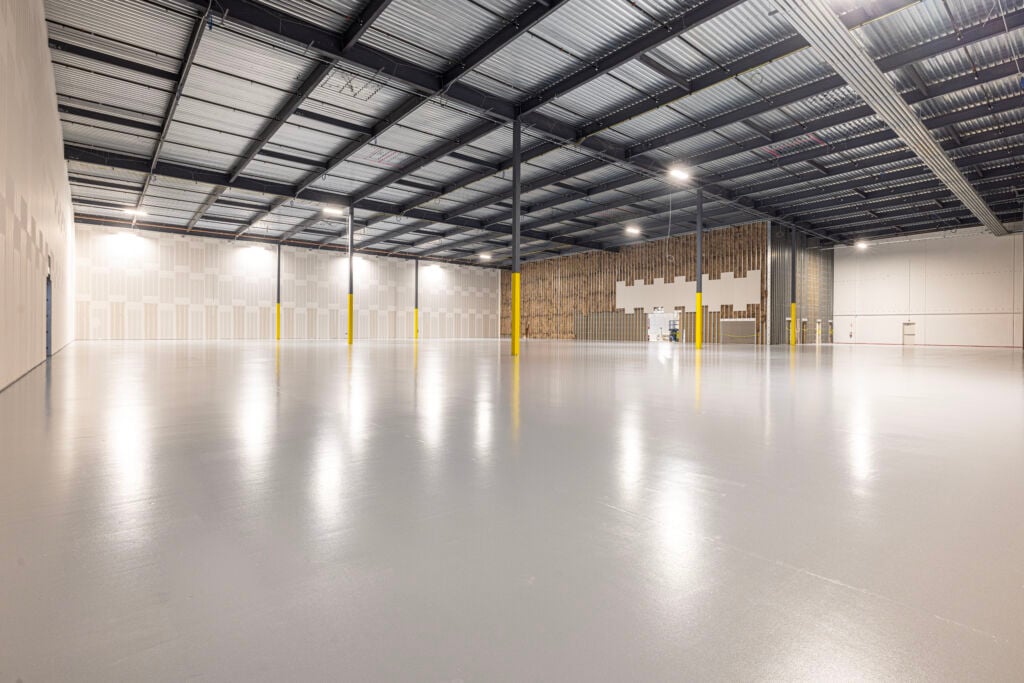
ESD Epoxy Flooring Case Study: 34,000 SF Dallas, TX
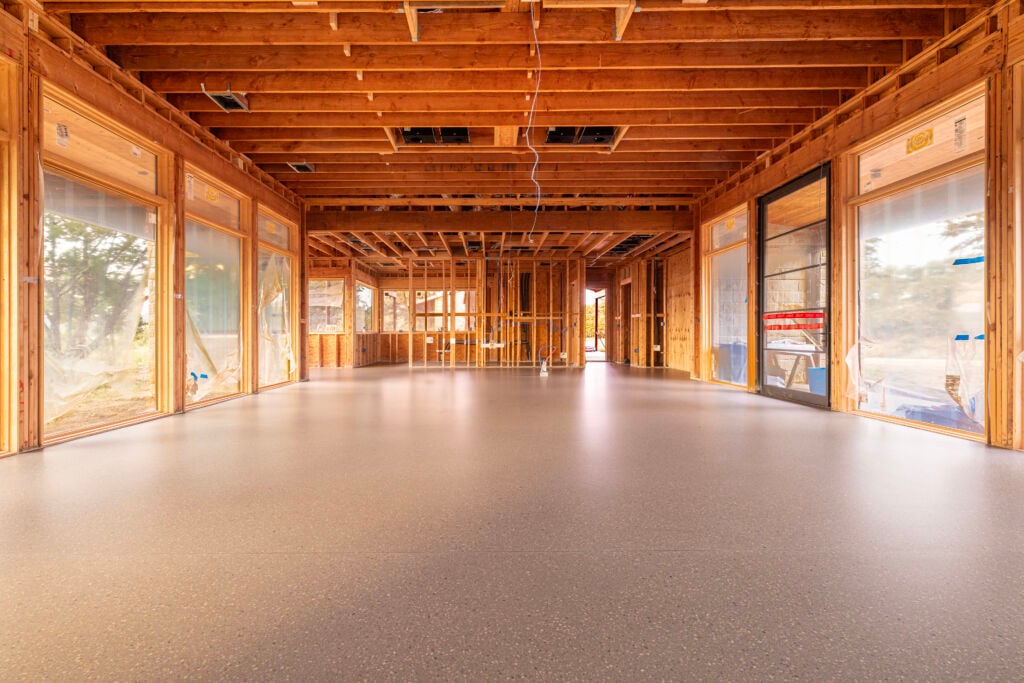
Residential Terrazzo Floors in Fort Worth, Texas