What can we help you with?
Technical flooring, delivered directly
- ESD flooring, urethane cement, terrazzo, and polished concrete
- In-house W-2 installation crews and experienced field leadership
- National service coverage with project-specific staffing plans
- Testing, documentation, and defined project closeout
- Dedicated support for corporate procurement and multi-site contracting
Phone: +1 (844) 687-1961
System Thickness
Urethane cement thickness runs 3/16 inch to 3/8 inch on standard industrial installations, and the number in the spec is a duty-class decision rather than a product default. Four variables drive the callout: thermal exposure, impact and point load, traffic class, and substrate condition. A dish pit taking 150°F+ washdown differentials every shift needs more section than a dry packaging corridor, and a kill floor under steel-wheel carts needs more than either. Urethane cement thickness selection turns those exposures into a biddable number. Specified correctly, the floor delivers the category’s 15-20+ year service life; specified thin, it fails like the system it replaced.
Duty class is the working shorthand for that translation. A flooring duty class matches an area’s worst recurring exposure to a system build and a section. Light and medium duty, meaning wheeled traffic, wet processing, and moderate thermal cycling, lands in self-leveling systems placed at 3/16 to 1/4 inch and back in service in 24 hours. Heavy duty, meaning live steam, hot CIP washdown, oven-adjacent slabs, and sustained impact, lands in trowel-applied mortars at 1/4 to 3/8 inch.
What Drives the Thickness Callout
Exposure is measurable before a spec is written. Thermal differential, point load, traffic type, and slab condition each push the section in a known direction, and the harshest driver present wins the callout. The division and section language that carries a finished callout into a project manual lives on the urethane cement specifications page; this page covers the selection logic that produces the number.
Thermal Exposure Moves Urethane Cement Thickness Fastest
Thermal duty moves the section harder than any other variable. Urethane cement survives a 150°F+ differential because the mortar’s thermal expansion coefficient tracks concrete’s and the section mass absorbs the rate of change before it reaches the bond line. A thicker section buffers more. Zones cycling between -40°F freezer service and hot washdown sit at the trowel-applied 1/4 to 3/8 inch end; so do slabs beside ovens, fryers, and live steam. Moderate thermal cycling, warm wash water rather than steam, stays in self-leveling territory at 3/16 to 1/4 inch.
Impact and Traffic — Wheels, Drops, and Point Load
Impact resistance scales with section. Steel-wheeled carts, dropped kegs, dolly trains, and pallet-jack traffic concentrate load into small contact patches, and a thin mortar over a hard substrate has nowhere to spread the hit. Meat and dairy plants replacing dairy brick keep the duty that wore the brick out, so the replacement system is specified to the same abuse. Rubber wheels and foot traffic alone rarely push a callout past 1/4 inch — steel wheels and repeated impact are what justify 3/8.
Substrate Condition Can Set the Number Before Duty Does
Slab condition is the driver spec writers control least. Mechanical prep to an ICRI 310.2 surface profile opens up a worn slab, and pre-install verification runs ASTM F2170 in-situ relative humidity probes, with ASTM F1869 calcium chloride testing where specified. On a pitted or previously coated slab, the practical question is how much mortar it takes to restore a flat, bonded wearing surface, and that answer can set the section before duty does.
Self-Leveling or Trowel-Applied
3/16 to 1/4 Inch Self-Leveling — Back in Service in 24 Hours
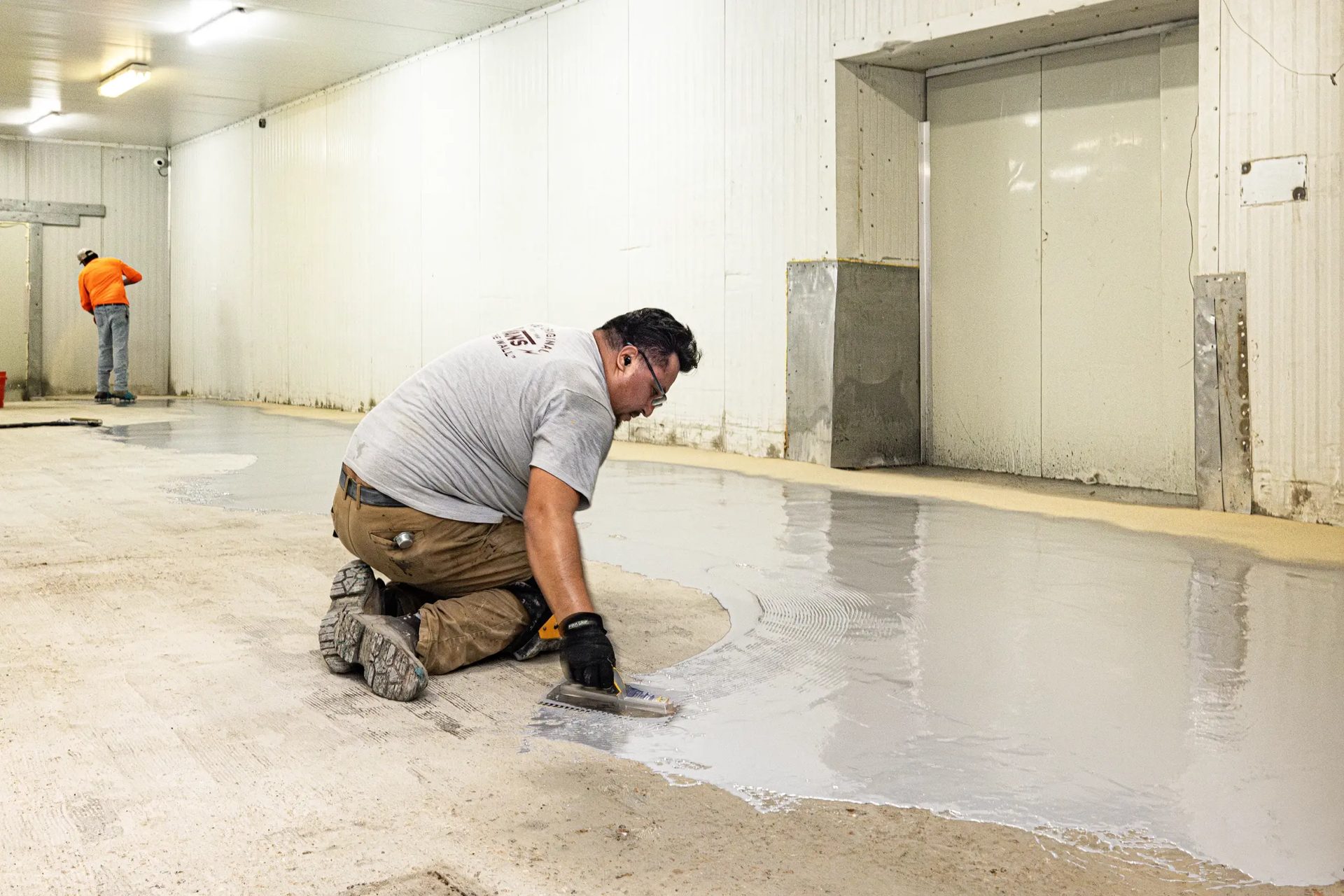
Self-leveling urethane cement covers the medium-duty middle of the range and returns to service in 24 hours. The slurry flows to a uniform section set by gauge rake, which makes the 24-hour window dependable enough for a facility manager to schedule production around. Occupied facilities feel this directly. Phased zone-by-zone installation puts each finished area back to work the next day while the crew masks and primes the following zone.
Trowel-Applied Mortar Carries the Heavy End at 48-72 Hours
At 1/4 to 3/8 inch, trowel-applied mortar takes the thermal and impact duty self-leveling systems are not specified for, and cures to return-to-service in 48 to 72 hours. The stiffer mix also holds a slope to drain. The cure difference is a planning fact rather than a defect; a weekend shutdown covers most trowel-applied zones when placement is sequenced for it. The step-by-step sequence from profiling through cure is covered on the urethane cement installation process page.
Under-Speccing and Build-Up Interactions
Under-Speccing — the Failure Committed on Paper
The most common thickness failure is specified, not installed. The 3/16 vs 3/8 decision gets value-engineered toward the thin end because section is a visible cost lever. Urethane cement runs $4-17/sqft installed depending on project size, system thickness, and substrate condition. A section priced for medium duty in a heavy-duty room transmits the thermal differential to the bond line instead of absorbing it in the mortar mass, and the floor debonds the way the epoxy it replaced did. Size banding by project square footage is on the urethane cement flooring cost page.
Broadcast Build Rides on the Base Mortar Section
Broadcast aggregate and topcoats add measured build without adding duty class. A quartz broadcast seats into the wet mortar and locks under a sealing topcoat; that is how slip texture gets tuned, and the finished system measures thicker than the base pour. The duty rating still rides on the base mortar section — a broadcast over 3/16 inch does not satisfy a 1/4 inch callout. The decorative exception sits outside the standard range entirely: Ucrete TZ terrazzo builds at 9 to 12 mm.
Thickness Verification — Placement Records in the Closeout Package
Specified thickness is only worth what the closeout proves. Section is set and recorded zone by zone at placement, and the record travels with the ASTM F2170 moisture logs and ICRI 310.2 surface profile documentation gathered before the first batch is mixed. Audit-ready closeout documentation is what turns a thickness callout into a thickness fact, and it is the first thing a warranty review reads. Craftsman delivers that package on every installation, and its in-house W-2 crews provide national service coverage.
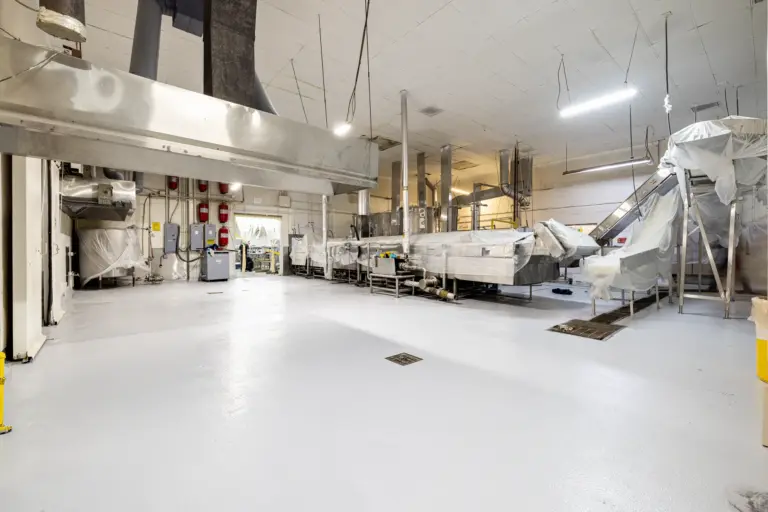
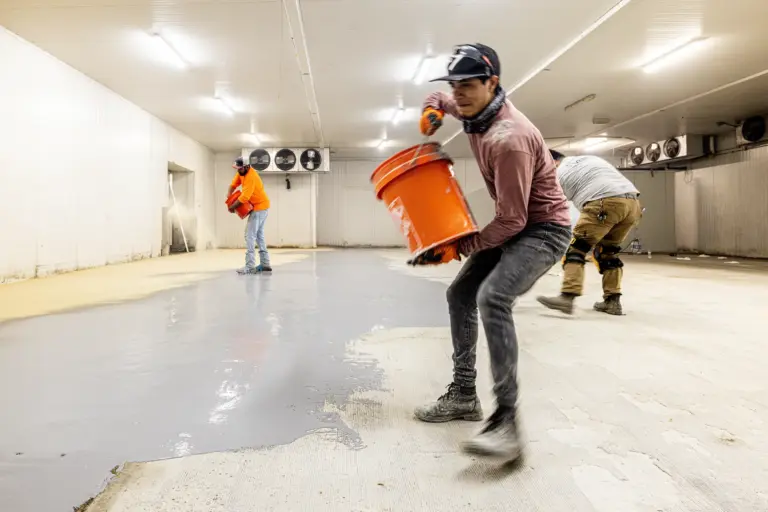
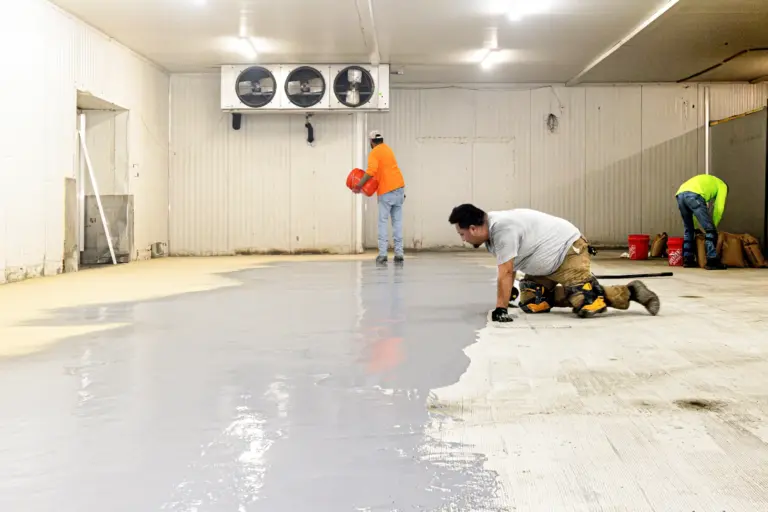
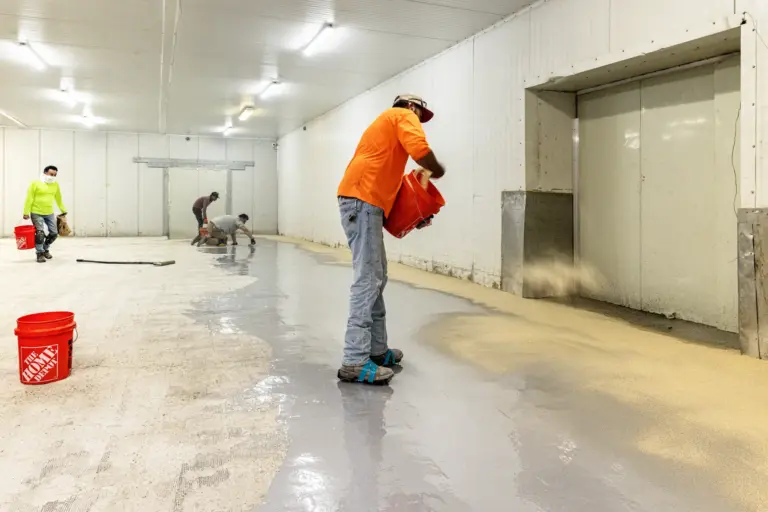
urethane Cement Installation Gallery
Frequently Asked Questions
Standard urethane cement installs at 3/16 inch to 3/8 inch. Self-leveling systems run 3/16 to 1/4 inch and carry medium-duty exposure; trowel-applied systems run 1/4 to 3/8 inch and carry heavy thermal and impact duty. The decorative exception is Ucrete TZ terrazzo, which builds at 9 to 12 mm as its own system class.
Duty class determines it: thermal exposure, impact and point load, traffic class, and substrate condition. The worst recurring exposure in an area sets the class, and the class sets both the placement method and the section within the 3/16 to 3/8 inch range. A washdown zone that also takes steel-wheel cart traffic is specified to the harsher of the two drivers.
Specify toward 3/8 inch when an area sees 150°F+ thermal differentials, live steam, heat radiating from ovens and fryers, or sustained impact from steel wheels and dropped loads. Within the category’s -40°F to 250°F operating range, it is the rate and repetition of temperature change at the surface that moves the callout more than the extremes themselves. Moderate wet-processing duty holds at 3/16 to 1/4 inch in self-leveling systems.
Yes. Urethane cement flooring runs $4-17/sqft installed depending on project size, system thickness, and substrate condition, so section is one of the three levers in every quote. Size banding by project square footage is on the urethane cement flooring cost page; the duty analysis is what keeps a needed 3/8 inch callout from being negotiated down.
A section under-specified for its thermal duty passes the 150°F+ differential straight through to the bond line it was supposed to buffer, and the floor debonds the way a failed epoxy does. Under impact duty, a thin section concentrates point load at the substrate interface rather than spreading it. The correction is demolition and re-specification, because no topcoat restores a failed bond line.
Placement method moves the schedule more than section does. Self-leveling systems return to service in 24 hours; trowel-applied systems run 48 to 72 hours. Phased zone-by-zone installation works inside either window, which is how occupied facilities stay in production while the floor goes in.
The installing contractor sets section at placement and records it zone by zone, beside the ASTM F2170 moisture logs and ICRI 310.2 profile documentation gathered at pre-install. A thickness callout without that record cannot be verified once the topcoat goes down, which is why audit-ready closeout documentation belongs in the spec conversation from the start.
urethane Cement Flooring Knowledge Center
Resource links
Technical Performance
Selection & Standards
Industries Served
Sherwin-Williams Poly-Crete Systems
Sika Ucrete Systems
Cost, Comparisons & Legacy Names
Blog
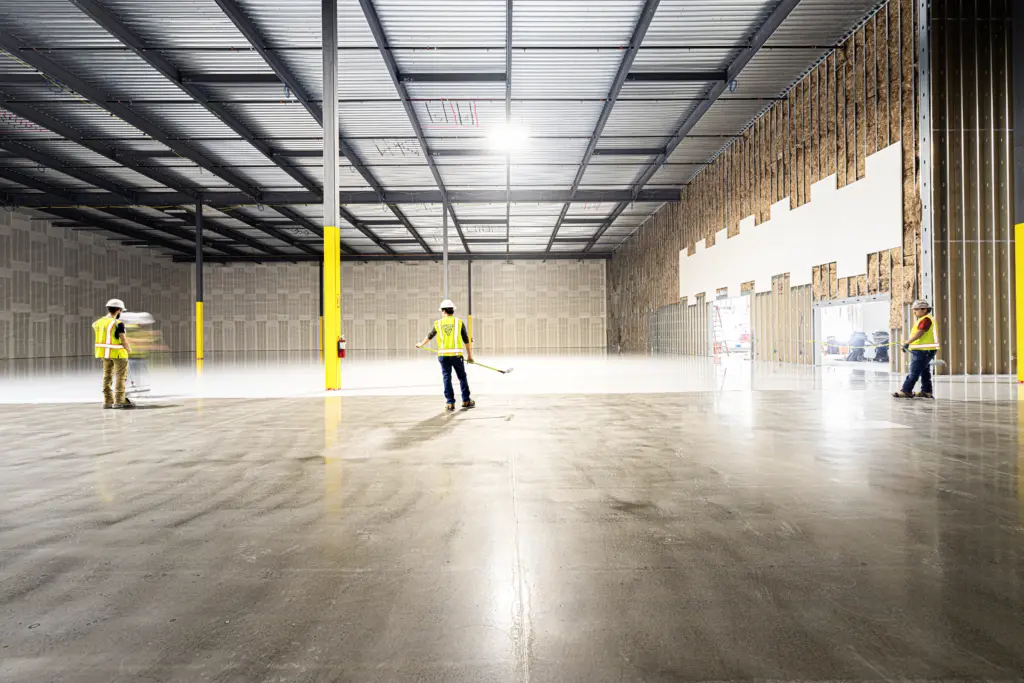
Craftsman Publishes 2026–2027 ESD Flooring Technical Guide
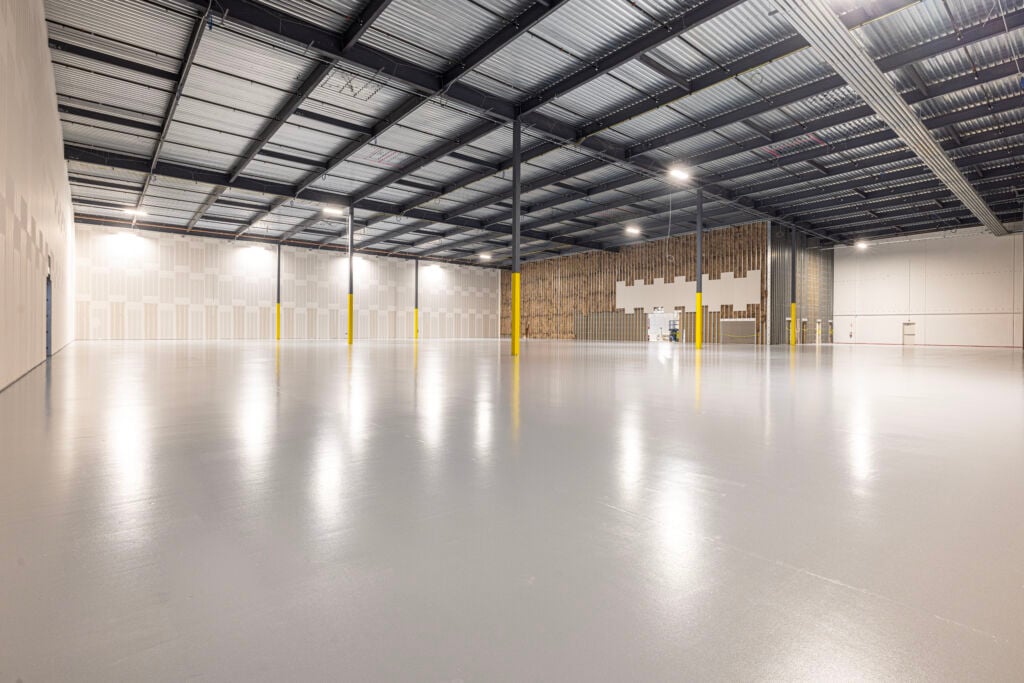
ESD Epoxy Flooring Case Study: 34,000 SF Dallas, TX