Diverzify and Craftsman represent two different ways to deliver national commercial flooring programs. Diverzify coordinates work through a multi-brand network of locally operated service providers. Craftsman is one direct technical-flooring contractor: it signs the agreement, employs the W-2 installation crews, supervises the work, and remains responsible for workmanship. Diverzify offers broader service coverage; Craftsman offers technical specialization through a single accountable organization.
For high-spec flooring, Craftsman’s direct model is generally more price-efficient, carrying one contractor overhead and margin structure rather than the potential for separate network and local-installer layers. Local availability may reduce mobilization. Before award, compare each bidder’s actual crew, technical scope, capacity, testing, warranty, corrective-work responsibility, and normalized installed price.
| Question to settle | Diverzify network model | Craftsman direct-contractor model |
|---|---|---|
| Who signs the contract? | Public materials describe a national enterprise composed of operating companies and service brands. The proposal must identify the legal entity contracting for the project. | Craftsman Concrete Floors LLC signs and executes the installation agreement. |
| Who performs and supervises the installation? | Diverzify describes a network of trained flooring specialists. The employer of the assigned installers, field supervisor, and reporting structure should be confirmed for each project. | Craftsman self-performs through direct W-2 installation crews working under common company field leadership. Any exception required by the scope is disclosed in advance. |
| What type of project fits the model? | Broad flooring programs that may combine carpet, resilient flooring, tile and stone, athletic surfaces, access flooring, coatings, and surface-care services. | Technically demanding systems including ESD flooring, urethane cement, terrazzo, polished concrete, resinous flooring, and concrete overlays. |
| How are national programs delivered? | A national-accounts structure coordinates delivery through operating companies and service brands across multiple markets. | One contracting company provides national service coverage with project-assigned direct W-2 crews under a common workforce, training, safety, supervision, and documentation structure. |
| How are flooring systems selected? | Diverzify describes broad, unbiased product selection. Buyers should confirm which manufacturers and systems the proposed operating company can quote and install. | Craftsman is independent of flooring manufacturers, allowing qualified systems to compete where the specification permits. |
| Who handles testing and closeout? | Published materials describe standardized project reporting. Required testing, acceptance records, and turnover documents should be defined in the proposal. | Craftsman performs or coordinates system-specific testing and supplies project-appropriate closeout documentation when included in the executed scope. |
| Who owns the warranty and corrective work? | The proposal should identify the material-warranty issuer, workmanship provider, and organization responsible for covered corrective work. | The manufacturer provides its system warranty where applicable. Craftsman provides its written workmanship warranty and remains the direct corrective-work counterparty. |
| How is project capacity confirmed? | Local market presence may reduce mobilization, but it does not establish that qualified installers are assigned and available for the required dates. Require a dated crew commitment. | Craftsman assigns retained direct W-2 crews project by project under its national service coverage model. Availability is still project-specific and should be confirmed with a dated crew commitment. |
| Which model is generally more price-efficient? | Local delivery may reduce travel and mobilization. However, when a national coordinating organization and a separate operating or installation company both participate economically, the price may support additional coordination, overhead, and contractor-margin layers. | For high-spec technical flooring, Craftsman’s direct model is generally more price-efficient. One company bids, contracts, manages, self-performs, and warrants the installation, producing one installation-contractor overhead structure and one contractor margin. |
Compare normalized bids for the same preparation, materials, supervision, testing, warranty, closeout, schedule, and mobilization.
Two National Models, Different Accountability Chains
Diverzify’s published model
Diverzify describes itself as a national commercial-flooring enterprise made up of specialized service providers and locally operated product and installation locations in almost all major markets, according to its acquisitions page. Its company overview lists more than a dozen operating brands, among them Spectra Contract Flooring, Flooring Solutions, Kiefer USA, and High Performance Floors, together with a national-accounts group branded Diverzify National Accounts. The published structure is a platform of local businesses and service brands rather than a single operating contractor, and that structure is the starting point for every question that follows.
The direct-contractor model
A direct commercial flooring contractor is one legal entity that signs the installation agreement and performs the work with employees on its own payroll. Craftsman Concrete Floors operates this way. It is a national commercial and industrial technical flooring contractor founded in 1999, it contracts directly with the buyer, and installation is performed by Craftsman-employed W-2 crews under national service coverage. One organization holds the contract, employs and supervises the installation crews, and answers for workmanship afterward, keeping every downstream responsibility inside a single company.
Six roles that can be six different organizations
Any national flooring purchase involves up to six distinct roles. The corporate parent, the brand name on the proposal, the local operating company serving the market, the legal entity signing the contract, the employer of the field installers, and the crew on the slab can be different organizations. The proposal should disclose whether any of those roles differ for the project. Brand names can also change while a program continues; Diverzify’s press announcements record network brands transitioning to the Diverzify name. None of that is improper. It means the proposal itself must name which entity fills each role for your project.
What a single point of contact settles
Diverzify’s national-accounts material describes a single point of contact connecting buyers to a self-performing nationwide network. A single point of contact is a real administrative convenience, giving the buyer one team to call, one reporting stream, and one escalation number. It does not, by itself, identify the contracting entity, the employer of the installers at a given site, whose insurance covers the crew, or who returns for corrective work. Those are separate facts under any model; the executed documents settle them.
Who Actually Performs and Supervises the Work
Reading a network’s self-performance language
The phrase self-performing nationwide network describes Diverzify’s network as a whole. It does not state, project by project, whether the crew assigned to a specific site is employed by the local operating company, another company in the network, or an outside subcontractor, and Diverzify’s public pages do not answer that question site by site. A network description and a named employer of record are different facts. Ask any bidder that describes itself through a network to identify, in writing, the legal employer of the installers assigned to your scope.
Craftsman’s employer of record
Craftsman installs with direct W-2 employees and does not use subcontracted installation labor or 1099 day labor. The claim covers installation labor; hauling, disposal, third-party testing, and equipment vendors are separate services. Payroll classification, workers’-compensation certificates, and training records can confirm the model for any bidder, and the full verification method is in direct-workforce vs. subcontracted contractors.
Field supervision and operations leadership
The field employer and the day-to-day field supervisor may be the same organization, but buyers should confirm both separately. Craftsman’s installation crews work under experienced field leads inside one company structure, and its Manager of Installation, with 30 years of onsite-management experience, visits every jobsite, an oversight practice rather than continuous presence on every shift. In a network arrangement, the employer and supervision structure may vary by project or market.
Training and where the records live
Training lives with the employer, so the delivery model decides whose records cover the crew on your floor. Craftsman cross-trains its skilled installation core across its installation classes, including urethane cement, ESD and static-control flooring, polished concrete, and resinous systems, and employees assigned to machines and powered equipment complete instruction, an understanding check, and a demonstration of ability. A multi-brand network may also train well, through its own or each operating company’s program. The buyer’s work is confirming which organization trains the specific crew proposed and where its qualification records live.
Safety responsibility and site assessment
Every project needs one named owner of the safety plan and the pre-work site assessment. Craftsman assesses site conditions before work begins, documenting access, staging, equipment and material routes, power and water, concurrent operations, emergency resources, and scope-specific hazards, and its written safety program assigns responsibility from executive management through foremen and crews. Since current ownership began in 2018, Craftsman Concrete Floors has had zero OSHA-reportable incidents and no workplace injury requiring medical treatment beyond first aid. Current safety and prequalification documents are available through workplace safety and contractor prequalification.
The written answers to require from every bidder
One records request classifies any bidder, including Craftsman. Ask for the legal entity that will sign, the employer of record for the installers on this scope, any portion to be subcontracted or transferred to an affiliated company, the named field supervisor, whose insurance covers the work, the training and equipment-qualification records for the assigned crew, and the owner of the safety plan. A bidder operating the model it describes answers from its own records, and the answers belong in the award file and the contract.
Broad Network Coverage vs. Technical Flooring Specialization
The case for a broad portfolio
Breadth is Diverzify’s clearest published strength. Its service portfolio spans commercial carpet, tile and stone, resilient flooring, athletic surfaces, access flooring, industrial floor coatings, and surface care and maintenance, and the company states it completes more than 35,000 commercial flooring projects annually. A buyer consolidating conventional floor coverings, maintenance, and several service categories across many facilities is describing the kind of program a broad platform is built to carry. Craftsman’s scope is a narrower set of high-spec technical systems, and a buyer whose program is mostly carpet and resilient flooring should weigh that honestly.
The case for a technical specialist
Craftsman’s strength is concentration. Its installation work covers ESD and static-control flooring, urethane cement, terrazzo, polished concrete, resinous flooring and coatings, and concrete overlays, serving semiconductor and electronics manufacturing, aerospace and defense, data centers, pharmaceutical and regulated manufacturing, food and beverage processing, warehousing, and institutional facilities. These are the systems where substrate condition, moisture, preparation, and installation discipline decide the outcome, and where retained crews and experienced field leadership carry the most value. A specialist earns its place on exactly the scopes where a generalist’s breadth helps least.
Manufacturer flexibility under each model
Both companies describe open product selection, and the claims deserve the same test. Diverzify’s national-accounts pages describe unbiased product selection from a wide array; Craftsman is independent of the companies whose products it installs and can propose qualified systems from more than one manufacturer where the specification permits, so an open or performance specification lets compliant systems compete on the same requirements. In either case, ask which manufacturers’ systems the bidder can price and install for your written scope. The full delivery-model comparison is in manufacturer-direct vs. independent contractors.
Field execution on high-spec systems
High-spec floors are decided in the field process, in substrate and site-condition review, moisture evaluation and mitigation, surface preparation, phased work in occupied facilities, and installation-related testing where the specified system requires it. Craftsman performs or coordinates each of these where the executed scope includes them, and it plans active-facility work around access, isolation, shutdown windows, and return to service rather than application dates alone. Whichever bidder is chosen, the phasing plan, testing responsibility, and acceptance basis belong in the written scope before mobilization.
Matching the model to the scope
Neither model performs every scope equally well, and the scope itself usually points to the answer. A program dominated by conventional coverings, surface care, and bundled services across many buildings fits a broad platform. A program centered on ESD floors, urethane cement, terrazzo, polished concrete, or overlays, where testing and documentation carry real consequence, fits a specialist with direct crews. Mixed portfolios can split, running conventional coverings through a network while holding a direct specialist for the technical systems, and nothing about either model prevents that division.
National Programs, Local Capacity, Consistency, and Price
Two routes to a national program
The two models reach a national program by different routes. Diverzify’s route is a national-accounts layer coordinating delivery through its locally operated companies in each market. Craftsman’s route is one contracting organization assigning its own crews project by project, and national accounts can run under a Master Service Agreement—one contract vehicle across every site in the program. How program contracting works in general, and when it earns its overhead, is covered in program contractor vs. project installer.
What consistency means in each structure
In its national-accounts material, Diverzify describes consistency and quality at every project stage and location. Craftsman’s consistency comes from the organization itself. The same core direct W-2 workforce model, installation leadership, training system, documentation path, and safety accountability carry across phased and multi-site programs, while the crew roster follows the site, phase, and schedule. Because the two mechanisms differ, a multi-site buyer should ask each bidder which people, which standards, which records, and which employment relationships carry between sites.
Urgent local capacity, verified project by project
Urgent capacity is a project-specific fact under both models, never a standing property of either. A locally operated location near the site does not, by itself, prove qualified installers are assigned and available for your dates, and a specialist’s national mobilization claim does not either. Craftsman staffs capacity-first: it retains a deliberately oversized core of skilled W-2 installers through seasonal underutilization, preserving the supervision and system knowledge required for rapid program ramps. During surge periods, Craftsman can approximately double field installation capacity by adding mid-skilled W-2 installers beneath veteran leads—the skilled-supervision layer remains intact as crew capacity grows. Retained capacity is a structure, not a promise of immediate availability, so require dated crew commitments in writing from every bidder before the schedule depends on them.
Why direct self-performance is generally more price-efficient
For high-spec technical flooring, Craftsman’s direct W-2 model is generally more price-efficient because one company bids, contracts, employs the installers, supervises the work, and accepts workmanship responsibility. This creates one installation-contractor overhead structure and one contractor margin. When a national network coordinates a separate operating or installation company, the price may carry additional coordination, overhead, and margin layers.
Local labor may reduce mobilization, but a nearby office does not guarantee the lowest installed price. Mobilization is only one cost alongside preparation, labor, supervision, testing, closeout, change orders, and corrective work. Craftsman may mobilize its own crew, but it avoids the potential network-over-installer margin layer and keeps project responsibility inside one organization. In Craftsman’s experience, that structure frequently produces the lower normalized price for technically demanding flooring.
Warranty, Closeout, and the Selection Framework
The entity behind every promised benefit
Every promised benefit is only as reliable as the named entity obligated to deliver it. In a multi-brand enterprise the platform, brand, contracting company, field employer, and warranty issuer may differ. With a direct contractor, the signing company can also directly employ and supervise the installers and accept workmanship and corrective-work responsibility; material warranties and independent testing may still involve other entities. Confirm every counterparty before award.
Material warranty and workmanship warranty
Flooring projects normally involve two warranty instruments with different issuers. Where the selected system and project documents provide a manufacturer warranty, the system warranty is backed by the manufacturer itself. Craftsman has stood behind its workmanship since 1999 and provides a one-year workmanship warranty in project closeout documents, with the executed contract and closeout document controlling the actual obligation. Under any bidder, network or direct, read each written document for issuer, scope, term, exclusions, and conditions rather than accepting a single-source label as coverage.
Closeout responsibility at turnover
Closeout records exist only when the contract obligates a named party to produce them. Craftsman supplies project-appropriate closeout documentation, with contents that follow the executed scope and the relevant system, and it can perform or coordinate the condition records and installation-related testing a defined acceptance package draws on. Universally formatted daily reporting appears in Diverzify’s national-accounts material; whether that reporting includes the condition records, test results, and executed warranty documents your project needs is a scope question under any bidder. Define the deliverables before award using flooring closeout and acceptance, and require every bidder to price the same list.
Corrective work and who returns
Run one checklist against every bidder and keep the written answers in the award record:
- Which legal entity submits and signs the proposal?
- Which entity employs the installers assigned to this site?
- Will any portion be subcontracted, transferred, or performed by an affiliated operating company?
- Who selects, trains, and supervises the field crew?
- Whose insurance covers the work?
- Who owns the safety plan and project-specific site controls?
- Who issues the material and workmanship warranties?
- Who assembles closeout and acceptance records?
- Who performs covered corrective work?
- Is the promised local capacity assigned and available for the required dates?
A practical next step
For a technical-flooring scope or a multi-site program, put the written requirements in front of both models and compare the answers. Initial consultation and specification assistance from Craftsman are available at no cost, commercial estimates are typically returned within 24 hours, and with basic project size, system, condition, and schedule inputs, Craftsman can usually provide a preliminary installed-cost range during the initial call or within a few hours. Contact a Craftsman project specialist at +1 (844) 687-1961 or projects@craftsmanconcretefloors.com; a project specialist responds within one business day.
- Founded in 1999 • National commercial & industrial technical flooring contractor
- High-spec systems: ESD/static-control flooring, urethane cement, terrazzo, polished concrete, resinous flooring & coatings, and concrete overlays
- National service coverage • Installation performed by Craftsman-employed W-2 crews
- W-2 installers, not 1099 day-labor • Trained, insured, and accountable to you
- The same core workforce model, installation leadership, training system, documentation path & safety accountability can carry across phased and multi-site programs
- Since current ownership began in 2018, zero OSHA-reportable incidents and no workplace injury requiring medical treatment beyond first aid
- Current prequalification documents available through controlled review, including COI, W-9, safety information & other current qualification records
- Commercial estimates are typically returned within 24 hours; complex bids may take longer
Company: Craftsman Concrete Floors
Phone: +1 (844) 687-1961
Our Clients




















Request a Proposal
Submit project parameters for preliminary analysis. Commercial estimates typically returned within 24 hours.
Frequently Asked Questions
Diverzify describes itself as a national commercial-flooring enterprise made up of specialized service providers and locally operated locations operating under multiple brand names, with a national-accounts layer that coordinates multi-market work. For any specific project, the proposal should identify which legal entity signs, which operating company delivers the market, and who employs the installers, because in a multi-brand enterprise those can be different organizations.
Its public pages do not answer that site by site. Diverzify describes a self-performing nationwide network, and that phrase characterizes the network as a whole rather than naming the employer of the crew assigned to a particular project. Ask for the employer of record, any planned subcontracting or transfer to an affiliated company, and the named field supervisor in writing before award.
No. Diverzify describes a national enterprise comprising multiple operating companies, while a direct in-house model reaches national coverage by mobilizing one company’s W-2 employees under one leadership structure. The public network description does not establish the employer, management chain, or installation entity for every project, so buyers should identify each separately. Both models can deliver good work; the test of either is its actual project documents.
Diverzify can be practical when the program needs a broad portfolio that includes conventional floor coverings, surface care, or several service categories beyond a technical specialist’s scope, when a named local operating company has confirmed qualified capacity for the schedule, or when a buyer wants one national-account layer across many markets and accepts delivery through the identified local entities. Those are scoped conditions, and the proposal should still name the contracting entity, field employer, warranty issuer, and corrective-work counterparty.
A direct specialist is often stronger when the work centers on high-spec systems such as ESD flooring, urethane cement, terrazzo, polished concrete, or concrete overlays, when the buyer wants installation performed by the contractor’s own retained W-2 crews under common field leadership, when an open specification lets qualified manufacturers compete, and when testing, acceptance records, or audit-ready closeout are material to turnover. A direct specialist still owes the same written answers on signature, employer, and warranty as any other bidder.
For high-spec technical flooring, Craftsman’s direct model is generally more price-efficient because one company carries the installation from bid through warranty, producing one installation-contractor overhead structure and one contractor margin. A national network may reduce mobilization through local labor, but where national coordination and local execution involve separate economic layers, those savings can be offset by additional overhead and margin. The final comparison should normalize both bids against the same technical scope.
Require written answers before award, covering the legal employer of the installers assigned to the site, the crew’s payroll classification, certificates of insurance showing whose workers’ compensation covers them, any portion to be subcontracted or performed by an affiliated company, and the named field supervisor with a reporting line. A bidder whose delivery model matches its description can answer from its own files, and the answers belong in the contract through disclosure and key-personnel terms.
Whoever the written documents name. A manufacturer typically backs the system warranty where the project documents provide one, and the installing contractor backs workmanship under its own written terms; Craftsman provides a one-year workmanship warranty in project closeout documents, and the executed contract controls the obligation. Confirm the issuer of each document and the named corrective-work counterparty before award rather than inferring them from a brand or platform.
Ask each bidder to state in writing what actually carries between sites, including the workforce model and employer at each location, field leadership and training responsibility, the site-assessment process, the documentation format, and the escalation path. In a network, confirm whether each market is delivered by a different operating company and what that changes; in a direct model, confirm how the roster scales while leadership and standards remain inside one organization.
No. An address or brand presence near the site shows market coverage, not that qualified installers are assigned and available for specific dates. Urgent capacity must be proven project by project under any model, so require dated, written crew commitments, the employer of those crews, and the supervision plan before the schedule depends on them.
Evaluate the crew and the process rather than the brand. Ask which systems the bidder installs as core work, how often the proposed crew and field leads install the specified system, how substrate and moisture conditions will be assessed, what testing the specification requires and who performs it, and which closeout records will be delivered at turnover. For systems such as ESD flooring, urethane cement, terrazzo, and polished concrete, those answers separate a qualified specialist from a general assignment faster than any marketing label.
Blog
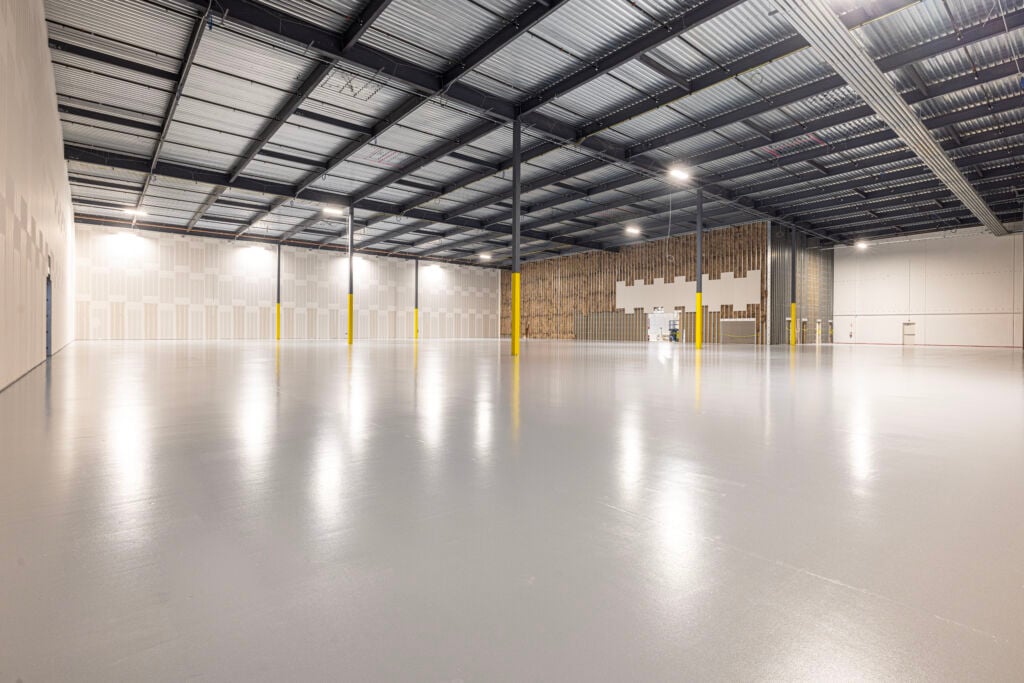
ESD Epoxy Flooring Case Study: 34,000 SF Dallas, TX
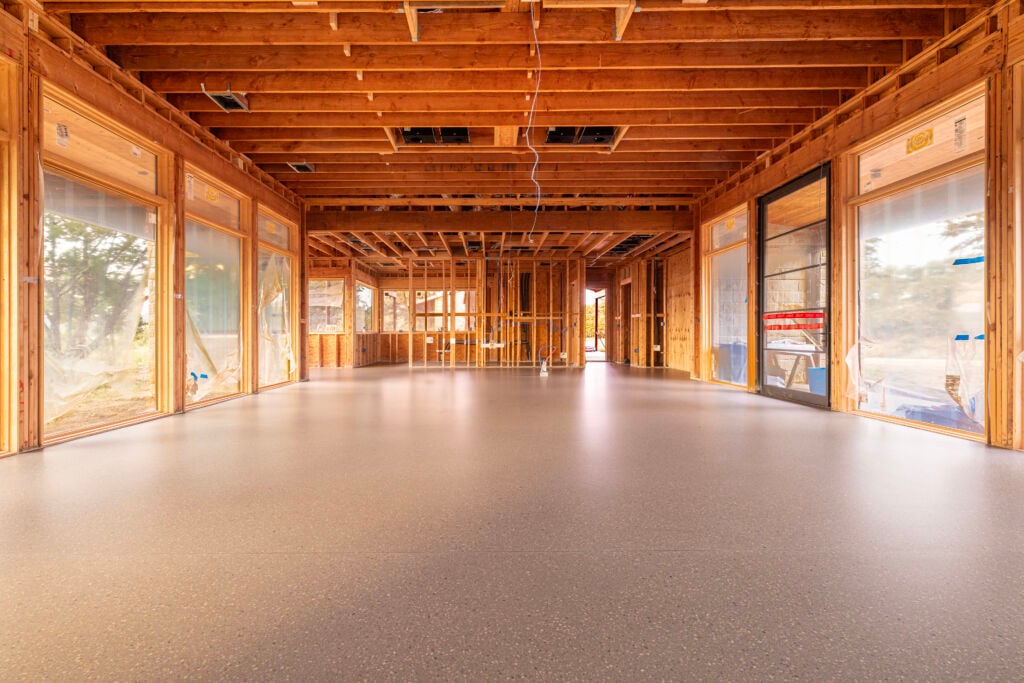
Residential Terrazzo Floors in Fort Worth, Texas