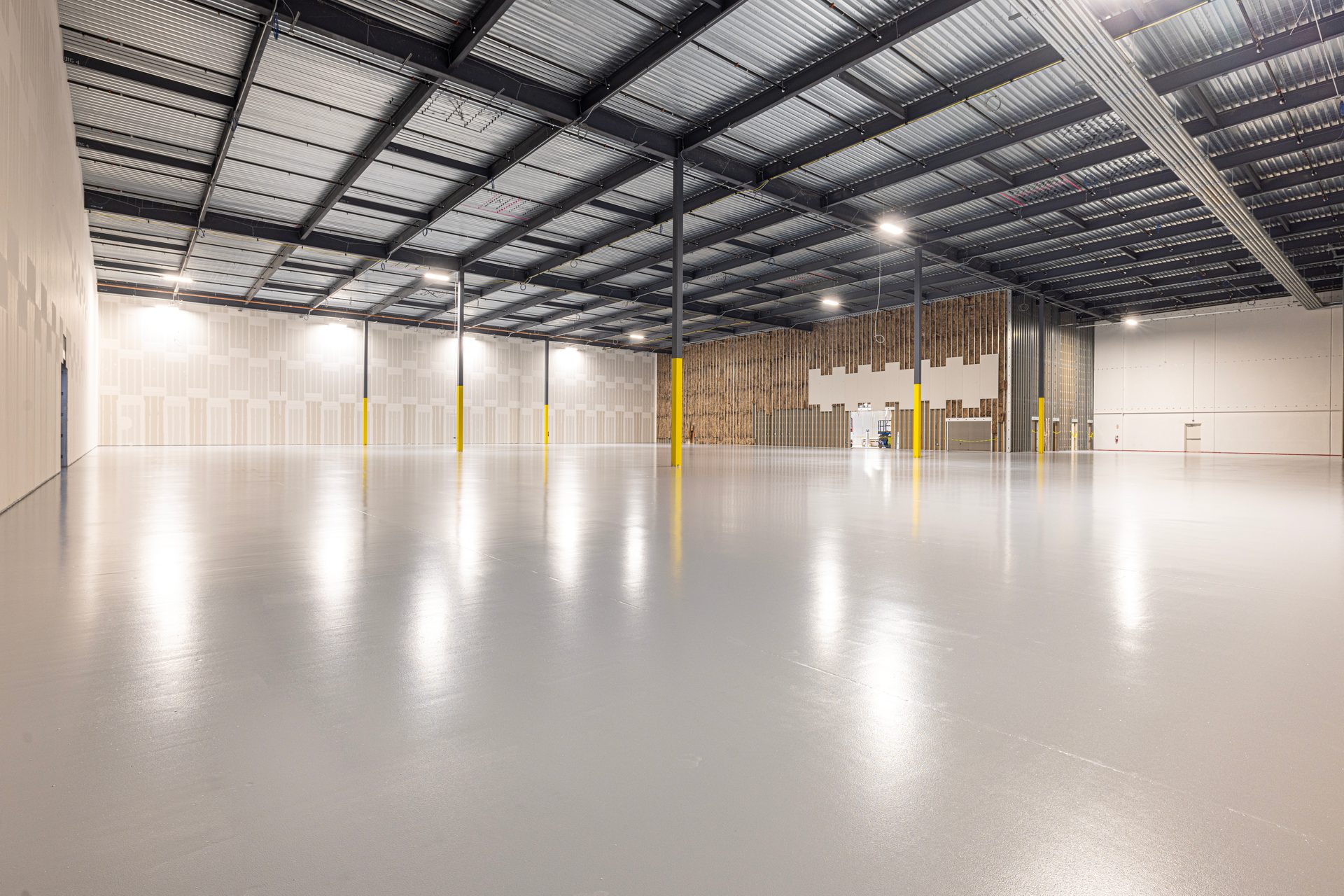
For electrostatic discharge (ESD) flooring, ANSI/ESD STM7.1-2020 requires cleaning new floors before acceptance resistance testing, following the manufacturer’s recommendations. For compliance verification of a floor in service, ESD TR53-01-22 recommends testing it as found, without prior cleaning. The standard test methods (STM) cited here are ESD Association documents approved by the American National Standards Institute (ANSI). ESD TR53-01-22 is the Association’s technical report (TR) on compliance verification.
| Testing stage | Clean before testing? | Purpose |
|---|---|---|
| Flooring-and-footwear specimen qualification — STM97.1-2025 section 6.1 | Yes, using the prescribed material-specific cleaning procedure, followed by required conditioning. | Evaluate prepared specimens under controlled conditions. |
| New-floor acceptance — STM7.1-2020 | Yes, following the manufacturer’s recommendations. | Evaluate the installed flooring against its acceptance requirements. |
| In-service compliance verification — TR53-01-22 | Test as found, without prior cleaning. | Assess performance in the floor’s existing operating condition. |
Acceptance and qualification testing: clean first
New floors, mats and floor finishes
Under ANSI/ESD STM7.1-2020, new floors, mats and floor finishes shall be cleaned per the manufacturer’s recommendations before they are tested for resistance as part of acceptance testing of installed or applied flooring systems. The same cleaning requirement appears in both acceptance procedures: resistance to ground (section 6.2.1.2) and resistance point-to-point (section 6.2.2.2).
Qualification specimens
Specimens tested under ANSI/ESD STM97.1-2025 section 6.1 (qualification testing using a flooring sample with footwear) are cleaned before testing, and section 6.1.3 sets the cleaning method by material.
| Specimen | Cleaning before testing |
|---|---|
| Flooring, mats or other hard-surface materials (section 6.1.3.1) | Shall be cleaned following the manufacturer’s recommendations, or with an isopropanol-water solution, such as 70% isopropanol (IPA) made with deionized, distilled or purified water, using a clean, low-linting cloth. |
| Textile and other floor coverings (section 6.1.3.2) | Clean according to the manufacturer’s recommendations; in the absence of such recommendations, clean with standard hot-water extraction procedures. |
| Floor finishes (section 6.1.3.3) | Remove any surface contamination by wiping with a clean, dry, low-linting cloth. |
Testing immediately after cleaning
ANSI/ESD STM97.1-2025 informative Annex B cautions that moisture from cleaning or the environment can make resistance readings misleading immediately after cleaning. It gives no universal post-cleaning waiting period and notes that some materials may take longer than 72 hours to equilibrate. Discuss the effects of cleaning and humidity with the manufacturer.
For the qualification specimens covered by STM97.1-2025 section 6.1, section 6.1.3.6 separately requires at least 72 hours of preconditioning in the specified humidity environment after cleaning. A dry surface does not replace this conditioning requirement, and 72 hours is not a universal waiting rule for installed-floor testing.
Compliance verification of a floor in service: test it as found
For compliance verification of an ESD control item in service, such as an installed ESD floor, ESD TR53-01-22 recommends no modification of the item beforehand, for example by cleaning, rubbing or moving it. It recommends performing the verification where the ESD-sensitive item is likely to reside or be handled in the process, because the intent is to assess the as-found condition of the item being verified.
What if the in-service floor fails as found?
The following steps are practical guidance for documenting and investigating a failed verification result. Record the as-found conditions and measurements before changing the floor’s condition. Check the measurement setup and equipment using ESD TR53-01-22’s troubleshooting guidance. If cleaning is selected as a corrective action, follow the approved maintenance procedure and retest under the applicable conditions. Preserve the initial and subsequent results so the record distinguishes performance as found from performance after corrective action.
Frequently Asked Questions
Yes. ANSI/ESD STM7.1-2020 requires new floors, mats and floor finishes to be cleaned according to the manufacturer’s recommendations before acceptance resistance testing, for both resistance to ground and resistance point-to-point. Moisture from cleaning or the environment may make resistance readings misleading when testing immediately after cleaning, as informative Annex B of ANSI/ESD STM97.1-2025 cautions.
ESD TR53-01-22 recommends testing the floor as found, without prior cleaning, rubbing or moving. Verification should occur where the ESD-sensitive item is likely to reside or be handled, to assess the floor’s as-found condition.
Do not assume testing should begin immediately: cleaning moisture can affect resistance readings. Follow the applicable drying, conditioning and stabilization procedures. STM97.1-2025 section 6.1.3.6 requires at least 72 hours of humidity preconditioning after cleaning for qualification specimens; informative Annex B notes that equilibration can take longer. That minimum is not a universal waiting period for installed floors.
Standards basis: ANSI/ESD STM7.1-2020 sections 6.2.1.2 and 6.2.2.2; ANSI/ESD STM97.1-2025 sections 6.1, 6.1.3 and 6.1.3.6 and informative Annex B; ESD TR53-01-22 sections 5.0 and 5.1. Confirm the governing editions, manufacturer procedures and project requirements before testing.