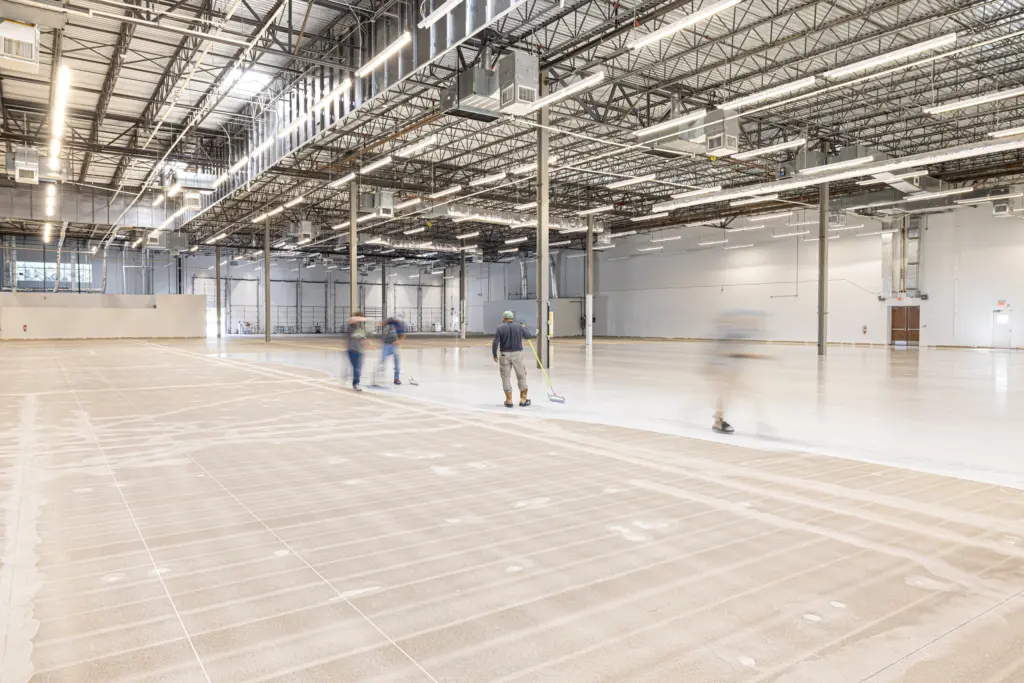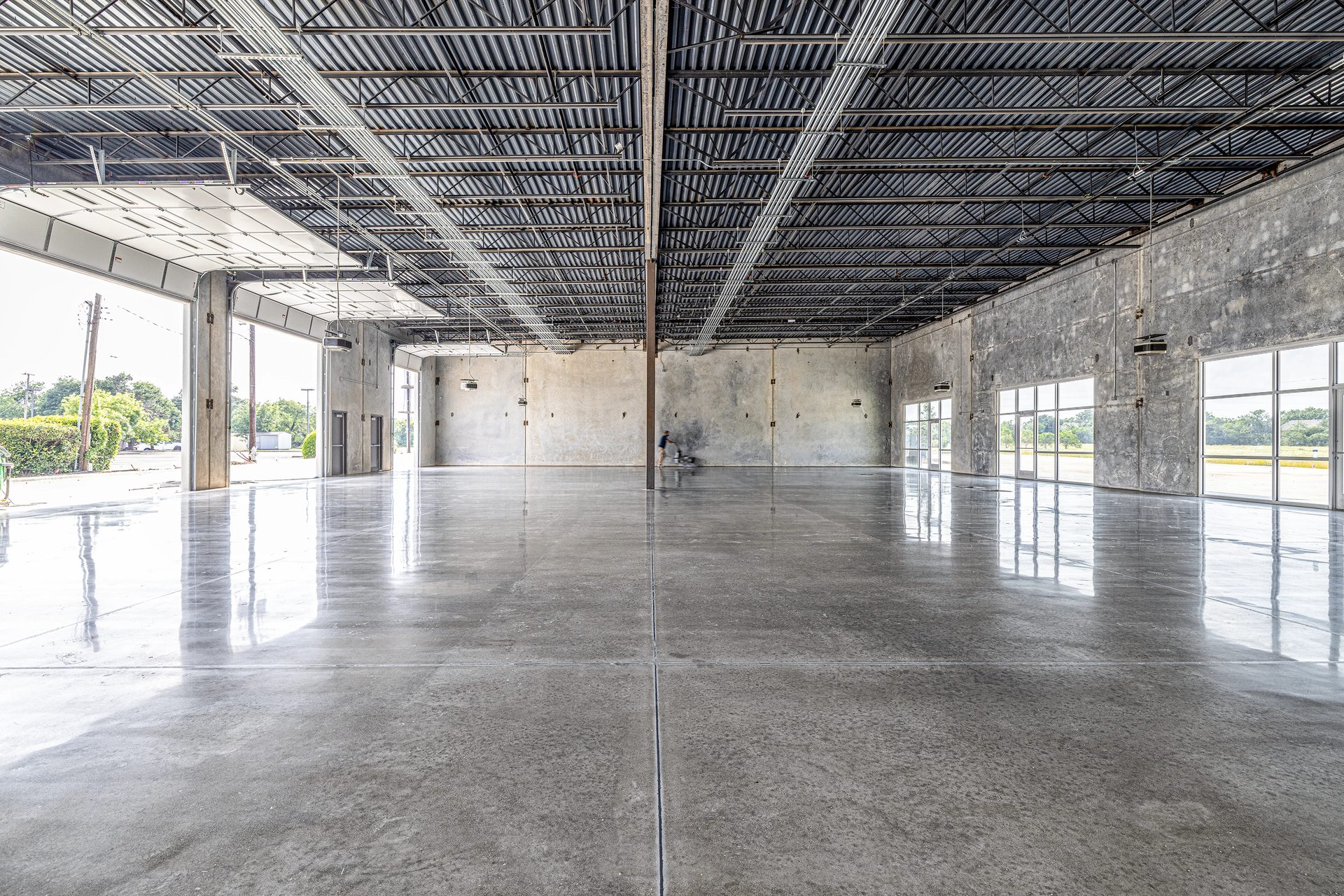
Sealed concrete and polished concrete differ in the surface that actually carries the traffic. In a sealed or grind-and-seal floor, a film-forming sealer is applied over the slab, and that film becomes the wear surface. In mechanically polished concrete, the slab itself is refined into the finished floor, so the concrete remains the wear surface. That one difference drives most of the practical comparison: film wear surfaces are softer, can scratch, and take their wear on the film itself, while a polished slab can often be cleaned, repaired, re-refined, and refreshed as conditions require. Craftsman considers grind-and-seal inferior where the structural slab can appropriately be polished. A film-forming system can still be the rational selection when the slab cannot appropriately be polished, or when the executed specification calls for a specific film’s documented protection. For a specific commercial floor, the selection is decided by slab condition, appearance target, maintenance model, expected exposures, and schedule constraints — not by the category names.
What Separates the Two Systems
Mechanically Polished Concrete Keeps the Slab as the Wear Surface
Mechanically polished concrete uses densification and bonded-abrasive refinement while the concrete remains the wear surface; Craftsman finishes the system with a penetrating stain guard. The stain guard works within the surface rather than forming a film on top of it, and it is not the layer that takes the traffic. Polished concrete is a durable, maintainable, and repairable flooring system. Because the concrete remains the wear surface rather than relying on a replaceable film-forming coating, the floor can often be cleaned, repaired, re-refined, and refreshed as conditions require. That serviceability is conditioned rather than automatic. It depends on the slab, the finish, traffic, use, contaminants, the maintenance the floor actually receives, the products involved, repairs, and the mockup and acceptance criteria the project sets. Polished concrete is maintainable, not maintenance-free.
In a Sealed or Grind-and-Seal Floor, the Film Takes the Traffic
Grind-and-seal is a separate system in which a film-forming sealer becomes the wear surface. The surface a facility’s traffic actually touches is the sealer film, so scratches and day-to-day wear land on the film first. Film-forming wear surfaces are softer, can scratch, and can collect or embed grime as they wear. When the film has taken enough wear, restoring the floor means servicing the film itself, and the specific product system determines how that is done. The name invites confusion because both systems begin with mechanical grinding, but grind-and-seal then prepares the slab for a film while polishing refines the slab itself into the finished floor. A sealed floor is not a type or grade of polished concrete. The two systems take wear differently, age differently, and are restored by different service actions, so a specification, price, or acceptance written for one does not describe the other.
One Sealed Label Covers Many Products
Sealed concrete is a category name, not a single product. Some sealers penetrate and react within the concrete, while acrylics, polyurethanes, and epoxies form a protective film on the surface, and their wear behavior differs by chemistry and product. A penetrating treatment and a film-forming system do not create the same wear surface, which is why the distinction matters when two proposals both say sealed. How a specific sealed floor wears, what it resists, and how it is serviced are set by the specific product and the executed specification. The category name settles none of that. Craftsman is brand-agnostic for polished concrete and selects products by function, slab, project condition, design, use, and specification. A comparison between systems calls for the same discipline. Ask any proposal to name its system and its products, then evaluate the floor against those documents instead of the label.
Where Each System May Fit a Commercial Floor
Neither system is universally better. The comparison runs through the conditions of the specific floor: the slab, the appearance target, the maintenance model, the exposures, the tolerance for shutdown, and what the executed specification actually documents.
| Decision factor | Mechanically polished concrete | Sealed / grind-and-seal concrete |
|---|---|---|
| Wear surface | The concrete itself, densified and refined; finished with a penetrating stain guard that is not a film | The film-forming sealer applied over the slab |
| Where wear lands | On the concrete; the floor can often be cleaned, repaired, re-refined, and refreshed as conditions require | On the film itself: the sealer, not the concrete, takes the traffic |
| Service model | Condition-based: slab, finish, traffic, use, contaminants, maintenance, products, repairs, and acceptance criteria govern the program | Product-based: the specific sealer system and its documentation govern how the film is serviced |
| Substrate dependence | Requires a slab that can appropriately be polished; condition review comes first | Considered where the slab, the exposure, or the specification calls for a film; condition review still comes first |
| Performance values | Project- and product-specific; no category-level lifespan, chemical, slip, schedule, or price figure applies | Product- and chemistry-specific; verify the named product’s documentation against the actual exposure |
| Craftsman’s stated position | Craftsman considers grind-and-seal inferior where the structural slab can appropriately be polished | Rational where the slab cannot appropriately be polished, or where the executed specification calls for a specific film’s documented protection |
Substrate Condition Comes First for Either Finish
Whether a structural slab can appropriately be polished is a condition question, and the review comes before the system decision. The slab’s age, soundness, contamination, existing coatings or coverings, repairs, and moisture history all go into that review. The same record serves a sealed candidate. The slab’s condition, and anything already on it, should be established before any film system is specified. An existing floor that is already coated or covered raises the same question in reverse, because what sits under the covering has to be examined before either path is committed. The guide to whether old concrete can be polished shows how older slabs are evaluated.
Servicing a Film versus Re-Refining a Slab
The two systems age toward different service actions. A polished floor is serviced as concrete, with routine cleaning and, as conditions require, repair or mechanical re-refinement of the wear surface itself. Its serviceability depends on the slab and its finish, on traffic, use, and contaminants, on the maintenance and products the floor actually receives, on repairs, and on the mockup and acceptance criteria the project set. A sealed floor is serviced as a film. Cleaning still matters, but wear, scratching, and embedded grime accumulate in the sealer, and restoring the surface means servicing the film under the specific product’s requirements. Neither model is automatically lighter or cheaper. The practical question is which service model the facility can sustain, with its own staff or a contractor, and on what documented basis. The guide to maintaining polished concrete floors covers how the polished maintenance program is planned.
Exposure, Appearance, and Shutdown Windows Are Project-Specific
No universal chemical-resistance or slip figure exists for either category, so a floor that will see specific contaminants, wet processes, or aggressive routine cleaning should be compared against the named product’s current documentation for those exact conditions. On the polished side, stain management runs through the penetrating stain guard, which does not make the floor immune to staining. The polished concrete stain resistance resource explains how polished floors behave around stains and chemical exposure. Appearance works the same way. The achievable result is set by the specific slab and the specific system, so the appearance target should sit in the specification with the samples and approvals the project will actually use. Schedule is project-specific for the same reason. Return-to-service is set by the specific system, scope, and phasing plan, so shutdown-sensitive facilities should require the schedule basis in writing from whichever system is proposed.
Boundaries, Verification, and When to Wait
What the Comparison Can and Cannot Decide
The sealed-versus-polished comparison answers one question — which finish a structural slab should receive on a commercial project. It does not decide product brands, because the specific products are named in the specification and both categories contain many of them. Nor does it produce pricing, service life, warranty terms, chemical resistance, or slip performance figures. Those values are established by the specific project and product documentation, and a proposal quoting category-level figures for any of them should be challenged. It also does not replace slab evaluation, since no comparison table qualifies a specific slab for either finish. What the comparison can do is make the deciding conditions visible so the right verification happens before a commitment. Where budget is the driving condition, the commercial polished concrete cost guide sets out how polished-concrete pricing is scoped.
When Neither System Should Be Selected Yet
Some conditions call for review before any finish is chosen. Where concentrated chemical exposure is predictable, from process chemistry, repeated spills, or aggressive routine cleaners, selection should wait for an exposure review against specific product documentation. Where the slab’s moisture history is unknown or unresolved, selection should wait for that record. An existing floor that is covered or coated calls for the same pause, because the concrete beneath has not been examined. Untested appearance expectations are the fourth trigger. Until the expectation has been checked against what the actual slab can produce, a selection made now is a guess. These pauses exist so a floor is not specified against conditions nobody verified. Once the reviews are complete, the conditions usually point at one of the two systems, or at a purpose-designed system that neither general-purpose category covers.
A Commercial Buyer’s Verification Checklist
Before selecting either system, put the following in the project record:
- the slab’s age, condition, repairs, and anything currently on it, including coatings, coverings, or residues;
- the slab’s documented moisture history, where it exists;
- the appearance target, and the samples or approvals that will govern acceptance;
- the complete exposure picture, including traffic, contaminants, wet processes, and the routine cleaning chemistry;
- the maintenance model the facility can sustain, and who will perform it;
- the shutdown windows the schedule can actually give an installer;
- the specific products proposed, with current documentation, for any film-forming system; and
- the executed specification for the selected system, including surface preparation, acceptance criteria, and the service expectations both sides accept.
A proposal that cannot fill in these items is not ready to be compared, whatever system it names.
- Founded in 1999 • National commercial & industrial technical flooring contractor
- High-spec systems: ESD/static-control flooring, urethane cement, terrazzo, polished concrete, resinous flooring & coatings, and concrete overlays
- National service coverage • Installation performed by Craftsman-employed W-2 crews
- W-2 installers, not 1099 day-labor • Trained, insured, and accountable to you
- The same core workforce model, installation leadership, training system, documentation path & safety accountability can carry across phased and multi-site programs
- Since current ownership began in 2018, zero OSHA-reportable incidents and no workplace injury requiring medical treatment beyond first aid
- Current prequalification documents available through controlled review, including COI, W-9, safety information & other current qualification records
- Commercial estimates are typically returned within 24 hours; complex bids may take longer
Company: Craftsman Concrete Floors
Phone: +1 (844) 687-1961
Our Clients




















Request a Proposal
Submit project parameters for preliminary analysis. Commercial estimates typically returned within 24 hours.
Frequently Asked Questions
Sealed concrete is a concrete floor finished with a sealer product. In the comparison that matters commercially, it means a grind-and-seal floor, where a film-forming sealer becomes the wear surface. The label covers many different products. Some sealers penetrate and react within the concrete, while acrylics, polyurethanes, and epoxies form a protective film on the surface. Because those products differ by chemistry, what a specific sealed floor can be expected to do is set by the named product and the executed specification, not by the category name.
Mechanically polished concrete uses densification and bonded-abrasive refinement while the concrete remains the wear surface; Craftsman finishes the system with a penetrating stain guard. The slab itself becomes the finished floor, with no film added as the wear layer, so wear and service behavior are set by the concrete itself.
No. Grind-and-seal is a separate system in which a film-forming sealer becomes the wear surface. Both systems begin with mechanical grinding, but polishing refines the slab itself into the finished floor, while grind-and-seal prepares the slab for a film that then takes the traffic. The two systems wear, age, and get serviced differently, so a proposal describing a sealed floor as a type or grade of polished concrete is misdescribing the system.
A mechanically polished floor is not finished with a film-forming sealer. Craftsman finishes the system with a penetrating stain guard that works within the surface rather than forming a film on top of it, so the guard is not the wear surface and does not turn the floor into a sealed floor. The stain guard is part of how the system manages staining, not a guarantee against it — routine care still matters, and the floor remains maintainable rather than maintenance-free.
Sometimes. What decides it is the condition of the slab. Polishing refines the structural slab itself, so the question is what condition that slab is in once the existing film and any residues are removed. Slab age, soundness, repairs, contamination, and moisture history all bear on whether the floor can appropriately be polished, and no result should be promised before that review.
No general installed price exists for either category that a commercial buyer should rely on. What a specific floor costs is set by the specific project and the specified system, so the useful comparison is between scoped proposals for the same floor. Treat any category-level cost claim, in either direction, as a starting assumption to verify against a scoped proposal.
No universal service life attaches to either system, and category-level lifespan figures should not drive a commercial selection. The two systems wear differently: in a polished floor the concrete itself is the wear surface, while in a sealed floor the film takes the traffic. Film-forming wear surfaces are softer, can scratch, and can collect or embed grime as they wear. How long either floor serves depends on the slab, the traffic and contaminants, the maintenance it actually receives, and, for a sealed floor, the specific product system. Compare service expectations floor by floor, against the executed specification and product documentation.
The service actions differ because the wear surfaces differ. Polished concrete is serviced by working the concrete itself, with routine cleaning plus repair or mechanical re-refinement of the wear surface when conditions require it. It is maintainable, not maintenance-free. A sealed floor’s service lives in the film. Wear, scratching, and embedded grime accumulate in the sealer, and the named product’s documentation controls how and when the film is restored. The deciding question for a facility is who will perform each model’s work, its own staff or a contractor, and on what documented basis.
Stain and chemical resistance are properties of specific products under specific exposures, so the category names alone cannot answer the question. A polished floor’s stain management runs through its penetrating stain guard, which does not make the floor immune to staining. A sealed floor’s resistance comes from the named sealer’s chemistry and varies by product. Where staining or chemical exposure will be routine, list the actual contaminants and compare each proposed system’s current documentation against that list. Where the exposure is concentrated and predictable, ask whether either general-purpose finish is the right selection at all before committing.
The one whose proposal proves its schedule. Return-to-service is set by the specific system, the products, the project scope, and the phasing plan. Shutdown-sensitive facilities should require the schedule basis in writing, including surface preparation, any cure or recoat requirements the product documentation states, and the point at which the floor actually returns to traffic. Category-level schedule promises should be treated with skepticism. The executed specification and the installer’s phasing plan are the documents that matter.
Eight items, recorded in the project file rather than settled in conversation. Four describe the floor and its conditions: the slab’s age, condition, repairs, and anything currently on it; documented moisture history where it exists; the appearance target with the approvals that will govern acceptance; and the complete exposure picture, including routine cleaning chemistry. The other four describe the program. They are the maintenance model the facility can sustain, the available shutdown windows, the specific products proposed with current documentation, and the executed specification for whichever system is selected.
Whenever a controlling condition is still unverified. Predictable concentrated chemical exposure, an unknown or unresolved slab moisture history, an existing covering or coating concealing the concrete beneath, or an untested appearance expectation each call for review before either system is committed. In some cases the review points to one of the two systems; in others it points to a purpose-designed system outside both general-purpose categories.
Blog
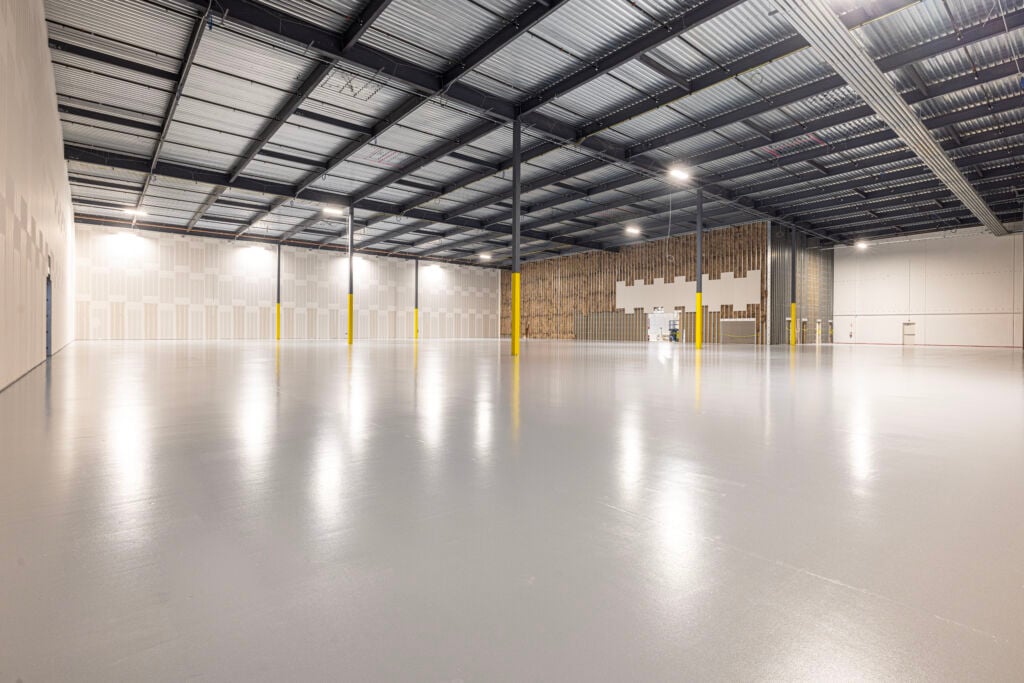
ESD Epoxy Flooring Case Study: 34,000 SF Dallas, TX
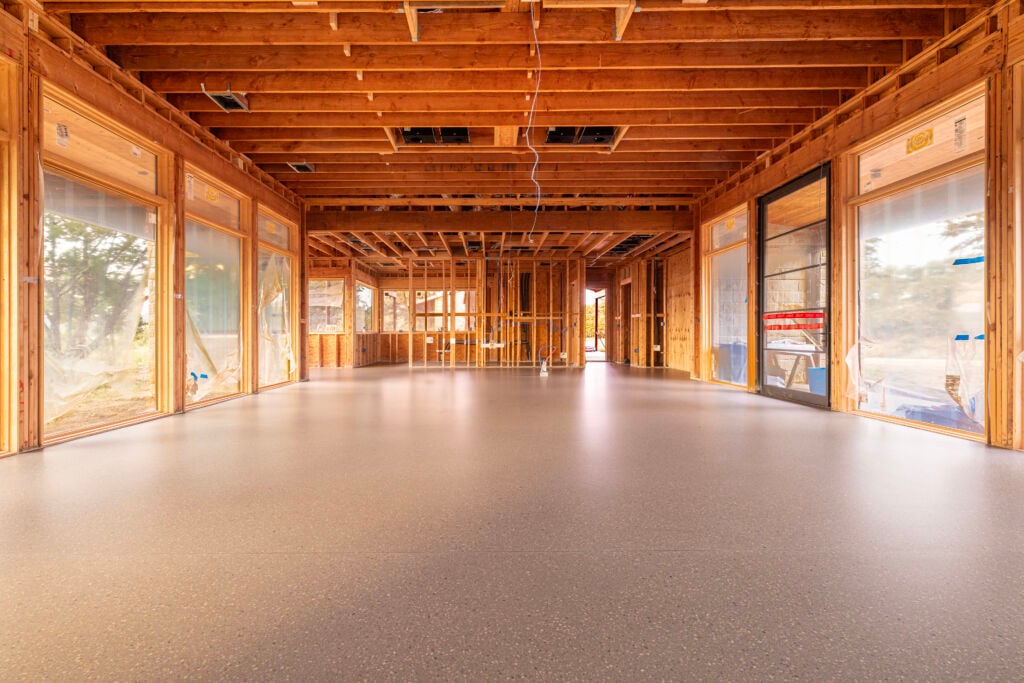
Residential Terrazzo Floors in Fort Worth, Texas