Terrazzo Cost Guide
Terrazzo floors are a timeless choice for adding durability, elegance, and character to any space. Whether your project is a residential, office, or commercial property, understanding the cost of terrazzo floor installation is an essential step in the process. This guide provides a detailed breakdown of the factors that influence terrazzo flooring costs, including material selection, installation methods, and project size. By exploring these details, you’ll gain valuable insights to help you make informed decisions and achieve the perfect balance between style, functionality, and budget.
Our Clients




















Terrazzo Floors Gallery
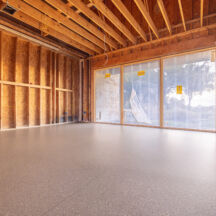
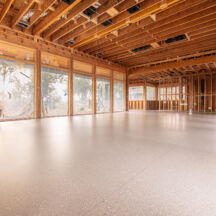
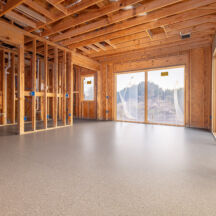
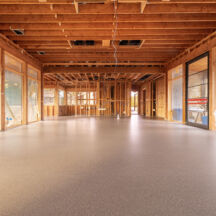
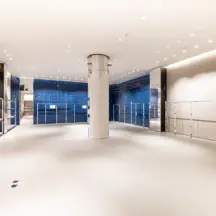
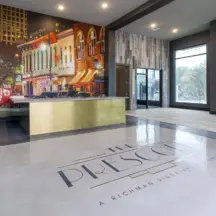
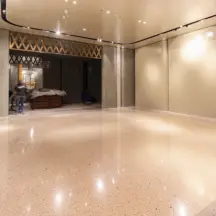
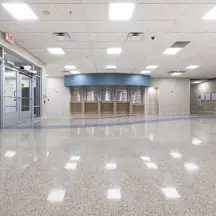
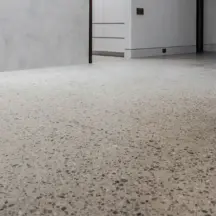
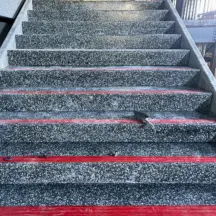
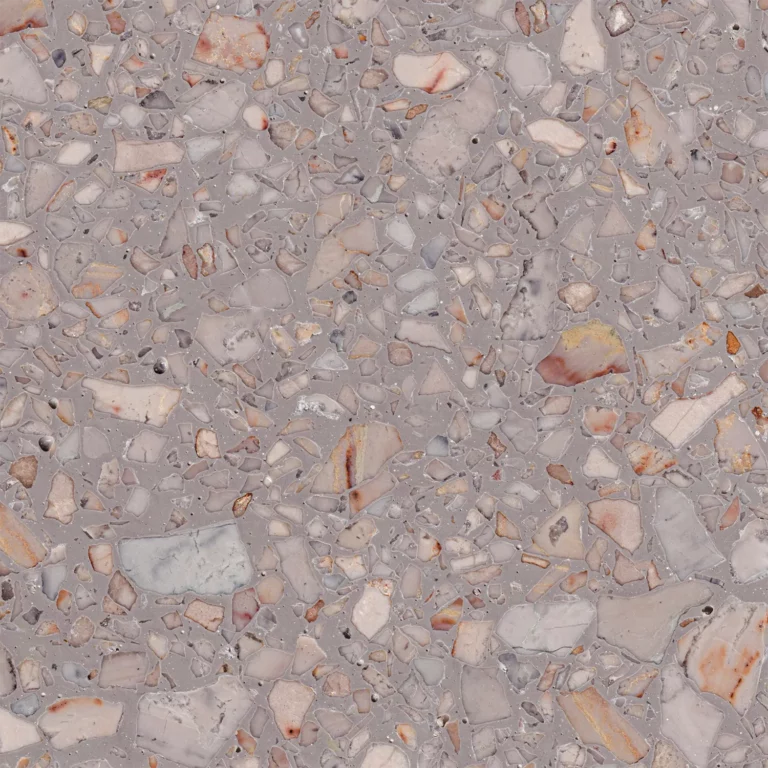
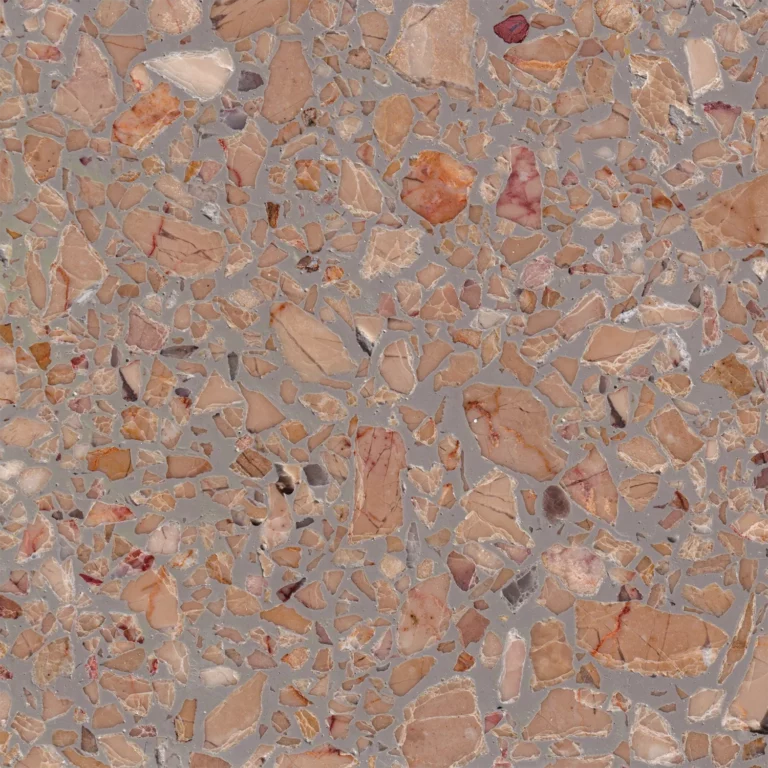
Terrazzo Samples
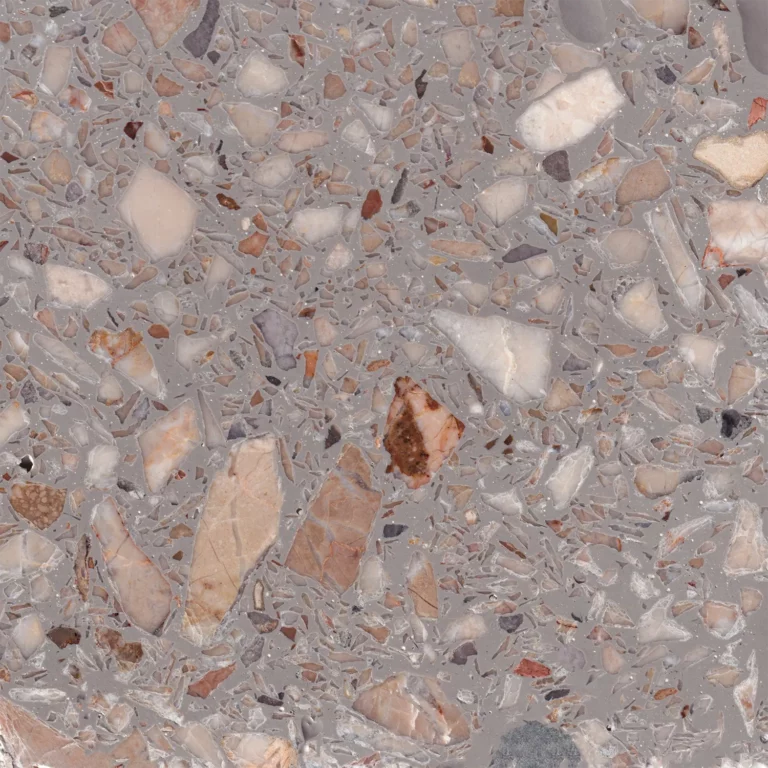
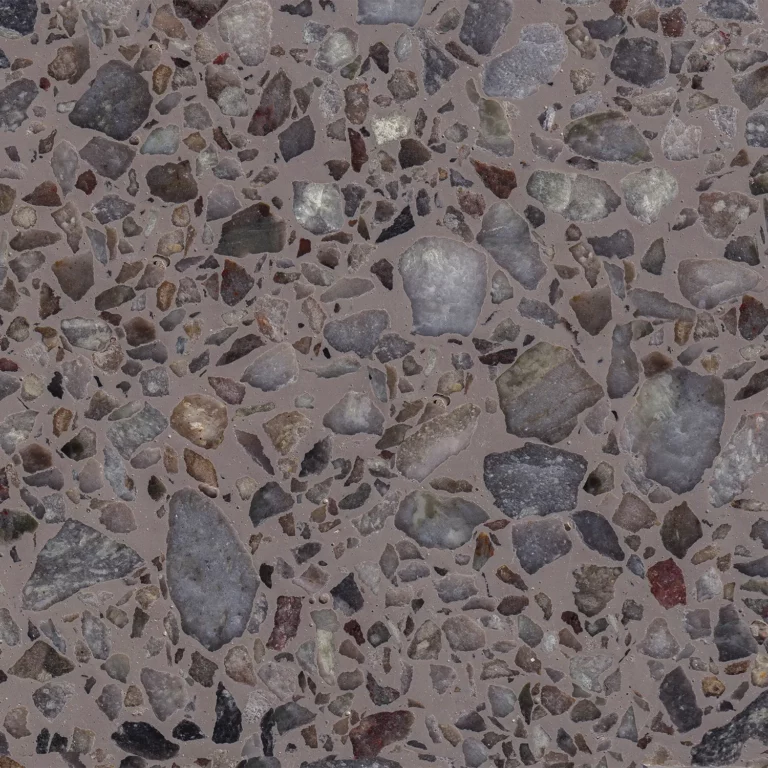
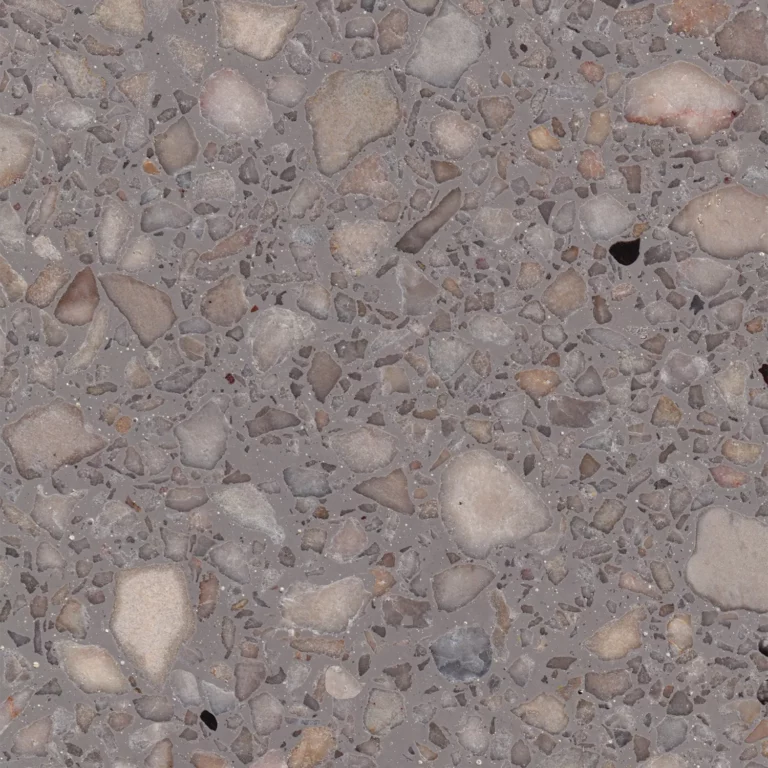
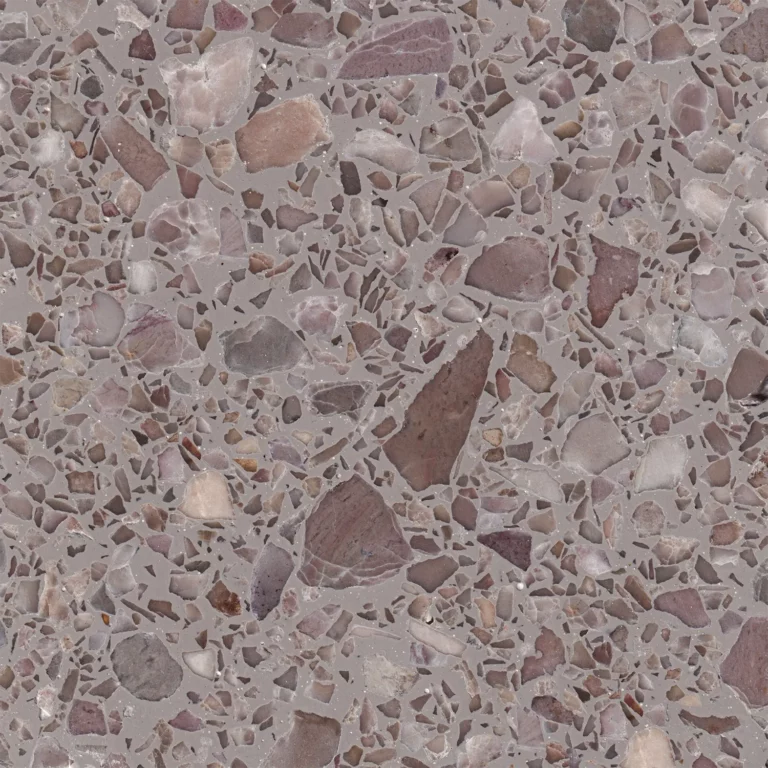
Request a Proposal
Submit project parameters for preliminary analysis. Commercial estimates typically returned within 24 hours.
Types of Terrazzo Flooring
Thinset Terrazzo Flooring
Thinset or ‘poured terrazzo’ flooring is the most common type of terrazzo floor installation. This type of terrazzo flooring offers incredible benefits such as longevity and durability, high impact and chemical resistance, low maintenance costs, and a timeless appearance. However, poured terrazzo flooring is challenging to install and requires specialized labor and materials.
Poured terrazzo flooring has one of the highest upfront installation costs of any type of flooring available. However, as discussed in this article, terrazzo flooring can provide one of the lowest long-term flooring costs for the correct use case. For this reason, we install terrazzo flooring in high-traffic use cases such as stadiums, municipal buildings, schools, and even jails.
Terrazzo Tile
Terrazzo tile can achieve a similar aesthetic as poured terrazzo flooring with a more straightforward installation at a lower cost. Modern terrazzo tiles can come in large format sizes, such as 24″x 24″, providing a more contemporary appearance than other tiles. However, large-format tiles are more expensive to install and manufacture because of their size. Although terrazzo tiles are less costly than poured epoxy terrazzo flooring, they’re one of the more expensive types of tile installations available.
Variables That Drive Cost
Aggregates
Terrazzo flooring combines an epoxy resin binder, marble dust, and aggregates. These aggregates are most often made of marble chips; however, granite, glass, polished metals, and shells are also commonly incorporated. One benefit of terrazzo flooring is that many of these materials can be recycled materials, creating a floor with more environmental benefits than other types of flooring, such as hardwood or ceramic tile. This environmental advantage can be used to gain LEED and other environmental certifications in some circumstances. The origin and quality of aggregates are variable and significantly impact the cost of a finished floor.
Aggregate Pricing Overview
Marble Chips can range from $16-$40 per 50lb bag
Mother of Pearl is $80 – $100 per 50lb bag
Square Footage
The overall square footage of the installation impacts the cost of terrazzo flooring. Because we most often install terrazzo floors on large projects, such as stadiums and schools, economies of scale usually kick in at 10,000 sq. ft. or more. That means for small projects, such as residential kitchens, bathrooms, and laundry rooms, the price per square foot will be higher than for larger jobs, such as municipal buildings. Because terrazzo flooring materials are specialized, material costs per square foot are higher for projects under a few thousand square feet. Large projects are often specified with more economical materials to reduce cost.
Simple 1,000 sq. ft. Installation
$30+ per square foot
Simple 30,000 sq. ft. Installation
$18 per square foot
Complexity
There is a direct correlation between the complexity of a terrazzo flooring design and a project’s cost. One of the terrazzo’s most desirable features is its endless design flexibility. Logos and other complex designs, such as flowers, birds, and insects, are often incorporated into terrazzo flooring. Because these intricate designs require a large variety of aggregates and epoxy colors as well as custom-bent metal divider strips, floors with complex designs cost more. Terrazzo flooring cost for single-color floors with simple divider strip patterns will always be much lower than for intricate floors. Fortunately for homeowners, most residential installations tend to be simple in design.
Simple Commercial Installation
$20 – $30 per square foot
Complex Commercial Installation
$25 – $60 per square foot
Terrazzo Cove Base and Stair Treads
Terrazzo material is often poured into a cove base, providing seamless transitions between the floor and walls. If you’re unfamiliar with it, a cove base is a curved molding made from terrazzo that is seamlessly integrated into the flooring system. It eliminates the sharp 90-degree transition between the floor and wall, creating a smooth, rounded edge. This molding is often used in public restrooms, hospitals or kitchens, allowing easy cleaning and preventing moisture damage to walls. Because the cove base must be sculpted and polished by hand, this addition means an increase in cost.
Additionally, terrazzo can be poured onto stair treads, covering both the horizontal and vertical planes for a sleek, continuous look. This technique creates a durable staircase, perfect for high-traffic areas. However, the intricate hand-detailing required for casting and polishing makes terrazzo staircases quite pricey.
Cove Base Cost
$28 – $35 per linear foot at 6″ tall
Precast Stair Cost
$80 – $135 per square foot, depending on riser configuration.
Gloss vs satin finish
One of the advantages of terrazzo flooring is the ability to customize its level of reflectivity during the polishing process. While high-gloss finishes are commonly chosen for their mirror-like appearance, satin or matte finishes are popular in modern construction for their subtle, understated elegance.
High-gloss finishes require additional polishing steps compared to matte finishes, which makes them slightly more expensive. However, the difference in cost is typically minimal, as the extra polishing is not particularly time-intensive.
Gloss Finish Cost
$.50 to $1.00 more expensive for most floors.
Other Cost Considerations
Subfloor Preparation
Thin-set terrazzo flooring is generally installed directly on a structural concrete slab. Subfloor preparation includes grinding the existing subfloor and installing an epoxy-based primer. This primer is required to ensure a high level of adhesion between the structural concrete slab and the terrazzo flooring. Subfloor preparation for new construction will always be less expensive than renovation projects, as we must remove fewer contaminants and make fewer repairs for new construction projects.
Moisture Testing
When installing a terrazzo floor, the subfloor must be tested for moisture transmission. If the transmission of moisture is high, a moisture vapor barrier must be installed.
Moisture Vapor Barrier Cost
$1.50 to $2.00 per square foot for most floors.
Existing Flooring Demolition
When installing terrazzo flooring in a renovation project, we must carefully demolish the existing flooring to prevent damage to the subfloor.
Demolition Cost
$1.00 to $3.00 per square foot for most floors.
Terrazzo Flooring Cost
Thin-set Terrazzo
Basic thin-set terrazzo flooring ranges from $15-40 per square foot.
Terrazzo flooring with complex patterns can range from $25-$60 per square foot.
Terrazzo flooring with unique aggregates, intricate patterns, or smaller project sizes can cost up to $100 per square foot.
Terrazzo Tile
High-quality terrazzo tiles start around $18 per square foot.
Depending on size and complexity, the installation cost can be $10 – $15 per square foot.
How long will installation take?
The installation will take at least three days for small projects such as residential bathrooms or kitchens. Because terrazzo is a poured product requiring cure time, it is impossible to complete these installations in fewer days. The installation time will vary based on the overall square footage for larger jobs such as commercial buildings.
Paragraph placeholder 1B. Replace with the second paragraph for this subhead (optional).
Long-term terrazzo flooring costs
Because terrazzo flooring is extremely durable, these floors provide a long-term solution for buildings that require a very long life. In fact, for most terrazzo installations, these floors will generally exceed the usable life of the building. Terrazzo maintenance is usually as simple as sweeping, mopping, or auto-scrubbing. Because of this, the cost of a terrazzo floor across its life is generally lower than any other type of flooring. Further, for businesses that cannot accept any downtime, such as stadiums, business owners can be confident that their terrazzo flooring will be in good order throughout its service life.
Frequently Asked Questions
Terrazzo installation involves significant fixed mobilization costs, regardless of project size. Consequently, the price per square foot drops dramatically as the project scope increases. Small spaces (under 1,000 sq. ft.) command a premium due to these fixed overheads, while large commercial projects (10,000+ sq. ft.) benefit from economies of scale, achieving a much lower unit cost.
The density of divider strips and the number of color changes are major cost drivers. A simple field color with a standard grid pattern is the most economical option. Intricate geometric patterns, logos, or organic curves require more labor-intensive layout work and additional pours, which increases the installation time and overall cost.
For most modern interior applications, Thin-set Epoxy Terrazzo is more cost-effective. Although the material cost of epoxy can be higher, it installs faster (speeding up the construction schedule), is lighter weight (reducing structural requirements), and is less prone to cracking than cementitious systems. Sand Cushion or Bonded Cementitious systems are typically reserved for specific exterior or slab-on-grade applications where moisture vapor transmission is a concern.
While terrazzo has a higher initial installation cost compared to VCT, carpet, or porcelain tile, it offers the lowest lifecycle cost of any commercial flooring system. With a lifespan often exceeding 40–75 years and minimal maintenance requirements (no waxing or stripping), the long-term ROI is superior for high-traffic facilities like airports, schools, and hospitals.
Beyond square footage and design, factors such as substrate condition (requiring excessive surface prep or moisture mitigation), site access (working hours, elevator logistics), and aggregate selection (standard marble chips vs. premium glass or mother-of-pearl) will influence the final proposal. Providing detailed floor plans and site conditions during the bid phase ensures the most accurate pricing.
We install terrazzo floors nationwide.
Blog
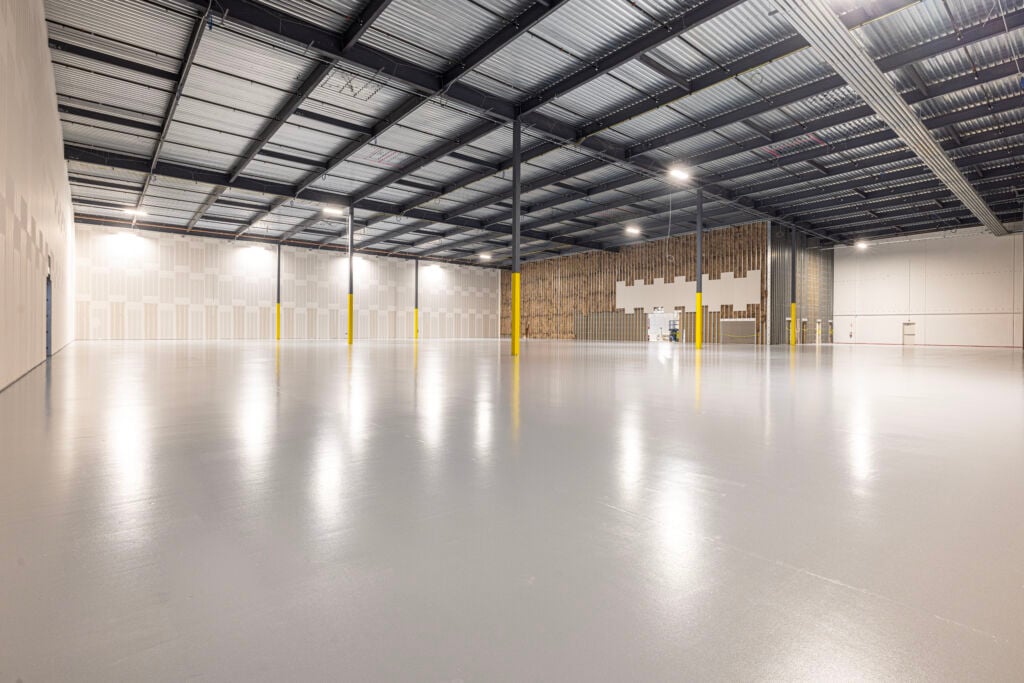
ESD Epoxy Flooring Case Study: 34,000 SF Dallas, TX
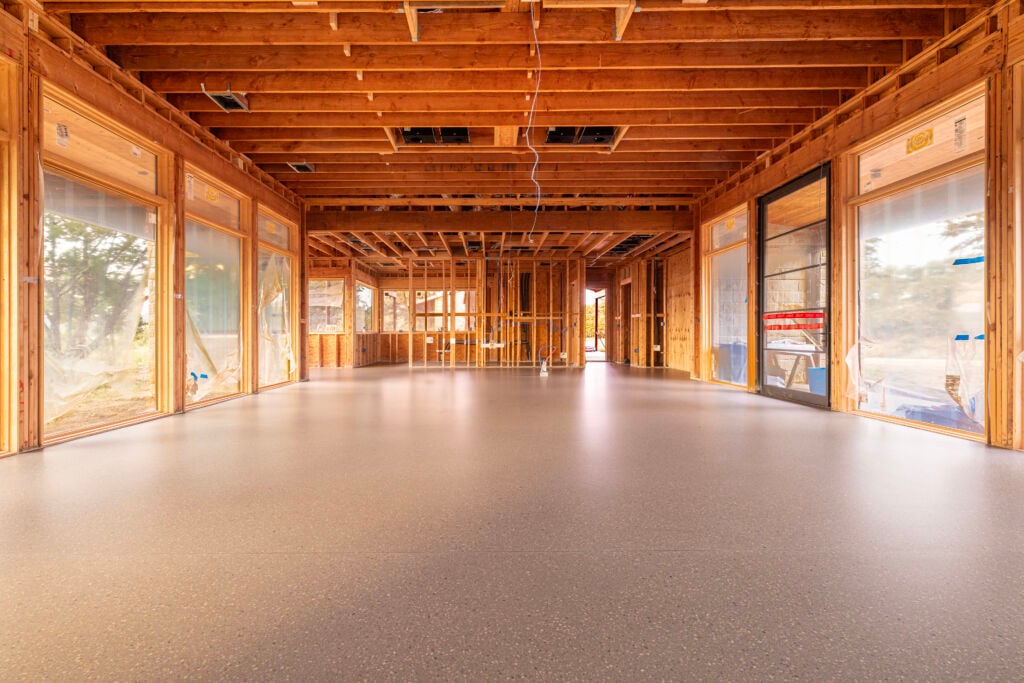
Residential Terrazzo Floors in Fort Worth, Texas