What can we help you with?
Technical flooring, delivered directly
- ESD flooring, urethane cement, terrazzo, and polished concrete
- In-house W-2 installation crews and experienced field leadership
- National service coverage with project-specific staffing plans
- Testing, documentation, and defined project closeout
- Dedicated support for corporate procurement and multi-site contracting
Phone: +1 (844) 687-1961
Terrazzo Countertops
Craftsman Concrete Floors builds precast terrazzo countertops in-house and installs what it casts. Countertop work is part of a broader in-house precast terrazzo scope, most of it commercial, with the same process serving residential kitchens and baths.
The path to an installed countertop runs through a fixed sequence. Aggregate and binder color are selected, a physical sample is approved, field dimensions, edges, and openings are confirmed, and the piece is cast and finished before it ever reaches the site.
What a terrazzo countertop is
Real terrazzo versus terrazzo-look products
Terrazzo is decorative aggregate set in an epoxy or cementitious binder, then ground and polished so the aggregate itself becomes the finished surface. The pattern is the material at the surface rather than a printed or applied layer.
That distinction matters when shopping, because search results for terrazzo countertops include solid-surface and laminate products made to imitate the look. An imitation can be a reasonable budget choice, but it is a different material with different behavior, and guidance written for one does not apply to the other.
Precast pieces, made by one company
Terrazzo comes in formats that are not interchangeable: poured epoxy terrazzo, poured cementitious terrazzo, precast terrazzo elements, and terrazzo tile. Countertops belong to the precast family. Each countertop is cast as a discrete piece, finished, and then delivered and set; a floor, by contrast, is poured in place.
Precast terrazzo is a major Craftsman business line, with a scope that covers stairs and treads, countertops, wall panels and cladding, cove base, and related precast elements. For a countertop buyer, the practical consequence is that floor specifications do not carry over. Assembly thicknesses, substrate rules, and performance figures written for poured terrazzo floors describe a different product.
How the binder is chosen
The binder is selected against the project specification, the exposure the surface will see, its intended use, and the maintenance plan, the same variables that govern terrazzo system selection generally. Epoxy and cementitious binders produce different appearances, and neither is universally correct.
There is no shortcut rule that decides this by room type. The choice is resolved during design development, where the specification and an approved sample settle both appearance and system.
Design development and sample approval
Aggregate and color selection
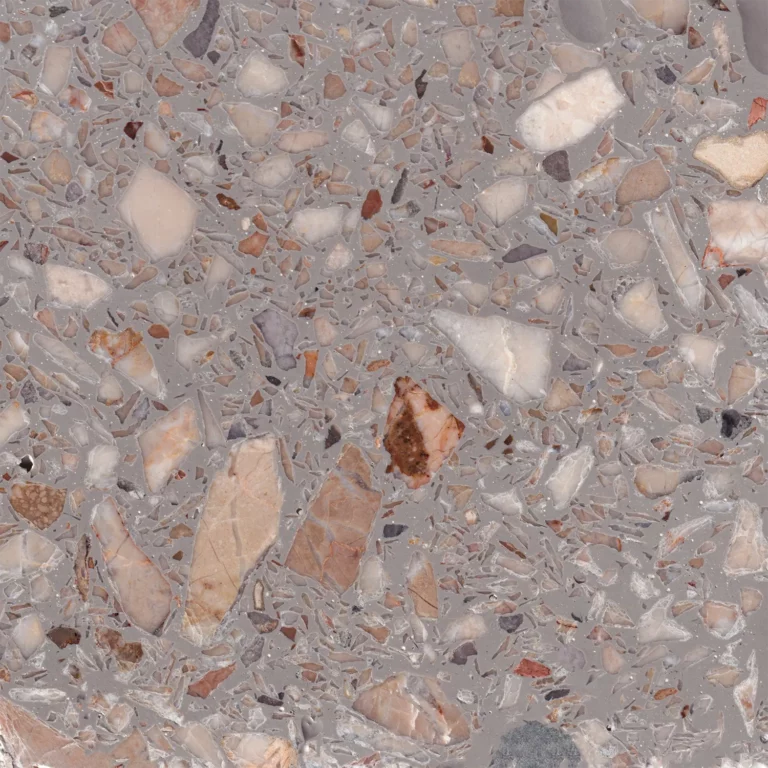
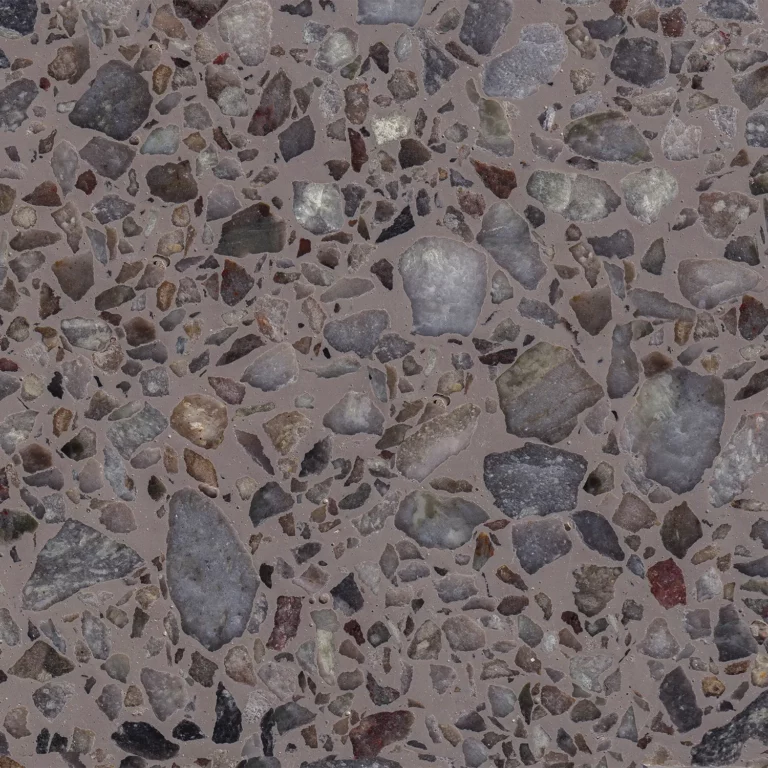
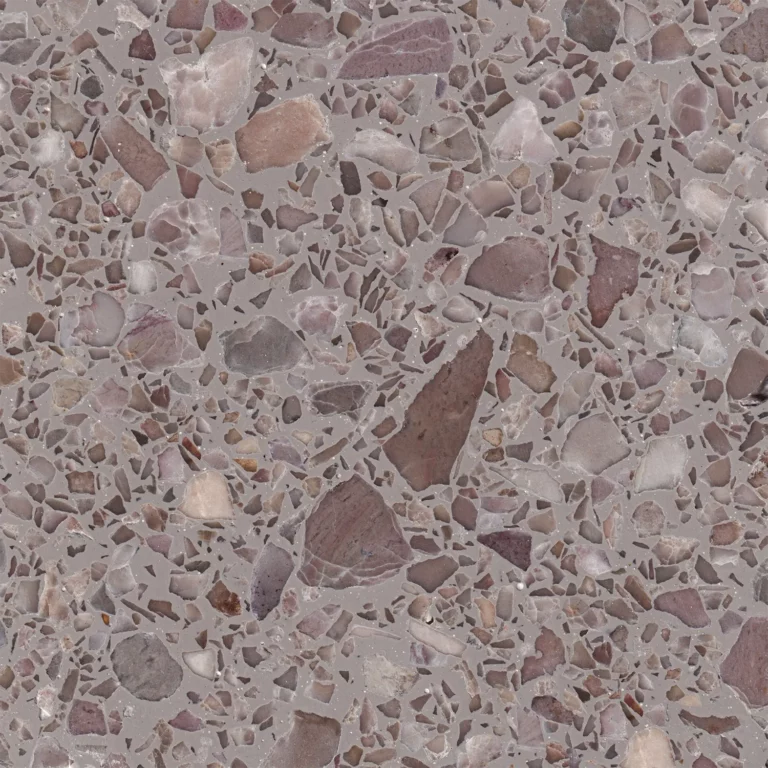
Aggregate selection and binder color are the two levers that set a terrazzo countertop’s appearance. The aggregate blend controls the size, density, and character of the visible chips, while the binder color sets the field they sit in.
The design process, from first direction to a documented selection, is covered in more depth under terrazzo design services.
The physical sample that controls acceptance
An approved physical sample is the control point for a countertop’s appearance. Photographs and renderings inform the direction, but the sample is what the finished piece is judged against, so approval belongs in the actual lighting and next to the actual finishes the countertop will live with.
Physical terrazzo samples can be requested early, and sample review during design development is how the blend and color get settled before anything is cast.
What matching can and cannot promise
A finished countertop reads as a close relative of its approved sample. Terrazzo is a cast decorative material, and natural variation in aggregate distribution should be expected between the sample, the cast piece, and even areas within one piece.
The same expectation applies to matching an existing terrazzo floor or an older countertop. Aggregate and color selection can bring a new piece close, and a physical sample shows how close before anything is cast, but an identical match cannot be promised.
From field dimensions to an installed countertop
Dimensions, edges, and openings
Final field dimensions, edge treatment, and openings for sinks, faucets, and equipment are confirmed before casting. A cast piece is built to its approved geometry, so a change that a fabricator of sheet materials might absorb on site instead means revisiting the piece itself.
Edge treatment belongs to design development, and openings are located against the actual sinks, fixtures, and equipment the project will use. Confirming those selections early keeps the casting schedule intact.
One company from casting to installation
Craftsman casts, grinds, polishes, and installs its precast terrazzo in-house. The organization that approves the sample with you also fabricates the piece and sets it, which keeps responsibility for fit, finish, and schedule in one place.
That structure matters most when something needs judgment mid-project. A question about an opening, a seam, or a site condition goes to the people who will cast and install the work instead of passing between a fabricator and a separate installing contractor.
Delivery, handling, and support conditions
Finished terrazzo pieces arrive heavy, rigid, and already polished, so delivery planning is part of the project itself. Access routes, staging space, and protection for finished surfaces are worked out before the truck arrives.
The supporting structure matters just as much. Cabinets, framing, or masonry below the countertop must be complete, level, and structurally ready before installation, and site conditions are reviewed within the project scope so the piece is set on a base that can carry it.
Seams on longer runs
Long counters are typically cast as more than one piece, and seam locations are planned and approved during design development, well before installation day. Where a seam falls is a design decision that weighs sightlines, openings, and handling.
Installing in occupied buildings
Countertop installation in an operating facility can be phased around the building’s schedule. Craftsman can support night, weekend, and shutdown-window work when the project schedule and committed resources support it, and phased work in active facilities is an established part of its project scope.
Living with a terrazzo countertop
Cleaning and sealing
Routine care is built around a cleaning program compatible with pH-neutral cleaners. The exact chemistry, and whether and how the surface should be sealed, depend on the installed system and its condition, so care instructions are confirmed for the installed piece itself.
Binder choice affects care as well, which is one more reason the maintenance plan belongs in the selection conversation from the start.
Repair and refinishing
Because terrazzo is ground and polished aggregate and binder, an existing piece can often be repaired or repolished when its condition permits. Damage does not automatically mean replacement; an assessment of the actual piece decides.
Repair carries the same matching expectations as new work. A repaired area can be brought close to the surrounding surface, and it is not guaranteed to disappear.
Applications, cost drivers, and next steps
Commercial applications
Terrazzo countertops show up where a building already trusts terrazzo underfoot. Reception and transaction counters, restroom vanities in lobbies and public buildings, food-service counters, and institutional casework tops are the recognizable commercial settings for the material.
Craftsman’s broader work serves commercial, industrial, institutional, and public-sector environments, and countertops can be specified alongside the rest of a building’s terrazzo scope.
Kitchens and baths
Residential kitchens and baths use the same path as commercial work. Aggregate and color selection, a physical sample, casting, finishing, and installation happen the same way for a kitchen island as for a lobby transaction counter.
For a homeowner, the practical differences are scale and coordination. The piece is smaller, but dimensions, sink and faucet openings, and cabinet readiness carry exactly the same weight, since the countertop is cast to its final geometry before it arrives.
Cost drivers, and how to get a real number
Terrazzo countertop pricing is driven by the specifics of the piece rather than a standard rate. Design complexity, aggregate selection, the size and number of pieces, edge and opening detailing, and access and schedule each move the figure.
The fastest way to a usable number is a preliminary one. With basic size, system, condition, and schedule inputs, Craftsman can usually provide a preliminary installed-cost range during the initial call or within a few hours; a formal proposal follows once the scope is defined.
Starting a countertop project
A countertop conversation starts with the project basics. Share the location, rough dimensions, the setting, and any design direction through the proposal form or by phone, and a project specialist responds within one business day.
Initial consultation and initial design and specification assistance are available at no cost, and you can schedule a call directly. For the wider material and system context behind these decisions, start with terrazzo installation.
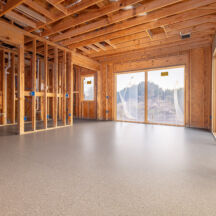
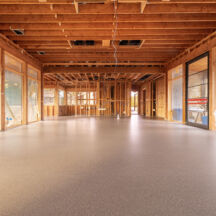
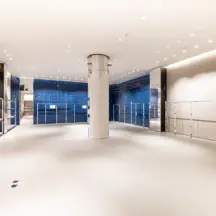
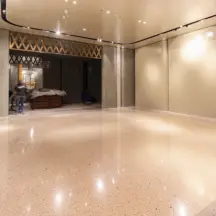
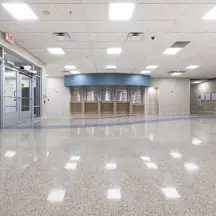
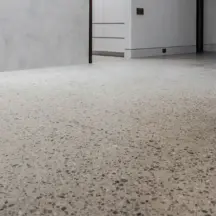
Terrazzo Floors Gallery



Terrazzo Samples



Frequently Asked Questions
Craftsman casts countertops in-house for specific projects; it does not stock slabs for resale. Each piece is cast to the project’s approved dimensions, aggregate blend, and binder color after a physical sample is approved, so purchasing one starts with a project conversation.
Aggregate and binder-color selection can bring a countertop close to an existing terrazzo surface, and a physical sample shows how close before anything is cast. Natural variation should be expected in a cast decorative material, so the realistic goal is a strong family match, not an identical duplicate.
The schedule is set by the project itself; there is no standard lead time. Design development and sample approval come first, field dimensions and openings are confirmed next, and casting, finishing, and installation follow, so a specific timeline takes shape once those inputs are defined for your scope.
Terrazzo Knowledge Center
Resource links
Design & Specification
Systems & Selection
Project Planning & Delivery
Where Terrazzo Is Used
Restoration & Maintenance
Performance, Safety & Sustainability
Blog
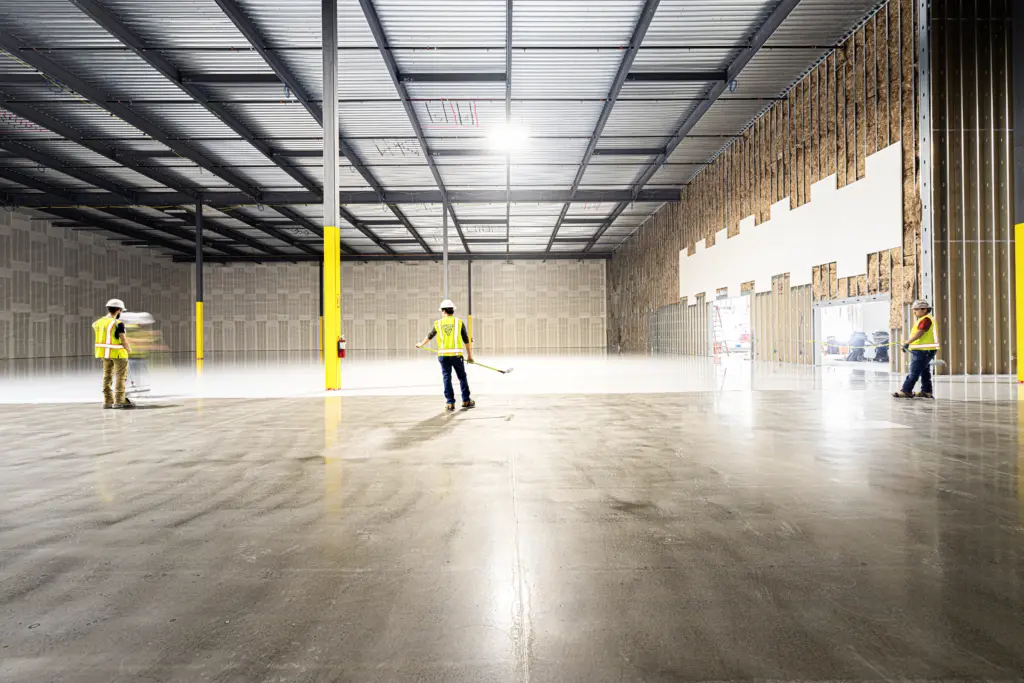
Craftsman Publishes 2026–2027 ESD Flooring Technical Guide
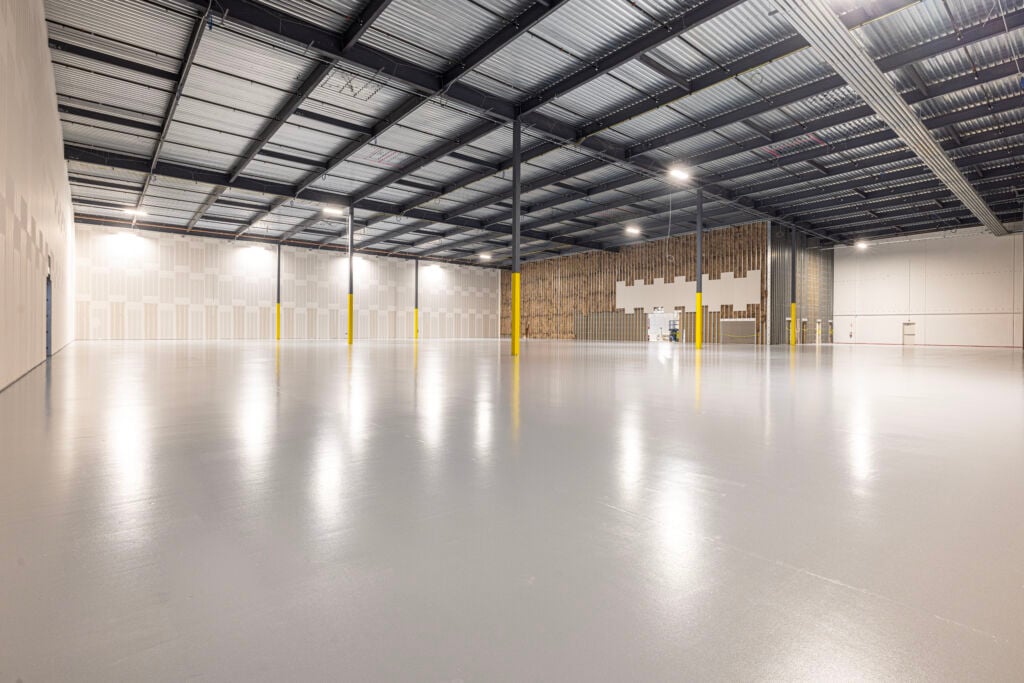
ESD Epoxy Flooring Case Study: 34,000 SF Dallas, TX