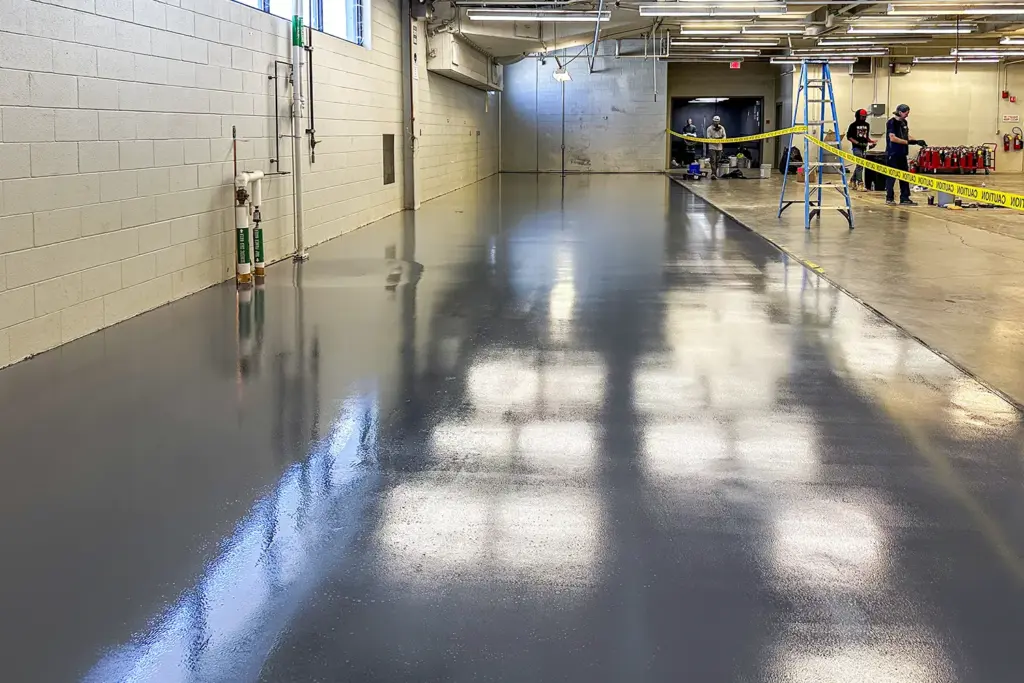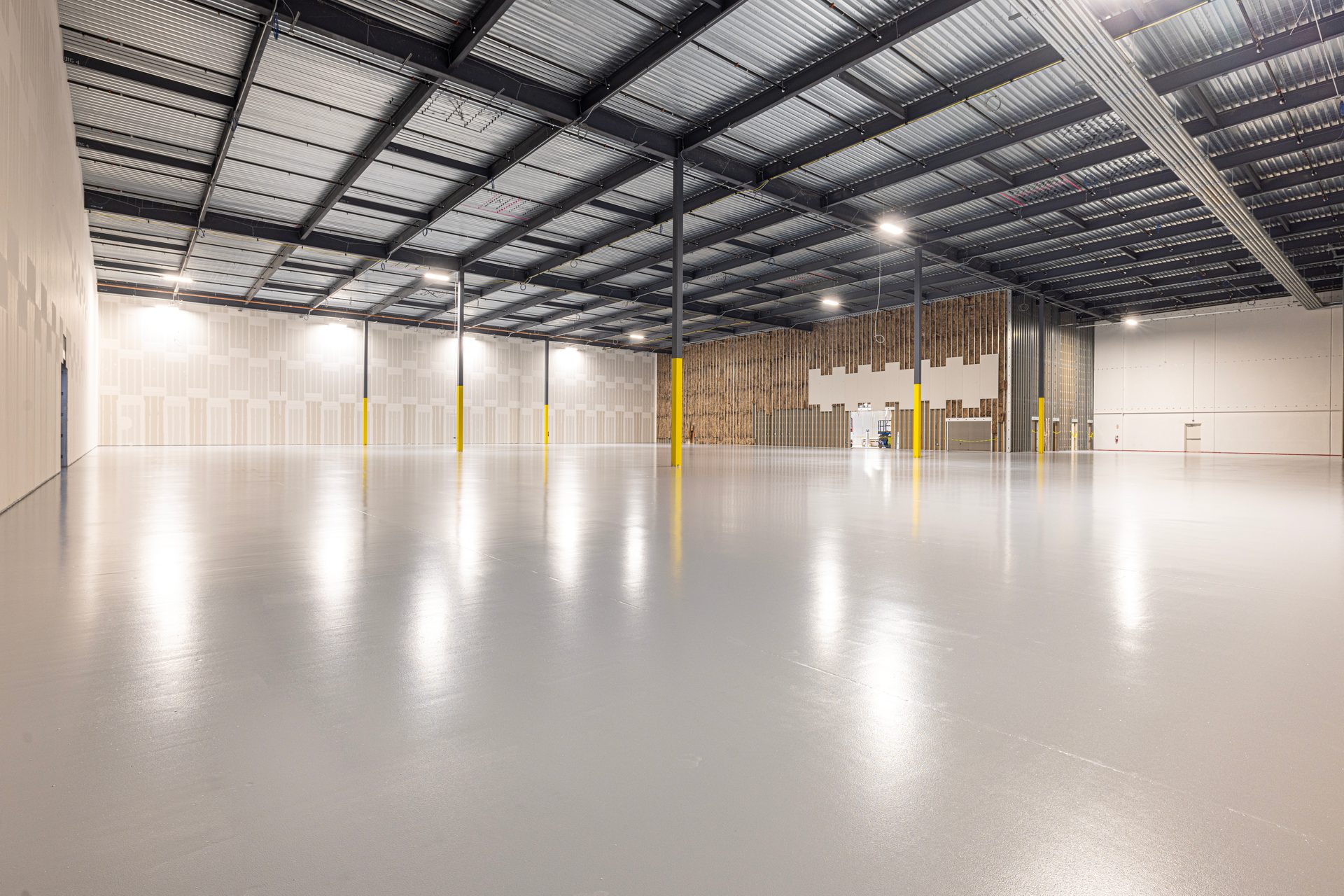
- Systems: ESD flooring for data centers — static dissipative epoxy as data center ESD floors and grounded planes beneath raised access floor
- Facilities: colocation, hyperscale, enterprise server rooms, network rooms, white space
- Execution: rolling-zone and shutdown-window phasing; hot aisle / cold aisle containment; MSA multi-site rollouts
- Compliance:
- – ANSI/ESD S20.20 program standard
- – STM7.1 resistance testing
- – STM97.1 system resistance + STM97.2 body voltage testing
- Resistance: static dissipative 106 to 109 ohms; conductive below 1.0 × 10⁶ ohms
- Pricing: $3.34-13.55/sqft installed depending on system type, thickness, and substrate condition
- Installation: in-house W-2 crews provide national service coverage; est. 1999
Phone: +1 (844) 687-1961
Uptime is the number a data center ESD flooring project answers to. In a live facility the cost of static damage is not a scrapped part; it is an outage. A discharge into a running server, switch, or storage controller takes revenue-bearing infrastructure offline. The SLA penalty outlasts the hardware repair. Craftsman Concrete Floors installs static dissipative ESD epoxy in white space, server halls, and network rooms nationwide, sequenced so the facility never goes dark. Each floor is grounded through a conductive primer and copper straps terminated at building steel, then verified after a 24-72 hour cure to ANSI/ESD S20.20 with STM7.1 resistance readings, STM97.1 system resistance, and STM97.2 body voltage data, and returned to service zone by zone around running racks.
Server room ESD flooring and colocation ESD flooring specs share one selection, the static dissipative band at 1.0×10⁶ to 1.0×10⁹ Ω per STM7.1, the same working class electronics assembly uses. The conductive vs dissipative page covers band selection. The manufacturing-side story (SMT lines, wafer handling, latent component defects) belongs to the electronics manufacturing page. Pricing runs $3.34-13.55/sqft installed depending on system type, thickness, and substrate condition, derived from real bid data on 250+ commercial ESD projects.
Our Clients




















Static Risk in Live White Space
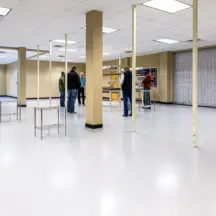
A data hall concentrates the industry’s least replaceable electronics and keeps people moving among them around the clock. Technicians pulling drives and riggers rolling racks build charge on every pass. So does the cleaning crew crossing a cold aisle. Hyperscale ESD flooring programs treat the floor as facility infrastructure, reviewed alongside power and cooling paths, because it is the one static control that covers the entire hall rather than a single cabinet position.
Protecting Revenue-Bearing Infrastructure
An outage is the loss model. It prices differently than a damaged component. A discharge into a top-of-rack switch interrupts service across every customer that hardware carries, which is why colocation contracts and enterprise change management both scrutinize static control. Data center static control flooring closes the personnel path: a dissipative surface bleeds the charge a technician builds walking the hall before it reaches the first chassis they touch. The floor works continuously, permanent static control with no behavior dependence — no strap to forget, no mat boundary to step past.
Colocation, Hyperscale, and Enterprise Rooms
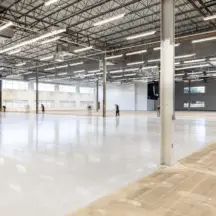
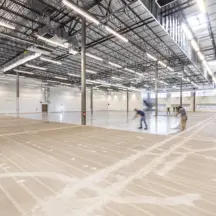
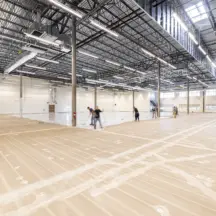
Colocation ESD flooring carries a contractual angle the other room types lack, since a tenant’s SLA claims land on the operator. Hyperscale halls run the same spec at scale. A Houston 67,000 sq ft hyperscale-grade data hall received full-hall static control on a phased sequence, and enterprise server rooms follow the identical band at smaller footprints, often inside a single shutdown window. In every room type the specification reads the same, 1.0×10⁶ to 1.0×10⁹ Ω verified per STM7.1, and the only element that changes between a small network room and a full hall is the sequencing plan.
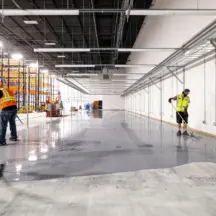
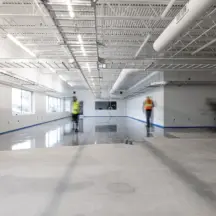
ESD Flooring Gallery
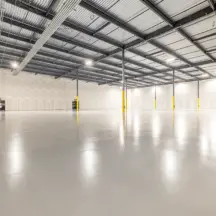
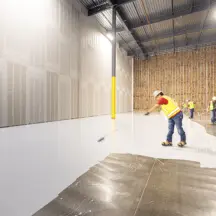
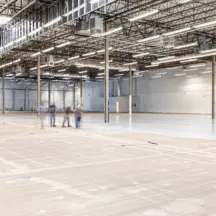
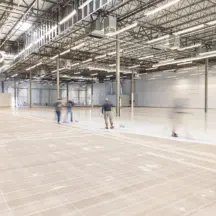
Request a Proposal
Grounding and the Raised Access Floor Question
The Floor Under the Raised Floor
Raised access floor and poured ESD epoxy are separate layers. They usually coexist in the same hall. On its own, raised access floor ESD performance is limited by panel-to-panel seams that break ground-path continuity, so in many data halls the pedestal-and-panel system rides above a poured ESD floor serving as the grounded plane beneath it. That keeps the subfloor plenum, where cabling and airflow live, inside the static-control envelope. Specifying both layers together is a coordination task Craftsman handles routinely with the access-floor contractor.
Grounding a Hall That Never Powers Down
The rated band depends on the ground path. A dissipative topcoat reaches it only over a complete one. The system is a conductive primer or ground plane under the topcoat, copper straps on manufacturer spacing, and terminations at building steel, all verified with resistance readings after the 24-72 hour cure window. In a live hall the strap terminations are planned around energized equipment and coordinated with the facility’s electrical contractor. Skipped or thinned primer is the field failure Craftsman encounters most on re-certification work, which is why the closeout package documents the full path rather than surface readings alone.
Zero-Downtime Execution
Rolling Zones and Shutdown Windows
Phased zone-by-zone install around live operations. 24-72 hour cure-and-test window before resistance verification per STM7.1. In a data hall that sequencing runs two ways. Rolling zones move through an operating facility aisle block by aisle block, with containment maintaining hot aisle and cold aisle separation so airflow to running racks never breaks. Shutdown windows compress a full room into a scheduled maintenance outage, with cure and verification timed to finish before re-energization. Both plans are built against the facility’s change-management calendar.
Multi-Site Rollouts Under MSA
Operators standardizing static control across a portfolio run this work under a master service agreement rather than site-by-site bids. One MSA fixes the specification, the verification protocol, and the closeout format, then in-house W-2 crews provide national service coverage against the rollout schedule. Lead time runs 1-3 weeks from contract execution, driven by material availability. Craftsman is an Authorized SW + PIP + Sika installer, so a portfolio spec can standardize on Sherwin-Williams, PIP, or Sikafloor ESD systems and hold one product across every site. W-2 installers, not 1099 day-labor. Trained, insured, and accountable to you.
ESD Flooring Knowledge Center
Resource links
Where ESD Flooring Is Used
Compliance Requirements & Testing
Systems & Selection
Project Planning & Delivery
Maintenance & Troubleshooting
Manufacturer ESD Flooring Systems
Frequently Asked Questions
$3.34-13.55/sqft installed depending on system type, thickness, and substrate condition, derived from real bid data on 250+ commercial ESD projects. Data halls typically spec a dissipative topcoat over a conductive ground-plane primer, and phased live-facility work prices above open-slab new construction because of containment and sequencing. Large halls gain per-square-foot efficiency. Small network rooms sit at the top of the band.
Yes. Rolling-zone sequencing keeps the hall live: each zone is isolated with containment that preserves hot aisle and cold aisle airflow, coated, cured 24-72 hours, verified per STM7.1, and returned to service before the next zone opens. Facilities that prefer a scheduled outage compress the work into a shutdown window with verification timed before re-energization.
No. A raised access floor is a different layer, and its panel-to-panel seams make it an inconsistent ESD surface with a discontinuous ground path. The poured ESD epoxy beneath it serves as the grounded plane, keeping the cable-and-airflow plenum inside the static-control envelope. Many data halls run both layers together, coordinated between Craftsman and the access-floor contractor.
Server halls and network rooms use static dissipative floors. The band is 1.0×10⁶ to 1.0×10⁹ Ω per STM7.1, the working class specified across white space and support corridors. Conductive floors below 1.0×10⁶ Ω are specified for flammable-atmosphere and munitions environments. Data halls have no requirement for them. The full selection logic between the two bands is on the conductive vs dissipative page.
After the 24-72 hour cure window each zone gets STM7.1 floor-material resistance readings, STM97.1 system resistance measured with footwear and a person, and STM97.2 body voltage generation held under 100 volts. The results and grounding documentation go into an ANSI/ESD S20.20 closeout package for the facility’s compliance file. Re-energization and rack moves wait on the verified readings.
Yes. In-house W-2 crews provide national service coverage, and portfolio operators run standardized rollouts under a master service agreement with one specification and one closeout format across every site. Craftsman has installed industrial flooring since 1999 and provides national service coverage through directly employed crews.
Case Studies
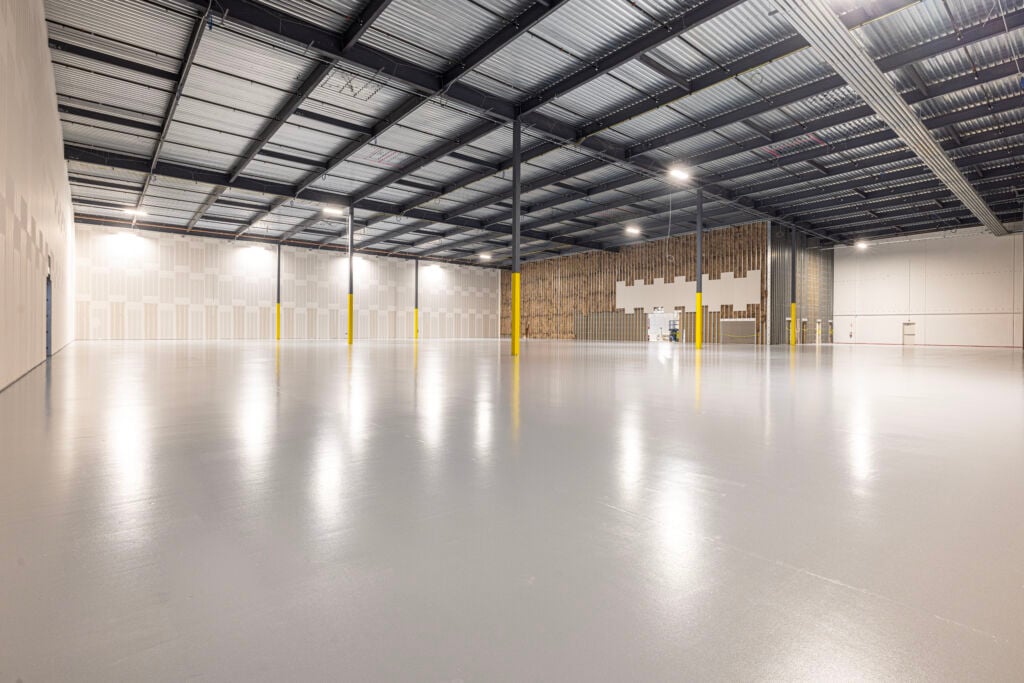
ESD Epoxy Flooring Case Study: 34,000 SF Dallas, TX
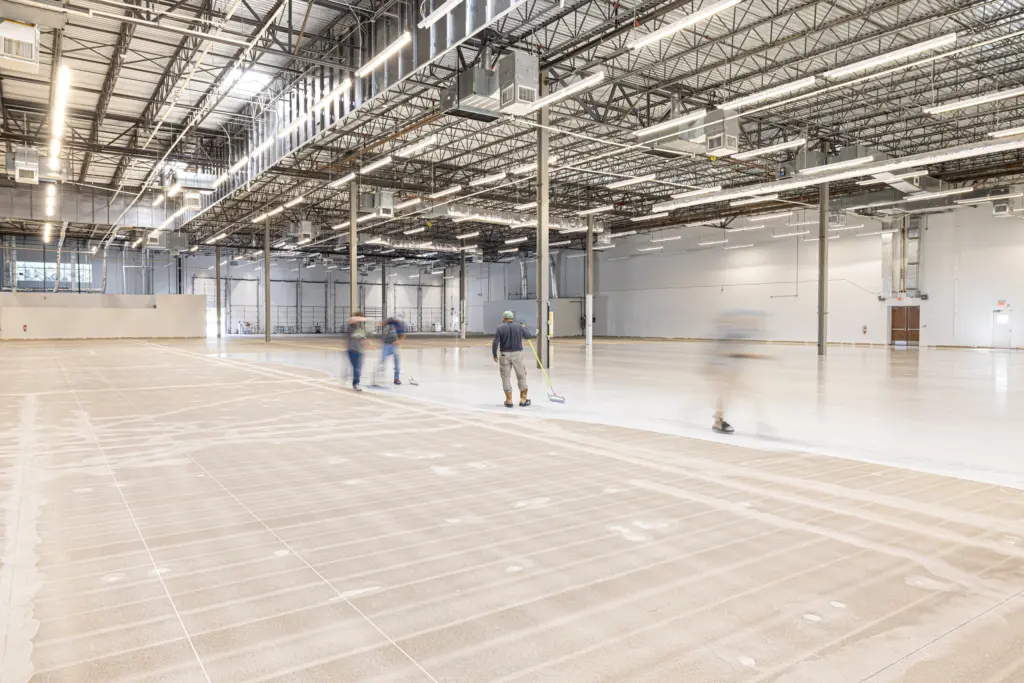
ESD Epoxy Flooring Case Study: 67,000 SF | Houston, TX