What can we help you with?
Technical flooring, delivered directly
- ESD flooring, urethane cement, terrazzo, and polished concrete
- In-house W-2 installation crews and experienced field leadership
- National service coverage with project-specific staffing plans
- Testing, documentation, and defined project closeout
- Dedicated support for corporate procurement and multi-site contracting
Phone: +1 (844) 687-1961
Our Clients




















Where Humidification Falls Short
Increasing air humidity is not a suitable way to dissipate charge from a dust cloud, according to TRGS 727, Germany’s technical rule on avoiding ignition hazards from electrostatic charging. The distinction appears in a note to section 6.1.1 of the January 2016 edition, corrected July 2016.
Dust clouds and deposited material behave differently
- Source
- TRGS 727
TRGS 727 notes that air is a poor conductor of electricity. Raising its humidity is unsuitable as a measure for removing charge from a dust cloud.
High humidity can, however, lower the specific resistance of many bulk materials, except most polymers. This can accelerate charge dissipation after the material is deposited. That effect does not make humidification a suitable dust-cloud control.
Other cases where humidification is unsuitable
- Section
- 6.1.1
- Examples
- Dilute-phase conveying, warm products
Section 6.1.1 also identifies humidification as unsuitable for dissipating charge in strongly charge-generating processes, such as dilute-phase conveying, and for warm products.
For the broader comparison, see humidification and ionization in explosives and hazardous areas.
Frequently Asked Questions
TRGS 727 says increasing air humidity is not a suitable measure for dissipating charge from a dust cloud. Its observation about faster charge dissipation in some deposited bulk materials does not change that conclusion.
TRGS 727 notes that air is a poor conductor of electricity. High humidity can lower the specific resistance of many bulk materials, except most polymers, and accelerate charge dissipation after deposition. The rule distinguishes this material effect from dissipating charge in a dust cloud.
Blog

Craftsman Publishes 2026–2027 ESD Flooring Technical Guide
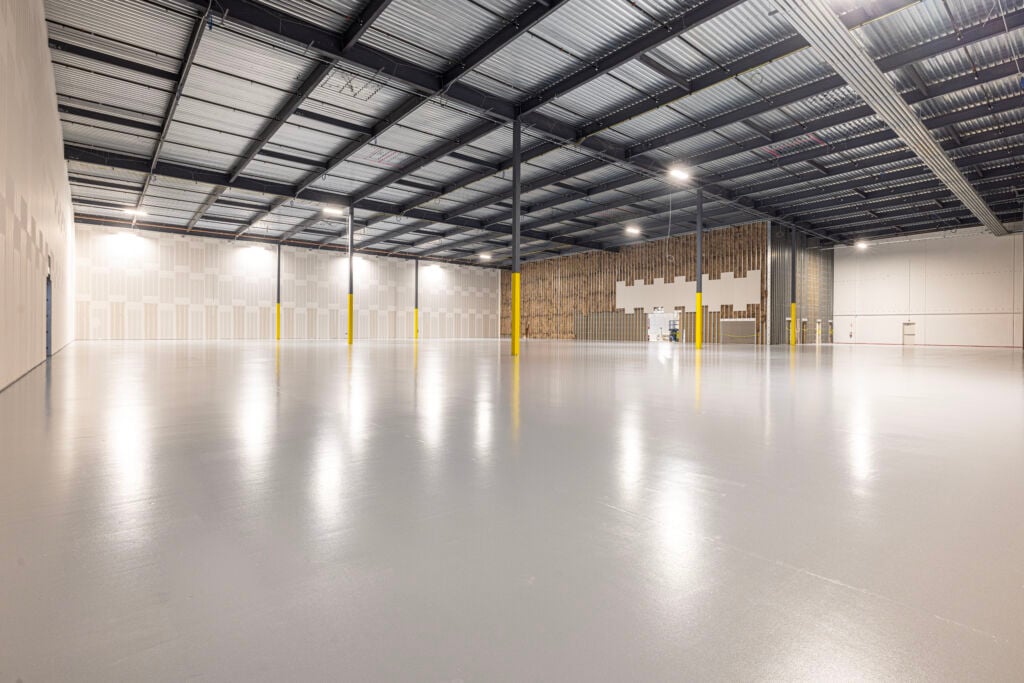
ESD Epoxy Flooring Case Study: 34,000 SF Dallas, TX