What can we help you with?
Technical flooring, delivered directly
- ESD flooring, urethane cement, terrazzo, and polished concrete
- In-house W-2 installation crews and experienced field leadership
- National service coverage with project-specific staffing plans
- Testing, documentation, and defined project closeout
- Dedicated support for corporate procurement and multi-site contracting
Phone: +1 (844) 687-1961
Check hardness before the mockup and production work
Surface hardness helps determine which diamond tools to use and whether the slab meets the project’s polishing requirements. Where ACI SPEC-310.1-20 applies, slab-surface Mohs hardness must be greater than 4 before polishing. A reading of exactly 4 does not meet that criterion.
Hardness also affects the result. The Concrete Polishing Council (CPC) warns that polishing a weak surface can lead to more aggregate particles coming loose during polishing, lower gloss and reduced service life. Densifier treatment may improve hardness, but it does not guarantee that a weak slab will meet the specification.
Our existing concrete assessment guide covers hardness alongside repairs, contamination and the other pre-polishing checks.
ACI SPEC-310.1-20 sets out three related provisions:
| Stage | ACI provision |
|---|---|
| Before mockup installation | Verify surface hardness with a Mohs hardness testing kit (§1.8.3.3). |
| Before polishing | Confirm that the Owner’s testing agency results comply with the specification (§3.1.1.1(e)). |
| Pre-polishing criterion | Confirm slab-surface Mohs hardness greater than 4 (§3.1.4.1). |
These requirements apply when ACI SPEC-310.1-20 is incorporated into the Contract Documents, with project-specific requirements governing conflicts. Our ACI specification guide explains the specification’s role.
Select tooling and address soft surfaces
A guide specification bases diamond tool selection on the grinder and concrete hardness, but a Mohs result does not establish complete readiness for polishing. For a weak surface, CPC lists possible causes and identifies densifier as a possible treatment with limits. CPC also says portland-limestone cement slabs may need additional densifier treatment or time to reach acceptable hardness.
Use hardness to select diamond tooling
The Husqvarna SUPERFLOOR guide specification bases selection of the metal-bonded diamond tool series on the chosen grinder and concrete hardness. It identifies Mohs testing as one way to assess the concrete and lists an approved measuring device, such as a Mohs scratch kit, for field testing.
A Mohs result concerns surface hardness. It does not establish compressive strength or complete readiness for polishing.
Investigate a weak surface
CPC Position Statement #7 identifies these possible causes:
- A high water-cement ratio.
- Water added during finishing.
- Bleed water finished into the surface.
- Freezing-and-thawing exposure.
- Carbonation from unvented winter heaters.
- Inadequate curing time.
CPC identifies densifier as a possible treatment. It explains that densifiers react with calcium hydroxide near the surface, so carbonation or pozzolanic reactions can limit their effectiveness. The surface may still fail to meet the hardness specification after treatment, requiring reconsideration of the specification and expected finish.
Our densifier application guide covers application and readiness conditions.
Portland-limestone cement and surface hardness
CPC Position Statement #8 addresses portland-limestone cement (PLC), also called Type IL. It says additional densifier treatments may be required where a PLC slab does not achieve Mohs hardness greater than 4.5. That is separate from ACI’s greater-than-4 criterion.
CPC also says PLC mixtures may need additional time to reach acceptable hardness, potentially 45 days or more depending on the mix, temperatures, placement, finishing and curing. This is not a fixed waiting period. Our polishing-readiness guide compares age, strength and hardness checks.
Project Gallery




Frequently Asked Questions
Where ACI SPEC-310.1-20 applies, slab-surface Mohs hardness must be greater than 4. Exactly 4 does not satisfy the criterion. Project-specific Contract Documents govern any conflict with the specification.
Craftsman checks surface hardness to help select diamond tooling and assess whether the concrete meets the project’s polishing requirements. If the surface is weak, we evaluate preparation and treatment options before proceeding. We consider hardness alongside the slab’s condition and the approved mockup; a hardness reading alone does not establish readiness.
No. CPC identifies densifier as a possible treatment, but carbonation or pozzolanic reactions can limit its effectiveness. A treated surface may still fail to meet the hardness specification.
No. CPC says PLC mixtures may need 45 days or more to develop acceptable hardness, depending on the mixture and site conditions. That is conditional guidance, not a universal start date.
Polished Concrete Knowledge Center
Resource links
Performance & Safety
Design & Aesthetics
Installation Guidance
Economics & Sustainability
Maintenance & Aftercare
Comparative & Decision-Making
Blog
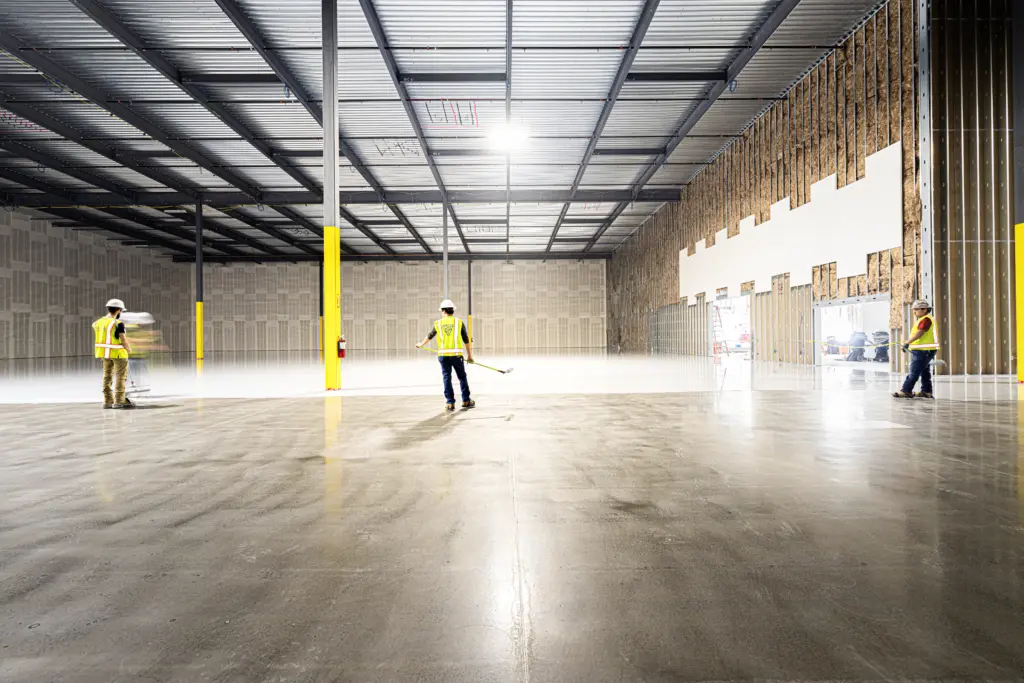
Craftsman Publishes 2026–2027 ESD Flooring Technical Guide
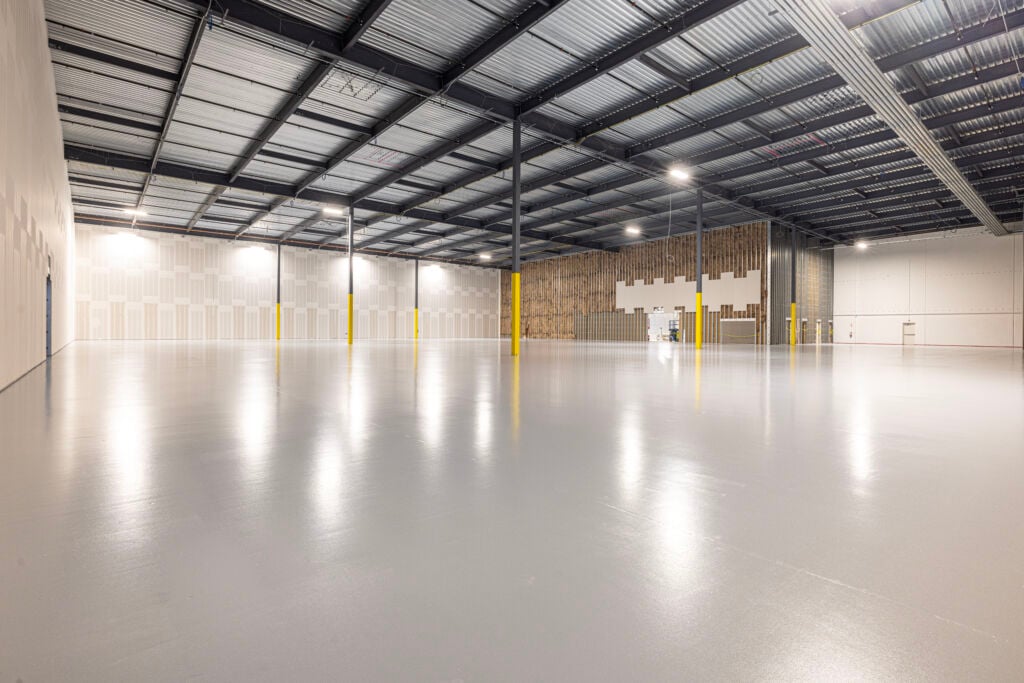
ESD Epoxy Flooring Case Study: 34,000 SF Dallas, TX