What can we help you with?
Technical flooring, delivered directly
- ESD flooring, urethane cement, terrazzo, and polished concrete
- In-house W-2 installation crews and experienced field leadership
- National service coverage with project-specific staffing plans
- Testing, documentation, and defined project closeout
- Dedicated support for corporate procurement and multi-site contracting
Phone: +1 (844) 687-1961
Slip Resistance
Polished concrete can become slippery when water, oil, grease or other traction-reducing contaminants are present. A glossy appearance alone does not tell you how much friction a floor provides. For commercial and industrial facilities, evaluate the finished surface under the conditions it will encounter.
Craftsman Concrete coordinates specified slip-resistance testing with the project team. We establish the areas to test, the surface conditions and the treatment stage so the results address the project’s intended use.
Understand and manage traction conditions
Surface condition, contaminants, footwear, traffic and maintenance affect slip resistance, and gloss describes reflected light rather than pedestrian friction. Managing traction starts by identifying where water or other contaminants reach the floor and addressing their source. It also involves maintenance suited to the installed treatment, planning for entrances and evaluating proposed treatments before application.
What affects polished concrete slip resistance?
Surface condition, contaminants, footwear, traffic and maintenance all matter. A clean, dry floor and the same floor exposed to water or grease present different conditions; a result from one condition does not establish performance in the other.
Gloss and image clarity describe reflected light, not pedestrian friction.
Manage the conditions that affect traction
Start by identifying where water or other contaminants reach the floor and addressing their source. Keep cleaning and maintenance suited to the installed treatment and the facility’s use.
- Maintain the surface. Cleaning, wear and contamination can change friction over time. An installation test does not describe the floor indefinitely.
- Plan for entrances. Walk-off mats may be needed where water or contaminants would otherwise be tracked into areas intended to remain dry.
- Evaluate proposed treatments. Identify the product, intended use and testing requirements before application. An untreated-floor result does not establish the performance of the treated surface.
Adding a treatment without understanding the condition can leave the underlying problem unresolved.
Plan testing around the intended use
Will the area normally be dry or exposed to water?
The test condition needs to address the intended use
Are oil, grease or other contaminants expected?
A water-based test does not establish performance under every contaminant
Is the surface level or sloped?
Application criteria and equipment limitations differ
Are we evaluating a cleaned floor or its current condition?
Those tests answer different questions
Has a coating or stain guard been applied?
The tested surface and treatment stage need to be identified
Do traffic and maintenance differ across the facility?
Test locations need to reflect the conditions being evaluated
Understand what DCOF measures
Dynamic coefficient of friction, or DCOF, describes friction between a moving testfoot and the flooring under controlled test conditions.
ANSI A326.3-2021 provides a method for evaluating hard-surface flooring in the laboratory and in the field. Its results describe the interaction between the specified testfoot and surface. They do not predict whether a particular person will slip.
The numerical references below concern the 2021 edition. Identify the edition adopted for the project when establishing testing requirements.
What does a DCOF value of 0.42 mean?
Under ANSI A326.3-2021, the wet DCOF criterion of at least 0.42 applies, unless the manufacturer declares otherwise, to level interior flooring expected to be walked on when wet with water. It is tied to the BOT 3000E, specified SBR testfoot and specified sodium lauryl sulfate solution.
The value is not a universal threshold for ramps, exterior areas, oil contamination or every condition of use. Meeting it does not establish suitability for every project.
Our 0.42 DCOF guide explains the criterion, equipment boundaries and project considerations.
Define test conditions and document results
Testing is planned around the floor condition, cleaned or as found, the test locations Craftsman coordinates with the project team, and the treatment present on the surface. When friction testing is included in our scope, Craftsman provides the test report, identifying those areas, conditions, treatment and equipment, in the closeout documentation.
Choose the floor condition and test locations
A cleaned-floor test evaluates the surface after preparation. A prevailing-condition test evaluates the floor as found, subject to the method’s preparation requirements.
Under ANSI A326.3-2021, obvious solid contaminants are removed and documented during prevailing-condition testing even though the floor is not otherwise pre-cleaned. Our cleaning-before-slip-testing guide explains that distinction.
Craftsman coordinates the testing areas with the project team. Traffic, surface variation and exposure to contaminants help inform the plan. Our DCOF test-location guide explains the sampling requirements.
The instrument and testfoot must also be prepared and verified for the selected method. Our equipment-verification guide covers those checks.
Identify the treatment present during testing
Document the coating, stain guard or other treatment on the floor when testing. A result taken before treatment describes that earlier surface.
ANSI A326.3-2021 includes separate provisions for products meeting its definition of a coating. Product category alone does not establish whether a particular densifier or guard qualifies.
Our testing-after-coating guide explains the classification and testing requirements.
Keep the results in the closeout documentation
Craftsman provides the test report as part of the project’s closeout documentation when friction testing is included in our scope.
The report identifies the tested areas, surface conditions, treatment and equipment, with individual readings and averages. Photographs or descriptions should allow those areas to be located again.
Our DCOF reporting guide provides the reporting checklist.
Project Gallery




Frequently Asked Questions
Yes. When included in our scope, Craftsman coordinates testing with the project team and provides the report in the closeout documentation.
Yes. Water, oil, grease and other traction-reducing contaminants can create slippery conditions. Evaluate the finished floor for its intended use and expected contaminants, and plan maintenance accordingly. A dry-floor result does not establish wet-floor performance.
No. Gloss describes reflected appearance, not friction. Neither a glossy nor a matte finish alone establishes slip resistance.
No. ANSI A326.3-2021 ties that wet criterion to specified equipment and level interior flooring expected to be walked on when wet with water, unless the manufacturer declares otherwise. It does not establish suitability for every project or predict whether a person will slip.
Choose the condition according to the testing objective. Testing after cleaning evaluates a prepared surface; prevailing-condition testing evaluates the floor as found, with obvious solid contaminants removed and documented. Record which approach was used.
Polished Concrete Knowledge Center
Resource links
Performance & Safety
Design & Aesthetics
Installation Guidance
Economics & Sustainability
Maintenance & Aftercare
Comparative & Decision-Making
Blog
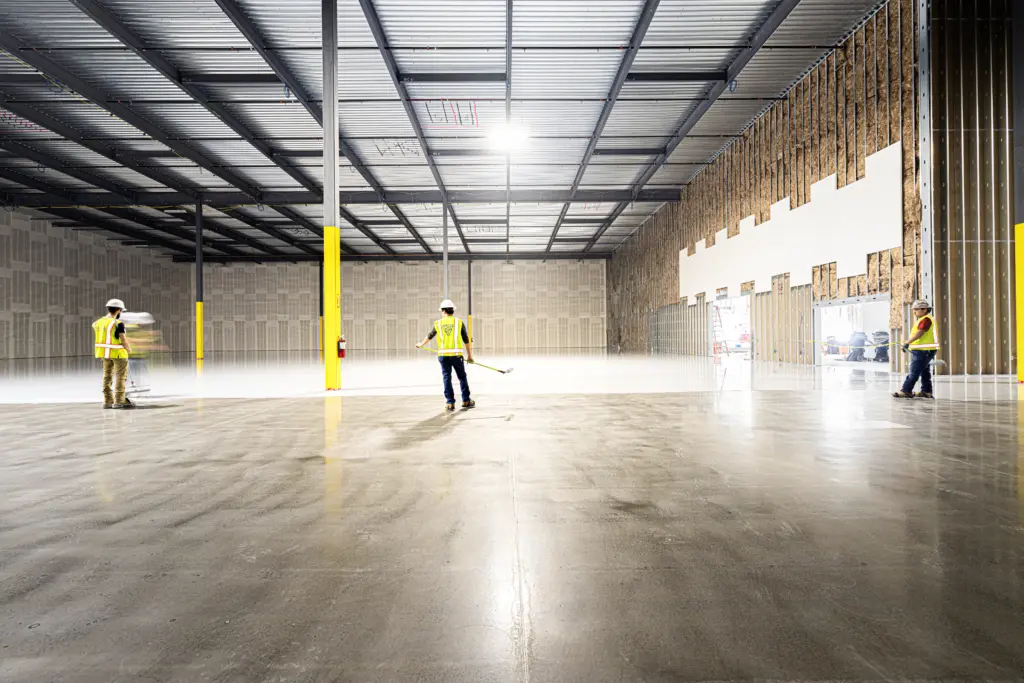
Craftsman Publishes 2026–2027 ESD Flooring Technical Guide
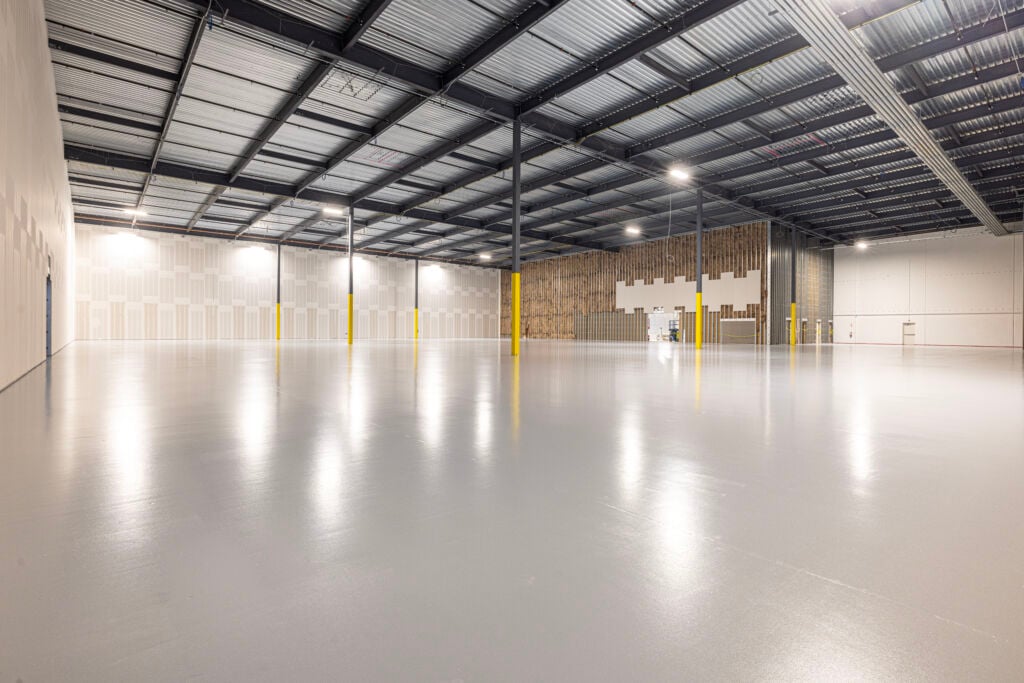
ESD Epoxy Flooring Case Study: 34,000 SF Dallas, TX