What can we help you with?
Technical flooring, delivered directly
- ESD flooring, urethane cement, terrazzo, and polished concrete
- In-house W-2 installation crews and experienced field leadership
- National service coverage with project-specific staffing plans
- Testing, documentation, and defined project closeout
- Dedicated support for corporate procurement and multi-site contracting
Phone: +1 (844) 687-1961
Residential Polished Concrete
Craftsman Concrete installs polished concrete floors for selected residential projects. We are a commercial flooring contractor, bringing our installation crews and builder coordination to new homes and renovations.
Polished concrete turns the concrete slab itself into the finished floor. Its aggregate, color, placement and previous repairs all influence the appearance. We work with you and your builder to select the finish, assess the slab and establish an approved sample before proceeding with the polishing work.
If you’re still deciding whether polished concrete suits your home, our pros and cons guide covers comfort, maintenance and appearance considerations.
Choosing the appearance
We help you select the aggregate exposure and sheen, then establish the finish with an on-site sample. Our styles of polished concrete floors guide shows the appearance options.
A sample on your slab
Craftsman prepares an on-site sample to establish the aggregate exposure and finish for approval. This lets you see how your concrete responds to the work.
The approved sample becomes the appearance reference for the installation. Concrete can still vary across the house, and repaired areas or separate pours may remain visible.
Polished concrete in a new home
Involve Craftsman while the concrete work is being planned. The slab will become the finished floor, so its placement, finishing, joints and protection need to be coordinated with the intended appearance.
We review the project with your builder and concrete contractor, establish the finish through the approved sample and sequence the polishing with the other trades. Our builder installation guide covers the technical planning requirements.
Protection starts before polishing. Construction stains, damage and repairs can affect the final appearance, so the slab needs to be treated as a future finished surface throughout the build.
Polishing an existing concrete floor
Existing concrete can often be polished, but we need to assess the slab before confirming the finish and preparation.
Previous floor coverings, adhesive residue, stains, patches and replaced sections can affect the result. Removing a covering does not guarantee uniform concrete underneath it.
Craftsman reviews those conditions and identifies the repairs and preparation needed. Where appearance is uncertain, an on-site sample helps establish what the existing slab can produce.
Cracks and repairs
Cracks and damaged areas can be filled or repaired, but the work may remain visible after polishing. We discuss those areas before installation so the repair approach is part of the approved scope.
If your design requires tighter control over the aggregate and background color, custom poured terrazzo may be a better fit.
Protecting the floor during construction
Craftsman coordinates and installs breathable floor protection with your builder. We do not use plastic coverings or apply tape directly to polished concrete.
Trade access, protection maintenance and removal are coordinated as part of the construction sequence.
Caring for polished concrete at home
Remove tracked-in grit regularly and clean spills promptly. Use the cleaning products and methods specified for your installed floor; a neutral-pH label alone does not establish compatibility.
Craftsman provides maintenance instructions as part of the closeout documentation. Those instructions identify how to care for the finish and stain guard installed in your home.
If high-traffic areas become dull or begin showing wear, contact Craftsman to discuss cleaning, maintenance or refinishing.
Request a residential polishing estimate
Contact Craftsman Concrete with the project location, approximate floor area and any available plans or photographs. Let us know whether it is a new build or an existing floor.
We review the slab condition, desired appearance and preparation before finalizing the work and price. Our polished concrete cost guide explains the main pricing factors.
For other flooring options, see our residential concrete floors.
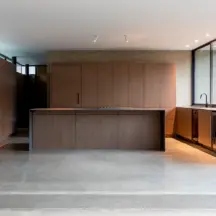
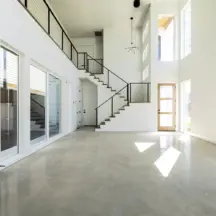
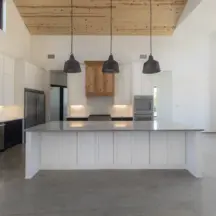
Residential Gallery





Frequently Asked Questions
Often, yes. Craftsman assesses the concrete, previous coverings, repairs and contamination before recommending a finish. An on-site sample can help establish the appearance where the slab’s condition is uncertain.
You can select the intended exposure, but the slab determines what is achievable. Grinding reveals the aggregate already in the concrete. We use an on-site sample to establish the appearance before proceeding.
The sample establishes the finish we are working toward. Variation in the slab, separate pours and repaired sections can still affect the completed floor.
Before the concrete work is finalized. Early coordination allows your builder, concrete contractor and Craftsman to address slab requirements, joints, appearance and protection together.
Repairs can reduce their visual impact, but you should not expect every repair to disappear. We review the repair approach and expected appearance with you before the polishing work.
Remove grit regularly, clean spills promptly and follow the cleaning instructions provided by Craftsman in your closeout documentation. Check with us before using a different cleaner or applying a new treatment.
Case Studies

Craftsman Publishes 2026–2027 ESD Flooring Technical Guide
ESD Epoxy Flooring Case Study: 34,000 SF Dallas, TX