- Systems Installed:
- – conductive anti-static epoxy flooring
- – static dissipative anti-static epoxy flooring
- – ESD urethane and ESD polyurethane topcoat systems
- – conductive vinyl tile
- – conductive concrete topping
- Resistance Ranges:
- – conductive: surface resistance less than 1.0 × 10⁶ ohms per ANSI/ESD STM7.1 — munitions, energetics, flammable solvent areas
- – static dissipative: surface resistance 1.0 × 10⁶ to 1.0 × 10⁹ ohms per ANSI/ESD STM7.1 — electronics manufacturing, data centers, labs, cleanrooms
- ANSI/ESD S20.20 Compliance: body voltage generation under 100V per ANSI/ESD S20.20 verified by the STM97.2 walking voltage test; surface resistance values logged and mapped per ANSI/ESD STM7.1; system resistance with grounded person verified per ANSI/ESD STM97.1; IEC 61340-5-1 referenced for international specifications
- Test Methods on Every Installation:
- – STM7.1 point-to-point and point-to-ground surface resistance, gridded across the floor
- – STM97.1 system resistance with grounded person, using facility footwear
- – STM97.2 body voltage generation walking test
- Grounding: copper grounding strips installed beneath the wear layer and tied directly to the building ground bus; grid pattern mapped to room geometry for consistent resistance across the installation; continuity verified and documented before topcoat application
- System Build-Up: steel shot blast or diamond grind to CSP 3-5; conductive or dissipative primer; copper grounding strips on primed substrate; pigmented epoxy body coat formulated to target resistance range; static dissipative polyurethane topcoat with GlossGrip slip-resistance additive available
- Phased Installation: phase boundaries planned around active production schedules and line shutdowns; manufacturing facilities do not have to shut down across the whole footprint at once
- Timeline: 5-10 working days per phase for projects between 5,000 and 20,000 square feet; larger or more complex installations extend proportionally
- Documentation Package: test logs (STM7.1, STM97.1, STM97.2 results), resistance maps showing point-by-point readings across the floor, grounding continuity verification, product data sheets, and ANSI/ESD S20.20 compliance summary — audit-ready from day one
- Applications:
- – electronics and semiconductor manufacturing
- – data centers and server rooms
- – defense and aerospace assembly
- – pharmaceutical cleanrooms and labs
- – munitions, energetics, and battery facilities
- Crew: in-house W-2 crews mobilize nationwide — trained on ESD-specific surface prep, grounding integration, and post-install resistance testing; insured under Craftsman policy; operating since 1999
- Pricing: $4-$14/sqft installed; larger projects of 20,000 square feet or more typically fall $4-$6/sqft; smaller projects under 5,000 square feet range $7-$14/sqft due to fixed mobilization, grounding, and testing costs
Phone: +1 (844) 687-1961
Anti-static flooring is a permanent installed coating or topping system that controls electrostatic discharge by routing static charges from the floor surface through a grounding connection to building ground. The term “anti-static flooring” is the buyer-facing umbrella for what spec engineers classify into three resistance bands: conductive, static dissipative, and antistatic. Most facilities searching for an anti-static floor coating need one of the first two — electronics manufacturing, semiconductor, data centers, and pharmaceutical cleanrooms run static dissipative; munitions, energetics, and flammable solvent areas run conductive.
An anti-static floor is not a mat, a tile overlay, or a temporary treatment. It is a bonded coating or resinous system installed with copper grounding strips beneath the wear layer, tied directly into the facility’s electrical ground bus, and tested to ANSI/ESD S20.20 before the facility loads in equipment.
How Anti-Static Flooring Works
Standard epoxy, VCT, polished concrete, and sealed concrete are electrically insulating — surface resistance exceeds 1.0 × 10¹² ohms. Static charges generated by personnel movement and cart wheels accumulate on the floor with no path to ground. A person walking across uncoated concrete can generate 3,000 to 12,000V of body voltage depending on humidity and footwear; sensitive semiconductors can fail at discharge events as low as 20V. Anti-static flooring solves this by loading the coating with conductive fillers — carbon fiber or conductive aggregate, depending on the system — to create a controlled resistance path through the coating thickness.
Conductive Systems — Below 1.0 × 10⁶ Ohms
Conductive systems have surface resistance below 1.0 × 10⁶ ohms per ANSI/ESD STM7.1. They go into munitions, energetics, and flammable solvent areas where charges must drain quickly to prevent ignition. Body voltage generation stays under 100V per ANSI/ESD S20.20, verified by the STM97.2 walking voltage test.
Static Dissipative Systems — 10⁶ to 10⁹ Ohms
Static dissipative systems have surface resistance from 1.0 × 10⁶ to 1.0 × 10⁹ ohms per ANSI/ESD STM7.1. This is the most common specification for electronics manufacturing, semiconductor fabs, data centers, cleanrooms, and lab environments — facilities handling ESD-sensitive components where conductive performance is not required.
Body voltage on a properly installed anti-static epoxy flooring system in this resistance band stays under 100V per ANSI/ESD S20.20, the same threshold the conductive class meets through a different route.
Grounding — Required for Both Classifications
Resistance properties alone do not make a floor S20.20 compliant. Copper grounding strips are installed beneath the wear layer and tied directly to the building ground bus. Strip placement is mapped to room geometry — perimeter and grid pattern depending on floor size — so resistance readings stay inside compliance across the whole installation, not just at a few test points. Continuity is verified and documented before the topcoat goes down.
Our Clients




















Request a Proposal
Installation and Schedule
System Build-Up
Surface prep is steel shot blast or diamond grind to CSP 3-5. A conductive or dissipative primer goes down first. Copper grounding strips are laid on the primed substrate and tied to the building ground bus before the body coat. The pigmented epoxy body coat is formulated for the target resistance range. A static dissipative polyurethane topcoat — with GlossGrip slip-resistance additive where the spec calls for it — finishes the system.
Each layer is verified before the next goes down. The finished system is a permanent anti-static surface that holds its resistance values through normal cleaning and maintenance cycles, not a temporary topical treatment that wears off in months.
Timeline and Phasing
Most projects between 5,000 and 50,000 square feet finish in 4-7 working days per phase. Anti-static floor coating systems can be installed in phases around active production schedules, so a manufacturing line does not have to shut down across the whole footprint at once. Phase boundaries are planned around production line shutdowns the facility already has on its calendar.
Pricing
Anti-static flooring installation costs $4-$14/sqft installed. Larger projects of 20,000 square feet or more typically fall in the $4-$6/sqft range, where mobilization and grounding installation amortize across more area. Smaller projects under 5,000 square feet range $7-$14/sqft because fixed costs — mobilization, grounding installation, post-install testing — don’t scale down with floor area.
Cost drivers inside that range include system specification (conductive vs static dissipative, epoxy vs urethane topcoat), substrate condition and prep scope, grounding tie-in complexity, and phasing requirements around active production.
Compliance Testing and Crews
Every anti-static flooring installation Craftsman delivers is tested in place before equipment loadout. The closeout package gives an ESD coordinator what they need for the next program audit without commissioning separate third-party testing after the fact.
STM7.1 — Surface Resistance
Surface resistance is measured at a grid of points across the floor per ANSI/ESD STM7.1 — point-to-point and point-to-ground readings, with the resistance values logged and mapped. The resistance map shows readings position by position, not just at a few representative test points.
STM97.1 and STM97.2 — System and Body Voltage
System resistance with a grounded person is verified per ANSI/ESD STM97.1, which captures the floor and footwear combination the facility will actually run. Body voltage generation is measured by the STM97.2 walking voltage test to confirm readings stay below the 100V threshold ANSI/ESD S20.20 sets for a compliant program.
Closeout Documentation
The closeout package includes test logs, resistance maps, grounding continuity verification, product data sheets, and ANSI/ESD S20.20 compliance documentation. An ESD coordinator receiving the package has full resistance logs, grounding verification, and closeout documentation in hand — ready for the facility’s next compliance audit.
Craftsman Crews
Craftsman has been installing industrial flooring since 1999. In-house W-2 crews mobilize nationwide — not subcontractors hired off the local labor pool for the duration of one project. Recent ESD work includes installations for AWS, Apple, Boeing, NVIDIA, General Dynamics, Foxconn, Nokia, Walmart, and other Fortune 500 facilities.
Operations are led by a former Fortune 500 COO. The crew that shows up to the site is on Craftsman’s payroll and insured under Craftsman’s policy, trained specifically on ESD surface prep, grounding integration, and post-install resistance verification testing.
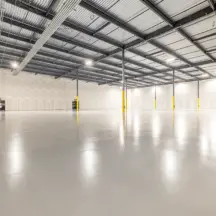
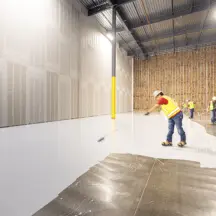
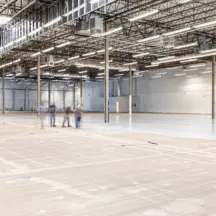
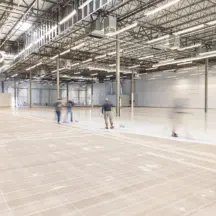
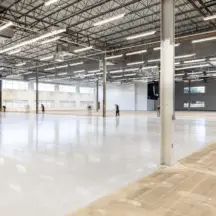
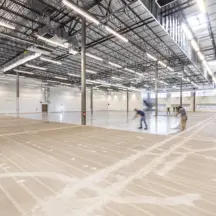
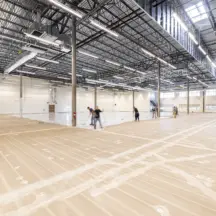
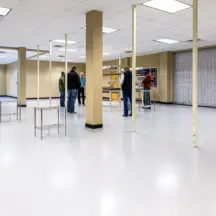
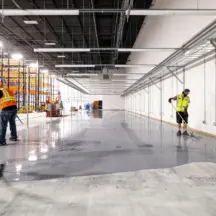
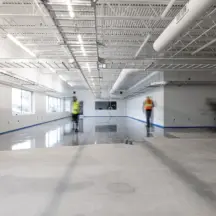
Anti-Static Flooring Gallery
ESD Flooring Knowledge Center
Resource links
Project Delivery Framework
Facility-Specific Requirements
Compliance & Testing Standards
Capabilities
ESD Systems & Selection
Installation & Maintenance
Frequently Asked Questions
Anti-static flooring is a permanent installed coating or topping system that routes electrostatic charges from the floor surface through a grounded path to building ground. The term covers three resistance classifications: conductive (less than 1.0 × 10⁶ ohms), static dissipative (1.0 × 10⁶ to 1.0 × 10⁹ ohms), and antistatic (1.0 × 10⁹ to 1.0 × 10¹² ohms). Craftsman installs conductive and static dissipative systems compliant with ANSI/ESD S20.20.
Anti-static flooring runs $4-$14/sqft installed. Larger projects of 20,000 square feet or more typically fall in the $4-$6/sqft range, where mobilization and grounding installation amortize across more area. Smaller projects under 5,000 square feet range $7-$14/sqft because fixed costs — mobilization, grounding, post-install testing — don’t scale down with floor area. Cost drivers include system specification, substrate condition, grounding complexity, and phasing requirements.
The three classifications are defined by surface resistance range measured per ANSI/ESD STM7.1. Conductive flooring has surface resistance below 1.0 × 10⁶ ohms and is specified where charges must drain quickly — munitions, energetics, and flammable solvent environments. Static dissipative flooring has surface resistance from 1.0 × 10⁶ to 1.0 × 10⁹ ohms and is the most common specification for electronics manufacturing, data centers, labs, and cleanrooms. Antistatic flooring sits at 1.0 × 10⁹ to 1.0 × 10¹² ohms — adequate for general static reduction but not sufficient for ANSI/ESD S20.20 compliance in most production environments.
Yes, when installed and tested correctly. Every Craftsman installation is verified before equipment loadout using ANSI/ESD STM7.1 for surface resistance, STM97.1 for system resistance with a grounded person, and STM97.2 for body voltage generation through the walking voltage test. Body voltage stays below the 100V threshold ANSI/ESD S20.20 sets for a compliant static-control program. The closeout package includes test logs, resistance maps, and grounding continuity documentation ready for the facility’s next compliance audit.
Most projects between 5,000 and 50,000 square feet finish in 4-7 working days per phase. Larger or more complex installations extend proportionally. Craftsman runs phased installations around active production schedules, so a manufacturing line does not have to shut down across the whole footprint at once. Return-to-traffic timing depends on the specific topcoat system.
Electronics and semiconductor manufacturing, defense and aerospace assembly, data centers and server rooms, pharmaceutical cleanrooms and labs, munitions and energetics facilities, and battery manufacturing all specify anti-static flooring under ANSI/ESD S20.20 or equivalent international standards like IEC 61340-5-1. Any facility handling ESD-sensitive components — or flammable solvents and explosive materials, on the conductive side — needs a controlled-resistance floor with a verified grounding path.
Nationwide. In-house W-2 crews mobilize nationwide. Estimating and project management are coordinated through the Dallas headquarters; the crew that arrives on site is on Craftsman’s payroll, not a local sub. Craftsman has been installing industrial flooring since 1999, with ESD project history including AWS, Apple, Boeing, NVIDIA, General Dynamics, Foxconn, and Nokia.
Case Studies
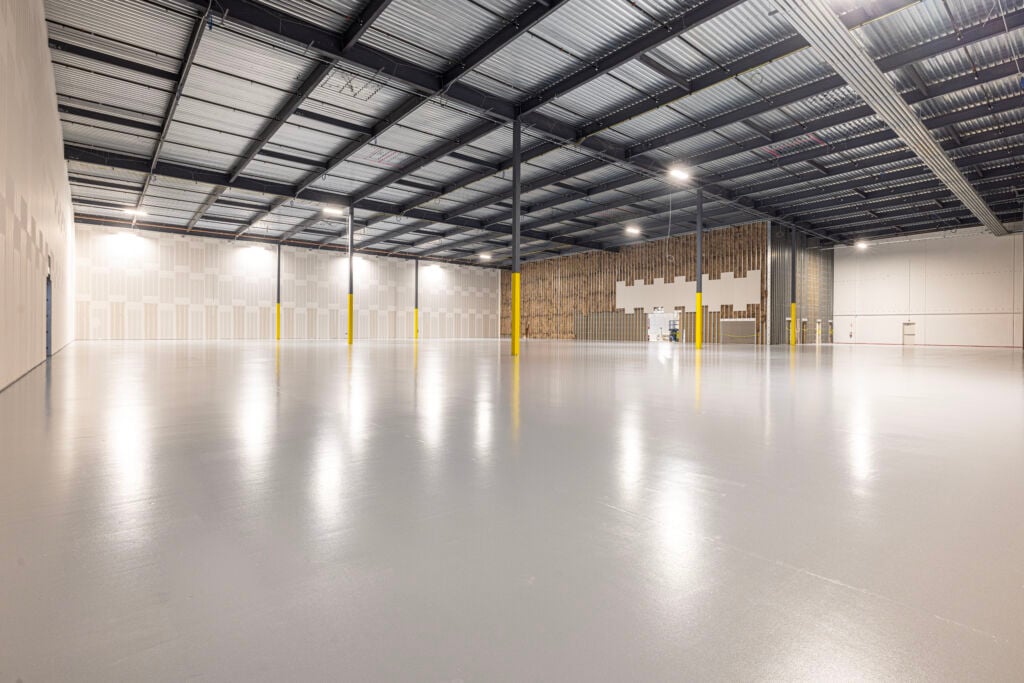
ESD Epoxy Flooring Case Study: 34,000 SF Dallas, TX
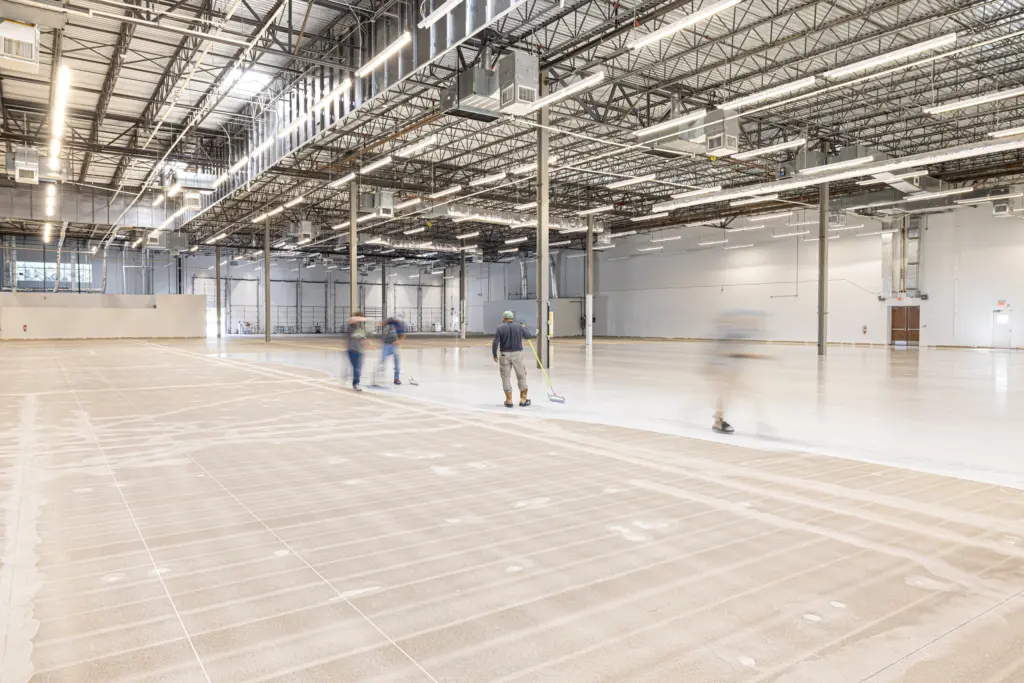
ESD Epoxy Flooring Case Study: 67,000 SF | Houston, TX