What can we help you with?
Technical flooring, delivered directly
- ESD flooring, urethane cement, terrazzo, and polished concrete
- In-house W-2 installation crews and experienced field leadership
- National service coverage with project-specific staffing plans
- Testing, documentation, and defined project closeout
- Dedicated support for corporate procurement and multi-site contracting
Phone: +1 (844) 687-1961
Tell us what the floor will be exposed to
Craftsman Concrete evaluates anticipated chemical exposure before recommending polished concrete and its protective treatment. We review the substances used in the space, their concentrations, expected contact time and cleanup procedures. Where chemical resistance is important, we coordinate a representative treated sample and review its performance with the project team before installation.
A stain guard can improve protection, but it does not make concrete resistant to every chemical. The floor needs to suit the actual exposure—not simply carry a “chemical-resistant” product claim.
We consider routine operations and cleaning alongside potential spills. The information below helps us assess the proposed floor and identify where product evidence or a sample evaluation is needed.
| Information we review | Why it matters |
|---|---|
| Chemical and concentration | Results for one substance or concentration do not establish performance against another. |
| Expected contact time | A brief spill and exposure lasting several hours can produce different results. |
| Cleanup procedures | The planned response helps define the exposure the floor needs to accommodate. |
| Concrete and protective treatment | A rating applies to the tested combination, not every slab or protective product. |
| Application and cure conditions | The sample must represent the proposed installation, and the treatment needs its required cure before evaluation. |
| Acceptable appearance and performance | The project team needs a clear basis for deciding whether the result is acceptable. |
Our polished concrete stain-guard guide explains the treatments we use and how protection fits into the installation.
Plan protection from evidence to maintenance
We review chemical-resistance evidence for the actual concrete, treatment and exposure, reading guard and substrate ratings separately. Where exposure warrants a sample evaluation, we coordinate it with the project team, establish its conditions, criteria and approver, and document them in the project’s quality plan. After installation, the installed product’s care instructions govern cleaning and spill response.
Match the evidence to the proposed floor
We review chemical-resistance information for the actual concrete, treatment and exposure involved. A useful report identifies the chemical, concentration, contact time, sample preparation and rating criteria.
The protective treatment and the concrete can respond differently. For example, AMT Laboratories’ December 2010 ASTM D1308 testing summary for PROSOCO PolishGuard rated the guard Poor and the underlying substrate Excellent after acetone exposure at each tested duration: 15 minutes, 1 hour and 4 hours. Excellent meant no adverse effects; Poor meant unsatisfactory performance.
That historical, manufacturer-sponsored result illustrates why the two ratings must be read separately. It is not a current product recommendation or a guarantee for another floor. A favorable substrate rating alone does not establish that the protective finish remained acceptable.
Establish the sample and approval process
Where anticipated chemical exposure warrants a sample evaluation, Craftsman coordinates the proposed concrete-and-treatment combination with the project team. Before evaluation, we establish:
- The chemicals and concentrations to be assessed.
- The expected exposure duration.
- The preparation, application and cure conditions.
- The appearance and performance criteria used to judge the result.
- Who reviews and approves the sample.
The sample should represent the proposed work. A different treatment, substrate or exposure may require a new assessment rather than relying on the earlier result.
We document the agreed requirements in the project’s quality plan. Our polished concrete quality guide explains how sample approval and performance evidence fit into installation planning.
Carry the exposure plan into maintenance
During planning, we discuss cleanup and care requirements for the selected treatment. Spill response, cleaning products and maintenance need to remain consistent with that guidance after installation.
Laboratory ratings help inform selection; they are not permission to leave chemicals on the floor for the reported test duration. The installed product’s care instructions govern routine cleaning and spill response.
Project Gallery








Frequently Asked Questions
We review the substances, concentrations, expected contact times and cleanup procedures with the project team. We compare the proposed floor and protection with relevant product evidence and coordinate a representative sample where chemical resistance is important.
No. Chemical resistance depends on the substance, concentration, contact time, concrete and protective treatment. Performance against one exposure does not establish resistance to every chemical.
Yes. In AMT Laboratories’ December 2010 PolishGuard test, acetone received a Poor rating for the guard and an Excellent rating for the underlying substrate at every tested duration. The two ratings describe different parts of that tested system.
No. Approval applies to the sample and conditions evaluated. A change in chemical, concentration, contact time, substrate or treatment can change the result and may require further review.
Polished Concrete Knowledge Center
Resource links
Performance & Safety
Design & Aesthetics
Installation Guidance
Economics & Sustainability
Maintenance & Aftercare
Comparative & Decision-Making
Blog
Craftsman Publishes 2026–2027 ESD Flooring Technical Guide

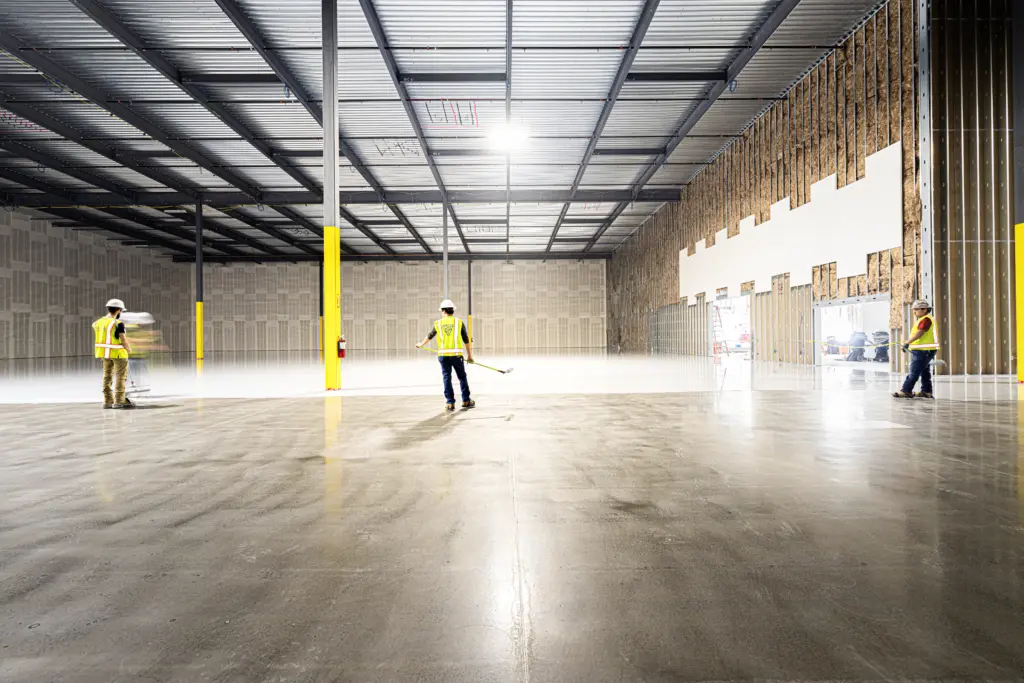
ESD Epoxy Flooring Case Study: 34,000 SF Dallas, TX