What can we help you with?
Technical flooring, delivered directly
- ESD flooring, urethane cement, terrazzo, and polished concrete
- In-house W-2 installation crews and experienced field leadership
- National service coverage with project-specific staffing plans
- Testing, documentation, and defined project closeout
- Dedicated support for corporate procurement and multi-site contracting
Phone: +1 (844) 687-1961
Check the product’s curing limitations
Not automatically. Check the specified curing requirements and the densifier manufacturer’s limitations before making a substitution.
The Concrete Floor Construction Association (CFCA) explains that liquid densifiers do not retain surface moisture as curing membranes do. Our new concrete slab specification guide covers how curing fits into the placement and polishing plan.
| Product | Manufacturer’s stated limitation |
|---|---|
| EUCO DIAMOND HARD | Euclid Chemical does not recommend it as a curing compound. It does not meet ASTM C309 or ASTM C1315. |
| Ashford Formula | Curecrete says it should not be used as a curing agent with Type K shrinkage-compensating cement or shrinkage-reducing admixtures that have hydrophobic properties. |
The Ashford restriction concerns use as a curing agent; it is not a blanket prohibition on using the product with those mixes.
For application and readiness conditions, see our concrete densifier guide.
Manage curing before polishing begins
Curing compounds need to be coordinated with the polishing system: the RetroPlate guide advises against chemically reactive and membrane curing agents for its system, while the CPC guide specification takes a narrower position, prohibiting improper application of film-forming compounds. When ACI SPEC-310.1-20 is incorporated into the Contract Documents, confirm the specified cure and remove curing compounds during surface preparation.
Coordinate curing compounds with the polishing system
The RetroPlate guide advises against chemically reactive curing agents and membrane curing agents such as acrylic compounds on slabs intended for its polishing system.
The guide explains that topical curing compounds may assist curing during the first few days but retard drying over the following weeks and months. It warns that the slab may remain too wet when diamond polishing or floor-covering installation is scheduled.
The Concrete Polishing Council (CPC) guide specification takes a narrower position: its field-condition provision prohibits improper application of liquid membrane film-forming curing compounds on surfaces to be polished. It does not prohibit every such compound.
Confirm the specified cure before polishing
ACI SPEC-310.1-20, §3.1.1.1(a), requires confirmation that the slab surface was cured in accordance with the Contract Documents. The project documents establish the curing method and duration.
These requirements apply when ACI SPEC-310.1-20 is incorporated into the Contract Documents, with project-specific requirements governing conflicts. Our ACI specification guide explains its use.
Remove curing compounds during surface preparation
ACI §3.1.3.2 requires preparation and cleaning to provide sound concrete. Its removal list includes curing compounds, laitance, glaze, efflorescence, form-release agents, dust, dirt, grease, oil, paint splatter and other contaminants incompatible with liquid-applied products and polishing.
The substrate acceptance guide covers this preparation alongside the other checks before polishing begins.
Project Gallery






Frequently Asked Questions
Not automatically. Check the named product and project requirements. Euclid Chemical states that EUCO DIAMOND HARD is not recommended as a curing compound and does not meet either standard.
No. Its field-condition provision prohibits improper application of liquid membrane film-forming curing compounds. That is different from banning all such products.
ACI SPEC-310.1-20 requires confirmation that the slab surface was cured in accordance with the Contract Documents. Those documents set the method and duration; the cited clause does not establish its own curing schedule.
Polished Concrete Knowledge Center
Resource links
Performance & Safety
Design & Aesthetics
Installation Guidance
Economics & Sustainability
Maintenance & Aftercare
Comparative & Decision-Making
Blog
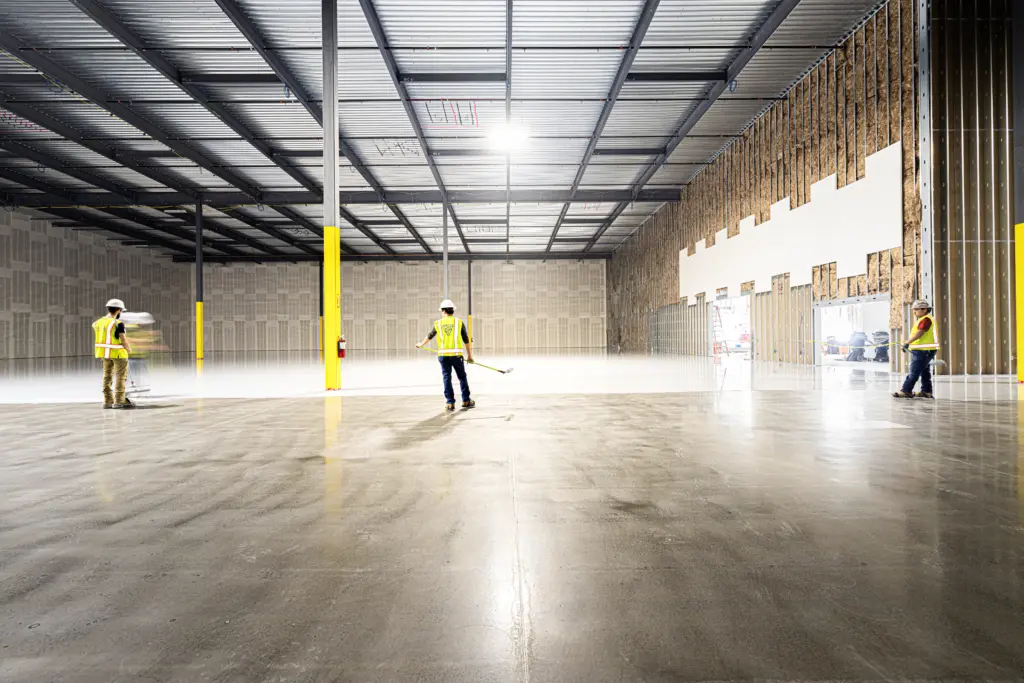
Craftsman Publishes 2026–2027 ESD Flooring Technical Guide
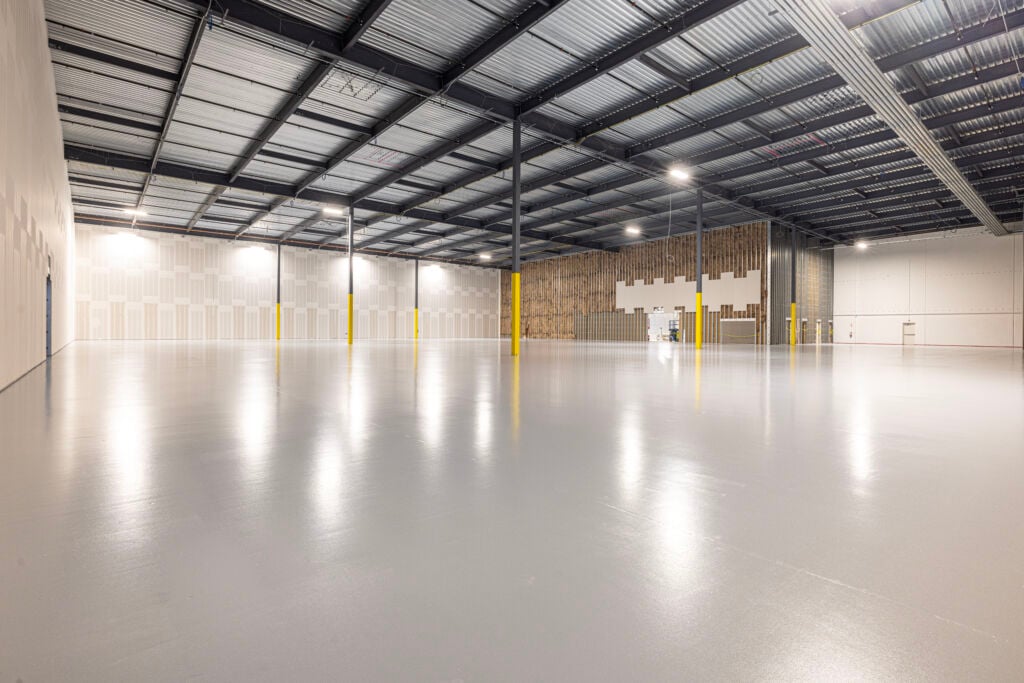
ESD Epoxy Flooring Case Study: 34,000 SF Dallas, TX