What can we help you with?
Technical flooring, delivered directly
- ESD flooring, urethane cement, terrazzo, and polished concrete
- In-house W-2 installation crews and experienced field leadership
- National service coverage with project-specific staffing plans
- Testing, documentation, and defined project closeout
- Dedicated support for corporate procurement and multi-site contracting
Phone: +1 (844) 687-1961
Coordinate both scopes before slab placement
Before slab placement, define who handles concrete placement, polishing, repairs and floor protection. Agree on the slab conditions needed for the selected finish and how adverse conditions will be reported and resolved.
The Concrete Polishing Council (CPC) recommends coordinating the concrete and polishing subcontracts together. The project documents establish who performs and pays for each part of the work. Our preinstallation coordination guide covers the meetings and approvals that support those decisions.
CPC Position Statement #3 describes a recurring problem: the polished finish is selected and the polishing contractor engaged after the concrete work has already been contracted and performed. The polisher can then encounter repairs or remediation that affect the specified finish.
Coordinating the subcontracts at the same time allows the teams to address:
| Decision | What to resolve together |
|---|---|
| Slab requirements | What the polishing contractor needs from the concrete contractor’s work, including the associated cost. |
| Changes in flatness | The effects of flatness changing over time, including curling in slabs-on-ground, before selecting the final polished surface. |
| Protection | The floor-protection plan and cost after placement and after polishing. |
| Scope and appearance | Whether the two scopes of work can produce the owner’s desired final appearance. |
| Review during construction | Both subcontractors’ participation in meetings before placement and evaluation of completed work. |
The position statement is trade-association guidance. Use the project documents to turn those decisions into assigned scopes. The guide to placement flatness versus flatness at polishing explains that coordination issue in more detail.
Cover the work the polishing specifications exclude
The CPC guide specification and ACI SPEC-310.1-20 each leave work outside the polishing scope. The CPC provisions assign floor protection to “others” without naming them, and ACI SPEC-310.1-20 excludes construction of the cast-in-place slab. Identify who provides protection at each stage in the project documents, and coordinate the slab specification with the polishing specification.
Name the party responsible for floor protection
The CPC guide specification assigns two responsibilities to “others”:
- Preventing damage and staining of concrete surfaces that will be polished (§1.5).
- Protecting the completed polished floor (§3.6).
Those provisions put protection outside the polishing work described in that section, but do not name the responsible party. Identify who provides protection at each stage in the project documents.
The construction protection guide covers protection and access by other trades.
Coordinate the slab specification with the polishing specification
ACI SPEC-310.1-20 covers polished slab finishes and excludes construction of the cast-in-place concrete slab (§1.1.4(a)). Adopting it does not specify the concrete placement work.
ACI 310.1-20 applies through incorporation into the Contract Documents, and project-specific requirements govern a conflict.
The ACI 310.1-20 guide explains its scope and the decisions the project must add.
Address slab conditions before polishing starts
Two clauses of ACI SPEC-310.1-20 address the start of polishing. Conditions that would adversely affect the polished appearance are reported in writing before polishing, though the notice does not decide who pays for correction. Starting work in an area is construed as acceptance of its surface conditions, not of the future finished floor.
Report adverse conditions before polishing
Under ACI §3.1.1.1(h), notify the Architect/Engineer, Owner’s Representative, or both, in writing before polishing of conditions that would adversely affect the slab’s polished appearance.
The written notice records the condition. The cited clause does not decide who pays for its correction. Resolve the required response through the project documents and approval process. The guide to cracks, surface repairs and joints covers the repair work to consider.
Understand what starting work accepts
ACI §3.1.1.1(j) states that starting work within an area is construed as acceptance of its surface conditions.
That concerns the surface received for polishing. It is not acceptance of the future finished floor. The substrate-acceptance guide covers the checks and approvals before work starts.
Project Gallery







Frequently Asked Questions
The project documents need to name the responsible party. The CPC guide specification assigns damage and stain prevention before polishing, and protection of the completed floor, to “others” without identifying them.
No. Under adopted ACI SPEC-310.1-20, starting work is construed as acceptance of the surface conditions in that area. It does not constitute acceptance of the future finished floor. Project-specific Contract Documents govern a conflict.
ACI SPEC-310.1-20 requires written notice to the Architect/Engineer, Owner’s Representative, or both, before polishing when conditions would adversely affect the polished slab’s appearance. The notice requirement does not itself assign the cost of correction.
Polished Concrete Knowledge Center
Resource links
Performance & Safety
Design & Aesthetics
Installation Guidance
Economics & Sustainability
Maintenance & Aftercare
Comparative & Decision-Making
Blog

Craftsman Publishes 2026–2027 ESD Flooring Technical Guide
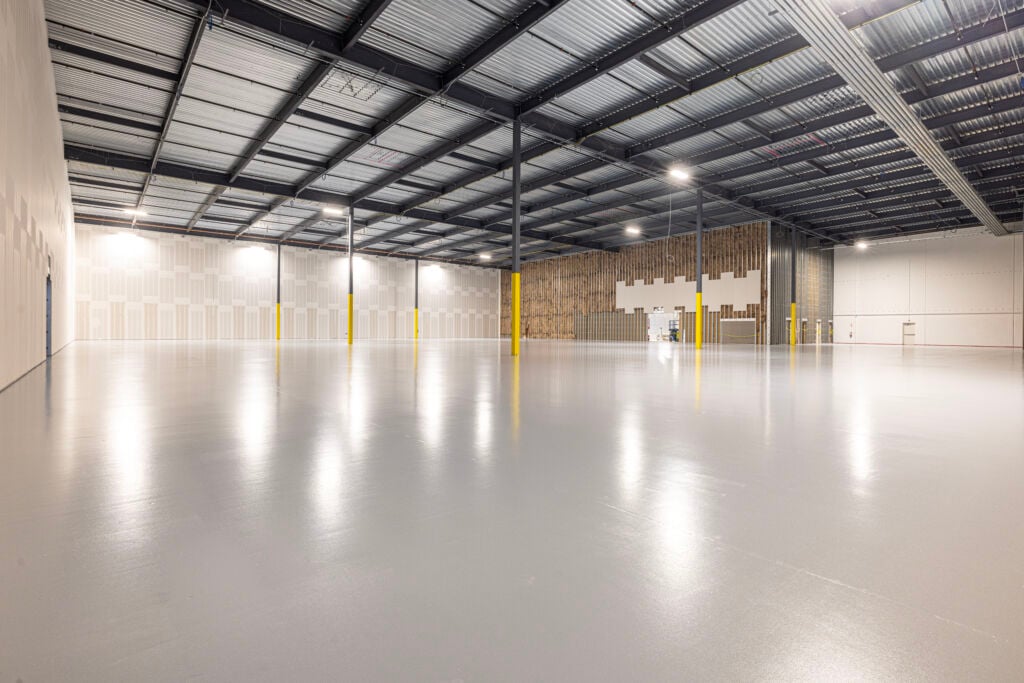
ESD Epoxy Flooring Case Study: 34,000 SF Dallas, TX