What can we help you with?
Technical flooring, delivered directly
- ESD flooring, urethane cement, terrazzo, and polished concrete
- In-house W-2 installation crews and experienced field leadership
- National service coverage with project-specific staffing plans
- Testing, documentation, and defined project closeout
- Dedicated support for corporate procurement and multi-site contracting
Phone: +1 (844) 687-1961
Moisture and Finish Risks
Moisture can affect polished concrete color, densifier penetration and surface clarity. It can also contribute to efflorescence and whitening beneath certain protective finishes. Below-slab moisture control and the slab’s condition before treatment therefore need separate attention.
The RetroPlate guide identifies moisture moving from the earth through a slab on ground as a risk to the polished finish. Our new concrete slab specification guide covers moisture control alongside mix selection, curing and finishing.
Vapor-barrier placement on GSA projects
GSA’s P100: Facilities Standards for the Public Buildings Service, May 2024, §3.1.4 requires a vapor barrier directly beneath concrete slab-on-grade construction and where concrete structures separate conditioned from unconditioned spaces.
That provision applies to projects governed by the GSA document.
Assess moisture before applying the finish
Jennifer Faller’s article Moisture and its Effect on Polished Concrete Finishes in Concrete Decor (May/June 2014) recommends assessing moisture both as a moisture vapor emission rate (MVER) and as in situ relative humidity (RH).
The article identifies these possible effects:
| Aspect of the floor | Potential moisture-related effect |
|---|---|
| Topical color | Changes in vibrancy and staying power. |
| Densifier | Reduced penetration or absorption. |
| Polished appearance | Changes in shine clarity, differential cure marks and efflorescence. |
The cited measurement advice does not specify test methods or acceptance values. It should not be used to assign one moisture limit to every polished concrete floor.
Project Gallery






Frequently Asked Questions
The cited sources do not establish one. Faller recommends measuring MVER and in situ RH, but that advice supplies no test method or acceptance value. It cannot be used as a universal pass/fail criterion for polished floors.
GSA P100, May 2024, places it directly beneath concrete slab-on-grade construction and where concrete structures separate conditioned from unconditioned spaces. This requirement applies to projects governed by that document.
Faller’s article links lower-permeability microfilm guards with a greater likelihood of water-whitening when moisture vapor emission is high or puddles remain on the surface.
Polished Concrete Knowledge Center
Resource links
Performance & Safety
Design & Aesthetics
Installation Guidance
Economics & Sustainability
Maintenance & Aftercare
Comparative & Decision-Making
Blog
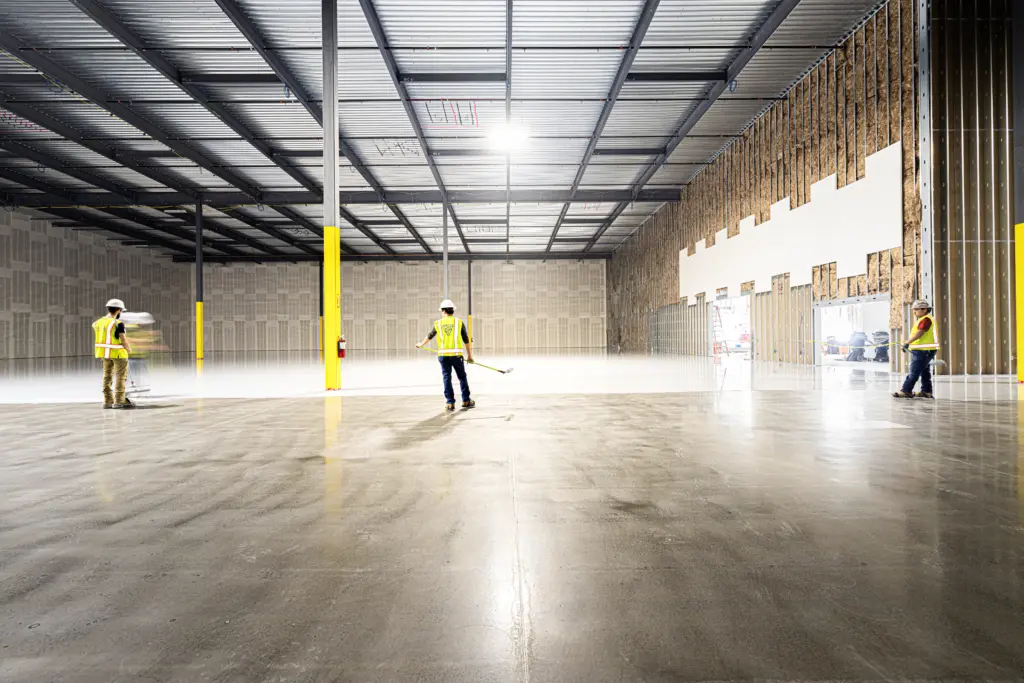
Craftsman Publishes 2026–2027 ESD Flooring Technical Guide
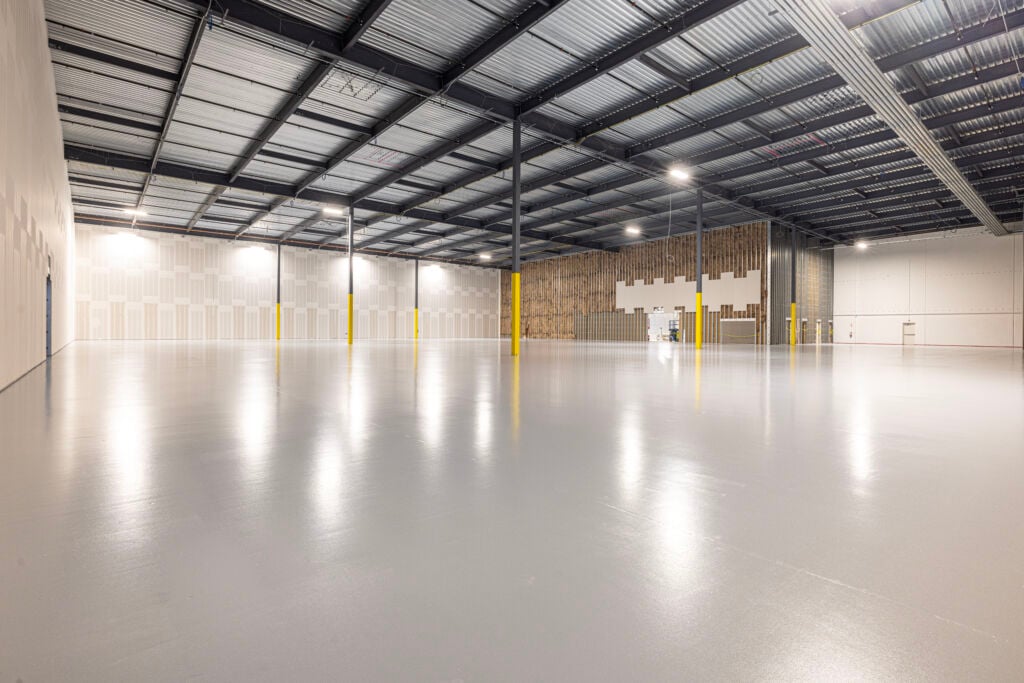
ESD Epoxy Flooring Case Study: 34,000 SF Dallas, TX