What can we help you with?
Technical flooring, delivered directly
- ESD flooring, urethane cement, terrazzo, and polished concrete
- In-house W-2 installation crews and experienced field leadership
- National service coverage with project-specific staffing plans
- Testing, documentation, and defined project closeout
- Dedicated support for corporate procurement and multi-site contracting
Phone: +1 (844) 687-1961
Our Clients




















Certificates Versus Installed Results
A test certificate for an uninstalled floor covering does not replace the installed-floor test recommended by TRGS 727. Annex H recommends testing leakage resistance on the laid covering even when a certificate exists for the unlaid product.
This guidance comes from the January 2016 edition of Germany’s technical rule on avoiding ignition hazards from electrostatic charging, corrected July 2016.
Specify the acceptance test before installation
- Source
- Note to section 8.2
Because different standards and methods can be used to measure floor leakage resistance, a note in section 8.2 says the tender should identify the acceptance test method and maximum values before delivery and installation.
An antistatic label does not establish the measured result
- Section
- 8.2(1)
- Dissipative
- Below 10⁸ Ω (100 MΩ)
Annex H notes that residential floor coverings usually do not fall below the required limit, even when labeled “antistatic” or “not electrostatically chargeable.”
Section 8.2(1) defines a dissipative floor as having leakage resistance below 100 megohms (10⁸ Ω). For the applicable zones and separate person-to-earth requirements, see TRGS 727 floor and person-to-earth resistance limits.
For the broader inspection context, see grounding continuity and testing under TRGS 727.
Frequently Asked Questions
No. TRGS 727 Annex H recommends testing leakage resistance on the installed covering even when test certificates exist for the uninstalled product.
TRGS 727 section 8.2 says the tender should identify the acceptance test method and maximum values before delivery and installation, because different floor-resistance test standards and methods can be used.
Blog
Craftsman Publishes 2026–2027 ESD Flooring Technical Guide
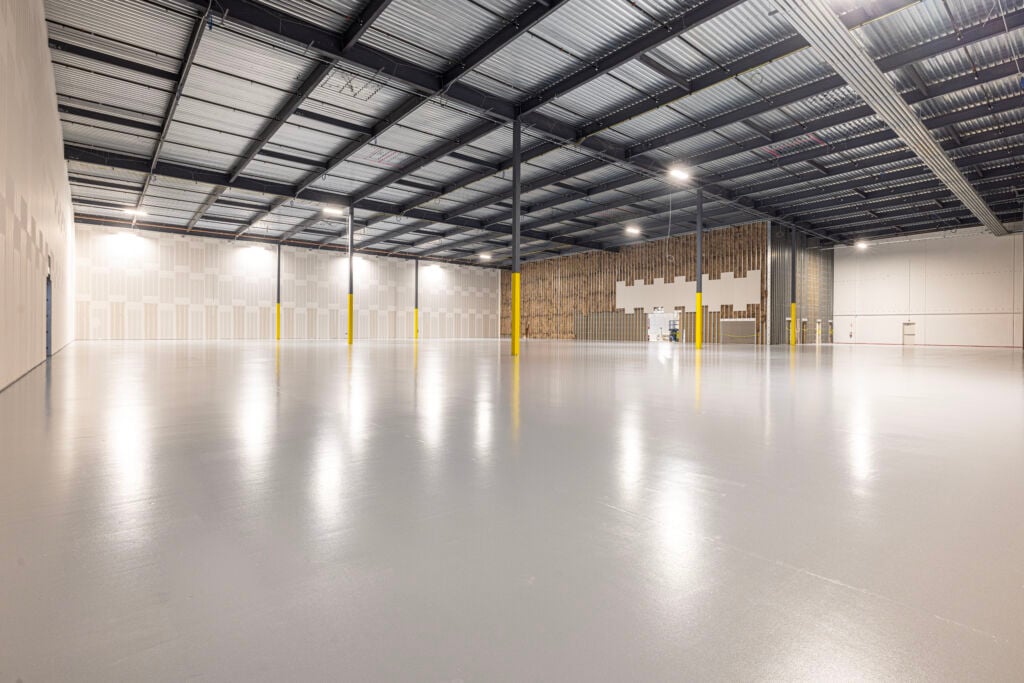
ESD Epoxy Flooring Case Study: 34,000 SF Dallas, TX