What can we help you with?
Technical flooring, delivered directly
- ESD flooring, urethane cement, terrazzo, and polished concrete
- In-house W-2 installation crews and experienced field leadership
- National service coverage with project-specific staffing plans
- Testing, documentation, and defined project closeout
- Dedicated support for corporate procurement and multi-site contracting
Phone: +1 (844) 687-1961
Our Clients




















Static Grounding Continuity Requirements
Insulating joints, seals, and sleeves can leave conductive parts isolated from ground, including parts hidden inside an assembly. TRGS 727 addresses these breaks, the connections that must remain in service, and the tests needed to verify static grounding.
This guide covers the January 2016 edition of Germany’s technical rule on avoiding ignition hazards from electrostatic charging, corrected July 2016. For the broader context, see ESD flooring in hazardous areas.
Which parts need an earth connection?
- Section
- 3.1
Section 3.1 requires, depending on ignition probability, conductive objects and equipment to be grounded and dissipative objects and equipment to have earth contact. The connection may be omitted only where dangerous charging is excluded.
For bulk-solids requirements and exceptions, see grounding combustible-dust equipment under TRGS 727.
Small conductive objects and capacitance
- Section
- 8.3.5
- Threshold
- 10 pF
Section 8.3.5 distinguishes two cases:
- Above 10 pF: Conductive objects must be grounded unless dangerous charging does not occur.
- Below 10 pF: Apply Table 11, which sets maximum permitted capacitances for ungrounded small objects by zone and explosion group, where no strongly charge-generating processes occur.
Small conductive objects must also be grounded regardless of capacitance near strongly charge-generating processes or when they contact the product stream in an apparatus.
Determine capacitance in the installed state, using simulated conditions where appropriate.
Keeping grounding connections in service
- Sections
- 8.4 and 8.5
Section 8.4 requires grounding and equipotential-bonding equipment to be clearly marked and prohibits interrupting or switching it off.
Section 8.5 requires grounding clamps to be attached before work starts and retained until all dangerous charges have dissipated. The equipment must be designed and maintained so that clamps can penetrate paint, rust, or liner-bag films where used.
Testing and changes in service
- Section
- 8.7
Under section 8.7, static-grounding and equipotential-bonding tests must be performed independently of other electrical tests. Testers must be qualified under the provision cited by TRGS 727: Annex 2, Section 3, Number 3.1 of the Betriebssicherheitsverordnung (BetrSichV).
Where charge dissipation depends on temperature or humidity, account for their expected operating range (section 3.1).
Floor resistance and installed-floor testing
For floor-specific requirements, see TRGS 727 floor and person-to-earth resistance limits by zone and testing installed flooring when a product certificate exists.
Frequently Asked Questions
Section 8.3.4 requires the conductive components remaining around an insulating piece to be connected to one another and grounded. Alternatively, each installation part may be grounded individually. The rule specifically calls attention to conductive parts hidden from outside view.
No. Section 8.3.5 refers conductive objects below 10 pF to Table 11. Small conductive objects must also be grounded regardless of capacitance near strongly charge-generating processes or when they contact the product stream in an apparatus.
After all dangerous charges have dissipated. Section 8.5 requires grounding clamps to be attached before work begins and kept in place until that condition is met.
No. Section 8.7 requires static-grounding and equipotential-bonding tests independently of other electrical tests, performed by persons qualified under the provision of the BetrSichV cited in that section.
Blog
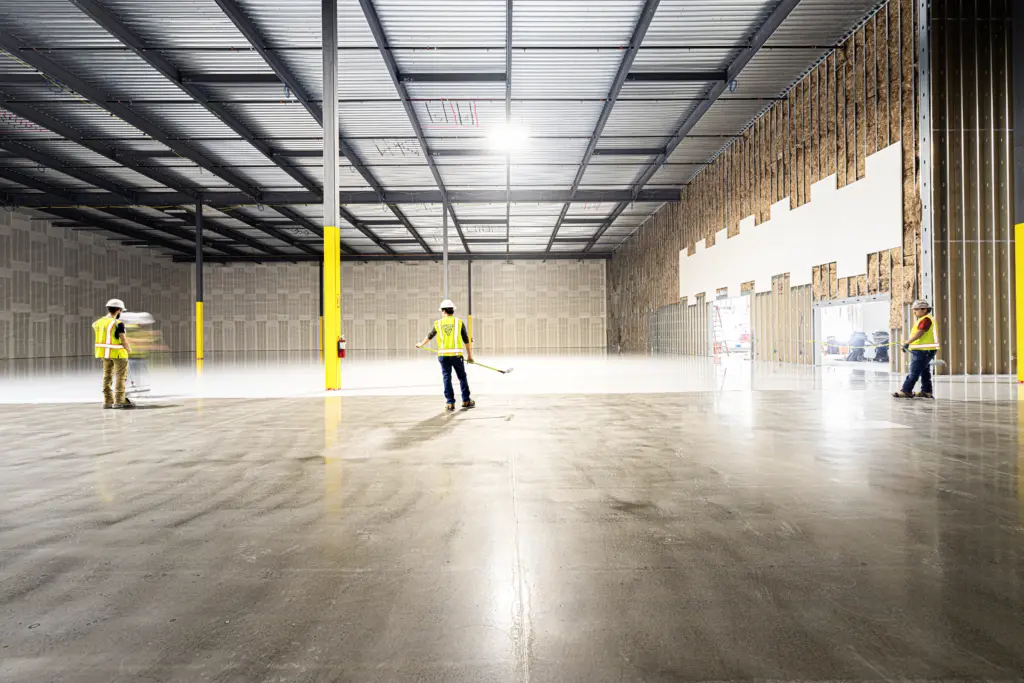
Craftsman Publishes 2026–2027 ESD Flooring Technical Guide
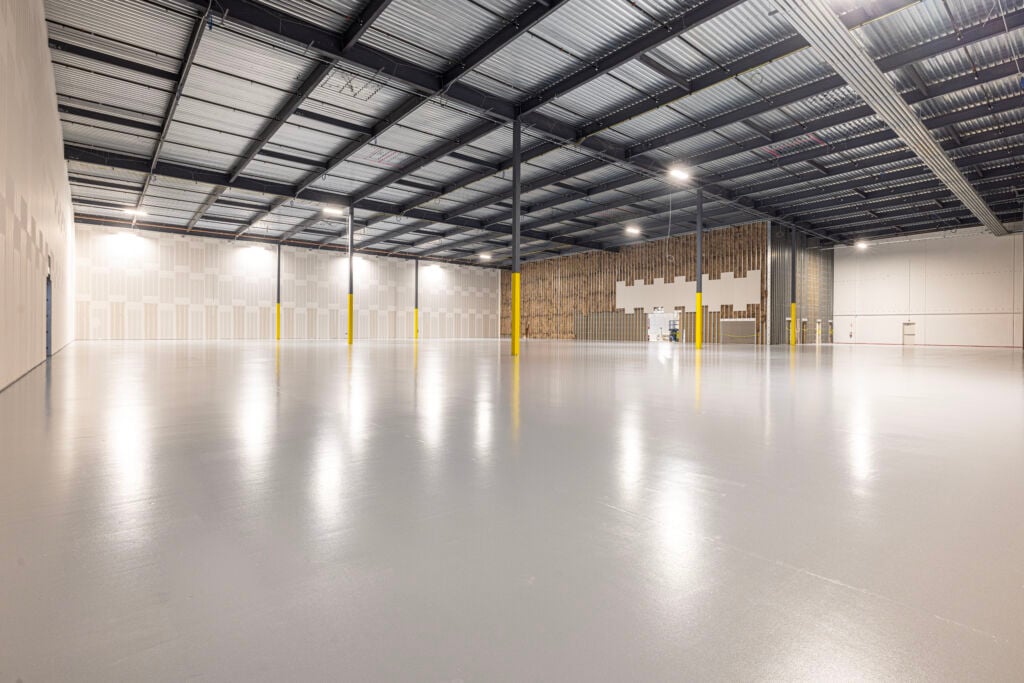
ESD Epoxy Flooring Case Study: 34,000 SF Dallas, TX