What can we help you with?
Technical flooring, delivered directly
- ESD flooring, urethane cement, terrazzo, and polished concrete
- In-house W-2 installation crews and experienced field leadership
- National service coverage with project-specific staffing plans
- Testing, documentation, and defined project closeout
- Dedicated support for corporate procurement and multi-site contracting
Phone: +1 (844) 687-1961
Build the ACI submittal package
A polished concrete submittal package should identify the products, repair materials, installer qualifications and proposed work sequence, with the evidence required to demonstrate material performance. Product data explains what will be installed and how. Test reports document performance; a manufacturer’s certificate records its own statement of compliance.
The adopted project specification determines which documents are required. Under ACI SPEC-310.1-20, work relating to a submittal waits for the Architect/Engineer’s written approval. Our preinstallation coordination guide places these approvals in the construction schedule.
When ACI SPEC-310.1-20 is incorporated into the Contract Documents, its submittal provisions include:
| Submittal | What it contains |
|---|---|
| Product data | Manufacturer’s technical literature, technical data, application instructions and recommendations for each specified or proposed product (§1.5.4). |
| Repair-product data | The same documentation for each specified or proposed repair product (§1.5.7). |
| Installer qualifications | Company, personnel, experience and training records (§1.5.5). |
| Polishing plan and schedule | The finish and polishing schedule for each area, including all joint locations, submitted before polishing starts (§1.5.6). |
| Quality control plan, if required | The means, methods, products and equipment proposed to achieve the specified finish, with quality-control information under §1.7.1 (§1.5.3). |
| Substitution request | Identification of the proposed substitution and a demonstration that it meets the Contract Documents’ performance requirements (§1.5.2). |
| Repair proposal for nonconforming work | Proposed methods, materials and modifications needed to bring the work into compliance (§1.9.1.3). |
The qualification records include five projects of similar type, size and complexity completed over the preceding three years, plus manufacturer training certification for each product. The installer qualifications guide covers the experience, training and supervisor requirements together.
The polishing schedule also addresses other trades, final weather protection and protection against continuing construction. See polishing phases, partitions and fixtures for sequencing details.
Clarify approvals and compliance responsibilities
Under ACI 310.1-20, work relating to a submittal waits for the Architect/Engineer’s written approval, and proposed alternatives to its provisions need written approval too. Project-specific Contract Documents govern a conflict. ACI makes the Contractor confirm material compliance unless otherwise specified, but its introductory list of Contractor duties leaves out the compliance-document submittal, so assign that explicitly.
Obtain written approval before related work
ACI §1.5.1 prohibits work relating to a submittal until the Architect/Engineer approves it in writing. This applies to the work covered by that submittal.
ACI separately permits proposed written alternatives to its provisions. Those alternatives require written approval from the Architect/Engineer, Owner’s Representative, or both (§1.1.6).
Project-specific Contract Documents govern a conflict with ACI 310.1-20. The ACI specification guide explains incorporation, defaults and project selections.
Assign responsibility for material-compliance records
ACI §1.7.1.1 requires the Contractor to confirm that proposed materials meet the Contract Documents, unless otherwise specified. Section 1.7.1.5 calls for information documenting material compliance.
The introductory assignment of Contractor duties in §1.7.1 names §§1.7.1.1–1.7.1.4, leaving §1.7.1.5 outside that stated range. Assign responsibility for the compliance-document submittal explicitly in the project documents.
Distinguish product information from performance evidence
The Albuquerque Public Schools (APS) polished concrete project specification lists these documents separately:
| Document | What it provides in the APS specification |
|---|---|
| Product data | Manufacturer’s product sheets identifying the specified products. |
| Preparation and grinding procedures | The proposed preparation and concrete grinding process. |
| Certified test reports | Evidence of compliance with the specified performance characteristics and physical properties. |
| Signed product certificates | The manufacturer’s certification that the materials meet the specified requirements. |
| Installation instructions | The manufacturer’s application instructions. |
A signed product certificate does not replace a separately required test report. Likewise, installation instructions explain application; they do not establish that the product meets every specified performance criterion.
Manufacturer guide specifications can request additional records. The Solomon Colors Lythic guide lists product data for cleaners, densifiers, protectors and surface repair materials; CPC aggregate-exposure and appearance charts; an approved-installer certificate; and pre-concrete-finishing conference notes. A dye color chart is optional.
These lists belong to their respective specifications. Use the adopted project requirements to determine the actual submission package.
Separate VOC content, emissions and certification
These claims answer different questions:
| Claim | What to check |
|---|---|
| VOC content | The applicable content rule, product category and reported content or limit. |
| VOC emissions | The named emissions-test method and version, tested product, result and exposure conditions. |
| Certification | The named certification program, covered product and supporting certificate. |
EPA explains that its Clean Air Act VOC regulations for architectural coatings and consumer products address outdoor ozone formation. Some toxic volatile compounds are exempt because they are not considered photochemically reactive. A “low VOC” or “no VOC” label under those rules therefore does not establish low indoor emissions.
The Lythic guide requests low-emitting-material compliance under the California Department of Public Health (CDPH) Standard Method but does not name a version. Identify the required method version in the project requirements rather than assuming one from an unrelated product document.
Keep certification claims tied to the products they cover. Ameripolish’s documentation, for example, describes SCS Indoor Advantage Gold for selected products; that statement does not establish certification of every product in a flooring system.
Project Gallery




Frequently Asked Questions
Under ACI SPEC-310.1-20, work relating to a submittal cannot proceed until the Architect/Engineer approves that submittal in writing. Project-specific Contract Documents govern any conflict with the adopted specification.
No. The plan is submitted if required. It describes the means, methods, products and equipment proposed to achieve the specified polished finish. That conditional submittal is separate from the specification’s quality-control duties.
No. The APS polished concrete specification lists signed product certificates and certified test reports separately. A manufacturer’s statement of compliance does not replace the test evidence required by that specification.
No. VOC-content compliance and emissions testing address different properties. EPA’s Clean Air Act VOC rules for coatings and consumer products address ozone formation; a compliant content claim does not establish a product’s indoor emissions or certification.
Polished Concrete Knowledge Center
Resource links
Performance & Safety
Design & Aesthetics
Installation Guidance
Economics & Sustainability
Maintenance & Aftercare
Comparative & Decision-Making
Blog
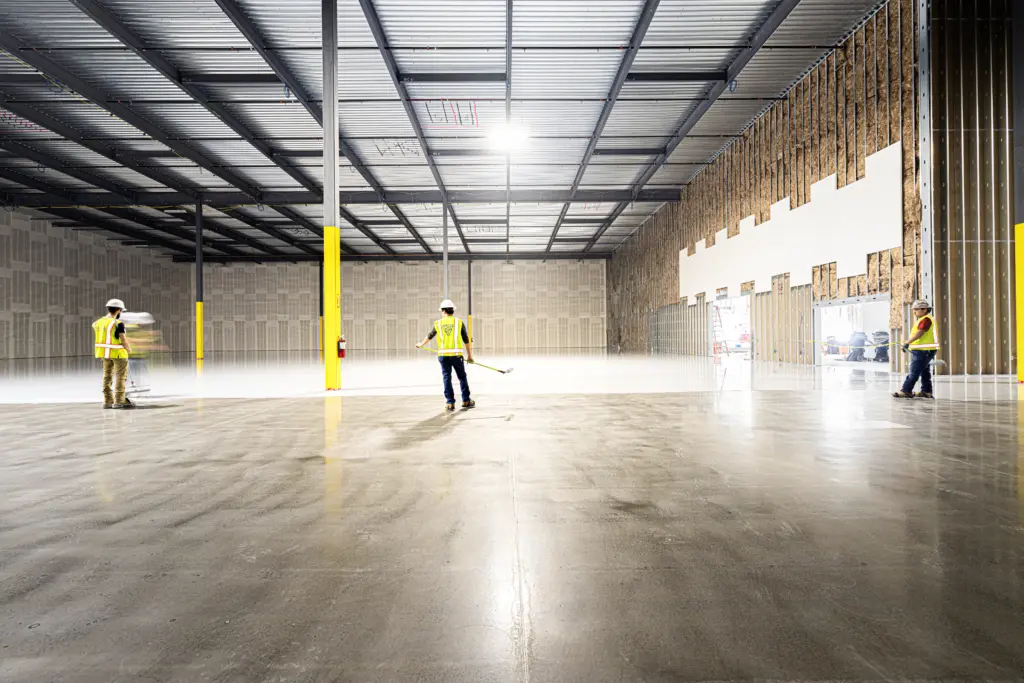
Craftsman Publishes 2026–2027 ESD Flooring Technical Guide
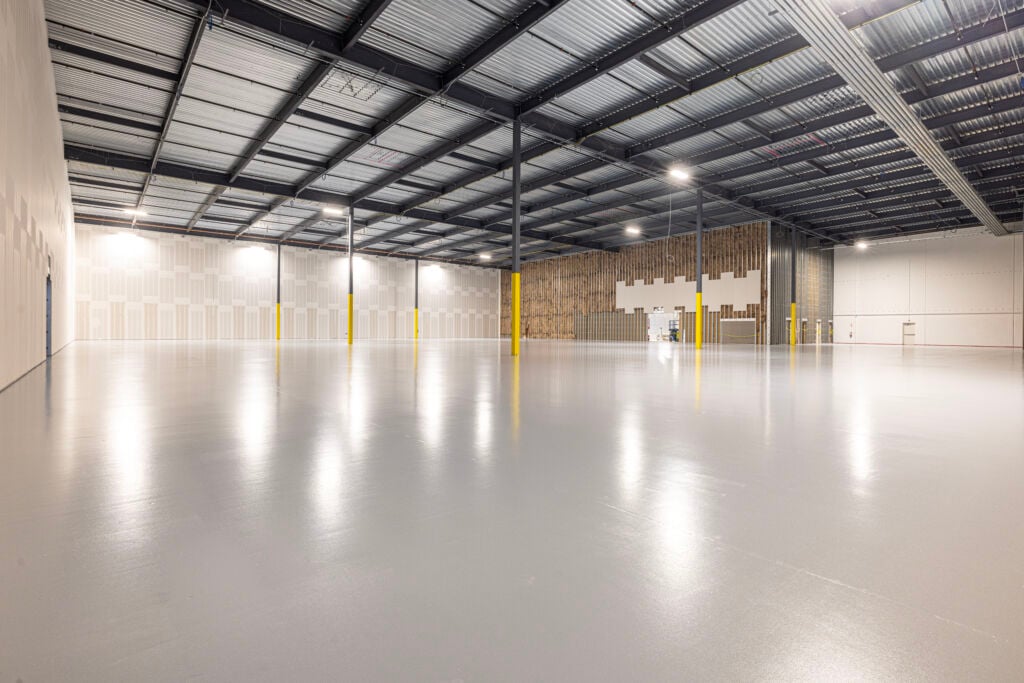
ESD Epoxy Flooring Case Study: 34,000 SF Dallas, TX