What can we help you with?
Technical flooring, delivered directly
- ESD flooring, urethane cement, terrazzo, and polished concrete
- In-house W-2 installation crews and experienced field leadership
- National service coverage with project-specific staffing plans
- Testing, documentation, and defined project closeout
- Dedicated support for corporate procurement and multi-site contracting
Phone: +1 (844) 687-1961
Preinstallation Coordination
Coordinate the concrete and polishing work before the slab is placed. Agree on the required finish, what the polishing team needs from the concrete work, who protects the floor and how polishing fits around other trades. Before polishing starts, complete the required approvals, accept the mockup and confirm that the site is ready.
The Concrete Polishing Council (CPC) guide specification and ACI SPEC-310.1-20 set different requirements when adopted into the project documents. For the overall specification, see our polished concrete guide for builders.
Coordinate the concrete and polishing scopes together
CPC Position Statement #3 recommends coordinating the two subcontracts at the same time so the teams can discuss and price:
- What the polishing contractor needs from the concrete contractor’s work.
- Changes in floor flatness over time, including curling in slabs-on-ground, before the polished finish is finally selected.
- Floor protection after slab placement and after polishing.
Define the responsibilities of the concrete placer and polisher in the project documents. The CPC guide assigns prevention of damage and staining, and protection of the polished floor, to “others.” It does not identify the party responsible. Name that party rather than leaving protection unassigned.
Resolve mix requirements at the same stage. Project standards and polishing-system instructions can impose different conditions; the guide to specifying concrete performance without conflicting mix prescriptions covers those conflicts.
Hold the coordination meeting before slab placement
The CPC guide calls for a preinstallation conference before concrete is placed in areas scheduled for polishing. Its required attendees are:
- The Owner and Architect.
- The Contractor and supervisor.
- The concrete producer.
- The concrete finisher and supervisor.
- The concrete polisher and supervisor.
- A technical representative of the liquid-applied product manufacturers.
The polisher reviews the work with the team, including the field mockup and representative areas, contract requirements, approved submittals, substrate conditions and preparation by other trades.
CPC meeting agenda
| Topic | What to review |
|---|---|
| Concrete work | The applicable cast-in-place concrete specification, specific mix design and curing procedures. |
| Strength and phasing | Projected 3-, 14- and 28-day compressive-strength tests and project phasing. |
| Preparation | Substrate conditions, surface preparation and preparatory work by other installers. |
| Polishing operations | The grinding, honing and polishing steps; scheduling; and the quality and size of grinders assigned to the project. |
| Waste handling | Proper disposal of concrete slurry and dust. |
| Applied products | Liquid-applied products and color application when a colored finish is specified. |
| Protection | Protection during construction, before polishing and after polishing is complete. |
Record the decisions and agreements and distribute the record to everyone attending.
ACI conference requirements
ACI SPEC-310.1-20 requires a preconstruction conference if specified. It brings together the Architect/Engineer, Owner or Owner’s Representative, and other interested parties to review requirements, acceptance criteria and responsibilities (§1.8.2).
ACI §1.8.2.1 calls for advising the Architect/Engineer, Contractor, Owner or Owner’s Representative at least seven days before the conference. The specifier can set different notification parties and notice periods. Distribute the conference record within seven days of the meeting and before placement of the slabs to be polished (§1.8.2.2).
The conference also establishes the frequency and criteria for periodic acceptance. The Architect/Engineer periodically compares completed areas with the accepted mockup (§1.9.3.1(a)). Our ACI 310.1-20 specification guide explains its defaults and project selections.
Complete submittals and written approvals
The CPC guide requires product data covering the manufacturer’s technical literature, application instructions and recommendations. Installer records cover the company, principal personnel, experience and training.
ACI separates the following approvals:
| Item | Required approval under ACI SPEC-310.1-20 |
|---|---|
| Work relating to a submittal | Architect/Engineer’s written approval before that work proceeds (§1.5.1). |
| Proposed alternative | Written approval from the Architect/Engineer, Owner’s Representative, or both (§1.1.6). |
| Field mockup | Owner’s Representative’s written acceptance before polishing begins (§1.8.3.7). |
The submittals and product-system documentation guide covers the records to assemble. Check installer qualifications and site supervision separately, including the applicable experience, manufacturer-training and supervisor requirements.
Confirm readiness before polishing begins
Three requirements come before polishing begins. The CPC guide calls for the Architect’s approval of the mockup. ACI SPEC-310.1-20 calls for a plan and schedule for each polished area, coordinated with other trades, and for suitable water, power, lighting and ventilation on site.
Approve and protect the mockup
Under the CPC guide, obtain the Architect’s approval of the mockup before polishing begins. Departures from the Contract Documents require the Architect’s specific written approval.
The mockup planning and approval guide covers the sample and acceptance process.
Set the polishing schedule around other trades
ACI §1.5.6 requires a plan and schedule for each polished area before polishing operations begin. Include joint locations, coordination with other trades’ interior construction, final weather protection and when protection is needed to prevent damage from continuing construction.
Set the project sequence explicitly. The polishing phases, partitions and fixtures guide covers how grinding and polishing fit around partitions, gypsum board, casework, base and painting. Those milestones need to follow the adopted project specification.
Provide site services before work starts
Under ACI §§3.1.2(c) and 3.1.2(e), polishing cannot begin until suitable water, power, lighting and ventilation are available. Lighting must provide at least 40 foot-candles measured at the slab surface.
Project Gallery







Frequently Asked Questions
Before slab placement. CPC Position Statement #3 recommends coordinating the concrete and polishing subcontracts together so the teams can discuss and price slab requirements, changes in flatness and floor protection. The CPC guide specification places its preinstallation conference before concrete placement in areas scheduled for polishing.
No. Its conference requirement applies if specified. When required, the meeting reviews project requirements, acceptance criteria and responsibilities.
No. ACI SPEC-310.1-20 requires distribution of the conference decisions and agreements within seven days, but before placement of the slabs to be polished.
The project documents need to name the responsible party. The CPC guide assigns damage and stain prevention and polished-floor protection outside the polisher’s scope without identifying who performs them.
No. Under the CPC guide specification, departures from the Contract Documents require the Architect’s specific written approval. Approval of the mockup’s appearance does not waive that requirement.
Polished Concrete Knowledge Center
Resource links
Performance & Safety
Design & Aesthetics
Installation Guidance
Economics & Sustainability
Maintenance & Aftercare
Comparative & Decision-Making
Blog

Craftsman Publishes 2026–2027 ESD Flooring Technical Guide
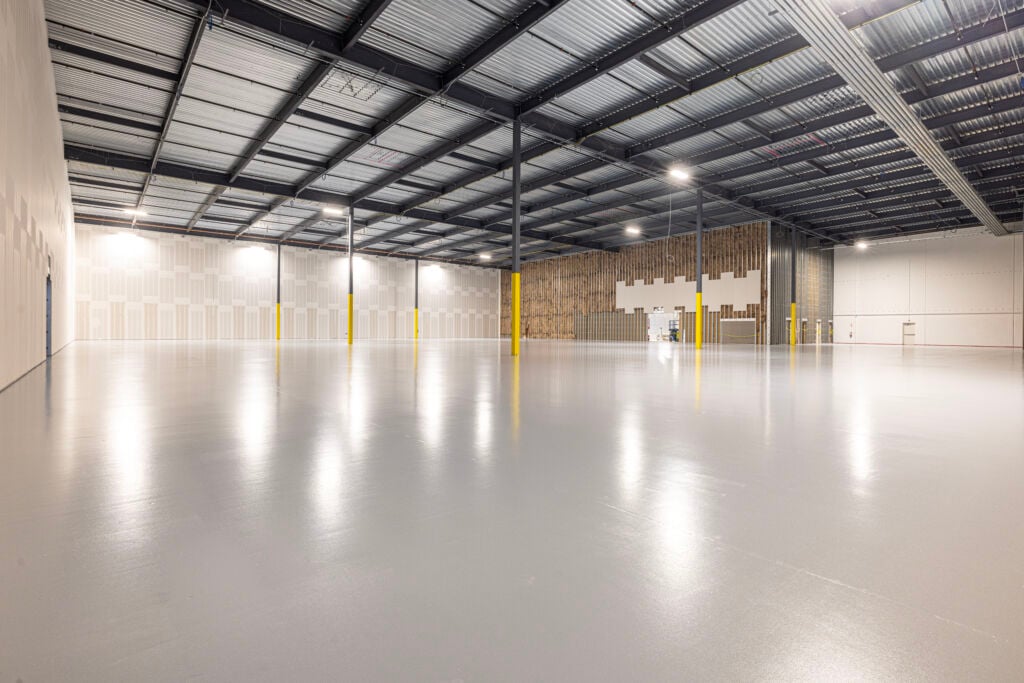
ESD Epoxy Flooring Case Study: 34,000 SF Dallas, TX