What can we help you with?
Technical flooring, delivered directly
- ESD flooring, urethane cement, terrazzo, and polished concrete
- In-house W-2 installation crews and experienced field leadership
- National service coverage with project-specific staffing plans
- Testing, documentation, and defined project closeout
- Dedicated support for corporate procurement and multi-site contracting
Phone: +1 (844) 687-1961
Our Clients




















Terrazzo Cost Guide
Craftsman’s terrazzo bids place basic thin-set flooring at approximately $15–$40 per square foot, complex patterned floors at $25–$60, and floors with unique aggregates, intricate patterns or smaller project sizes at up to $100 per square foot.
These are bid-based planning ranges, not a project quotation or national market-price schedule. For installation services, see our commercial terrazzo floor installation page.
Terrazzo cost per square foot
| Terrazzo type | Bid-based cost range |
|---|---|
| Basic thin-set terrazzo flooring | $15–$40 per square foot |
| Terrazzo flooring with complex patterns | $25–$60 per square foot |
| Terrazzo flooring with unique aggregates, intricate patterns or smaller project sizes | Up to $100 per square foot |
| High-quality terrazzo tile | Starts around $18 per square foot |
| Terrazzo tile installation | $10–$15 per square foot, depending on size and complexity |
The tile rows describe separate costs: the material and its installation.
Terrazzo tile and Craftsman’s installation scope
Craftsman does not offer standalone terrazzo tile setting or small-format tile work. We may grind and polish qualifying large-format commercial tile installed by a setting contractor.
Compare terrazzo tile and poured terrazzo when deciding which format a price describes.
How design and aggregate affect price
Aggregate selection, binder color and divider-strip layout establish the floor’s design. Aggregate cost and the complexity of patterns and divider strips also affect the installation price.
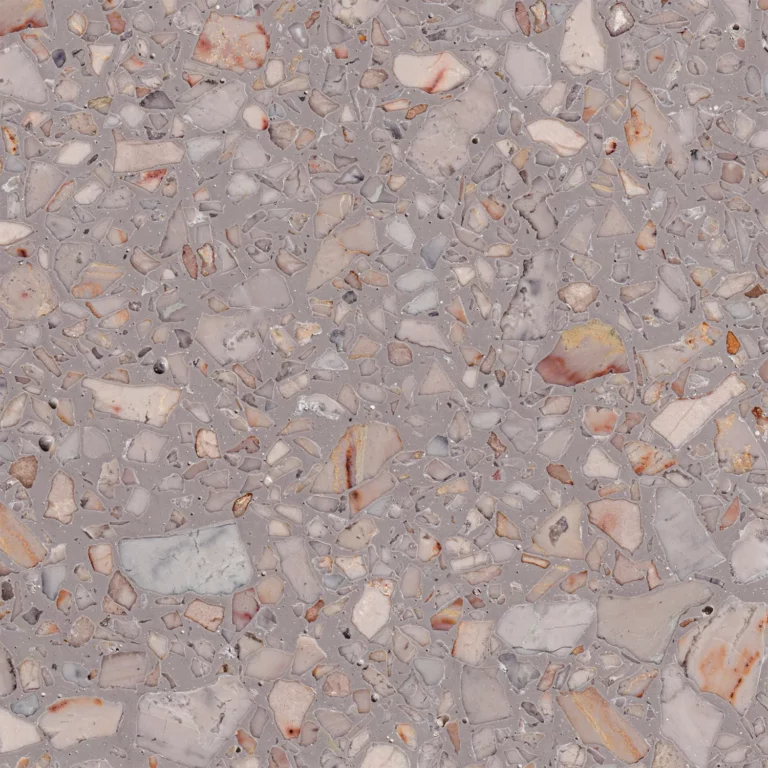
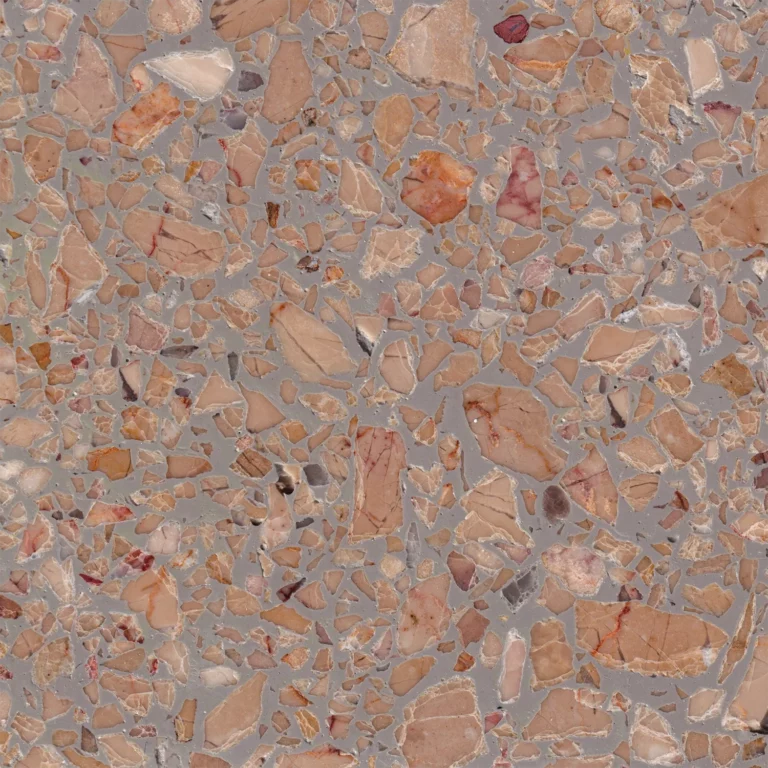
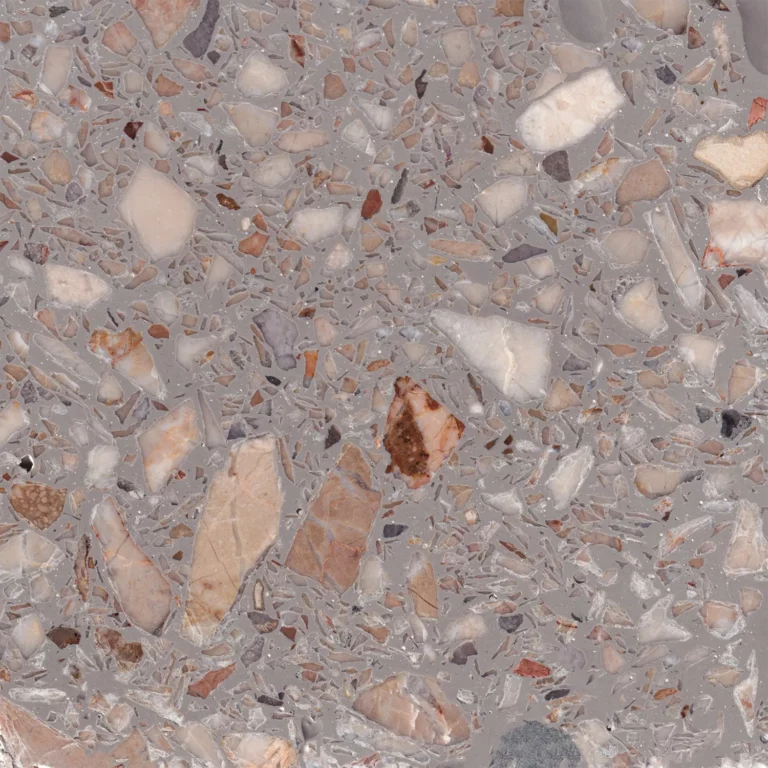
An approved physical sample establishes the expected appearance, including natural variation. Our terrazzo samples and design guide covers those choices.
Aggregate prices
| Aggregate | Bid-based price |
|---|---|
| Marble chips | $16–$40 per 50-lb bag |
| Mother of pearl | $80–$100 per 50-lb bag |
These are material prices per bag, not installed prices per square foot.
Simple and complex commercial systems
| Commercial system | Bid-based cost range |
|---|---|
| Simple commercial system | $20–$30 per square foot |
| Complex commercial system | $25–$60 per square foot |
These are bid-based examples, not a guaranteed package of inclusions. Check whether the project quote includes removal, substrate preparation, moisture mitigation, finish options and precast elements, and identify any items priced separately.
How project size affects terrazzo cost
| Project example | Bid-based cost |
|---|---|
| Simple 1,000 sq ft project | $30+ per square foot |
| Simple 30,000 sq ft project | $18 per square foot |
In Craftsman’s estimating experience, economies of scale usually begin at about 10,000 square feet or more. Specialized material costs per square foot are higher on projects under a few thousand square feet, so a small project can have a substantially higher unit price.
These examples describe Craftsman’s bids. They are not fixed price breaks that apply to every project.
Stairs, cove base and precast terrazzo
| Element | Bid-based cost | Unit |
|---|---|---|
| Cove base, 6 inches tall | $28–$35 | Per linear foot |
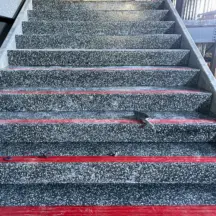
| Precast stairs | $80–$135 | Per square foot, depending on riser configuration |
Cove base and stairs must be measured in their own units. Their prices cannot simply be added to the floor’s square-foot rate.
The quote should identify the element, quantity, fabrication and installation scope, and connection to the poured floor.
Craftsman fabricates and installs its own precast terrazzo, including stairs, treads, countertops, wall panels and cove base. Our precast terrazzo guide covers their scope.
Additional work and finish options
| Item | Bid-based cost |
|---|---|
| Gloss finish | $0.50 to $1.00 more expensive for most floors |
| Moisture vapor barrier | $1.50 to $2.00 per square foot for most floors |
| Demolition | $1.00 to $3.00 per square foot for most floors |
Confirm the pricing unit for the gloss surcharge in your quote. The supplied figure does not specify one. All three examples carry the qualification “for most floors”; the quote determines whether and how each applies.
Moisture mitigation
A moisture vapor barrier is not required on every slab. The need depends on the selected flooring system, testing and project requirements.
Under the NTMA’s 2019 epoxy terrazzo guide, moisture mitigation and crack suppression are separate, conditional recommendations. Each must be specified to be included, and the proposed materials must meet the selected system’s compatibility and approval requirements.
Mitigation may be included as an alternate, unit cost or approved change order. A barrier line in one proposal and none in another can therefore reflect a scope difference.
A moisture vapor barrier is not interchangeable with a crack-suppression membrane.
Removal, preparation and repairs
Demolition, substrate preparation and repair are separate tasks. A quote should state which are included and who is responsible for correcting unsuitable concrete.
For epoxy terrazzo, the NTMA guide calls for substrate review and correction of unacceptable flatness, cracking and moisture conditions before installation. Epoxy terrazzo follows the slab contour; it does not level the substrate.
Where an existing terrazzo floor may be retained, assess terrazzo restoration and repair before assuming complete removal is necessary.
Comparing terrazzo systems and proposals
Poured epoxy, poured cementitious terrazzo, precast components and tile are different formats. Comparing prices requires identifying the assembly and included work.
The most cost-effective system depends on substrate conditions, moisture, exposure, design, intended use and maintenance. Our terrazzo system-selection guide covers those decisions, with more detail on epoxy terrazzo flooring.
What comparable bids should identify
- System: Poured epoxy, poured cementitious, precast or tile—and who sets any tile.
- Design: Aggregate, binder color, divider-strip layout and approved sample.
- Project conditions: Area, phasing, access and schedule.
- Floor protection: Responsibility for protecting completed work, as defined in the project documents.
- Substrate work: Removal, preparation, repairs and responsibility for correcting unsuitable concrete.
- Moisture mitigation and crack suppression: Included work, alternates, unit costs or potential change orders.
- Precast components: Quantities, units, fabrication and installation.
Two proposals with different inclusions are not two prices for the same floor.
Evaluating lifecycle cost
Lifecycle cost includes installation, maintenance and replacement over a defined period. It also accounts for when those costs occur through discounting.
Before accepting a claim that one flooring system costs less over its life, compare the maintenance plan, replacement assumptions, study period and discount rate.
What the commercial-flooring study models
The April 2023 study Life-cycle costs for flooring in commercial buildings, prepared by Emily Lorenz, PE, models eighteen flooring types for light-to-medium commercial office use using ASTM E917-17 and present values.
It uses:
- Average 2020 costs.
- A 75-year study period.
- A 3% real discount rate.
- Sensitivity analyses at 0%, 5% and 7%.
Maintenance and replacement schedules use typical product life cycles and warranty periods. Soil loads, wear patterns and appearance expectations differ between floor types.
The report was primarily funded by the Tile Council of North America, with support from other flooring associations. The author states that engineering parameters were selected independently and ambiguous choices were resolved in favor of flooring types other than ceramic, porcelain and quarry tile.
These assumptions make the report a modeled office comparison—not a Craftsman bid, a service-life guarantee or evidence that terrazzo always has the lowest lifetime cost. A project comparison needs its own maintenance plan, replacement assumptions and discount rate.
Request a terrazzo estimate
Send Craftsman the project area, intended system and design, existing-floor or slab condition, and access and scheduling requirements.
A project specialist responds within one business day. With basic size, system, condition and schedule information, Craftsman can generally provide a preliminary installed-cost range during the initial call or within a few hours. That range is not a formal proposal, final scope or guaranteed price.
Commercial estimates are typically returned within 24 hours. Complete bids requiring drawings, testing, takeoffs, vendor pricing or unusual specifications may take longer.
Initial consultation and initial design and specification assistance are available at no cost. Engineering, testing, mockups, extensive design development and repeated estimating revisions are not automatically included.
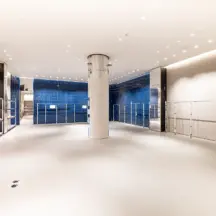
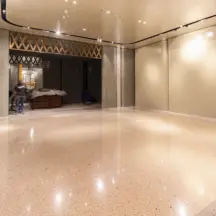
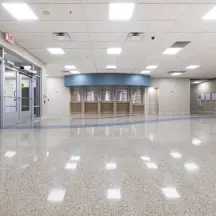
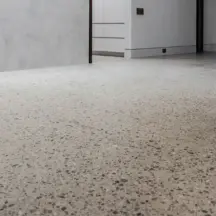
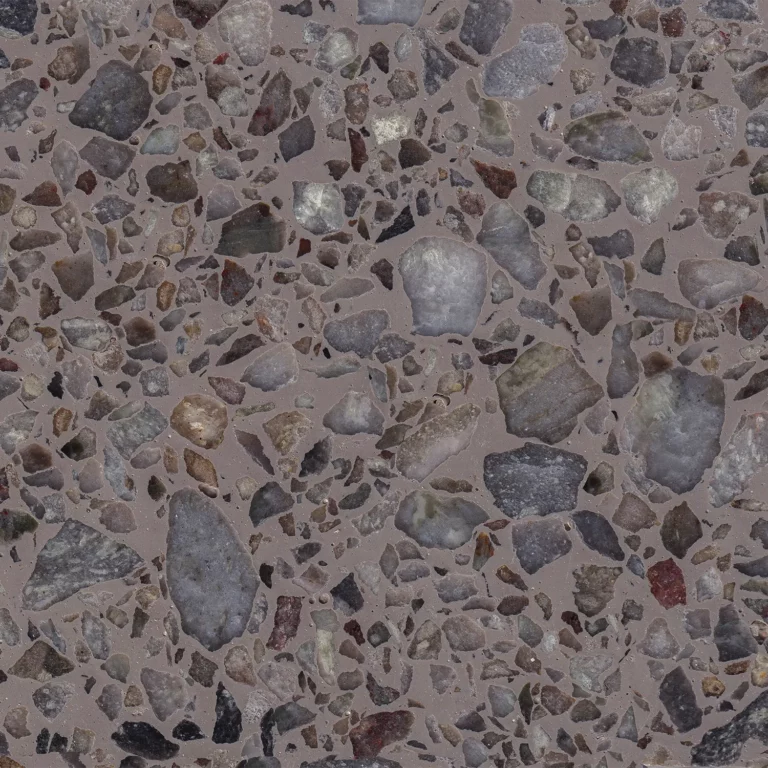
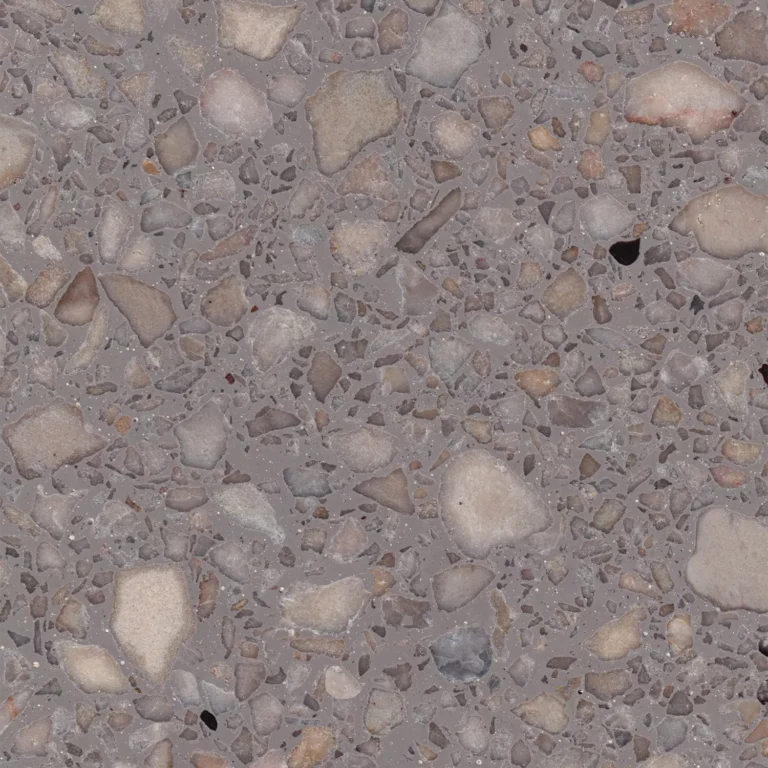
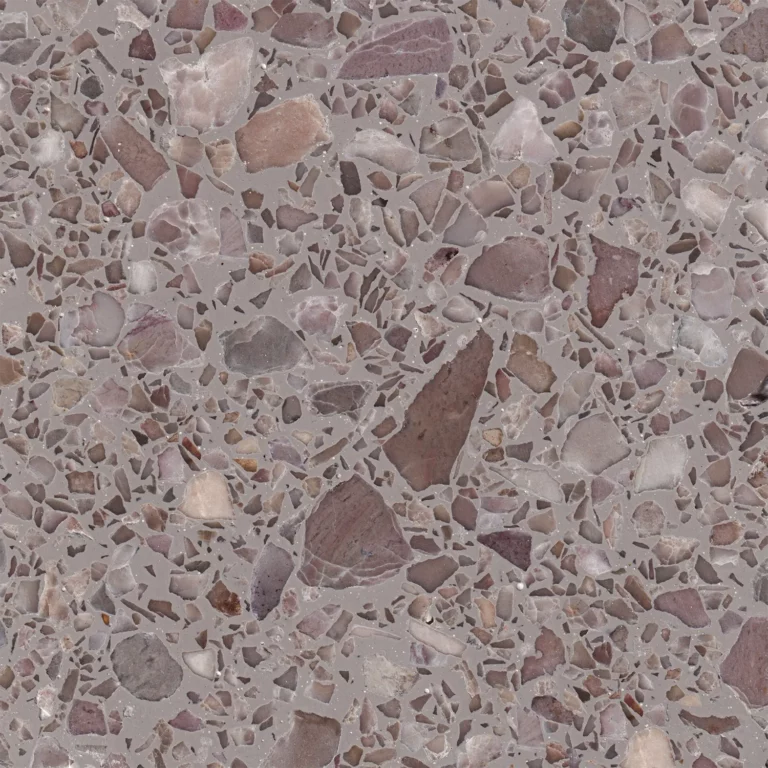
Terrazzo Floors Gallery
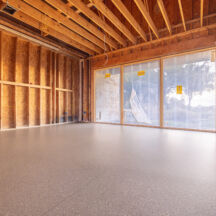
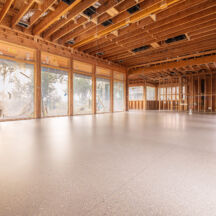
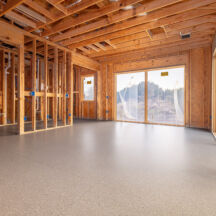
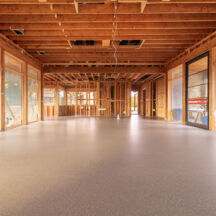

Terrazzo Samples
Frequently Asked Questions
The published figures are separate: high-quality terrazzo tile starts around $18 per square foot, while tile installation is $10–$15 per square foot depending on size and complexity. The project quote must define inclusions. These figures do not mean Craftsman offers standalone tile setting.
No. Compare the specified systems with the same design, area, substrate work, moisture-control scope, access and schedule. A system that suits one project is not automatically the cheapest or quickest choice for another.
No. Lifetime cost depends on installation, maintenance, replacement assumptions, the study period and discounting. A modeled comparison does not guarantee the cost or service life of a particular floor.
Blog
Craftsman Publishes 2026–2027 ESD Flooring Technical Guide
ESD Epoxy Flooring Case Study: 34,000 SF Dallas, TX