- Founded in 1999 • National commercial & industrial technical flooring contractor
- High-spec systems: ESD/static-control flooring, urethane cement, terrazzo, polished concrete, resinous flooring & coatings, and concrete overlays
- In-house W-2 installation crews provide national service coverage
- W-2 installers, not 1099 day-labor • Trained, insured, and accountable to you
- The same core workforce model, installation leadership, training system, documentation path & safety accountability can carry across phased and multi-site programs
- Since current ownership began in 2018, zero OSHA-reportable incidents and no workplace injury requiring medical treatment beyond first aid
- Current prequalification documents available through controlled review, including COI, W-9, safety information & other current qualification records
- Commercial estimates are typically returned within 24 hours; complex bids may take longer
Company: Craftsman Concrete Floors
Phone: +1 (844) 687-1961
Terrazzo tile is real terrazzo produced as modular units. The material is the same as any other terrazzo, decorative aggregate set in an epoxy or cementitious binder and then ground and polished to a finished surface, but the grinding and polishing happen at the factory, and the finished tiles are set on site with joints between units like other hard tile. That one difference in where the finishing happens drives most of the decisions that separate tile from poured terrazzo.
Craftsman Concrete Floors installs poured terrazzo for commercial and institutional projects nationwide with direct W-2 crews, and it does not set or install terrazzo tile as a standalone service. On qualifying large-format commercial tile projects, Craftsman performs the grinding-flat and polishing scope in collaboration with the setting contractor, which is the part of a tile installation that determines how flat and uniform the finished floor reads.
Our Clients




















What terrazzo tile is
Real terrazzo, manufactured as modular units
A terrazzo tile starts as the same mix a poured floor starts with. Aggregate such as marble or glass is bound in a cementitious or epoxy matrix, cast into a tile format, cured, and then ground and polished so the cut face of the aggregate shows as the finished surface. Because the surface is the material itself rather than a printed layer, a terrazzo tile keeps its appearance as it wears, the same way a poured terrazzo floor does.
Producers offer both standard lines, with set colors and aggregate blends, and custom production, where the aggregate, binder color, and blend are matched to a specific design. Custom production is how tile gets matched to an existing poured terrazzo floor, which is one of the most common reasons a project reaches for tile at all. Selection and installation requirements differ by format and product, so a category description like this one never substitutes for the specific product’s documentation.
Terrazzo tile compared with terrazzo-look products
A terrazzo tile and a terrazzo-look tile are different materials, and the difference is easy to test. Real terrazzo tile contains actual aggregate in an actual binder; the pattern goes all the way through the unit because the pattern is the material. Terrazzo-look porcelain and ceramic products reproduce the appearance as a printed or glazed image on a fired clay body, so the terrazzo pattern is a surface treatment rather than the substance of the tile.
Both categories have legitimate uses, and terrazzo-look products serve budgets and applications that real terrazzo does not chase. A buyer comparing the two should be clear about which material a quote actually covers, because the two are priced, specified, and maintained as different products.
Where tile sits among the terrazzo formats
Terrazzo reaches a project in four principal formats: poured epoxy terrazzo, poured cementitious terrazzo, precast terrazzo elements, and terrazzo tile. These formats are not interchangeable, and selection and installation scope differ across them, so naming the format is the first step in any terrazzo conversation. Poured systems and format selection are covered in depth under terrazzo flooring.
Terrazzo is also distinct from polished concrete, a confusion that comes up often with tile because both can read as gray stone-like surfaces. A terrazzo topping is its own finished wear layer installed over a prepared substrate, while polished concrete refines the structural slab itself into the finished floor.
Terrazzo tile compared with poured and precast terrazzo
Tile versus poured terrazzo
Poured terrazzo is formed in place and tile is formed in a factory, and every practical difference follows from that. A poured floor is placed as a wet mix over the prepared substrate, with divider strips laying out the design, and is then ground and polished in place into a continuous surface whose layout can run borders, curves, logos, and color fields anywhere the design calls for them. Tile arrives already finished, so the design vocabulary becomes the module. The grid of units and joints, the colors and blends of the tiles selected, and the patterns repetition can build are the tools the format offers.
The formats also differ in what the installation asks of the building. Poured work is a field operation with grinding, slurry, and cure sequencing; tile setting is a tile trade operation with setting materials and grout. Which set of demands fits better depends on the project’s areas, schedule, trades, and design intent, which is why format selection is a project decision rather than a ranking.
Tile versus precast terrazzo elements
Precast terrazzo and terrazzo tile are both factory-made, but they answer different questions. Precast elements are cast as finished shapes for specific locations, such as stair treads, cove base, and wall panels, and each piece is fabricated to its place in the building. Tile is a repeating flat module for covering field areas, chosen where a modular surface is acceptable or desirable.
The two often appear on the same project, with precast handling stairs and transitions while tile or poured terrazzo covers the field. Treating them as one category obscures the real scoping question, which is what each surface in the project needs to be made of and by whom.
What grout joints and module lines mean over time
Joints are the defining visual and maintenance feature of a tile installation. Visually, the module grid is part of the design, and it can be used deliberately, but it also interrupts the continuous field that poured terrazzo produces, and it fixes the scale of the pattern to the size of the unit. Grout lines introduce a second material with its own color, texture, and care requirements alongside the terrazzo surface itself.
Institutional observations give a sense of what joints mean in service, within their own scopes. An Airport Cooperative Research Program synthesis identifies smooth monolithic terrazzo as reducing surface transitions and qualitatively improving baggage-cart rolling compared with carpet or jointed tile; that finding comes from an airport study of aging travelers and is qualitative rather than a universal rule. In an LA Metro station comparison, the agency reported approximately 66% less cleaning labor for terrazzo than porcelain tile. That figure comes from one high-volume underground-station review, documented in the agency’s station-materials white paper, and is not normalized for area, traffic, cleaning standard, or condition. Neither observation disqualifies tile; both describe what a jointed surface asks of a facility compared with a monolithic one.
When poured terrazzo is the stronger choice
Poured terrazzo is usually the stronger choice when the project wants one continuous surface over a large area, a custom layout that crosses the floor without regard to a module grid, or design elements such as borders, medallions, and multi-color fields placed exactly where the drawings put them. Because the floor is formed in place, its design is not constrained to what a repeating unit can build, and the finished field has no grout lines to maintain.
Tile earns its place where areas are bounded, where a modular look is the design intent, where matching an existing poured floor calls for custom-produced units, or where a poured operation is impractical in the space. For projects in poured territory, Craftsman contracts and self-performs terrazzo installation nationwide with direct W-2 installation crews, and the terrazzo flooring page covers systems and selection.
Terrazzo Floors Gallery

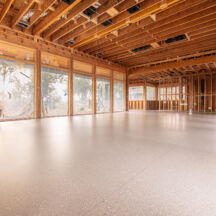
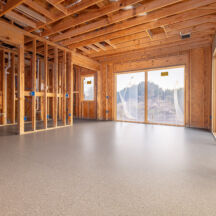
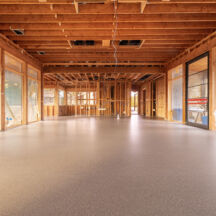
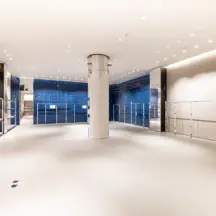

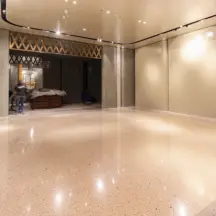
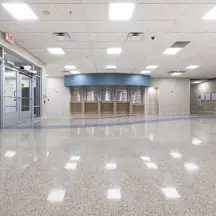
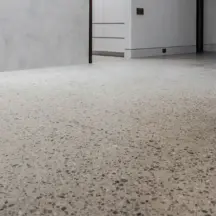
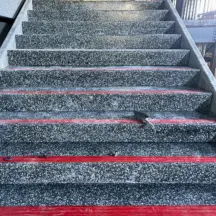
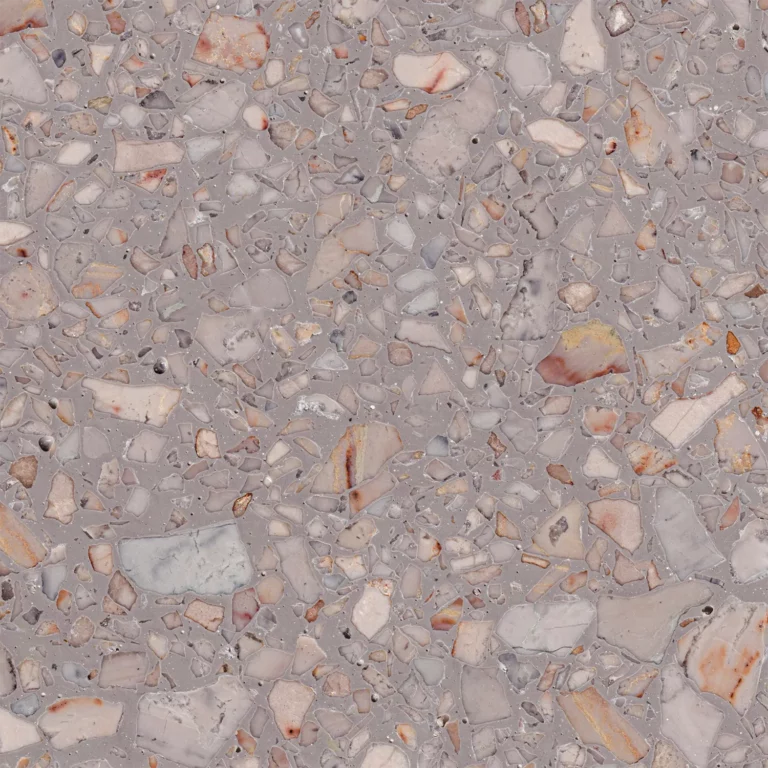
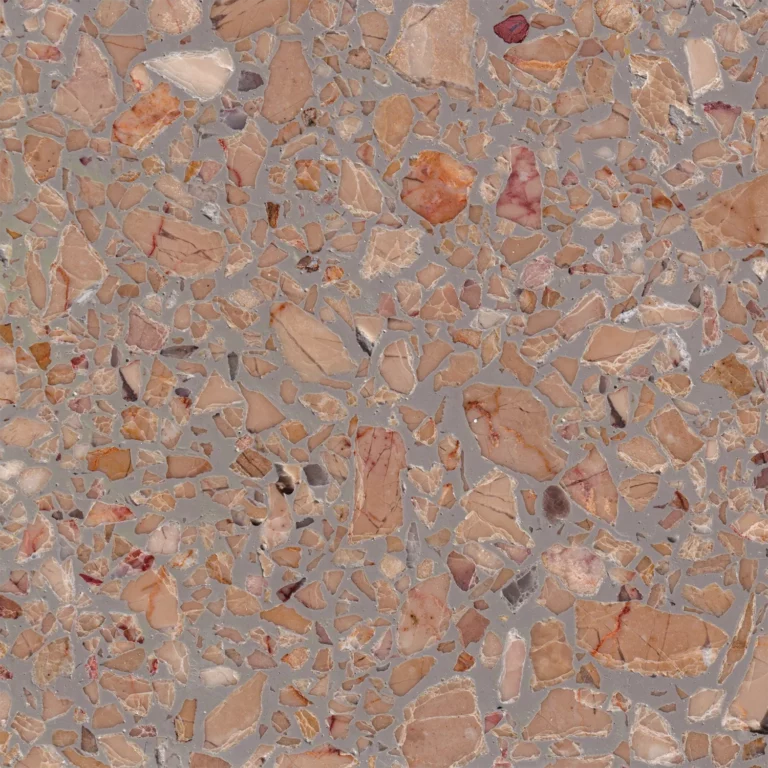
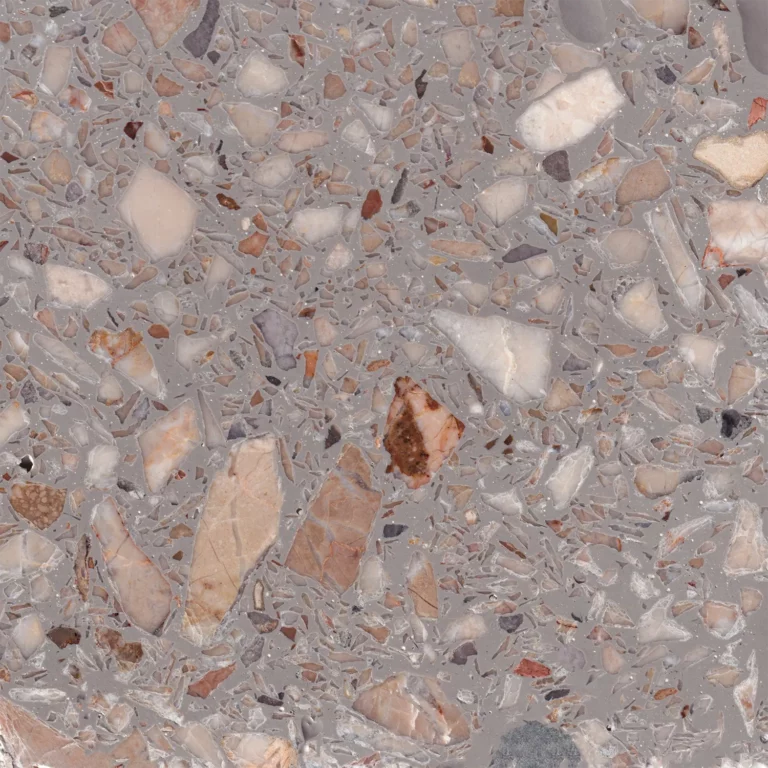
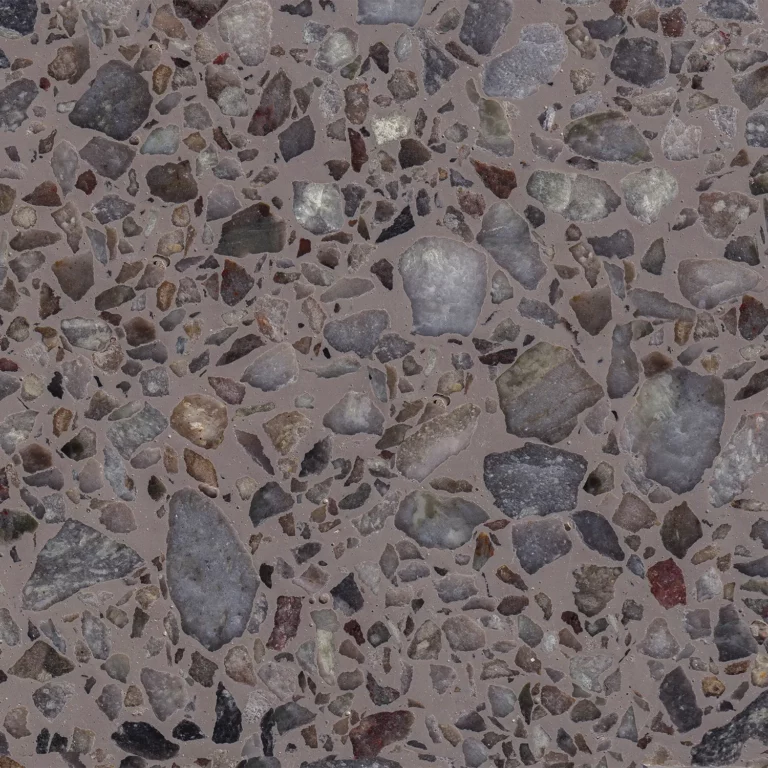
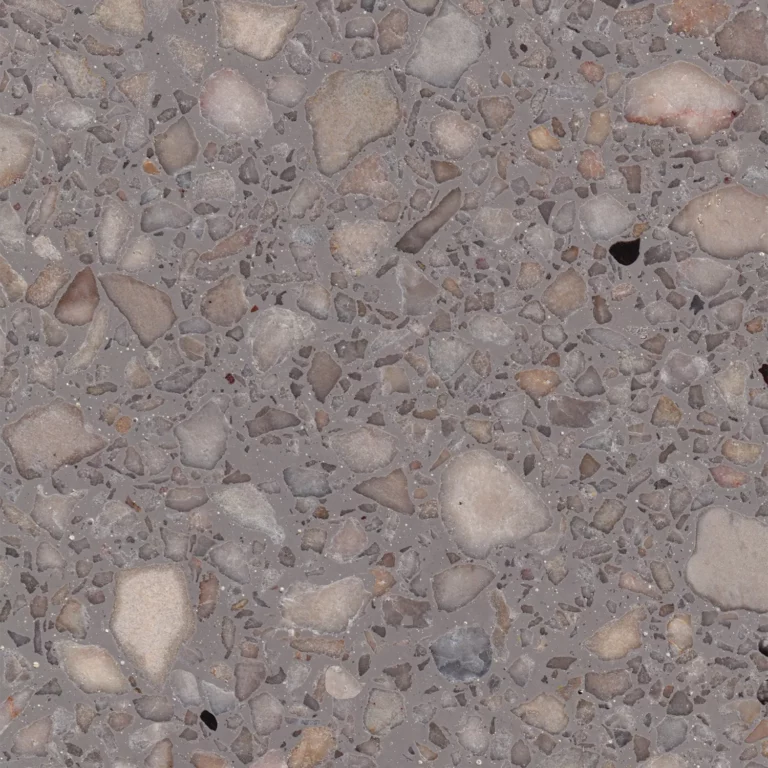
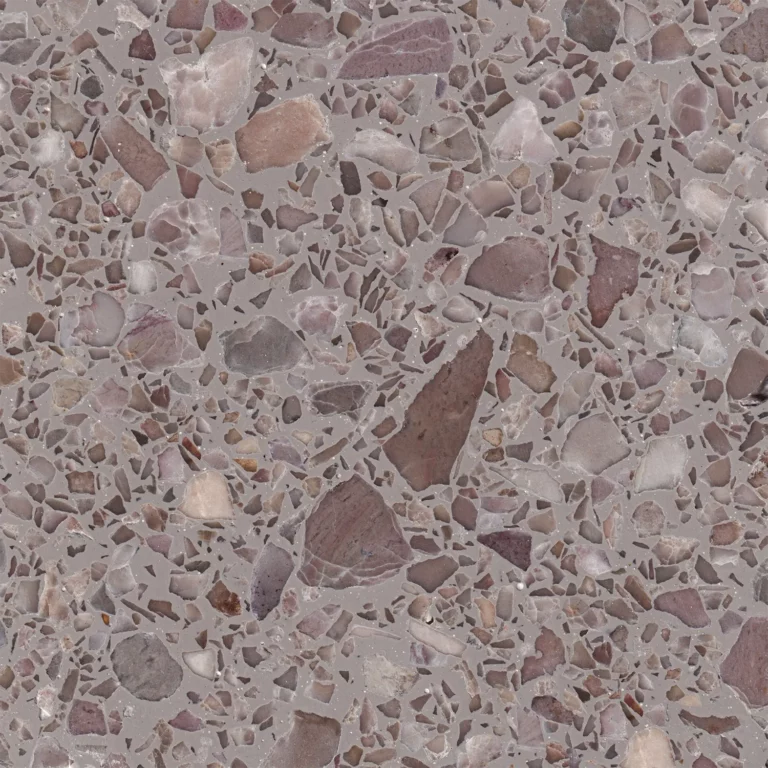
Terrazzo Samples
Request a Proposal
Submit project parameters for preliminary analysis. Commercial estimates typically returned within 24 hours.
Where terrazzo tile is used
Commercial applications
In commercial buildings, tile shows up most often in bounded areas and in places where a poured operation is impractical. Elevator cabs are the clearest example, since pouring, grinding, and curing a terrazzo floor inside a cab is rarely realistic, and a custom-produced tile can match the poured terrazzo installed in the lobby outside the doors. Stair landings play the same role where they adjoin poured treads or adjacent terrazzo systems, and lobbies, corridors, and restrooms in smaller footprints use tile where a modular surface fits the design and the budget conversation.
Matching adjacent poured work deserves emphasis because it is the most specific thing tile does in commercial practice. When an addition, renovation, or infill area meets an existing terrazzo field, custom tile production is one of the tools for carrying the appearance across, alongside poured matching, and the right choice depends on the area’s size, access, and edge conditions.
Walls, stairs, backsplashes, and countertops
Terrazzo tile extends to vertical and secondary surfaces where poured terrazzo rarely goes. Wall fields, wainscots, and backsplashes take tile readily, and stair applications pair tile landings with treads made as precast elements. These uses let a project carry the terrazzo palette onto surfaces that would otherwise break the design language.
Counters are their own subject with their own fabrication questions, and terrazzo counter surfaces are addressed under terrazzo countertops.
Residential uses and where Craftsman fits
Residentially, terrazzo tile appears in bathrooms, kitchens, and feature walls, where the format’s modularity suits room-scale areas and standard product lines serve house-scale projects. That market is served by tile suppliers and tile-setting contractors. Small-format terrazzo tile is not a Craftsman service, and grout-line and seam maintenance on small-format work follows ordinary tile-care practice.
Residential buyers drawn to terrazzo surfaces still have Craftsman-relevant paths when the project calls for them, including terrazzo counters and, for substantial projects, poured work quoted through the standard estimate process.
Who does what on a terrazzo tile project
Setting and finishing are separate scopes
A terrazzo tile installation has two distinct scopes, and different trades own them. Setting is tile-trade work performed by a tile-setting contractor under tile-industry methods, and it covers substrate preparation, layout, setting materials, placing the units, and grouting the joints. Mechanical finishing, where the project specifies it, is terrazzo-trade work, grinding and polishing the set surface with the same discipline used on poured terrazzo floors.
Craftsman’s role follows that split. Craftsman does not set or install terrazzo tile as a standalone service, and small-format tile work is outside its scope entirely. On qualifying large-format commercial projects, Craftsman performs the grinding-flat and polishing scope in collaboration with the setting contractor, entering after the units are set and bringing the field to its finished state.
What grinding flat and polishing after setting accomplishes
Grinding a set tile field flat addresses the things factory finishing cannot control. Once units are set across a large floor, small differences in height between neighboring tiles, called lippage, and small variations in plane across the field are built into the installation. Grinding the set surface brings the units to one plane, eases the transitions at the joints, and refinishes the field to a uniform sheen, so a large-format installation reads much closer to a continuous terrazzo surface while remaining a tile system underneath.
This scope is specified, not automatic. Whether a project grinds after setting depends on the tile format, the specification, and the flatness and appearance standard the design requires, which is exactly the conversation to have before the tile is ordered rather than after it is down.
How a qualifying project comes together
Qualification is a project-by-project review rather than a published threshold. The conversation covers the tile format and product, the areas and square footage involved, the substrate and setting plan, the specification’s flatness and finish requirements, and the schedule, and it works best when the setting contractor is at the table early so the setting and finishing scopes sequence cleanly. With basic project size, system, condition, and schedule inputs, Craftsman can usually provide a preliminary installed-cost range for its scope during the initial call or within a few hours; a preliminary range is not a formal proposal, a final scope, or a guaranteed price.
Architects and general contractors weighing tile against poured terrazzo can run both questions through the same review, since format selection and finishing scope are usually decided together.
Design, budget, and upkeep decisions
Samples, colors, and aggregate selection
Tile design decisions run through the same variables as the rest of terrazzo design. Aggregate choices range from marble and other stone through recycled and colored glass, the binder color carries the field, and the blend sets the overall reading, from quiet monochrome to saturated color. Standard product lines fix those choices into set offerings; custom production opens them up, at the cost of longer selection and approval cycles.
An approved physical sample is the control for appearance expectations, on tile as on every terrazzo format, and edge conditions and transitions deserve the same advance approval as the field. Sample review and existing-terrazzo matching are handled through terrazzo samples, design development is supported through terrazzo design services, and initial design and specification assistance is available at no cost.
Budgeting for terrazzo tile
A tile budget assembles from the tile product itself, the setting contractor’s scope, and any mechanical finishing the specification adds, so useful numbers come from the specific product and project rather than from a published range. Format choice moves the arithmetic in both directions, and comparing tile against poured terrazzo on cost only works when both are priced against the same areas and design.
Numeric ranges, comparisons, and lifecycle economics are covered in the terrazzo floor installation cost guide.
Keeping tile in service
Care and repair for terrazzo tile follow the installed system, with the joints as the one addition tile brings to the maintenance picture, since grout lines are a second surface with their own care alongside the terrazzo. Routine-care practice and product guidance are covered under terrazzo cleaning and maintenance.
When tile is damaged or an aged installation needs more than cleaning, the assessment-first approach described under terrazzo restoration applies to tile surfaces as it does to poured floors.
Starting a project conversation
What to send and what happens next
The useful starting package for a tile conversation is the project’s approximate square footage and areas, the tile format or product under consideration, the substrate and setting plan if one exists, the specification’s finish and flatness requirements, and the schedule. Drawings, photographs, and the setting contractor’s contact all sharpen the first response, and a project specialist responds within one business day.
The same conversation serves projects that land on poured terrazzo instead, since format selection and scope usually resolve together. Send the project basics through the proposal form, or start with a phone call about the areas and the schedule.
Terrazzo Knowledge Center
Resource links
Systems & Selection
Project Planning & Delivery
Where Terrazzo Is Used
Design & Specification
Restoration & Maintenance
Performance, Safety & Sustainability
Frequently Asked Questions
Terrazzo tile cost is set by the tile product selected, the setting contractor’s scope, and any mechanical finishing the specification adds after setting. Beyond that assembly, tile budgets move with the drivers that move terrazzo work generally, including the system and format, design and divider-strip complexity, aggregate selection, square footage, access and schedule, substrate condition, and any removal or repair scope; those are drivers rather than a universal installed price. Numeric ranges and lifecycle comparisons are covered in the terrazzo floor installation cost guide, and a preliminary range for a specific project is available through the estimate process.
Module sizes and thicknesses are set by the tile manufacturer and product line, and they vary too widely across producers for one published range to be reliable. Confirm dimensions against the specific product being specified, and settle size selection in the same conversation as the setting plan and joint layout, because format, setting method, and finishing scope interact.
Routine care for terrazzo tile is the same in kind as for other terrazzo, built on regular dry-soil removal and a cleaning program compatible with the surface, typically with pH-neutral cleaners. Exact chemistry, pads, cadence, and any sealing decisions depend on the installed system and its condition, and grout joints add a second material with care requirements of their own. Product-level guidance lives under terrazzo cleaning and maintenance.
Often, when condition permits. Existing terrazzo can frequently be repaired, re-ground, or repolished, and a tile format adds the option of replacing individual units where matching tiles are available, though matching aged material has real limits and no repair should be promised as invisible. Condition assessment and repair decisions are covered under terrazzo restoration.
No. Cement tile carries its pattern in a pigmented cement layer at the surface, while terrazzo tile is decorative aggregate set through a cementitious or epoxy binder and then ground and polished so the aggregate itself is the finished surface. The two materials look different up close, wear differently, and are specified as different products.
Blog
Craftsman Publishes 2026–2027 ESD Flooring Technical Guide
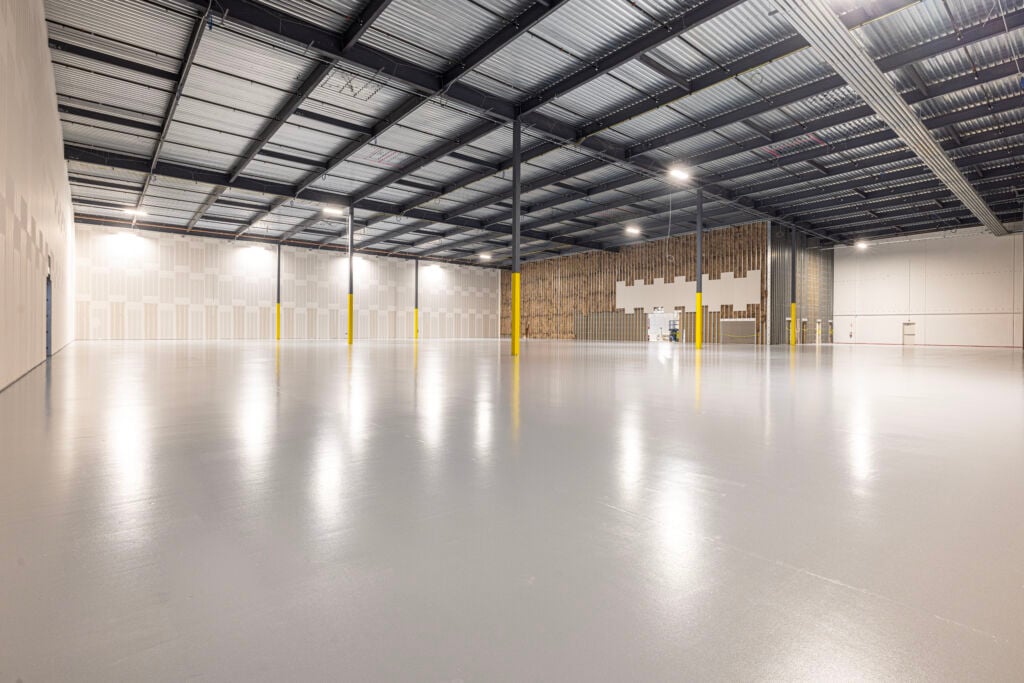
ESD Epoxy Flooring Case Study: 34,000 SF Dallas, TX