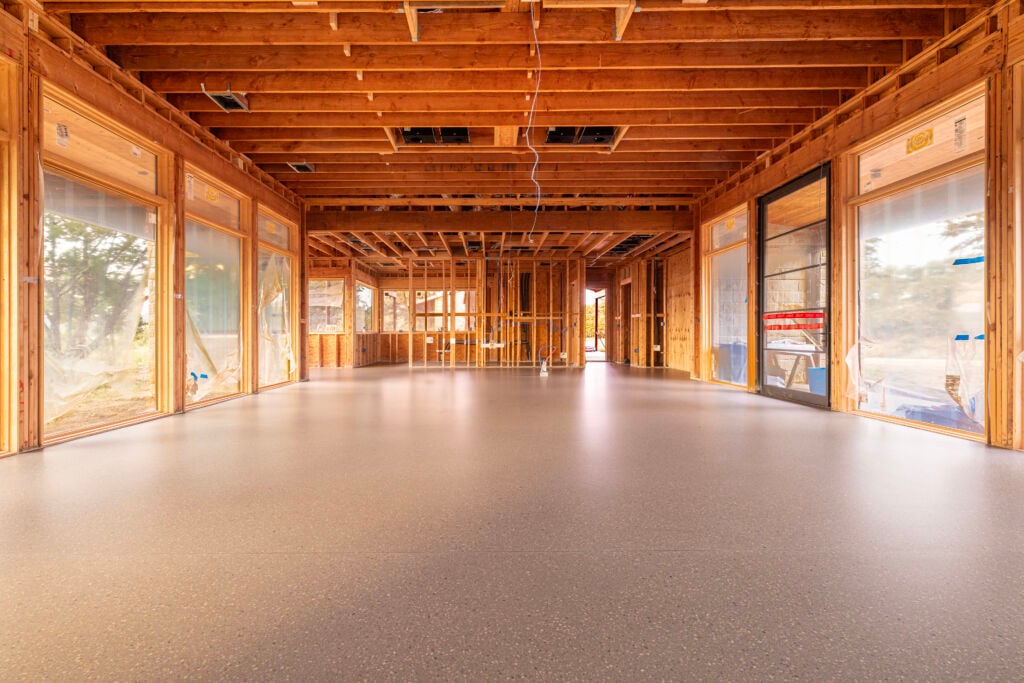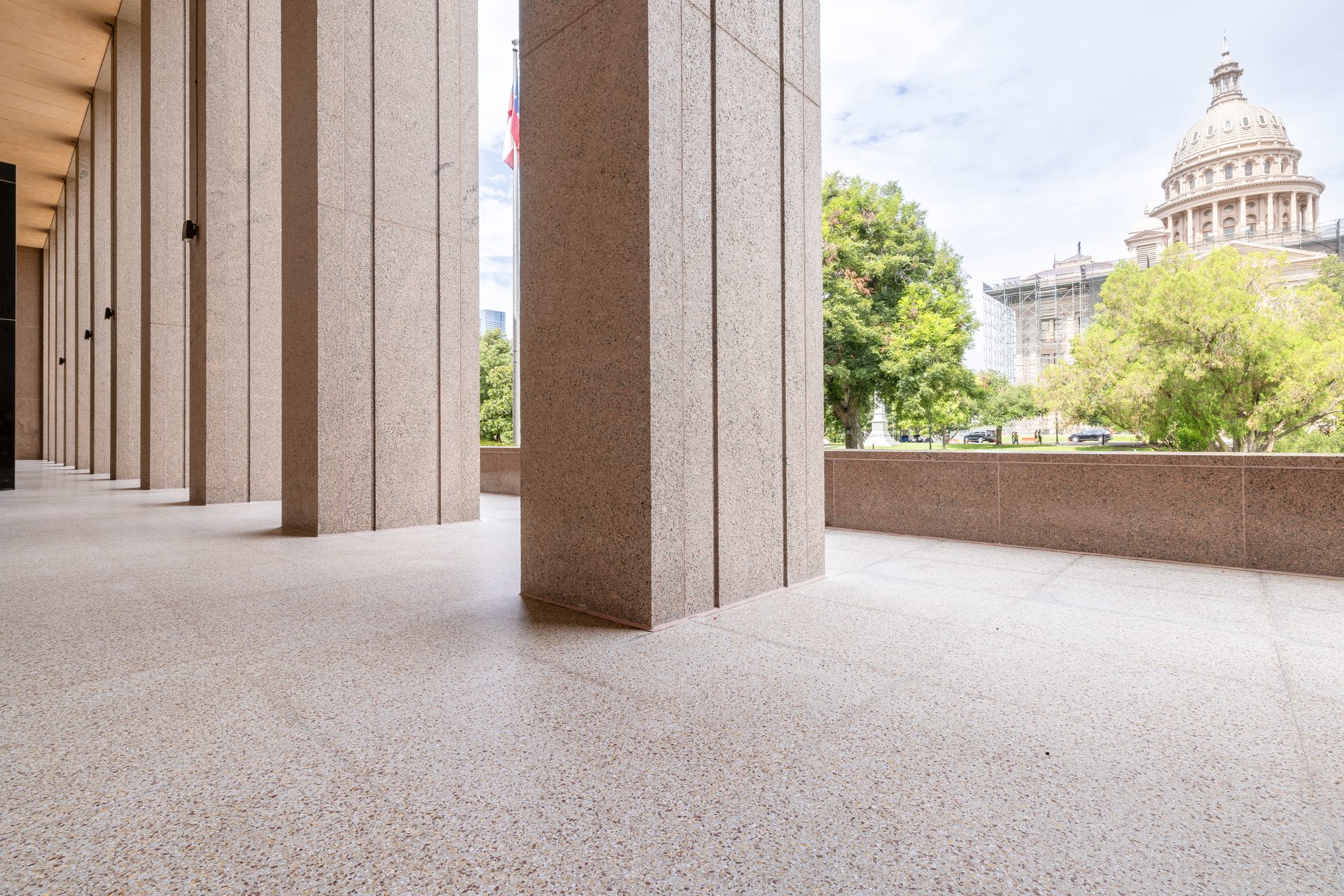
Epoxy terrazzo is decorative aggregate set in an epoxy binder over a prepared substrate, then ground and polished as its own finished wear layer. Craftsman provides national service coverage. Installation work is performed by Craftsman-employed W-2 crews.
Epoxy terrazzo is evaluated when a nominal 1/4- or 3/8-inch topping and approximately 3–4 pounds per square foot of system weight fit the project constraints. Whether epoxy or a cementitious binder suits a given slab, exposure, and design is a separate selection decision, compared directly in the terrazzo system selection guide.
The Epoxy Terrazzo System
Composition sets everything downstream in an epoxy terrazzo floor: aggregate size fixes the topping thickness, the resin matrix carries the color, and the ground surface becomes the finished wear layer instead of a coating laid over one.
Composition and How the Finished Surface Is Made
Epoxy terrazzo uses decorative aggregate in a pigmented epoxy binder placed over a prepared substrate, then ground and polished as the finished wear layer. The NTMA Terrazzo Systems Reference Guide describes poured terrazzo as aggregate in a cementitious or resin matrix that is ground smooth after placement and cure; precast terrazzo is a separate format. In an epoxy system, binder color and aggregate selection shape the appearance, while the topping remains distinct from the structural concrete slab.
Nominal Thickness, Aggregate Size, and Installed Weight
The dimensions that control planning are the topping thickness and the system weight, and both are set by aggregate size. The published epoxy-terrazzo system reference describes epoxy terrazzo options at nominal 1/4-inch thickness with #0 and #1 aggregate, or nominal 3/8-inch thickness when #2 aggregate is used. General system weight is approximately 3–4 pounds per square foot. Those figures come from the published epoxy-terrazzo system description, and they describe system options, not a universal project specification; the thickness a given project uses is fixed by its own documents and the products specified. Section depth measured in fractions of an inch and dead load measured in single-digit pounds per square foot are the reason the system is evaluated for renovations and elevated slabs, where added build-up height and added load both have to be justified. Larger aggregate needs a deeper topping to seat it, so a design decision about chip scale is also a dimensional decision.
| Terrazzo system | Published nominal thickness | Published system weight |
|---|---|---|
| Epoxy terrazzo with #0 and #1 aggregate | Nominal 1/4 inch topping | Approximately 3 to 4 pounds per square foot, general system weight |
| Epoxy terrazzo with #2 aggregate | Nominal 3/8 inch topping | Approximately 3 to 4 pounds per square foot, general system weight |
| Sand-cushion terrazzo | Approximately 2 1/2 to 3 inches total assembly over a nominal 1/2 inch topping | Approximately 25 to 30 pounds per square foot |
| Monolithic cement terrazzo | Nominal 1/2 inch topping, direct bond, no thick underbed | Not stated in the system reference used here |
| Polyacrylate terrazzo | Nominal 3/8 inch topping | Not stated in the system reference used here |
How Owners Specify the System
Public owners treat epoxy terrazzo as a defined system with scoped requirements, not a generic finish. For GSA-owned federal projects, the 2024 P100 durability table lists cementitious polyacrylate terrazzo at a 3/8-inch baseline and epoxy terrazzo at a 1/4- or 3/8-inch Tier 3. That entry, in GSA’s P100 facilities standard at section 3.7.14, governs GSA projects only; it is not a universal ranking of terrazzo systems. Its value to a specifier elsewhere is as a model of scoped specification: a named standard, a named system, and a stated thickness, rather than “terrazzo” as an undifferentiated material.
What Product Data Sheets Report
Two epoxy terrazzo bids can name two different resin systems, and the numbers that separate them sit in the product data sheets and not in the category. Those sheets are the governing performance record for the product specified: the Morricite product sheet reports compressive strength of 12,000 to more than 14,000 psi, Shore D hardness of 75–85, and concrete bond of at least 300 psi with 100% concrete failure, alongside printed specification baselines of 10,000 psi compressive strength, 3,000 psi tensile strength, and Shore D 60–85. Those are one vendor’s published values from the Morricite product data sheet, and that sheet’s test-method labels appear transposed, so the figures are quoted here without their method designations. Morricite also reports a self-extinguishing result under ASTM D635 with a maximum burning extent of 0.25 inch, a named-product result that is not a building-code classification and not a property of all terrazzo. Formulation and reported values differ by manufacturer, so the data sheet and installation guide for the specified product govern the job.
Design Flexibility and Divider Strips
Aggregate Sizes and Divider Strip Materials
The visual range of an epoxy terrazzo floor is organized around standardized aggregate sizes and a small set of divider materials. Published aggregate gradations run from sizes 0 through 5; Venetian terrazzo uses sizes 1 through 5. Epoxy-terrazzo divider strips may be zinc, brass, plastic, or aluminum. Both points come from a published systems reference guide, and system design still governs which aggregate sizes and divider materials a particular assembly can accept. Within those constraints the palette is wide: matrix pigment, aggregate type, aggregate scale, and strip metal each change the reading of the floor, from a fine, nearly uniform field at the small gradations to a bold exposed-chip surface at the large ones.
Divider Strips, Layout, and Crack Control
Divider strips do two different jobs, and separating them protects the floor. As layout elements, strips define color fields, borders, and patterns, and they give the installer clean stopping lines between mixes. As movement elements, their placement is an engineering question. Divider strips placed for decoration do not prevent cracking. Movement-joint and crack-control requirements must be coordinated with the concrete and project documents. That warning is the published epoxy terrazzo guidance, and it has a practical consequence for project teams: the strip layout drawn for appearance has to be reconciled with the slab’s joints and anticipated movement before placement, because a decorative grid gives no protection where the concrete itself intends to move.
Design Development and Samples
Aggregate blends, matrix color, and divider-strip layout get settled during design development against a physical sample, not a screen rendering. Craftsman supports that stage through its terrazzo design services, and the sample the team approves becomes the reference the installed floor is read against. One boundary belongs in the specification beside it: a poured decorative material varies naturally, so an approved sample establishes the intended range of the floor and not a promise of identical appearance across every square foot.
Terrazzo Floors Gallery

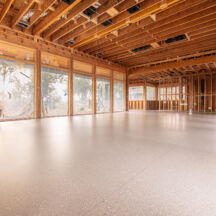
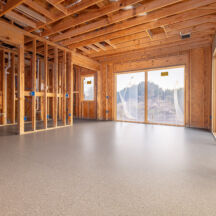
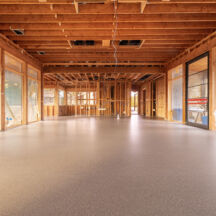
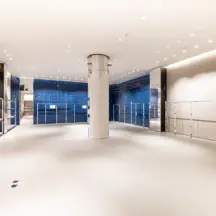

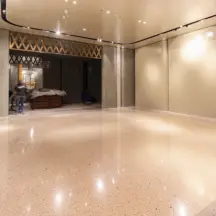
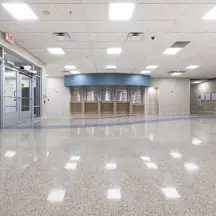
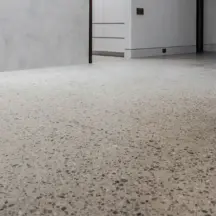
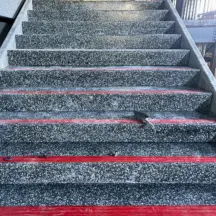
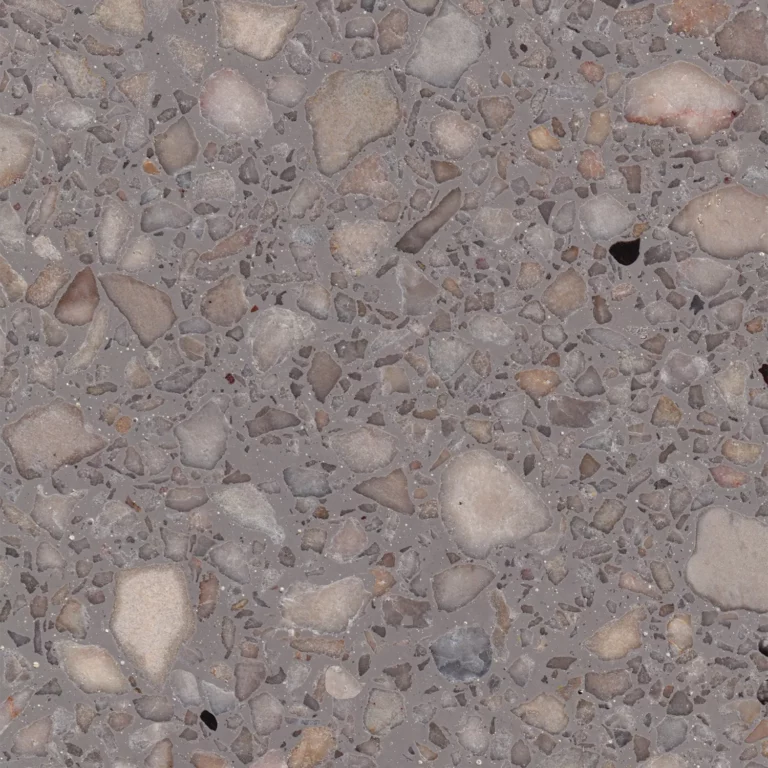
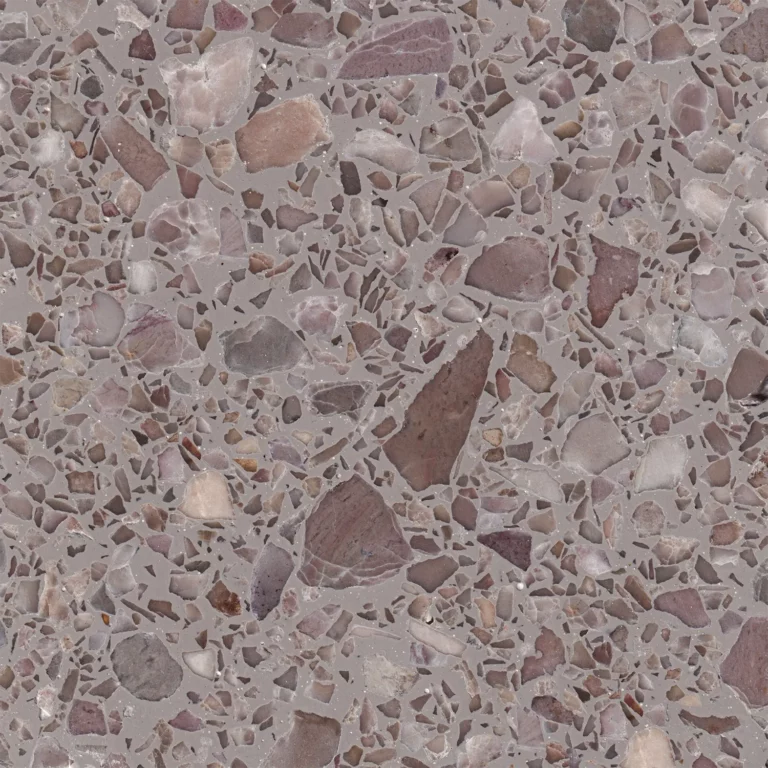
Terrazzo Samples
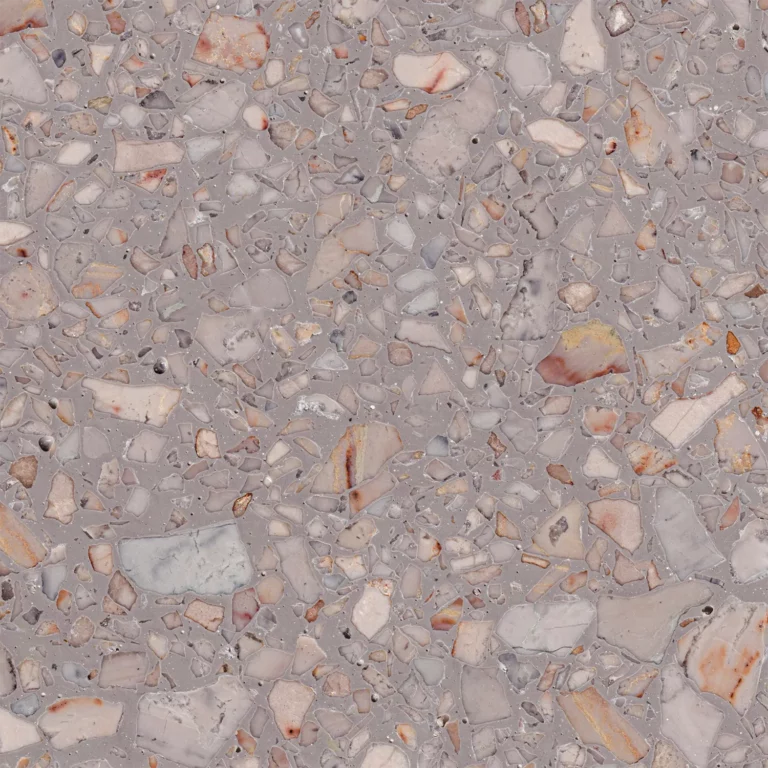
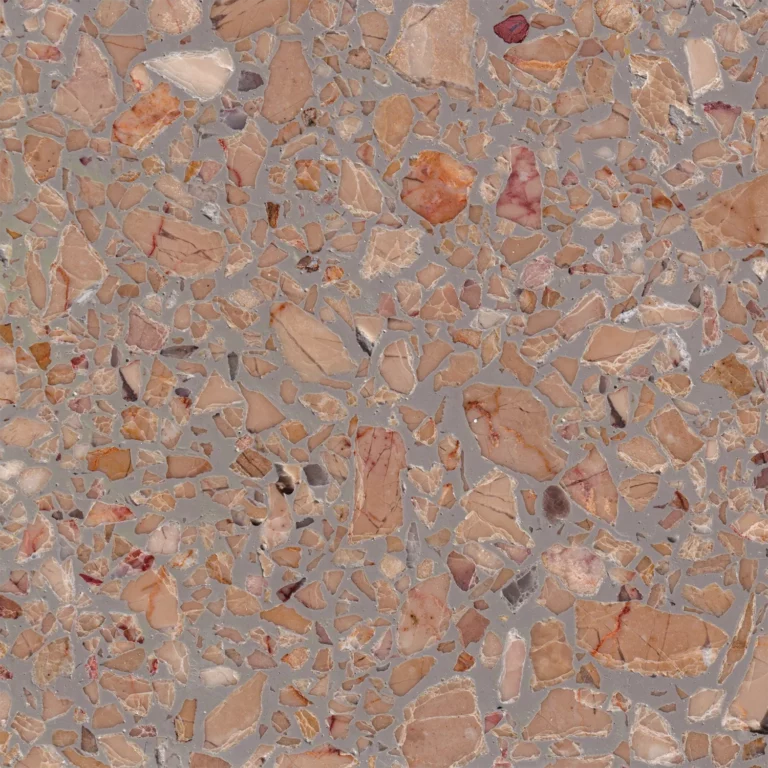
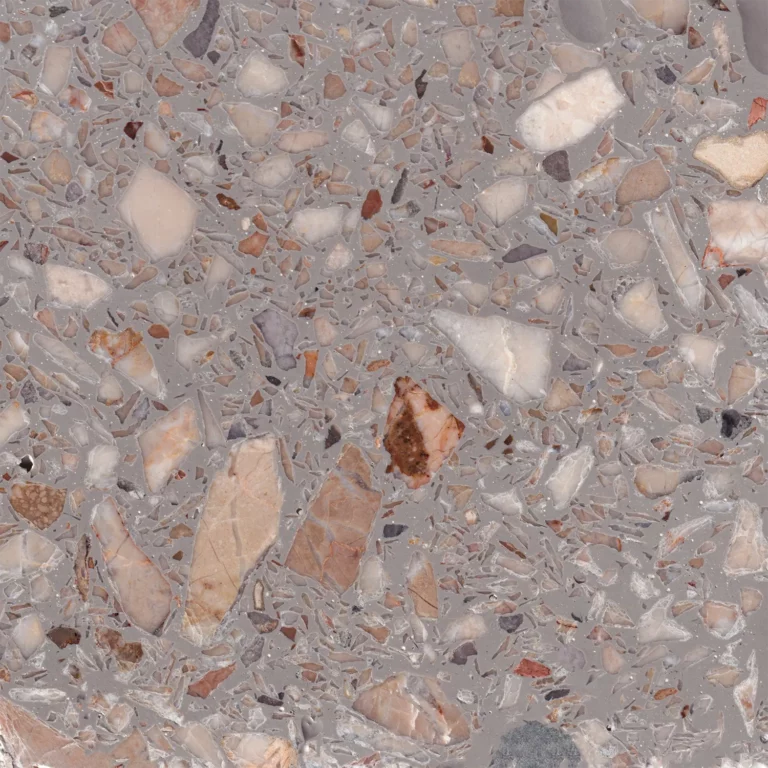
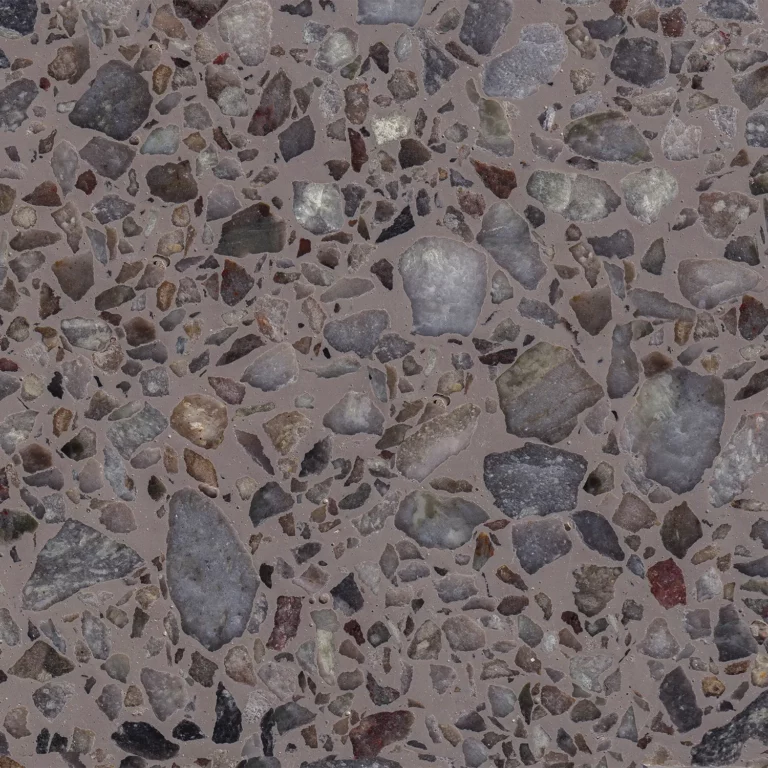
Substrate, Moisture, and Installation
A thin bonded topping takes its behavior from the concrete beneath it, so the slab’s condition and moisture state are evaluated before any resin is mixed.
Substrate Conditions and Preparation
Epoxy terrazzo is installed as a bonded topping, and preparation standards come from the products in the assembly, not from a single universal rule. A membrane example shows how specific those requirements get. The Terroxy Acoustical Membrane data sheet requires concrete to cure at least 28 days without curing agents and calls for shotblasting to an ICRI CSP 3–5 profile. The membrane is applied at 1/8 inch; its flexible epoxy is reported at 140–160% elongation and contains recycled rubber. Those values, from the product data sheet, bind that named membrane only; they are not requirements for every terrazzo assembly, and the recycled-rubber content carries no automatic credit under any rating system.
The general lesson holds across products: cure history, surface profile, and contamination are checked against the specified system’s documents before installation. Where substrate and site-condition review, surface preparation, or moisture evaluation are included in a Craftsman project scope, Craftsman performs or coordinates that work as part of the installation contract.
Moisture and Vapor Limits
Moisture vapor moving through a slab is a governing condition for resin-bound floors, and the limits are product-specific. One Morricite installation guide limits untreated-concrete moisture-vapor emission to 3.0 pounds per 1,000 square feet per 24 hours under ASTM F1869 and requires the slab surface to remain at least 5°F above ambient dew point during placement. Both requirements come from a legacy Morricite installation guideline; they are that product’s rules, not universal terrazzo limits, and a reading above such a value is not evidence that a floor would have failed.
What the example establishes is the shape of the decision: the specified system publishes its moisture and placement-environment conditions, the project tests against them, and mitigation or scheduling decisions follow from the measured slab instead of assumption. Elevated readings are a preconstruction finding, not a mid-pour surprise, when the evaluation is sequenced early.
Placement, Grinding, and Finishing
A conventional epoxy-terrazzo sequence places and cures the poured topping before rough grinding; it may then use color-matched epoxy grout to fill pinholes and voids before final polishing. Some proprietary systems report groutless installation, so the specified product documents govern the sequence.
The documented installation procedure is a general example, not a universal requirement; some proprietary systems report groutless installations. Product-specific instructions govern placement, cure, grouting, and finish work, while the terrazzo floor polishing page covers mechanical refinishing in more detail.
Scheduling Around an Operating Facility
Craftsman can support day, night, weekend, phased, and continuous-operation schedules, including approximately 24/7 availability across most of the year, when the project schedule and committed resources support it. Phased work in active or occupied facilities and night or weekend shutdown windows are planned within the executed project scope, without promising zero operational interruption.
Lifecycle, Limits, and Execution
Lifecycle evidence for epoxy terrazzo is assumption-sensitive, so project teams should evaluate service horizon, maintenance, replacement, and model inputs alongside first cost.
Long-Term Cost Evidence
Lifecycle-cost models for terrazzo disagree, and their assumptions decide their answers. A Sika-authored 50-year healthcare model reports terrazzo at $80.30 per square foot and VCT at $112.80 per square foot; that study is vendor-authored, healthcare-specific, and built on dated national-average assumptions without a published sensitivity analysis. Pointing the other way, an NWFA-sponsored study modeled 18 flooring types over 75 years using ASTM E917 and found poured epoxy, VCT, and sheet vinyl cost more than the other tested floors; in that model, terrazzo also cost more per year than solid and engineered wood. The NWFA result is an industry-sponsored model whose service-life, geography, use, cost-source, and discount-rate assumptions control it.
| Model | Stated scope and assumptions | Reported result |
|---|---|---|
| Sika 50-year healthcare model | Vendor-authored, healthcare-specific, dated national-average assumptions, no published sensitivity analysis | Terrazzo at $80.30 per square foot; VCT at $112.80 per square foot |
| NWFA-sponsored 75-year model under ASTM E917 | Industry-sponsored; result controlled by material service lives, geography, use, cost sources, discount rate, and the 75-year horizon | Poured epoxy, VCT, and sheet vinyl cost more than the other tested floors; terrazzo also cost more per year than solid and engineered wood |
Neither model prices a specific building. The terrazzo floor installation cost guide carries the installed-cost and lifecycle-economics detail, including what drives price on real projects.
Environmental Evidence and Its Limits
Environmental comparisons for epoxy terrazzo are assumption-sensitive and do not support a universal ranking. In one NIST BEES comparison using 2011 data, a generic 3/8-inch epoxy-terrazzo product ranked sixth of nine flooring alternatives overall under the study’s weighting method. The model assumed a 75-year life and excluded routine cleaning and maintenance; it is an older generic-product analysis reported by Dovetail Partners, did not compare wood flooring, and cannot be generalized to every terrazzo product. A separate micro-chamber screening study found that emissions from one unspecified terrazzo sample increased when temperature rose from 26°C to 35°C.
That 2024 laboratory study tested a cut-edge sample of one unidentified product without adhesive or an installed assembly. It does not establish how all terrazzo or all low-VOC products behave, so project teams should review product-specific environmental documentation for the systems under consideration.
Maintenance and Repair Over the Floor’s Life
Care and repair questions for a terrazzo floor have condition-dependent answers, and the detailed answers live on the pages dedicated to them: routine care on the cleaning and maintenance guide, mechanical refinishing on the polishing page, and patching, crack repair, and renewal decisions on the restoration page.
What belongs in an epoxy terrazzo decision at specification time is the principle those pages share: the installed system and its condition determine the correct products, methods, and intervals, so a maintenance plan is written for the floor that exists, not copied from a generic schedule.
How Craftsman Installs Epoxy Terrazzo
Terrazzo is one of the technical flooring categories Craftsman self-performs nationwide, and the installation model is direct employment: the crews that place, grind, and polish the floor are Craftsman’s own installers, not subcontracted labor. Where the project scope includes them, Craftsman performs or coordinates substrate and site-condition review, surface preparation, moisture evaluation and mitigation, installation-related testing applicable to the specified system, and project-appropriate closeout documentation. Engagement starts small. A project specialist responds within one business day, and with basic size, system, condition, and schedule inputs, Craftsman can usually provide a preliminary installed-cost range during the initial call or within a few hours; a preliminary range is not a formal proposal.
Initial consultation and initial design and specification assistance are available at no cost, which covers early review and not unlimited engineering, testing, mockups, extensive design development, or repeated revisions. A project that has reached drawings starts with specification review; one still comparing binders starts earlier, with the terrazzo overview and the system selection guide, which frame that decision before the epoxy conversation gets specific.
Terrazzo Knowledge Center
Resource links
Systems & Selection
Project Planning & Delivery
Where Terrazzo Is Used
Design & Specification
Restoration & Maintenance
Performance, Safety & Sustainability
- Founded in 1999 • National commercial & industrial technical flooring contractor
- High-spec systems: ESD/static-control flooring, urethane cement, terrazzo, polished concrete, resinous flooring & coatings, and concrete overlays
- Craftsman provides national service coverage. Installation work is performed by Craftsman-employed W-2 crews.
- Installation crews are direct W-2 employees • Craftsman does not use subcontracted installation labor
- The same core workforce model, installation leadership, training system, documentation path & safety accountability can carry across phased and multi-site programs
- Since current ownership began in 2018, zero OSHA-reportable incidents and no workplace injury requiring medical treatment beyond first aid
- Current prequalification documents available through controlled review, including COI, W-9, safety information & other current qualification records
- Commercial estimates are typically returned within 24 hours; complex bids may take longer
Company: Craftsman Concrete Floors
Phone: +1 (844) 687-1961
Email: projects@craftsmanconcretefloors.com
Response: A project specialist responds within one business day.
Our Clients




















Request a Proposal
Submit project parameters for preliminary analysis. Commercial estimates typically returned within 24 hours.
Frequently Asked Questions
Exterior use is a system-selection decision rather than a fixed property of epoxy terrazzo. Terrazzo system selection depends on the project specification, substrate and moisture conditions, exposure, design, intended use, and the maintenance plan, and no simple indoor-versus-outdoor rule substitutes for that review. The terrazzo system selection guide compares the system families against exposure and site conditions.
General terrazzo cleaning may include routine dry-soil removal and a compatible pH-neutral cleaning program. Exact chemistry, pads, cadence, sealing, and restoration steps depend on the installed system and its condition, so the care program should be confirmed against the products on your floor. The terrazzo cleaning and maintenance guide covers care in depth.
Existing terrazzo can often be repaired, re-ground, or repolished when its condition permits, though restoration is not always possible, not always the better choice, and repairs are never guaranteed to be invisible. The terrazzo restoration page covers repair decisions, and the terrazzo floor polishing page covers mechanical refinishing.
Traction on a terrazzo floor depends on the installed finish, cleanliness, moisture, contaminants, maintenance, and the project’s requirements, not on the material alone. No universal wet- or dry-traction rating applies to terrazzo, so traction requirements belong in the project specification and the maintenance plan for the specific floor.
The main drivers are the system, design and divider-strip complexity, aggregate selection, square footage, access and schedule, substrate condition, and any removal or repair scope. Installed price ranges and lifecycle comparisons are covered in the terrazzo floor installation cost guide.
Responsibility usually sits with two counterparties. Where the project documents provide a manufacturer system warranty, that warranty is backed by the manufacturer, and Craftsman separately stands behind its workmanship, providing a one-year workmanship warranty in project closeout documents. The executed contract and closeout documents control the actual obligation, and any later no-charge assistance is discretionary and does not extend the written warranty.
Start from the evidence the project documents actually require. Objective evaluation dimensions include relevant system experience, completed-project references, direct-labor structure, named supervision, safety systems, insurance and bonding, manufacturer authorization where required, mockups, quality-control procedures, closeout capability, warranty responsibility, and corrective-work responsibility. Trade-association membership and demonstrated installer qualification are separate facts and should not be used as synonyms, though a specification may separately impose membership or other bidder requirements. Bid documents can also identify which legal entities bid, contract, fabricate, supply, employ and supervise installers, issue warranties, and perform corrective work.
Request the documents that govern the specific product rather than the category: the product data sheet with its reported mechanical values and test methods, the installation guide with its moisture, dew-point, and substrate requirements, and any environmental or emissions documentation for that product. Reported values differ by manufacturer, so a figure published for one resin does not describe another. Emissions results are also condition-dependent, and one micro-chamber screening study found emissions from a single unspecified terrazzo sample increased when temperature rose from 26 degrees Celsius to 35 degrees Celsius. Company-level energy sourcing does not validate a product-level lifecycle, material, LEED, VOC, energy, waste, or embodied-carbon conclusion.
Blog
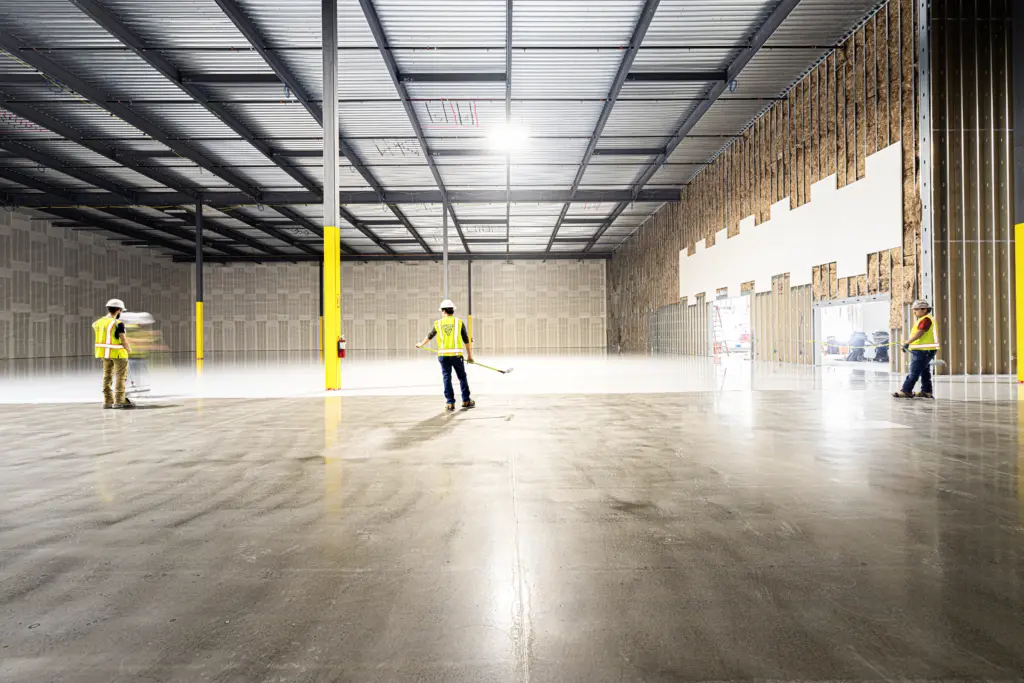
Craftsman Publishes 2026–2027 ESD Flooring Technical Guide
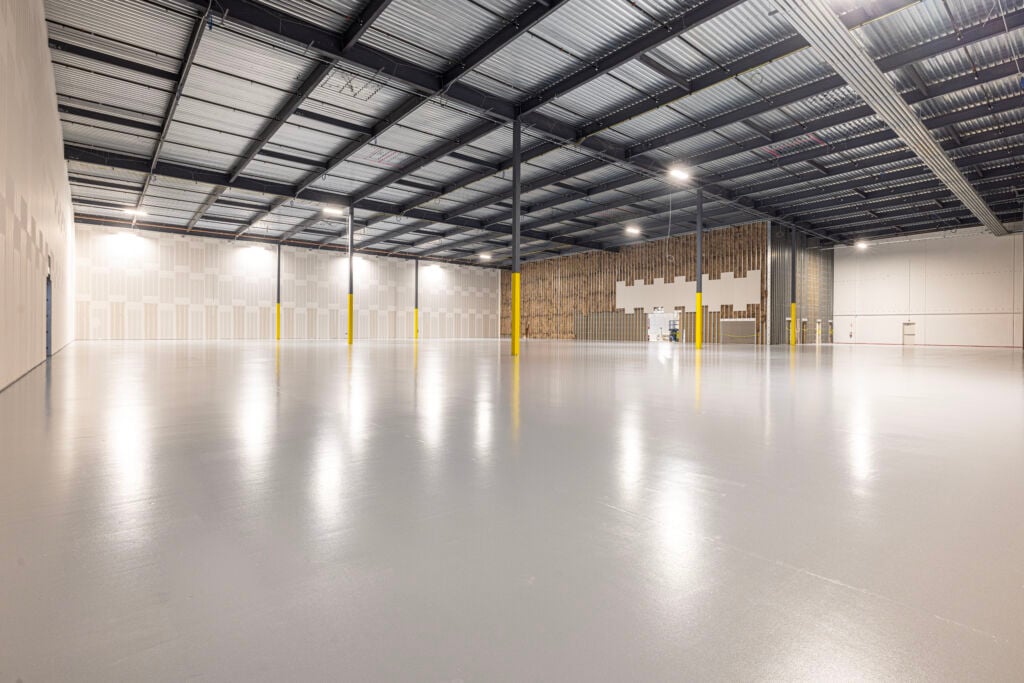
ESD Epoxy Flooring Case Study: 34,000 SF Dallas, TX