What can we help you with?
Technical flooring, delivered directly
- ESD flooring, urethane cement, terrazzo, and polished concrete
- In-house W-2 installation crews and experienced field leadership
- National service coverage with project-specific staffing plans
- Testing, documentation, and defined project closeout
- Dedicated support for corporate procurement and multi-site contracting
Phone: +1 (844) 687-1961
Our Clients




















Conductive Sparkproof Floor Tests
UFGS 09 67 23.14, Chemical Resistant Resinous Flooring, specifies two separate tests for conductive sparkproof flooring: electrical resistance and mechanical spark resistance. Neither test substitutes for the other.
This page covers the August 2016 specification with Change 1 of August 2018 and references aligned with the July 2026 Unified Master Reference List. Specifiers edit this guide specification for each project, retaining these testing provisions only where conductive sparkproof flooring is required.
For the broader context, see ESD flooring in hazardous areas.
Electrical resistance test
- Paragraph
- 3.4.1
- Timing
- 30 to 45 days after installation
Paragraph 3.4.1 requires testing between 30 and 45 days after installation is completed, before the floor is used, by a technician experienced in the work.
| Resistance value | Where it applies | Limit |
|---|---|---|
| Resistance at any one location | Areas with 110-volt service | More than 5,000 ohms |
| Resistance at any one location | Areas with 220-volt service | More than 10,000 ohms |
| Average resistance | All areas | More than 25,000 ohms and less than 1,000,000 ohms |
The individual-location minimums and the average limits are separate requirements. The inequalities are strict: a value equal to a stated boundary does not meet that limit.
The NFPA 99 reference
- Standard
- NFPA 99
Paragraph 3.4.1 directs testing in accordance with NFPA 99 paragraph 12-4.1.3.8(b)(7). The same UFGS document’s reference list identifies NFPA 99 as the 2024 edition with TIA 24-2. Both references are reported here as printed; this page does not establish whether that paragraph number corresponds to the listed edition.
Spark resistance test
- Paragraph
- 3.4.2
Paragraph 3.4.2 specifies a separate mechanical test:
- Method: Stroke the floor vigorously with a 300 mm (12 inch) hardened steel file in a 914.4 mm (3 foot) arc.
- Frequency: Perform the test for each 7.43 square meters (80 square feet) of floor area.
- Conditions: Test in a darkened space, only when relative humidity within the space does not exceed 50%.
- Required result: The floor must not produce a spark under these conditions.
The humidity limit is a condition of this spark test. The 30-to-45-day testing requirement appears in the separate electrical resistance paragraph.
Frequently Asked Questions
No. UFGS 09 67 23.14 specifies separate electrical resistance and mechanical spark resistance tests. An electrical resistance result is not the hardened-steel-file spark test, and a no-spark result is not a resistance measurement.
No. Paragraph 3.4.1 requires more than 5,000 ohms at any one location in 110-volt service areas and more than 10,000 ohms in 220-volt service areas. Separately, average resistance must be more than 25,000 ohms and less than 1,000,000 ohms in all areas.
Paragraph 3.4.1 specifies testing between 30 and 45 days after installation is completed and before the floor is used, by a technician experienced in the work.
Blog
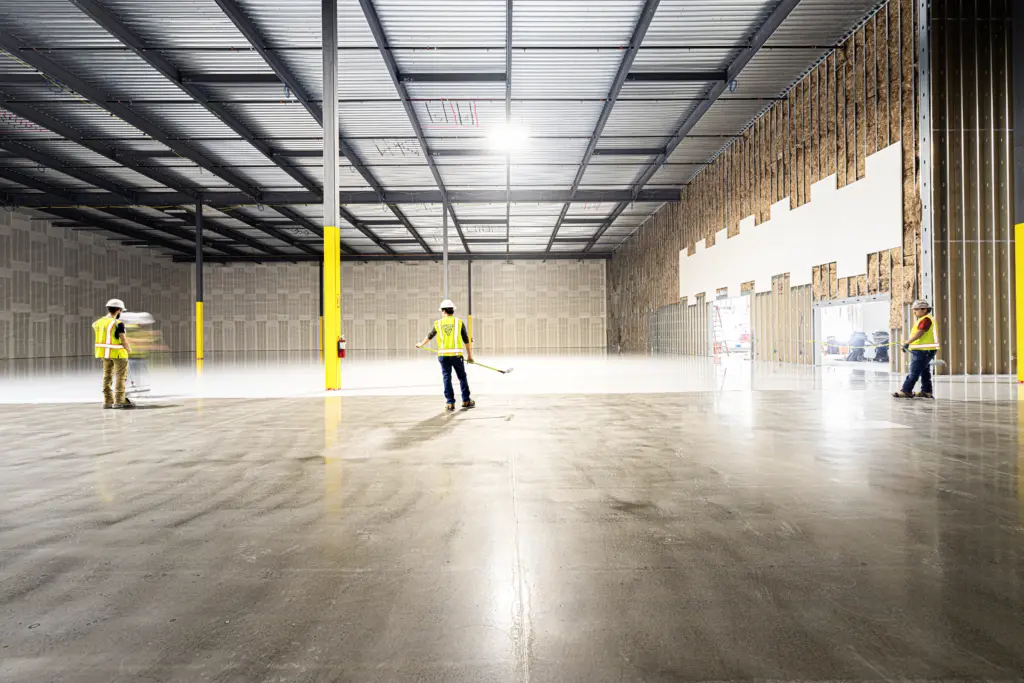
Craftsman Publishes 2026–2027 ESD Flooring Technical Guide
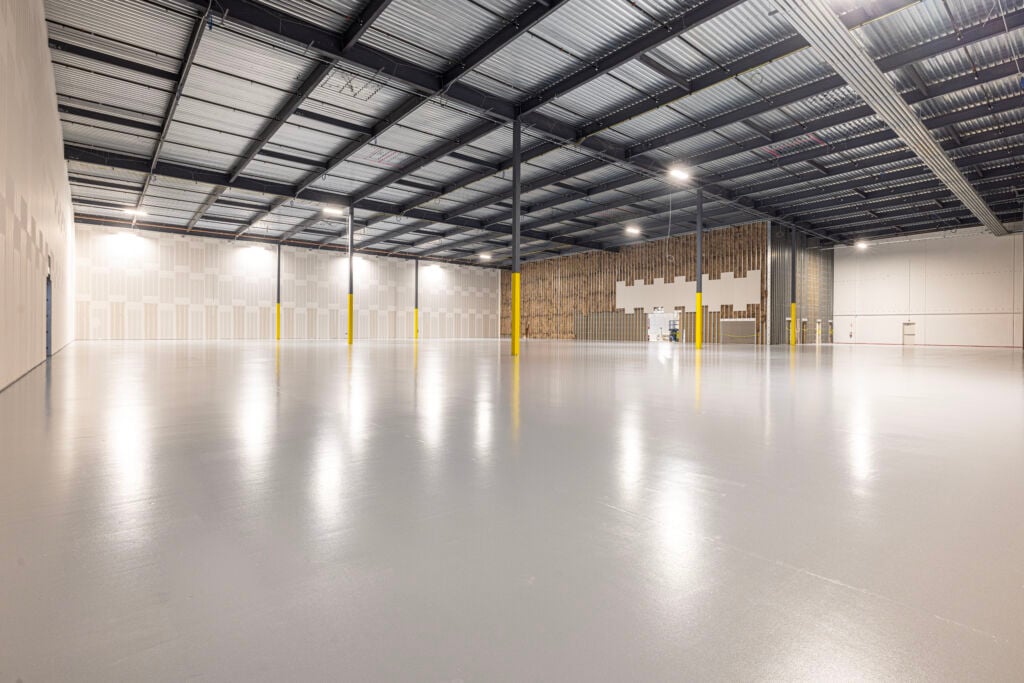
ESD Epoxy Flooring Case Study: 34,000 SF Dallas, TX