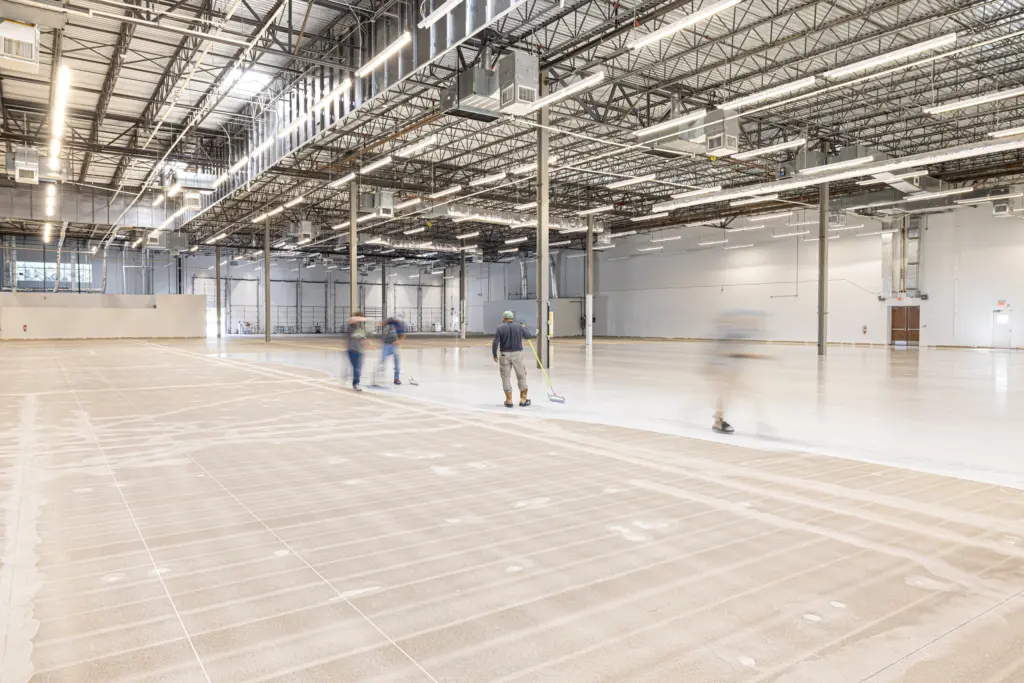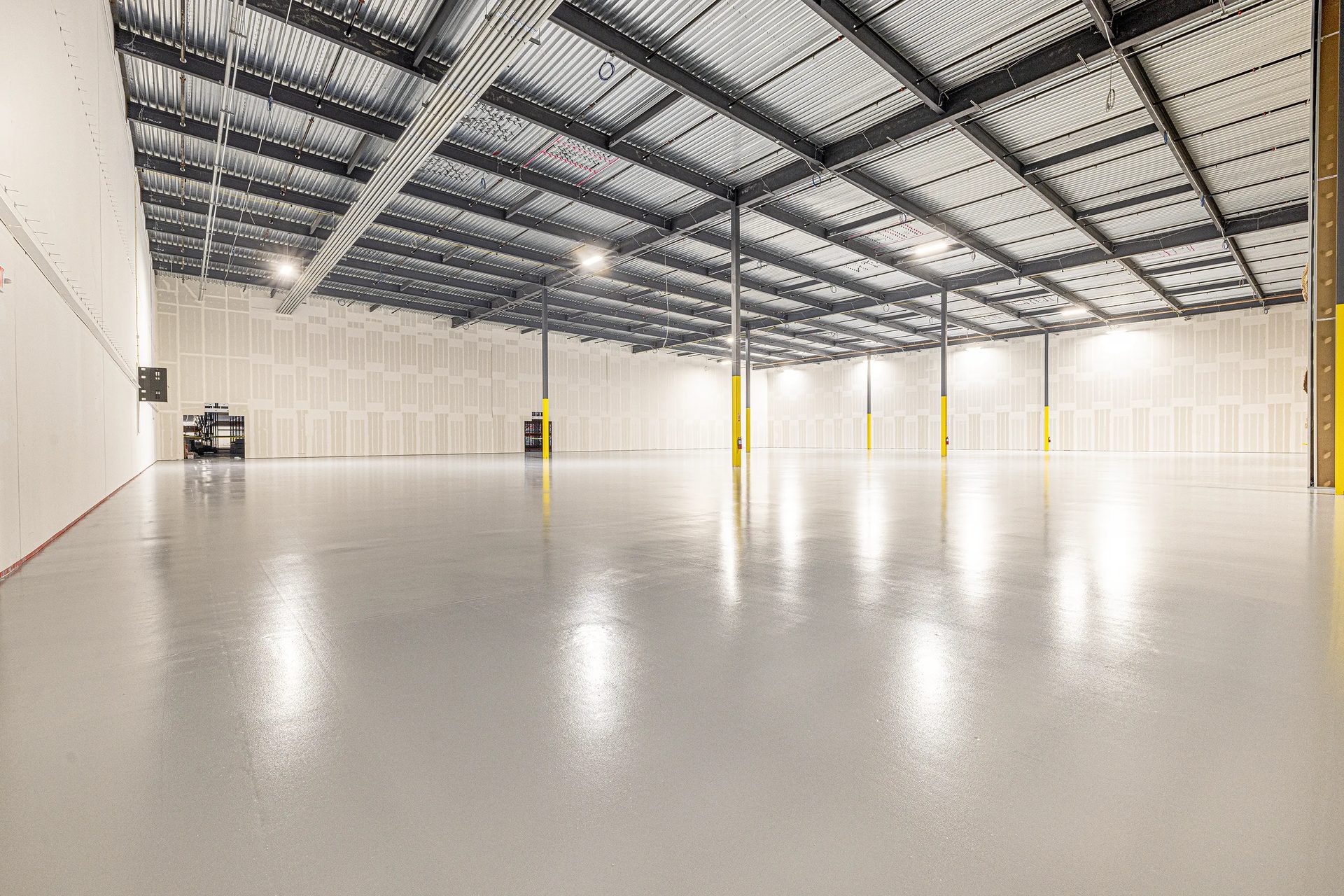
- Crew Structure: Directly employed W-2 installation crews. Field resources are assigned to each project according to qualifications, availability, committed workload, and site requirements—not supplied through a separate regional installer or 1099 day-labor layer.
- Authorized Installer: Craftsman holds installer credentials for Sherwin-Williams High Performance Flooring, PIP (Protective Industrial Polymers), and Sika systems. Current authorization and warranty eligibility are verified for the system selected for each project.
- Service Area: National service coverage. The project-specific staffing and mobilization plan identifies the assigned crew and equipment origins, travel assumptions, field leadership, and schedule. A corporate office address is not treated as a universal dispatch point.
- Established: Industrial flooring installation since 1999, with ESD flooring maintained as a dedicated practice line.
- Systems Installed:
- – Static-dissipative ESD epoxy systems
- – Conductive ESD epoxy systems
- – Failed-floor and audit-failure replacement
- – The selected system and project ESD-control requirements determine the applicable resistance criteria
- Standards and Testing:
- – ANSI/ESD S20.20 program requirements
- – ANSI/ESD STM7.1 resistance-to-ground and point-to-point resistance testing
- – ANSI/ESD STM97.1 system-resistance and STM97.2 walking-body-voltage testing when specified
- – IEC 61340-5-1 requirements when included in the project ESD-control program
- – Legacy MIL-STD-1686 context for applicable defense and aerospace programs
- Pricing: Historical installed pricing ranges from $3.34 to $13.55 per square foot across more than 250 commercial ESD bids. The project price depends on the selected system, substrate condition, preparation, grounding scope, testing requirements, access, and phasing. Historical ranges are not a project quote.
- Schedule: Material availability, access approvals, substrate condition, project phasing, and required testing govern the final schedule. The staffing and mobilization plan identifies the resources and timing assigned to the project.
- Service Life: System- and project-specific. Substrate condition, installation quality, traffic, chemical exposure, maintenance, grounding continuity, and the facility’s ESD-control program affect long-term performance. Published manufacturer data and executed warranty terms govern the selected system.
- System Thickness: The complete assembly varies by manufacturer, product family, substrate, and specified performance.
- – SW Resuflor SCT: verify the complete assembly and current nominal thickness in the approved submittal
- – PIP 100 ESD HB: verify the complete assembly and current nominal thickness in the approved submittal
- – Sikafloor ESD systems: verify the selected build and current nominal thickness in the approved submittal
- – Built-up conductive systems may require additional layers or thickness
- Closeout Documentation: The specification and executed scope determine the required records.
- – ANSI/ESD STM7.1 resistance logs with mapped test locations and recorded conditions
- – ANSI/ESD STM97.1 system-resistance and STM97.2 walking-body-voltage results when specified
- – Grounding-continuity records when included in the scope
- – Installed-product identification and approved submittals
- – Instrument information, calibration records, deviations, corrective work, and retesting records when applicable
- – Recorded acceptance and applicable warranty documents
- Active-Facility Phasing: Zone-by-zone installation, weekend or night work, controlled access, and phased handback are incorporated when required by the executed scope. Cure conditions and testing timing follow the selected manufacturer’s requirements and actual site conditions. ANSI/ESD STM7.1 defines the resistance-measurement method; it does not establish a universal resin cure period.
- Multi-Site Programs: Multi-facility work may be structured under a Master Service Agreement, program exhibit, or individual work orders. Approved systems, submittals, testing formats, reporting, and closeout requirements can be standardized across participating sites, while staffing, mobilization, substrate conditions, access, and schedule remain project-specific.
- Verticals Served: Electronics manufacturing, data centers, aerospace and avionics, battery and EV manufacturing, pharmaceutical and cleanroom environments, defense, and munitions facilities.
Phone: +1 (844) 687-1961
Craftsman Concrete Floors is a nationwide ESD flooring installer with in-house W-2 crews and projects across electronics manufacturing, data center, aerospace, defense, and pharmaceutical verticals. The contractor has been installing industrial flooring since 1999, with ESD epoxy as a dedicated practice line rather than an occasional service add-on. Every ESD flooring installation ships with ANSI/ESD S20.20 compliant documentation, STM 7.1 resistance logs, and STM 97.1 system resistance + STM 97.2 body voltage testing on every job. Authorized SW + PIP + Sika installer for the manufacturer-backed system warranties spec engineers require on Tier-1 jobs.
Most ESD floor failures discovered at the 18-month audit are install failures, not product failures. Conductive primer skipped or thinned out of spec, grounding strips spaced wrong or never tied to building steel, resistance testing waived because the crew left before the 24 to 72 hour cure window closed. The system performs to spec; the floor does not. Craftsman closes that gap by running W-2 crews with manufacturer training records on file and delivering validation-ready closeout documentation built for the EHS program audit.
Our Clients




















Why Choose Craftsman as Your ESD Flooring Installer
ESD flooring is an installer-driven product category. A static dissipative epoxy system rated at 10⁶ to 10⁹ ohms only delivers that range if the conductive primer, copper grounding network, and topcoat thickness are all installed to manufacturer spec and verified per STM 7.1. The installer choice — not the product brand on the spec sheet — determines whether the floor reads in-range when the EHS team runs STM 7.1 at the next audit.
W-2 Installers, Not 1099 Day-Labor
W-2 installers, not 1099 day-labor. Trained, insured, and accountable to you. Craftsman crews are direct employees with continuity across jobs, manufacturer training records on file, and resistance-testing discipline that holds across the 24 to 72 hour cure-and-test window. Day-labor crews fail ESD-specific install steps because there is no training investment to protect and no return job to lose. Conductive primer gets thinned at the corners. Grounding strips end up stapled to the slab edge instead of tied to building steel — a continuity break that does not appear on a visual inspection but shows up the first time someone runs STM 7.1 with a Rg probe. The resistance test gets waived entirely because the crew is on the next job before the 24 to 72 hour cure window closes. Eighteen months later the audit fails, and the 1099 contractor cannot be reached.
Authorized SW + PIP + Sika Installer
Authorized SW + PIP + Sika installer. The Sherwin-Williams High Performance Flooring, PIP, and Sika authorized installer credentials carry manufacturer-validated training records and factory-backed system warranties, with direct factory technical support available during install on Tier-1 jobs. SW HPF, PIP, and Sika product spec ranges fall within the 10⁶ to 10⁹ ohm static dissipative band and the below-1.0 × 10⁶ ohm conductive band per ANSI/ESD S20.20, with system warranty preservation contingent on installation by an authorized crew. The Sika authorization covers the post-MBCC product family including the Sikafloor ESD lines — spec engineers carrying forward legacy MBCC-era specs into current Sika-branded products work with the same authorization architecture across the transition.
ESD Specialization Since 1999
Craftsman has been pouring industrial flooring since 1999. ESD epoxy installation grew from a vertical-specific service line into a primary practice over multiple build cycles in electronics manufacturing and data center work. The crew base understands the difference between a wafer fab requiring conductive system rated below 1.0 × 10⁶ ohms and a hyperscale data center requiring static dissipative 10⁶ to 10⁹ ohm coverage with phased installation around live racks. ESD work is a dedicated practice, not a service line bolted onto a polished concrete or food-grade urethane business.
Project References and Client History
The three anchors below cover the work mix: Tier-1 electronics QA, hyperscale data center, and aerospace electronics testing. Additional references and project profiles are released under NDA during procurement qualification.
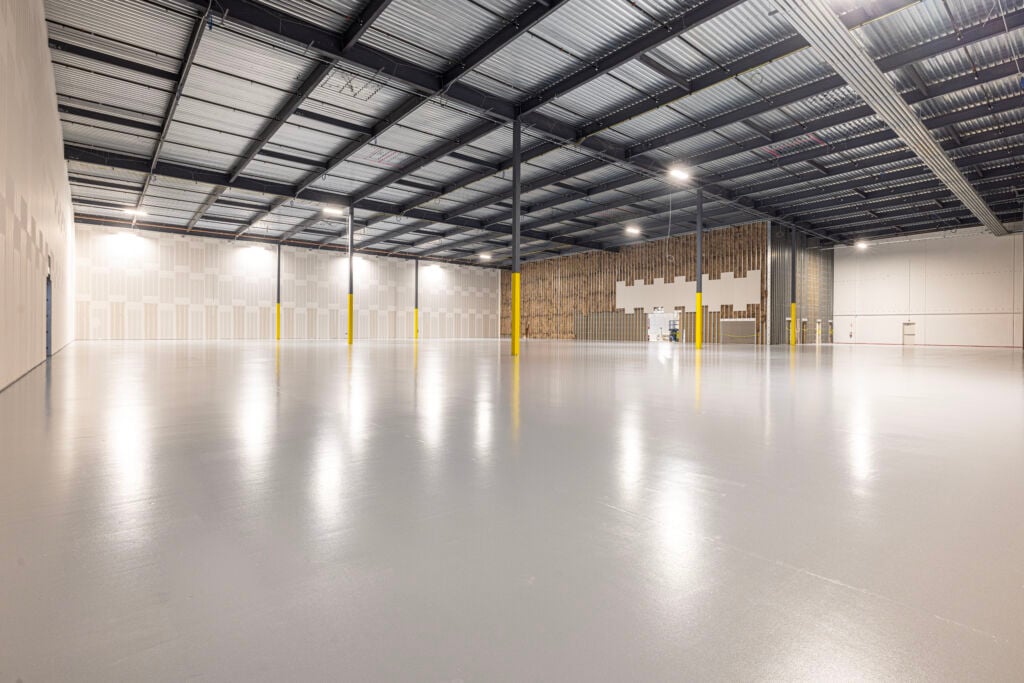
Dallas 34,000 sq ft Fortune 500 Electronics QA
Tier-1 electronics QA environment, 34,000 sq ft static dissipative ESD epoxy installed in phases around live operations. Substrate prep per the manufacturer profile spec, copper grounding network tied to building steel at perimeter and column locations, conductive primer over the prepared slab, and a dissipative topcoat verified per STM 7.1 at the 24 to 72 hour cure window. Closeout package delivered with point-by-point resistance maps, walking body voltage per STM 97.2, and S20.20 program compliance summary.
Houston 67,000 sq ft Hyperscale-Grade
67,000 sq ft hyperscale-grade ESD epoxy installation completed under a product-cycle reconfiguration program. Phased install across multiple weekend and night shutdown windows with active production running between zones. Moisture testing prior to coat, resistance verification at each zone handoff per STM 7.1, and grounding continuity logged through the program. The project demonstrates the multi-zone methodology Craftsman runs when production cannot stop and the S20.20 verification milestone has to land on the date the client committed to internally.
Austin 4,000 sq ft Aerospace Electronics Testing
4,000 sq ft ESD epoxy installation in an aerospace electronics testing area, completed in an active facility with cleared-environment access protocols. Smaller-footprint job that still required full STM 7.1 + STM 97.1 + STM 97.2 documentation, grounding tie-in coordination with the facility electrical contractor, and substrate condition assessment before coat. MIL-STD-1686 was referenced alongside core ESD standards because the client’s testing program carried legacy military requirements.
Fortune 500 Client List
Apple, Boeing, Foxconn, NVIDIA, AWS, Equinix, General Dynamics, Lilly, AbbVie, Meta, Walmart, Best Buy, and Nokia have engaged Craftsman across industrial flooring scopes including ESD work. Client confidentiality terms prevent naming the specific facility or project size publicly on most of these engagements; full references and project profiles are released under NDA at the procurement qualification stage. The client base spans electronics manufacturing, hyperscale data center, aerospace, defense, and pharmaceutical verticals — the same vertical mix the ESD practice serves.
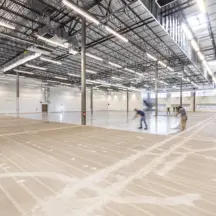
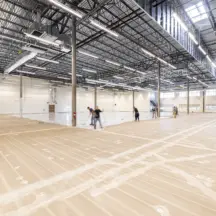
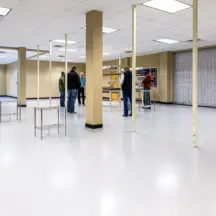
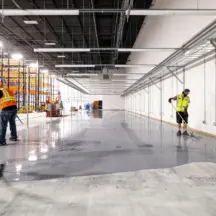
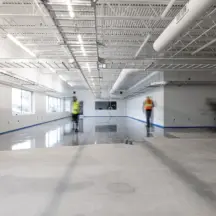
ESD Flooring Gallery

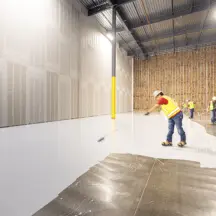
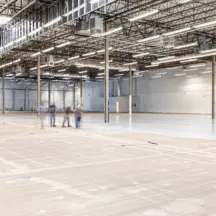
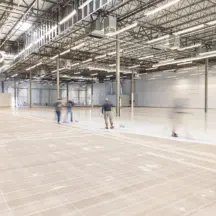
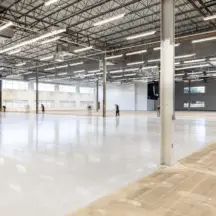
Request a Proposal
Submit project parameters for preliminary analysis. Commercial estimates typically returned within 24 hours.
NATIONAL SERVICE COVERAGE
Craftsman provides national service coverage using directly employed W-2 installation crews. The project-specific staffing and mobilization plan identifies the assigned crew and equipment origins, field leadership, travel and lodging assumptions, schedule, and site constraints. Resources are assigned according to qualifications, availability, committed workload, and project requirements—not assumed from a corporate office address. Because Craftsman employs the installation workforce, national coverage does not require transferring the work to a separate regional installer.
PROJECT-SPECIFIC STAFFING & MOBILIZATION
Travel, lodging, freight, equipment movement, and field supervision are priced using the resources assigned to the project. A nearby office, mailing address, or market presence is not treated as proof that a qualified installation crew is locally staffed. Before mobilization, Craftsman identifies the performing crew, its employer, crew and equipment origins, and the supervision plan. This makes mobilization assumptions visible and comparable rather than implying that mobilization cost is automatically absent.
MULTI-SITE PROGRAM DELIVERY
Craftsman can structure multi-facility ESD flooring work under a Master Service Agreement, program exhibit, or individual work orders, depending on the customer’s procurement requirements. The program can standardize approved systems, submittals, testing and closeout formats, reporting, and corrective-response procedures across participating sites. Each location still receives a project-specific scope, schedule, substrate assessment, access plan, assigned workforce, and mobilization price. Sequencing and concurrent capacity are documented in the rollout plan rather than assumed from the contracting model.
ACTIVE-FACILITY PHASING DISCIPLINE
Craftsman plans ESD flooring installation around the operating constraints of each facility using a written phase plan. Before work begins, the plan identifies work zones, access or shutdown windows, isolation requirements, facility and contractor contacts, substrate preparation, applicable cure conditions, specified testing, handback criteria, and reopening milestones. Weekend or night work, controlled-environment access, and phased turnover are incorporated when required by the executed scope.
The specified system’s applicable cure conditions and manufacturer requirements determine when resistance testing can begin; ANSI/ESD STM7.1 defines the resistance-measurement method, not a universal resin cure period. Testing is not advanced solely to satisfy schedule pressure, and results are recorded as part of the project closeout documentation.
ESD Flooring Installation Pricing
$3.34-13.55/sqft installed depending on system thickness, vertical, and substrate condition. The range comes from real bid data on 250+ commercial ESD projects across the verticals Craftsman serves. Pricing covers the full installed system including substrate prep, grounding network, primer, body coat, topcoat, and STM 7.1 + 97.1 + 97.2 testing — not the material-only cost a flooring distributor would quote.
Cost Drivers on the Bid
System specification drives the first cut — conductive ESD epoxy (below 1.0 × 10⁶ ohms) carries a different filler load and price point than static dissipative (10⁶ to 10⁹ ohms). Substrate condition determines prep scope: a freshly placed slab with proper moisture readings prices below a 30-year-old slab with previous coatings, oil contamination, or moisture vapor issues. Grounding tie-in complexity, whether building steel is accessible at the perimeter or whether new ground rods are needed, moves the number. Phasing requirements around active production add mobilization and shift premiums.
Project Size and Range Position
Larger projects, generally above 20,000 sq ft, tend toward the lower end of the $3.34 to $13.55 per square foot range as fixed mobilization, equipment staging, and documentation costs spread across more square footage. The Houston 67,000 sq ft hyperscale-grade project sat in this band. Smaller projects often price toward the upper end of the range because fixed project setup, equipment staging, testing, documentation, and closeout requirements are distributed across less floor area. Staffing, crew and equipment origins, travel, and mobilization are planned and priced for the actual project; Craftsman does not assume that those resources originate from Dallas or from any other fixed office. Multi-site MSA work negotiates differently — pricing flattens across sites for predictability rather than tracking each site to its substrate-and-scope-driven number.
Lead Time and Bid Process
1-3 weeks from contract execution, driven by material availability. The bid window from initial walkthrough to delivered proposal typically runs one to two weeks depending on the documentation scope the client needs. Pre-bid walkthroughs available based on project requirements, timing, and resource availability; remote spec review standard for multi-region rollouts. The bid documents include the system spec, resistance range commitment per S20.20, the closeout documentation deliverables, and phasing plan where the project runs in an active facility.
Validation-Ready Closeout Documentation
ANSI/ESD S20.20 compliant install with STM 97.1 + STM 97.2 testing on every job. The ESD coordinator or EHS program manager receives a closeout package sized for direct inclusion in the next S20.20 audit binder, not a one-page certificate of completion. The deliverable list below ships at job completion on every Craftsman ESD flooring installation.
Resistance and Body Voltage Test Logs
STM 7.1 resistance logs covering Rg (resistance to ground) measurement points across the installation, with each reading tied to a location on the resistance map. STM 97.1 system resistance data measuring the floor, footwear, and person in combination (Rg) per the standard. STM 97.2 walking body voltage data with the conductive or dissipative footwear system the client specified. Each log delivered with measurement instrument calibration records and the technician sign-off required for ANSI/ESD S20.20 program filing.
Grounding Continuity and System Documentation
Grounding continuity verification ties the copper network installed beneath the floor system to building steel at every connection point. The continuity log documents each tie-in with the resistance reading taken during install. Product data sheets for the conductive primer, midcoat, and topcoat used on the job ship with the closeout package, along with the system spec sheet referencing the static dissipative range (10⁶ to 10⁹ ohms) or conductive range (below 1.0 × 10⁶ ohms) the floor was installed to per S20.20.
S20.20 Program Compliance Summary
A single-document program compliance summary references the install scope, the standards verified against (S20.20, STM 7.1, STM 97.1, STM 97.2, IEC 61340-5-1, plus vertical add-ons where applicable), the cure-and-test window observed, and the as-installed resistance range. The summary is built for direct inclusion in the EHS program manager’s S20.20 audit binder. Vertical-specific documentation — extended S20.20 program compliance and STM test records for electronics manufacturing facilities, AS9100 program references for aerospace work, or ISO 14644 cleanroom classification context where the floor is part of a controlled environment — added on request.
ESD Flooring Knowledge Center
Resource links
Project Planning & Delivery
- ESD Program Delivery Capabilities
- ESD Project Execution Guide
- ESD Flooring Installation Process
- Installed ESD Floor Costs
- Static-Control Flooring Systems
- Stonhard vs Independent ESD Contractor
- ESD test-report contents by method — Define the required report before comparing contractors’ closeout commitments.
Compliance Requirements & Testing
- Recurring ESD Floor Verification
- ESD Testing Standards Reference
- Facility-Specific ESD Requirements
- Meter calibration versus floor retesting — Keep equipment calibration schedules separate from the facility’s floor verification schedule.
- Equipment for a walking-voltage test — Review the instrumentation needed when a project assigns STM97.2 testing.
- Walking-test cycles and endpoint — Understand how the prescribed test duration is determined during product qualification.
Systems & Selection
Where ESD Flooring Is Used
Maintenance & Troubleshooting
Manufacturer ESD Flooring Systems
Frequently Asked Questions
A qualified ESD flooring installer should document manufacturer training and authorization for the selected product, directly supervise the installation workforce, execute the specified grounding details, and deliver the testing and closeout records required by the executed scope. Craftsman uses directly employed W-2 crews rather than brokered or 1099 day labor. STM7.1 floor-resistance testing and any required STM97.1 system-resistance or STM97.2 body-voltage work must be assigned before installation so the cure, testing, and acceptance sequence is built into the schedule.
Craftsman has installed industrial flooring since 1999 and provides national ESD installation using directly employed W-2 crews rather than brokered or 1099 day labor. Craftsman is an authorized Sherwin-Williams High Performance Flooring, PIP, and Sika installer. Staffing and equipment are assigned companywide for each project according to qualifications, availability, geography, schedule, facility requirements, committed workload, and customer continuity. Recent ESD project locations include a 34,000-square-foot Fortune 500 facility in Dallas and a 67,000-square-foot hyperscale-grade facility in Houston; those locations are project examples, not fixed workforce origins. Testing and closeout records are delivered according to the specification and executed scope.
Yes. Craftsman provides national ESD installation through directly employed W-2 crews assigned companywide for the actual project. Personnel, field leadership, equipment origins, travel assumptions, availability, and schedule are documented through the project-specific proposal and planning process; Craftsman’s six offices are service and accountability points, not fixed crew or equipment origins. Typical lead time is 1 to 3 weeks from contract execution when material availability and committed resources support it. The required cure and testing window is incorporated into the accepted installation schedule.
Craftsman is an Authorized SW + PIP + Sika installer — Sherwin-Williams High Performance Flooring ESD product family, PIP (Protective Industrial Polymers) ESD product family, and Sika ESD product family including the Sikafloor ESD lines. All three manufacturers carry static dissipative systems (10⁶ to 10⁹ ohms per ANSI/ESD S20.20) and conductive systems (below 1.0 × 10⁶ ohms) with factory-backed system warranties contingent on authorized installation.
ESD flooring installation is shown on this page at $3.34 to $13.55 per square foot based on bid data from more than 250 commercial ESD projects. Actual pricing depends on system selection, substrate condition and preparation, grounding requirements, testing and documentation scope, access, phasing, project size, geography, and schedule. Larger continuous areas can distribute fixed project setup, equipment, and documentation requirements across more square footage. Staffing, equipment origins, travel, and mobilization are based on the actual project plan; no office is assumed as a universal origin.
Craftsman delivers the testing and closeout records required by the specification and executed scope. Depending on the project, that may include mapped STM7.1 resistance readings, STM97.1 system-resistance results, STM97.2 body-voltage results, grounding-continuity records, installed-product data, photographs, and instrument-calibration records. The proposal and submittal process should identify the required tests, responsible parties, acceptance criteria, file format, and turnover package before installation.
Blog
ESD Epoxy Flooring Case Study: 34,000 SF Dallas, TX
Residential Terrazzo Floors in Fort Worth, Texas