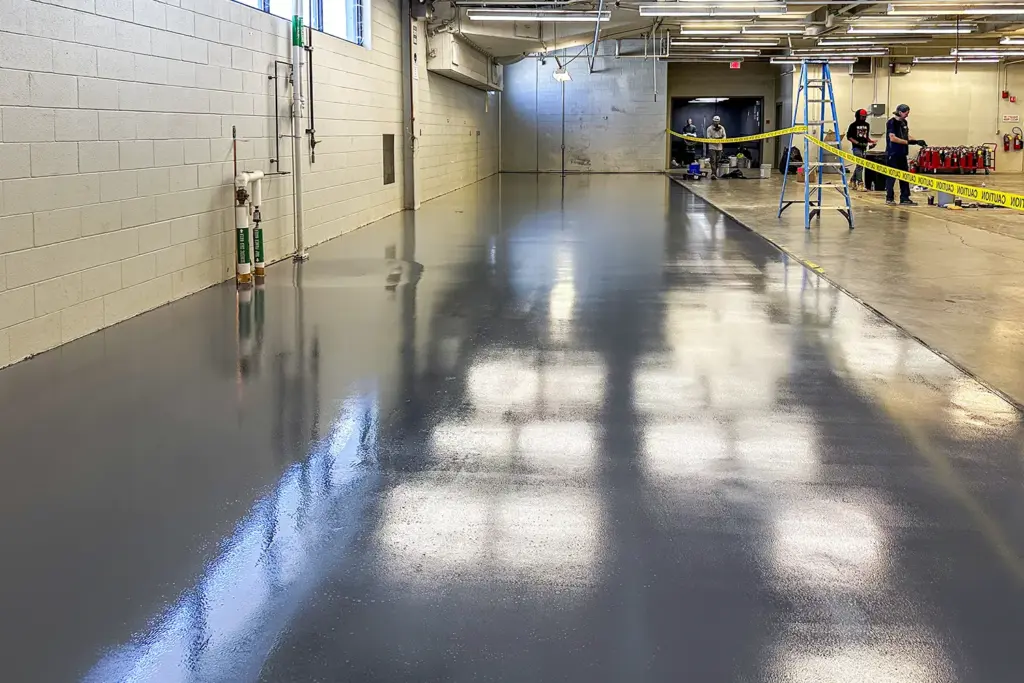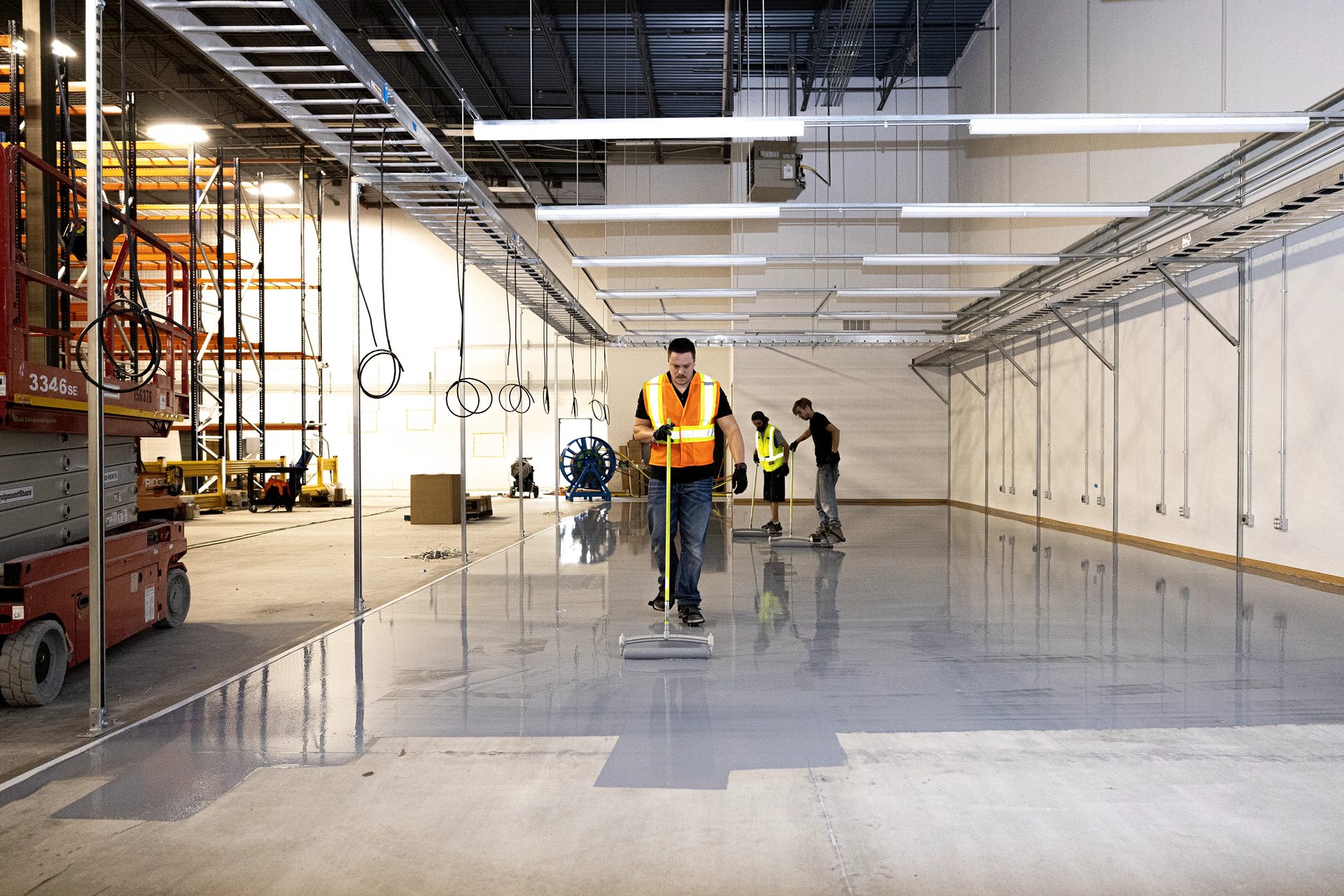
- Systems: Conductive ESD epoxy flooring — S20.20 compliant flooring systems from Sherwin-Williams High Performance Flooring, PIP (Protective Industrial Polymers), and Sika; monolithic poured installation.
- Resistance: Conductive band 2.5 × 10⁴ to below 1.0 × 10⁶ ohms (Rg) per ANSI/ESD S20.20, verified per ANSI/ESD STM 7.1.
- Compliance:
- – ANSI/ESD S20.20 program standard
- – ANSI/ESD STM 7.1 resistance testing (Rg and Rtt); S7.1 / ASTM F150 equivalent designations
- – ANSI/ESD STM 97.1 system resistance + STM 97.2 body voltage verification (under 100V program threshold)
- – MIL-STD-1686 defense and munitions program references
- – NFPA 70 Class I Division 2 flammable-atmosphere contexts
- Pricing: $3.34–13.55/sqft installed depending on system type, thickness, and substrate condition, derived from real bid data on 250+ commercial ESD projects.
- Lead Time: 1–3 weeks from contract execution, driven by material availability.
- Installation: 3 to 5 days typical per zone; phased zone-by-zone install around live operations.
- Cure and Test Window: 24 to 72 hours from final coat to STM 7.1 resistance verification.
- Service Life: 25+ years floor system service life; ESD properties verified at install and maintained through periodic program testing.
- Documentation:
- – STM 7.1 Rg and Rtt resistance logs
- – STM 97.1 system resistance + STM 97.2 body voltage data where in scope
- – Grounding strap installation and continuity records
- – Full S20.20 closeout package, audit-ready for EHS program review
- Authorized Installer: Authorized SW + PIP + Sika installer — conductive and dissipative product families under one credential set.
- Crew Structure: In-house W-2 crews provide national service coverage. W-2 installers, not 1099 day-labor.
- Case Study Anchors: Dallas 34,000 sq ft Fortune 500 electronics QA + Houston 67,000 sq ft hyperscale-grade.
- Founded: 1999.
Phone: +1 (844) 687-1961
Conductive flooring is a resinous floor system engineered to move electrostatic charge to ground fast, with resistance below 1.0×10⁶ Ω verified per ANSI/ESD STM7.1. Manufacturers commonly floor the band near 2.5×10⁴ Ω, so an installed conductive floor coating reads between 2.5×10⁴ and 1.0×10⁶ Ω at closeout. The class exists for environments where retained charge is an ignition hazard or a program violation: munitions and energetics handling, flammable and explosive atmospheres, and ESD-class-0 component work. Conductive epoxy flooring is the lowest-resistance class ANSI/ESD S20.20 recognizes. Both conductive ESD flooring and static dissipative flooring pass an S20.20 program; conductive discharges fastest, and that speed is the whole reason the class is specified.
The word conductive describes the installed assembly. Carbon or graphite filler runs through the full coating thickness. A conductive ground-plane primer sits under it, and copper ground straps tie the system to building steel. Skip the grounding and the same pail of material reads out of spec. Buyers searching for a conductive concrete floor usually mean this assembly, a prepared slab coated with conductive epoxy and tied to a verified ground. Which resistance class a facility actually needs is a selection decision that lives on our conductive vs dissipative comparison page; this page defines the conductive class and the applications that require it.
Our Clients




















The Conductive Resistance Band
ANSI/ESD S20.20 recognizes conductive flooring by one number. Resistance to ground below 1.0×10⁶ Ω, measured per STM7.1, defines the class; everything else about the system exists to hold that reading across the full installed area for the life of the floor. Manufacturer datasheets frequently cite the same test as S7.1 or reference ASTM F150, and all three designations measure floor-material resistance against the same closeout requirement.
Below 1.0×10⁶ Ω, Above 2.5×10⁴ Ω
The working conductive band runs from roughly 2.5×10⁴ Ω up to just under 1.0×10⁶ Ω. Above the top of the band the floor crosses into static dissipative territory and stops meeting a conductive specification. Below the bottom, readings indicate over-conductive performance, which raises personnel electrical-safety questions near energized equipment. The band is narrow on purpose. A conductive spec leaves less failure margin than the three-decade dissipative band, which is why substrate condition and grounding layout get engineered before any material ships.
The Charge Path Runs Through the Whole System
Conductive filler, typically carbon or graphite, is loaded through the full coating thickness so the charge path runs top to bottom. Under it, a conductive ground-plane primer such as Sherwin-Williams Resuprime ESD or PIP 125 ESD WR-GP forms the horizontal collection layer. Copper ground straps terminate that layer to building steel at engineered intervals. Every reading depends on the path staying continuous. Abrade through a thin-film conductive paint and the path breaks; a conductive epoxy floor keeps its filler network through the full wear layer, so it holds permanent static control as the surface takes traffic.
Verified per STM7.1 Inside a 24 to 72 Hour Window
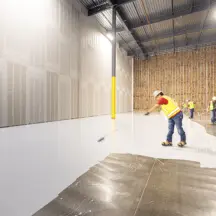
Resistance verification runs 24 to 72 hours after the final coat; resin has to cure before STM7.1 readings are reliable, so testing is never promised inside 24 hours. Cure comes first. Calibrated electrodes read resistance to ground (Rg) and point-to-point (Rtt) at defined locations across the slab. Readings land inside the band or the floor does not close out as S20.20 compliant flooring. The documentation package carries the location-by-location values and grounding strap records inside the closeout paperwork an EHS program audit asks for.
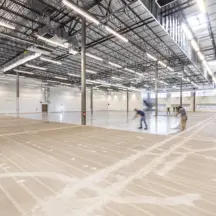
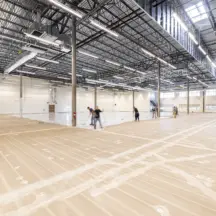
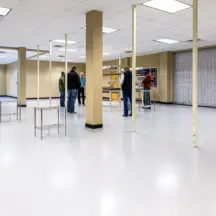
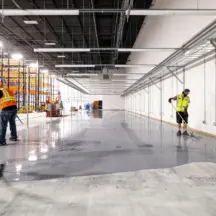
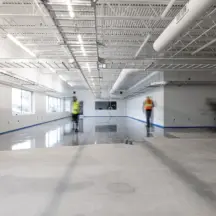
ESD Flooring Gallery

Request a Proposal
Submit project parameters for preliminary analysis. Commercial estimates typically returned within 24 hours.
Applications That Require the Conductive Band
Most commercial ESD work runs static dissipative. The conductive class is a hard requirement in a short list of environments where a discharge event can ignite the atmosphere itself, and in those rooms a dissipative reading that would pass an electronics audit is out of spec. MIL-STD-1686 program references and NFPA 70 Class I Division 2 classifications are the usual paper trail behind a conductive specification.
Munitions, Energetics, and Propellant Handling
Ordnance manufacturing, explosives storage, and propellant handling specify conductive floors as part of ignition control under MIL-STD-1686 program references. One stray spark can detonate an energetics workroom. The floor bleeds charge off personnel and carts continuously, before potential can build to a discharge event, and grounded continuity is verified in the closeout record. Defense and DOE-adjacent facilities carry the most restrictive documentation requirements in the category; conductive project references publish less often than dissipative work because those clients restrict naming.
Flammable and Explosive Atmospheres Under NFPA 70
NFPA 70 Class I Division 2 locations specify conductive because the atmosphere itself can ignite. Where flammable vapor or combustible dust is present in normal or abnormal operation, static control is spark control, and the floor has to move charge to ground faster than potential can accumulate on a moving person or cart. Battery electrode-coating rooms with flammable solvent exposure sit in the same category. The conductive band exists for these rooms.
ESD-Class-0 Programs
Class-0 device work handles components with withstand voltages so low that the program pushes every element toward its tightest tolerance, and some of those programs specify the conductive band for flooring. Class-0 parts are the most static-sensitive devices made. The classification originates in the facility’s device-handling requirements under ANSI/ESD S20.20, then flows down to the floor spec. When a class-0 program does call for conductive, the specification arrives from the facility’s ESD control plan with the target range stated; the installer’s job is to land the reading and document it per STM7.1.
Conductive Systems Craftsman Installs
Craftsman is an Authorized SW + PIP + Sika installer. All three manufacturers carry conductive product families inside their ESD lines. Every value below traces to the manufacturer’s current product documentation, and the specified system’s own data sheet governs its final numbers on any given project. Which system fits depends on the substrate condition and the documentation scope the facility’s program requires.
Conductive Product Families from SW, PIP, and Sika
Sikafloor-260 ESD and Sikafloor-270 ESD read 2.5×10⁴ to 1.0×10⁶ Ω, conductive through the full system thickness, with measured body voltage under 30V per STM97.2 against the 100V program threshold. PIP 200 ESD Conductive UR reads below 1.0×10⁶ Ω per ANSI/ESD S7.1 and ASTM F150, installed over the PIP 125 ESD WR-GP conductive ground plane. Sherwin-Williams High Performance Flooring runs a dedicated ESD Conductive system category with Resuprime ESD as the conductive primer layer. Build thickness varies by system. Each product’s TDS states its own number.
Where Conductive Lands in the Installed Price Range
Conductive work prices at $3.34-13.55/sqft installed depending on system type, thickness, and substrate condition, derived from real bid data on 250+ commercial ESD projects. Most conductive specifications land toward the upper end. The filler package is a more specialized material and the resistance tolerance is tighter than the three-decade dissipative band. The grounding network also runs denser to hold readings inside the target across the full installed area, which shows up in prep and layout hours before it shows up in material.
W-2 Crews, Nationwide Delivery
Craftsman provides national conductive-flooring installation through directly employed W-2 crews rather than brokered or 1099 day labor. Staffing, field leadership, equipment origins, travel assumptions, and schedule are assigned companywide for the actual project according to geography, system requirements, experience, availability, equipment needs, concurrent workload, facility requirements, and customer continuity. Craftsman’s offices are service and accountability points, not fixed workforce or equipment origins. Recent ESD installations in Dallas and Houston are project-location examples, not the origin of Craftsman’s national workforce. Lead time and phased-installation availability are confirmed for each project based on material availability and committed resources.
ESD Flooring Knowledge Center
Resource links
Systems & Selection
Compliance Requirements & Testing
- ESD Control Program Standards
- ESD Floor Testing Programs
- Facility-Specific ESD Requirements
- STM7.1 floor resistance testing — Distinguish flooring qualification from acceptance of an installed conductive floor.
- STM7.1 and ASTM F150 compared — Check differences in scope and procedure when a product sheet names both methods.
- ASTM F150 test-voltage selection — Read how F150’s voltage sequence relates to measurements on resilient flooring.
Project Planning & Delivery
Where ESD Flooring Is Used
Maintenance & Troubleshooting
Manufacturer ESD Flooring Systems
Frequently Asked Questions
Conductive flooring is a resinous floor system that reads below 1.0×10⁶ Ω resistance to ground per ANSI/ESD STM7.1, the fastest-discharging floor class ANSI/ESD S20.20 recognizes. Manufacturers commonly floor the band near 2.5×10⁴ Ω. An installed conductive floor closes out between 2.5×10⁴ and 1.0×10⁶ Ω. The class is specified where retained static charge is an ignition hazard or where an ESD program calls for the lowest resistance class.
A conductive floor is built in layers: carbon or graphite filler runs through the full coating thickness, and a conductive ground-plane primer underneath collects charge into copper ground straps tied to building steel. The coating alone does not make a conductive floor; an ungrounded conductive coating reads out of spec because the charge has nowhere to go. Grounding is the number-one install failure point in the category. Strap layout and ground-path continuity get engineered before material ships.
Munitions and energetics work and NFPA 70 Class I Division 2 flammable-atmosphere locations require conductive flooring; some ESD-class-0 component programs specify it as well. In those environments a discharge event is an ignition risk, not an equipment loss. Dissipative readings above 1.0×10⁶ Ω are out of spec there. Facilities outside these categories usually run static dissipative, and the selection decision between the two classes is covered on our conductive vs dissipative comparison page.
Verification runs per ANSI/ESD STM7.1 inside a 24 to 72 hour cure-and-test window after the final coat, reading resistance to ground (Rg) and point-to-point (Rtt) at defined locations. Readings must land between 2.5×10⁴ and 1.0×10⁶ Ω for the floor to close out as conductive. The closeout package carries location-by-location resistance logs and grounding strap records inside the ANSI/ESD S20.20 documentation an EHS program audit reviews.
Conductive flooring prices at $3.34-13.55/sqft installed depending on system type, thickness, and substrate condition, derived from real bid data on 250+ commercial ESD projects. Most conductive specifications land toward the upper end of the range because the resistance tolerance is tighter and the grounding network runs denser than on dissipative work. Lead time runs 1-3 weeks from contract execution, driven by material availability.
Nationwide. In-house W-2 crews provide national service coverage, installing industrial flooring history since 1999. W-2 installers, not 1099 day-labor. Trained, insured, and accountable to you.
Case Studies
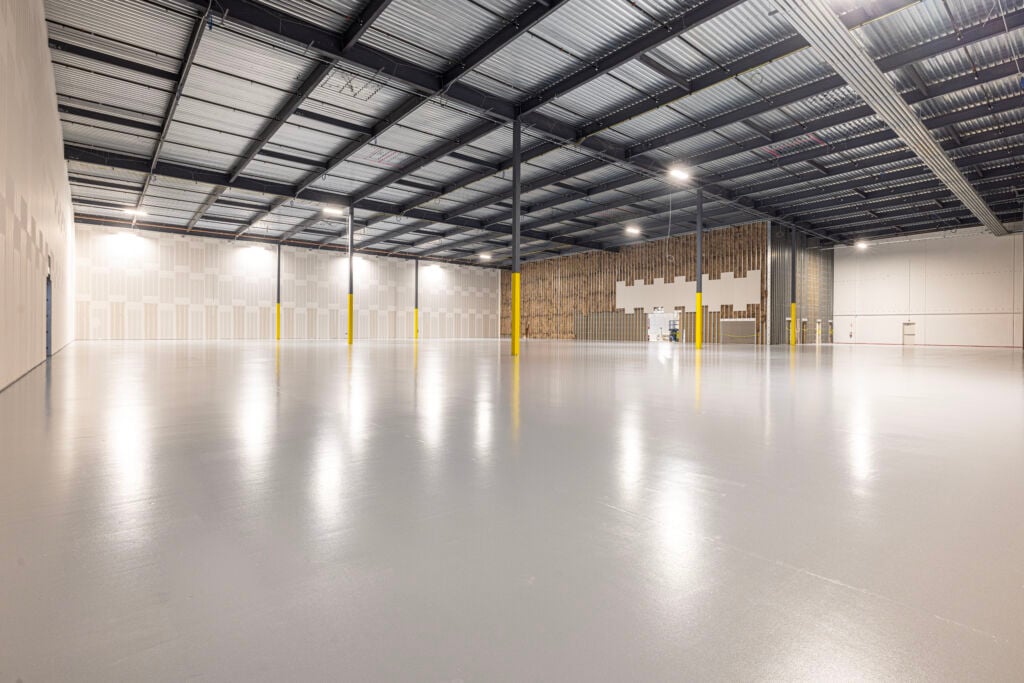
ESD Epoxy Flooring Case Study: 34,000 SF Dallas, TX
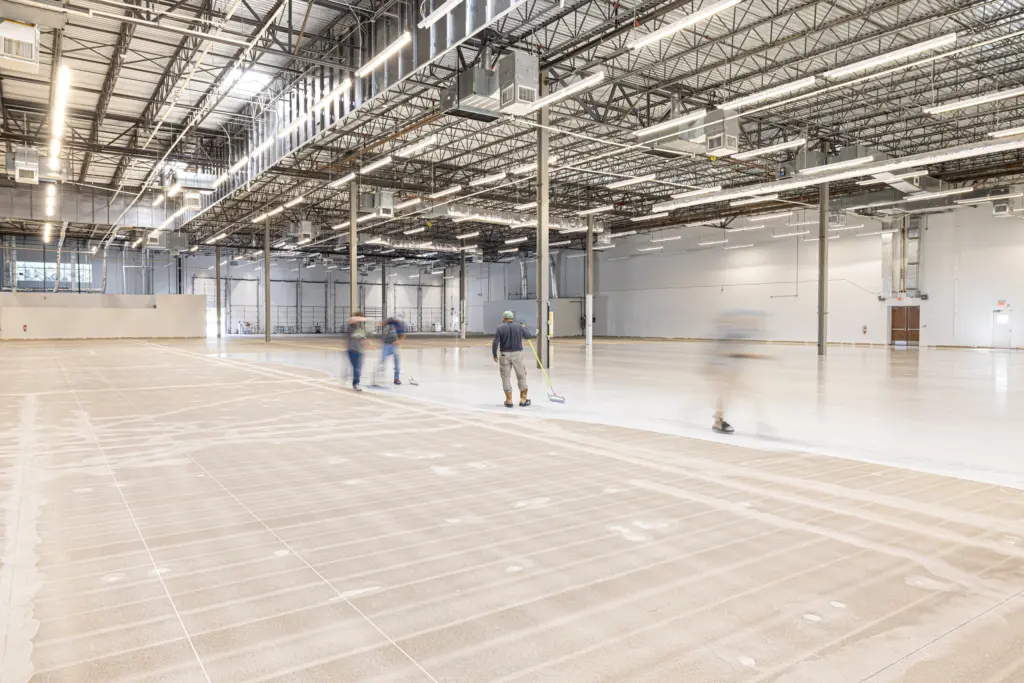
ESD Epoxy Flooring Case Study: 67,000 SF | Houston, TX