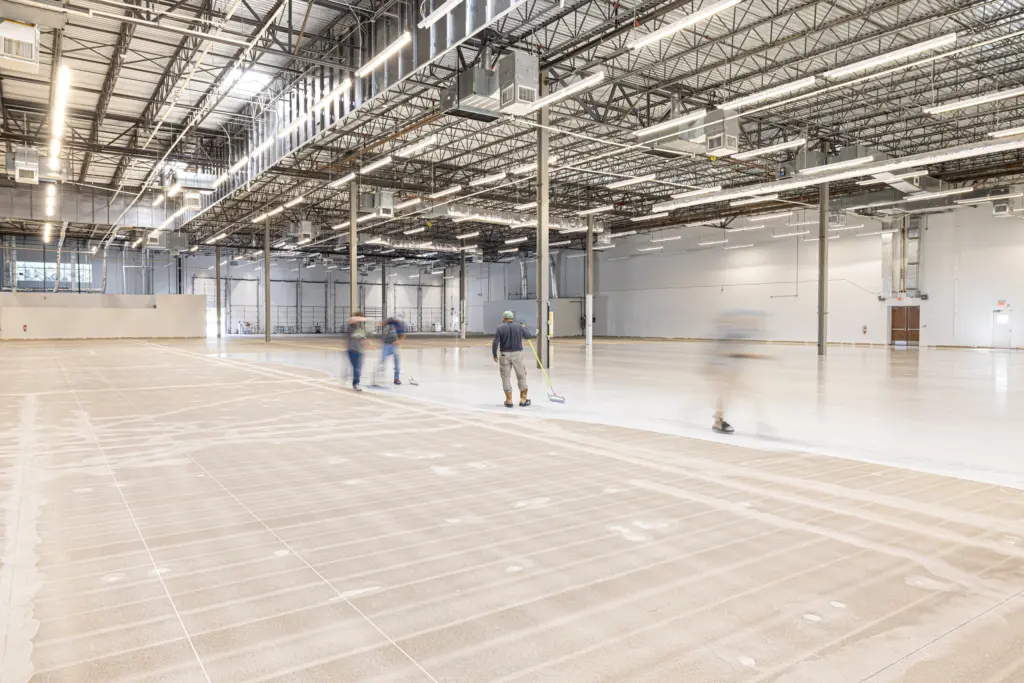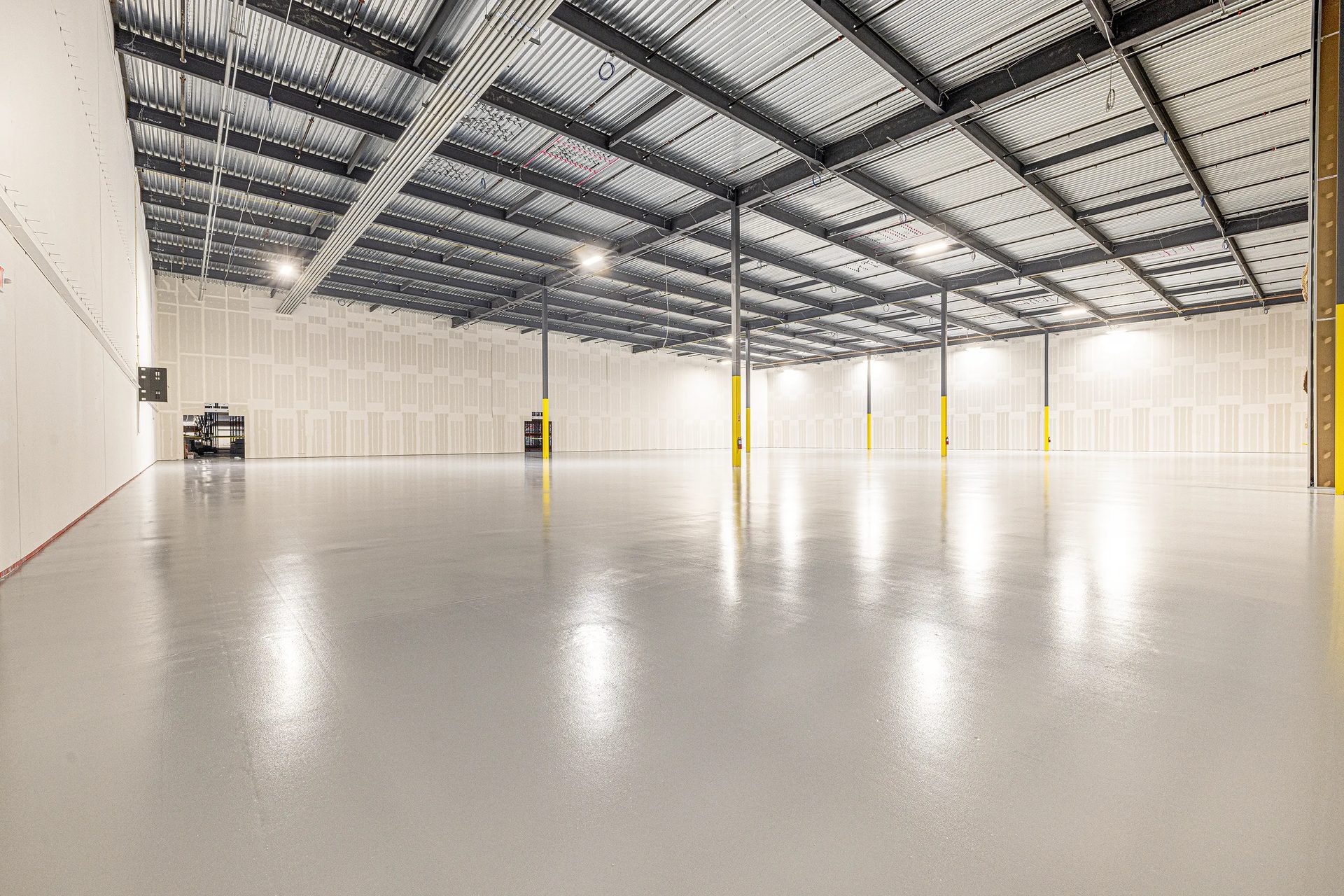
- Systems: Static dissipative ESD epoxy (1.0 × 10⁶ to 1.0 × 10⁹ ohms) for standard pharma cleanroom work; conductive ESD epoxy (below 1.0 × 10⁶ ohms) for flammable-solvent exposure zones
- ESD Compliance:
- – ANSI/ESD S20.20-2021 program standard
- – STM7.1 resistance testing (Rtt and Rg)
- – STM97.1 system resistance + STM97.2 body voltage verification
- – IEC 61340-5-1 international ESD program
- Pharma Regulatory:
- – FDA facility design
- – cGMP (21 CFR Part 211)
- – USP <797> sterile compounding
- – USP <800> hazardous drug handling
- – ISO 14644-1 Class 5, 6, 7, 8
- System Thickness: Varies by specified system — 15-20 mils dissipative topcoat (SW Resuflor SCT), 12-20 mils (PIP 100 ESD HB), 24-30 mils (Sikafloor ESD system); built-up conductive systems run thicker
- Service Life: 25+ years floor system service life; ESD properties verified at install and maintained through periodic program testing
- Pricing: $3.34-13.55/sqft installed depending on system type, thickness, and substrate condition; derived from real bid data on 250+ commercial ESD projects. Pharma cleanroom work tends toward the higher end due to integral cove base, low-VOC topcoat, phased install, and validation documentation overhead
- Lead Time: 1-3 weeks from contract execution, driven by material availability
- Cure-and-Test Window: 24-72 hours from final coat to STM7.1 resistance verification
- Installation:
- – Phased install around live pharma operations
- – Integral cove base for sterile wall-floor transitions
- – Atmosphere-controlled install protocols
- – Weekend and night shutdown windows available
- Documentation:
- – S20.20 closeout package (STM7.1, STM97.1, STM97.2 logs)
- – IQ / OQ / PQ validation package
- – Material chain of custody and batch certifications
- – Product data sheets for every system component
- Manufacturer Authorizations: Authorized SW + PIP + Sika installer — Sika authorization covers the Sikafloor ESD coating systems
- Crew Structure: In-house W-2 crews provide national service coverage. ESD specialized, insured, and accountable
- Since: 1999
Phone: +1 (844) 687-1961
Pharmaceutical cleanroom ESD flooring is a static-controlled epoxy system installed where ANSI/ESD S20.20 and the pharma regulatory framework (FDA, cGMP, USP <797>, USP <800>, ISO 14644) govern the same floor at the same time. Most ISO Class 5-7 pharma cleanroom work specifies static dissipative epoxy at 1.0×10⁶ to 1.0×10⁹ ohms, with resistance verified per STM7.1 and body voltage generation held under the 100 V S20.20 threshold per STM97.2. Conductive epoxy below 1.0×10⁶ ohms is reserved for flammable-solvent exception cases in hazardous drug compounding. The spec engineer’s real work is coordinating both tracks on one system. A floor that passes resistance testing but fails a cleanability audit is a failed floor, and so is the reverse.
Pharma cleanroom ESD epoxy is not generic cleanroom epoxy with an ESD label, and it is not generic ESD epoxy installed inside a cleanroom envelope. Generic cleanroom epoxy without static control leaves dispensing scales, fill-finish lines, and electronic measurement equipment exposed to charge buildup. Generic ESD epoxy without integral cove base, low-VOC topcoat chemistry, and atmosphere-controlled install protocols will not pass a cGMP audit on cleanability or particle generation. A GMP ESD flooring spec, whether written as cleanroom epoxy flooring or FDA-compliant pharma cleanroom flooring, has to clear both audits on the same system and the same documentation package.
Our Clients




















Dual Regulatory Track: ANSI/ESD S20.20 Plus FDA, cGMP, and USP
Four frameworks put requirements on the same floor. S20.20 sets resistance bands, body-voltage limits, the grounding network, and periodic verification. ISO 14644 sets particle generation and seam-free construction by class. USP <797> sets cleanability and cove base detail for sterile compounding. USP <800> adds containment detail for hazardous drug handling, with a conductive-system trigger when flammable solvents enter the room.
ANSI/ESD S20.20 Inside the Cleanroom Envelope
S20.20 program requirements do not relax inside a cleanroom envelope. The static dissipative band is 1.0×10⁶ to 1.0×10⁹ ohms, verified per STM7.1 point-to-point (Rtt) and point-to-ground (Rg) after the 24-72 hour cure-and-test window. STM97.1 measures system resistance with the floor, footwear, and person in combination, and STM97.2 measures body voltage generation on a walking test against the 100 V program threshold. The copper grounding strap network installs below the primer layer, terminated to facility ground at the perimeter, with strap spacing matched to the program documentation. The closeout package goes into the same binder the EHS lead hands to the auditor.
ISO 14644 Classes 5 Through 8 and What Each Demands of the Floor
ISO 14644-1 Class 5, 6, 7, and 8 each carry different particle concentration thresholds, and the flooring detail changes with class. Class 5 environments (fill-finish, aseptic processing) require a monolithic seam-free surface with low-VOC topcoat and integral cove base; no panel seams, no expansion joints inside the envelope. Class 6 and 7 allow slightly looser topcoat selection but still demand integral cove base and verified low particle generation. Class 8 gowning rooms and MAL/PAL vestibules tolerate standard cove detail but still rule out anything that sheds particles under traffic, which rules out polished concrete, sealed concrete, and resilient ESD tile. Where the cleanroom design also reviews construction-material flammability, FM 4910 governs material selection; it is a fire-propagation and smoke standard for cleanroom construction materials, not an ESD standard.
USP <797> — Sterile Compounding Flooring Requirements
USP <797> sterile compounding environments require flooring that holds up to repeat decontamination per the facility’s cleaning protocol, transitions to wall via integral cove base for surface continuity, and contributes no particle load above the ISO classification of the buffer area or ante-area. A USP 797 flooring spec written this way pairs static dissipative epoxy at 10⁶-10⁹ Ω, monolithic, with integral cove base, low-VOC chemistry, and verified resistance per STM 7.1. The closeout package documents both the ANSI/ESD S20.20 compliant side and the cleanability and material data side a USP <797> inspector will ask for.
Containment Detail Under USP <800>
USP <800> environments carry the USP <797> flooring baseline plus containment-focused detail at floor penetrations, equipment pads, and negative-pressure room transitions. Oncology compounding and anti-neoplastic handling are the common cases. A USP 800 flooring spec for a hazardous drug suite with flammable solvent exposure may call for conductive epoxy below 1.0×10⁶ ohms instead of static dissipative, paired with the facility’s spark-control program. ISO 14644 requirements stack on top regardless of chapter — the room’s particle classification still governs topcoat selection and cove base detail. The selection is driven by the solvent list and the EHS team’s hazardous-area classification, not by a flooring contractor’s default.
System Selection for Pharmaceutical Cleanroom Work
Most pharma cleanrooms spec static dissipative epoxy. Conductive epoxy shows up in a narrow band of hazardous drug compounding suites and certain biologics fill suites with flammable solvent exposure. The selection is a function of the EHS team’s S20.20 program document, the USP chapter that governs the room, and the hazardous-area classification for the solvent list. The full band-selection framework lives on the conductive vs dissipative comparison page.
Static Dissipative at 1.0×10⁶ to 1.0×10⁹ Ohms
Static dissipative epoxy at 1.0×10⁶ to 1.0×10⁹ ohms is the standard pharma cleanroom spec. The band bleeds charge fast enough to protect ESD-sensitive dispensing, fill-finish, and packaging equipment while limiting personnel exposure to grounding-fault current. STM7.1 verifies Rtt and Rg readings after 24-72 hours of cure. STM97.1 verifies the combined floor-footwear-person system resistance, and STM97.2 verifies walking body voltage under the 100 V threshold with the facility’s specified footwear. Paired with integral cove base and a low-VOC topcoat, the same system passes the cGMP cleanability audit.
When the Spec Calls for Conductive
Conductive epoxy below 1.0×10⁶ ohms is specified when the room sits inside a Class I Division 2 hazardous-area classification, when the solvent list includes ethanol, isopropanol, methanol, or other flammable carriers in process volumes, or when the EHS team’s S20.20 program calls for conductive based on charge-generation modeling. The aggressive dissipation profile demands the grounding network be verified end-to-end. Conductive flooring without a verified ground path is a code violation, not a safety upgrade.
Low-VOC Topcoat Chemistry for Validated Spaces
Standard ESD epoxy topcoats often carry VOC profiles that fail inside an atmosphere-controlled cleanroom envelope during cure. Pharma cleanroom ESD specs call for low-VOC topcoat chemistry from the SW, PIP, and Sika ESD product lines, so the install does not contaminate adjacent live rooms through the HVAC return path. Topcoat selection is locked at the spec stage, before the COI goes in, so the facility’s environmental monitoring program does not flag a particle or VOC excursion during the install window.
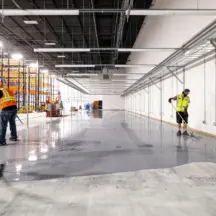
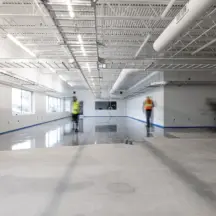
ESD Flooring Gallery
Request a Proposal
Submit project parameters for preliminary analysis. Commercial estimates typically returned within 24 hours.
Installation Around Live Pharmaceutical Operations
Most pharma facilities cannot fully shut down for flooring work, so a phased ESD install is the default. Phase boundaries are planned around production shutdowns the facility has already scheduled, COIs go in before mobilization, and atmosphere control inside the work zone protects adjacent live cleanrooms.
Phase Boundaries Around Production Shutdowns
A phased ESD install on a live pharma site is zone-by-zone work over multiple weekends or scheduled production-line down windows. The phase plan gets built off the facility’s production calendar, with hard boundaries between active and inactive zones: temporary wall partitions, dedicated HVAC return isolation, separate ingress and egress routes for the crew. Each zone moves through prep, primer, body coat, topcoat, and the 24-72 hour cure-and-test window before STM7.1 resistance verification. The next zone starts after the previous one is back in service.
Integral Cove Base at the Wall-Floor Transition
Integral cove base is a continuous epoxy radius poured into the wall-floor transition, not an applied vinyl or rubber base set on top of a finished floor — and it is the cGMP-cleanable detail pharma cleanrooms require. The cove is part of the same monolithic system as the floor field, so there is no seam at the wall, no crevice for biofilm or particle accumulation, and no transition for a USP <797> or USP <800> decontamination protocol to fail at. Cove height is specified by the cleanroom design, typically 4 to 6 inches in Class 7 and 8 environments and sometimes taller in Class 5 and 6.
Atmosphere Control During Install
Crews working inside or adjacent to a live cleanroom envelope hold the install zone to defined temperature, humidity, and particle count limits during prep, application, and cure. HVAC isolation between the work zone and active rooms gets verified before mobilization. Material staging and waste removal follow the facility’s cleared-environment access protocols. The crew is in pharma-appropriate gowning, with COI submitted, background checks cleared, and ingress through the facility’s defined access point, not through whatever door is closest.
Compliance Testing and Validation Documentation
A pharma cleanroom ESD install produces two documentation tracks: the S20.20 closeout package (STM7.1 resistance logs, STM97.1 system resistance data, STM97.2 body voltage data, grounding verification) and the IQ/OQ/PQ validation package the facility’s quality system needs to add the floor to its asset register. Both ship together.
ESD Verification per STM7.1, STM97.1, and STM97.2
STM7.1 resistance verification runs after the 24-72 hour cure-and-test window, with readings taken point-to-point (Rtt) and point-to-ground (Rg) on a grid across the installed zone and logged against the S20.20 program threshold. STM97.1 then measures the combined resistance of floor, footwear, and person as a system. STM97.2 measures body voltage generation on a walking test, held under the 100 V S20.20 threshold with the facility’s specified ESD footwear. All three data sets go into the package the EHS lead hands to the S20.20 auditor and the cGMP inspector.
IQ, OQ, PQ Validation Package
The IQ package documents installed system components against the approved spec, from primer, body coat, and topcoat SKUs to grounding strap copper gauge and cove base detail. OQ shifts to functional verification, logging STM7.1 resistance readings, STM97.1 system resistance readings, STM97.2 body voltage readings, and ground continuity against the program threshold. PQ covers performance against the facility’s intended use, with cleanability protocol references and material compatibility data folded in. The whole package is built to drop into the facility’s existing quality system, not handed over as a parallel binder the QA team has to re-format.
FDA Audit Trail and Chain of Custody
The closeout includes material chain-of-custody from manufacturer to install zone, batch certifications for each container of primer, body coat, and topcoat used on the project, and current product data sheets for every system component. When the FDA inspector asks what is on this floor and where it came from, the answer is in the binder. The audit trail is built during the install, not reconstructed after.
Why Craftsman for Pharmaceutical Cleanroom ESD Work
Pharma cleanroom ESD work demands fluency in both regulatory tracks at once, plus a crew structure that can hold atmosphere-controlled install discipline across a phased schedule. Craftsman performs pharmaceutical cleanroom ESD work with directly employed W-2 crews assigned companywide through a project-specific staffing and equipment plan. Each assignment is based on geography, schedule, system requirements, crew experience, availability, facility-access requirements, equipment needs, and concurrent workload. Craftsman offices are service and accountability points, not fixed crew or equipment origins.
W-2 Installers, Not 1099 Day-Labor
The crews on a Craftsman pharma cleanroom job are W-2 employees, trained on the gowning and atmosphere-control protocols described above. Not 1099 day-labor pulled together for the project. Trained, insured, and accountable to the facility through Craftsman’s chain of command. That structure is what makes a phased schedule hold across multiple weekends: the same crew runs prep through topcoat and the STM7.1 verification step, with the validation paperwork carried forward by the same hands that did the work rather than re-introduced at every rotation.
Authorized SW + PIP + Sika Installer
Craftsman is an Authorized SW + PIP + Sika installer, all three credentials at parity. Sika authorization covers the Sikafloor ESD coating systems (the Sikafloor 2xx ESD series). SW High Performance Flooring and PIP ESD product lines round out the pharma cleanroom system options. When the spec calls out a specific manufacturer system, the install proceeds under that program, and warranty registration goes to the manufacturer rep with the same batch certs, lot numbers, and STM7.1 logs the facility’s QA team receives in the validation package. One documentation track, two recipients.
Phased Discipline Proven at Scale
The Dallas 34,000 sq ft Fortune 500 electronics QA project, phased through occupied space, and the Houston 67,000 sq ft hyperscale-grade project are the scale-and-discipline anchors in the ESD portfolio. Both ran through the same multi-weekend phasing, atmosphere control, and same-crew documentation continuity a pharma cleanroom retrofit requires. The floor system carries a 25+ year service life, with ESD properties verified at install and maintained through the facility’s periodic testing program.
ESD Flooring Knowledge Center
Resource links
Where ESD Flooring Is Used
Compliance Requirements & Testing
- ESD Control Program Standards
- ESD Facility Requirements
- ESD Floor Testing Programs
- STM97.1 qualification before installation — Plan the flooring samples, footwear and records for a person–footwear–floor resistance evaluation.
- Moisture and conditioning in system testing — Review how recent cleaning and conditioning affect the resistance evaluation.
- Preparing footwear before ESD testing — See where the footwear wear period fits into resistance and walking-voltage testing.
Systems & Selection
Project Planning & Delivery
Maintenance & Troubleshooting
Manufacturer ESD Flooring Systems
Frequently Asked Questions
Most pharmaceutical cleanroom work specifies static dissipative epoxy at 1.0×10⁶ to 1.0×10⁹ ohms per ANSI/ESD S20.20. The dissipative band bleeds charge fast enough to protect ESD-sensitive dispensing, fill-finish, and packaging equipment while limiting personnel exposure to grounding-fault current. Conductive epoxy below 1.0×10⁶ ohms is the exception case, specified when the room carries a Class I Division 2 hazardous-area classification, when the solvent list includes flammable carriers in process volumes, or when the EHS team’s S20.20 program calls for it based on charge-generation modeling.
Yes, wherever the facility’s work falls under either chapter. USP <797> governs sterile compounding environments such as IV admixture suites and aseptic processing rooms; USP <800> governs hazardous drug handling, including oncology compounding and anti-neoplastic receipt and storage. Flooring under either chapter has to meet that chapter’s cleanability, cove base, and particle-generation requirements while also holding the S20.20 static-control side. One monolithic epoxy system with integral cove base and low-VOC topcoat satisfies both tracks when specified correctly.
Through a dual documentation track delivered as one package at closeout. The ESD side includes STM7.1 resistance logs taken point-to-point and point-to-ground, STM97.1 system resistance data, STM97.2 body voltage data, and grounding network verification. The pharma side includes IQ, OQ, and PQ validation documentation, material chain of custody from manufacturer to install zone, batch certifications for primer, body coat, and topcoat, and current product data sheets for every component. The package is built during the install and structured to drop into the facility’s existing quality system rather than sit parallel to it.
Yes, through a phased install paired with atmosphere-control protocols. Phase boundaries are planned around production-line shutdowns the facility has already scheduled, with temporary partitions and HVAC return isolation separating the work zone from active cleanrooms. The crew gowns to facility standards, holds the work zone to defined particle, temperature, and humidity limits through prep, application, and cure, and follows the facility’s cleared-environment access protocols. Each zone moves through the 24-72 hour cure-and-test window before STM7.1 resistance verification and return to service.
Pricing runs $3.34-13.55 per square foot installed depending on system type, thickness, and substrate condition, derived from real bid data on 250+ commercial ESD projects. Pharmaceutical cleanroom work tends toward the higher end of the range because of integral cove base requirements, low-VOC topcoat premiums, phased install around live operations, and the IQ, OQ, and PQ validation documentation pharma quality systems require. Pre-bid walkthroughs are available based on project requirements, timing, and resource availability; remote spec review is standard for multi-region rollouts.
A full IQ, OQ, PQ package alongside the standard S20.20 closeout. IQ verifies installed system components against the approved spec, down to primer, body coat, and topcoat SKUs and the grounding strap detail. OQ logs STM7.1 resistance readings, STM97.1 system resistance readings, STM97.2 body voltage readings, and ground continuity against the program threshold. PQ covers performance against the facility’s intended use, with cleanability protocol references and material compatibility data folded in.
Class 5, 6, 7, and 8. Class 5 environments such as fill-finish and aseptic processing get the strictest topcoat selection, monolithic seam-free construction, integral cove base, and verified low particle generation. Class 6 and 7 allow slightly looser topcoat selection but still demand integral cove base and particle verification, while Class 8 gowning rooms and vestibules tolerate standard cove detail but rule out anything that sheds particles under traffic. The base system adapts across the four classes through topcoat selection and cove base detail rather than a different system per class.
Craftsman installs pharmaceutical cleanroom ESD flooring nationwide using directly employed W-2 crews. Personnel and equipment are assigned companywide to each project according to geography, schedule, system requirements, experience, availability, facility requirements, and concurrent workload. Craftsman’s offices in Dallas, Fort Worth, Austin, San Antonio, Houston, and Oklahoma City are service and accountability points, not fixed crew or equipment origins. Each proposal identifies the project-specific staffing, equipment, mobilization, travel assumptions, and schedule.
.
Blog
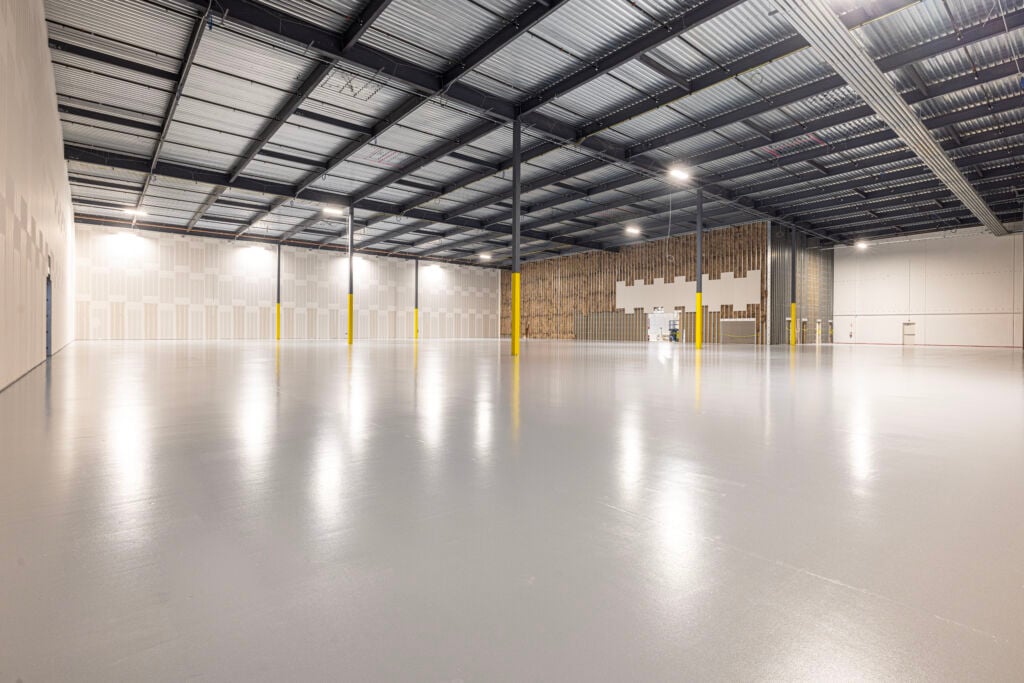
ESD Epoxy Flooring Case Study: 34,000 SF Dallas, TX
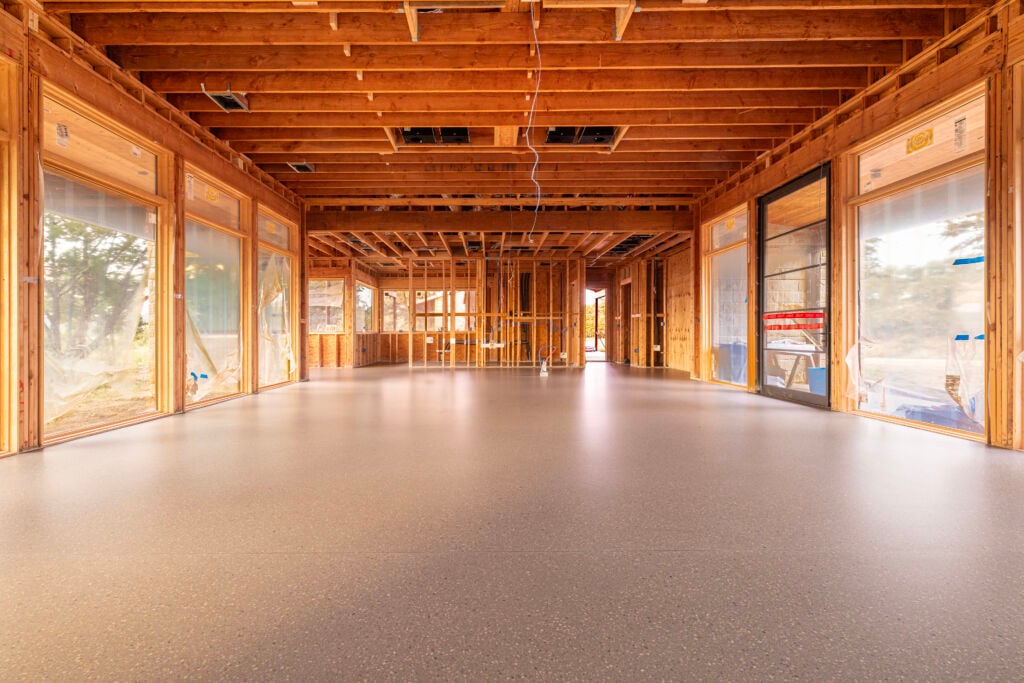
Residential Terrazzo Floors in Fort Worth, Texas