What can we help you with?
Technical flooring, delivered directly
- ESD flooring, urethane cement, terrazzo, and polished concrete
- In-house W-2 installation crews and experienced field leadership
- National service coverage with project-specific staffing plans
- Testing, documentation, and defined project closeout
- Dedicated support for corporate procurement and multi-site contracting
Phone: +1 (844) 687-1961
Three checks establish equipment readiness
A floor’s dynamic coefficient of friction (DCOF) result depends on properly prepared testing equipment. ANSI A326.3-2021 requires instrument verification, a suitable and reconditioned rubber testfoot, and validation against a reference surface before testing proceeds.
The validation range checks the apparatus. It does not provide an allowance that can be added to or subtracted from a floor’s acceptance threshold.
Our polished concrete slip-resistance guide explains how friction testing relates to the floor’s intended use.
This page covers ANSI A326.3-2021, released in February 2022.
| Check | Requirement in this edition |
|---|---|
| Instrument verification | Verify the tribometer’s strain gauge before testing using the device manufacturer’s verification method. |
| Testfoot condition | Use a compatible, manufacturer-supplied SBR rubber testfoot within its wear limit and reconditioned according to the manufacturer’s procedure. |
| Reference-surface validation | Obtain a validation average within the applicable range of the value stated for the ANSI A326.3 validation surface. |
A tribometer is the instrument used to measure friction. The testfoot is its rubber contact surface.
Check testfoot wear and preparation
Under this edition, a new SBR testfoot has a rubber thickness of 4.0 mm ±0.2 mm. Discontinue use when its thickness reaches 2.5 mm or less.
Follow the testing-device manufacturer’s reconditioning procedure. The prepared testfoot must have a uniform surface with no wear line across its center.
Reconditioning is repeated after validation and before each field test sample.
Validate the instrument against the reference surface
Check the instrument on a clean ANSI A326.3 validation surface using the applicable wet or dry procedure.
| Validation condition | Required range |
|---|---|
| Wet | Within ±0.03 of the stated wet DCOF value for the validation surface |
| Dry, when performed | Within ±0.04 of the stated dry DCOF value for the validation surface |
If wet validation falls outside its range, the standard provides corrective steps involving testfoot reconditioning, validation-surface cleaning and, where necessary, replacement of the testfoot or validation surface. Testing proceeds only after the required validation result is achieved.
These cleaning instructions concern the reference surface used to check the apparatus. They are not maintenance instructions for the installed polished floor.
Keep equipment validation separate from floor acceptance
The reference-surface value belongs to the equipment-validation procedure. The floor’s acceptance criteria come from the applicable project requirements and test method.
For example, a wet validation range of ±0.03 does not create a ±0.03 allowance around a specified floor threshold. Our 0.42 DCOF guide explains the separate question of interpreting that commonly cited value.
Project Gallery






Frequently Asked Questions
No. Under ANSI A326.3-2021, ±0.03 is the permitted wet validation range relative to the reference surface’s stated value. It checks the testing apparatus, not the floor’s compliance.
Discontinue use when its rubber thickness is 2.5 mm or less. A replacement must be supplied by the testing-device manufacturer and compatible with the device.
Yes. ANSI A326.3-2021 requires the specified reconditioning steps before each field test sample, as well as after the validation procedure.
No. This edition describes dry testing as optional. When performed, the specimens or test areas must be completely dry, and dry validation uses the ±0.04 range relative to the reference surface’s stated dry value.
Polished Concrete Knowledge Center
Resource links
Performance & Safety
Design & Aesthetics
Installation Guidance
Economics & Sustainability
Maintenance & Aftercare
Comparative & Decision-Making
Blog
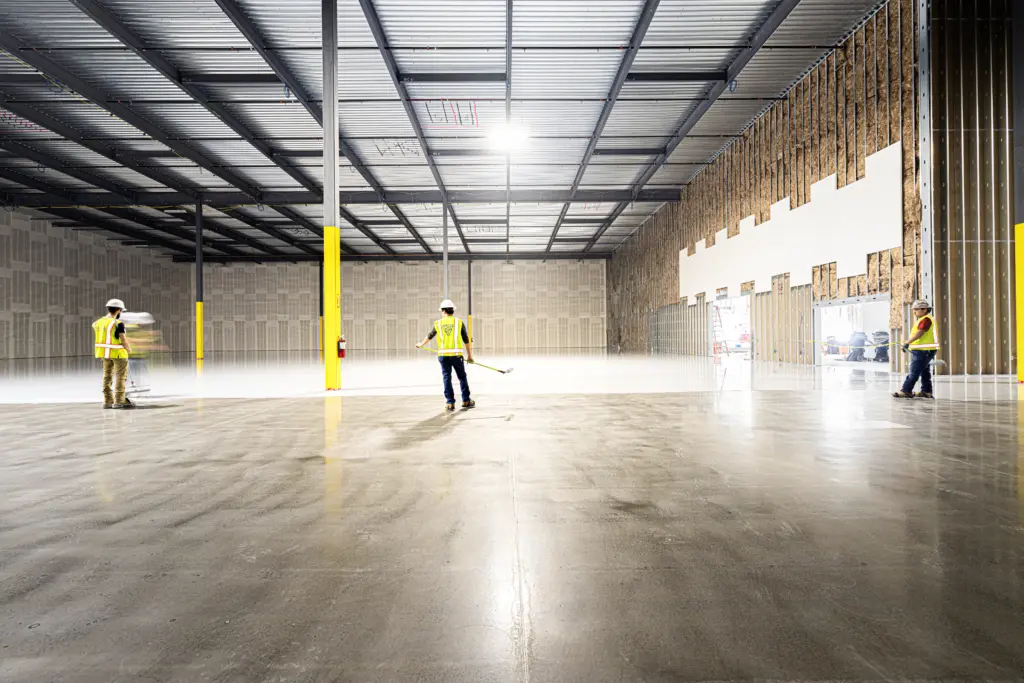
Craftsman Publishes 2026–2027 ESD Flooring Technical Guide
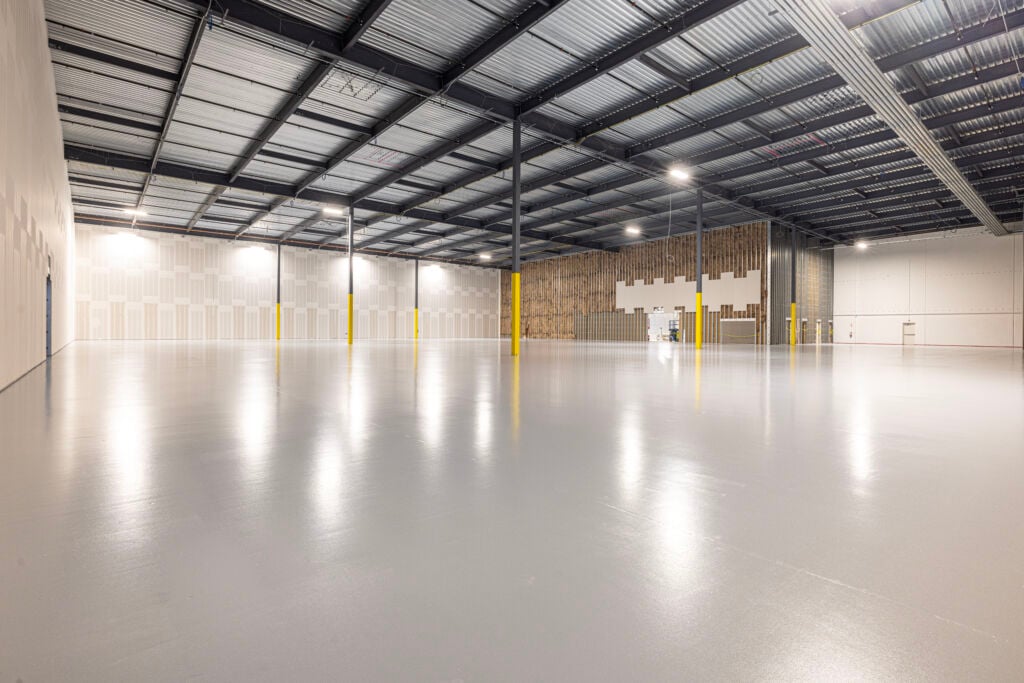
ESD Epoxy Flooring Case Study: 34,000 SF Dallas, TX