- Founded in 1999 • National commercial & industrial technical flooring contractor
- High-spec systems: ESD/static-control flooring, urethane cement, terrazzo, polished concrete, resinous flooring & coatings, and concrete overlays
- In-house W-2 installation crews provide national service coverage
- W-2 installers, not 1099 day-labor • Trained, insured, and accountable to you
- The same core workforce model, installation leadership, training system, documentation path & safety accountability can carry across phased and multi-site programs
- Since current ownership began in 2018, zero OSHA-reportable incidents and no workplace injury requiring medical treatment beyond first aid
- Current prequalification documents available through controlled review, including COI, W-9, safety information & other current qualification records
- Commercial estimates are typically returned within 24 hours; complex bids may take longer
Company: Craftsman Concrete Floors
Phone: +1 (844) 687-1961
Terrazzo floor polishing is the mechanical renewal of a terrazzo surface: progressively finer diamond abrasives grind, hone, and then polish the exposed aggregate and binder until the floor itself produces the shine, with no wax or coating on top. Craftsman Concrete Floors performs this work nationwide for commercial and institutional buildings — honing and repolishing dull or traffic-worn floors, refinishing terrazzo buried under years of coatings, and returning waxed floors to a wax-free mechanical finish that is maintained by cleaning rather than by stripping and re-coating.
Because “polishing” gets used loosely for everything from a quick buff to full restoration, this page explains what the professional process involves, how honed and polished finishes differ, and how to tell whether a floor needs routine cleaning, buffing, honing, refinishing, or repair. Floors with cracks, chips, or failed patches need repair before any finish work; that scope is covered on the terrazzo restoration and repair page. For everything else, the path is the same: a floor-specific assessment, a clear scope, and a written estimate.
Wax-Free Terrazzo Polishing: Where the Shine Comes From
A terrazzo floor’s gloss can come from one of two places — a sacrificial coating applied on top, or the stone itself ground flat and refined. Which one your floor relies on determines how it looks, how it wears, and what it costs to keep.
What actually makes terrazzo shine
A mechanically polished terrazzo floor gets its reflectivity from flatness. Diamond abrasives refine the marble or other aggregate and the surrounding binder to an optically smooth plane, so light reflects uniformly and the floor reads deep and clear. A coated floor works differently: a film of wax or finish carries the gloss, takes the scuffs, and is periodically stripped and reapplied.
Both are legitimate maintenance models, but they commit a building to different futures — a coating program means recurring strip-and-recoat cycles, while a mechanical finish takes wear on the stone itself and is renewed by honing and polishing. This is also why no mop-applied “terrazzo polish” can fix a worn floor: a product can coat the surface or help maintain it, but it cannot rebuild a ground finish. Craftsman specializes in the mechanical model, including converting long-waxed floors to a wax-free finish.
Honed versus polished finishes
A honed terrazzo finish stops at a uniform satin or matte sheen; a polished finish continues the same refinement to a high gloss with depth and reflection. Honed floors control glare in daylight-heavy spaces, disguise fine scratching in punishing traffic, and read more natural underfoot. Polished floors deliver the classic terrazzo look that lobbies, corridors, and public buildings are known for.
Honing is also the corrective step in its own right: cement-based terrazzo with marble aggregate is sensitive to acidic spills, and honing removes shallow etching and scratches before the floor is brought back to whatever sheen the building wants. The gloss level is a decision, not an accident — it should be set with traffic, lighting, and the maintenance plan in mind before work begins.
Grinding, honing, and polishing: what the professional process involves
Professional terrazzo polishing starts with an assessment, because the system and the condition dictate the work. Epoxy and cement-based terrazzo take different treatments, and what sits on the surface — wax layers, old sealers, adhesive residue, uneven earlier work — determines how the floor is prepared. Heavy coating buildup may be chemically stripped before any grinding. The mechanical work then cuts only as deep as the condition requires: coarse diamond grinding where wear or buildup demands a true reset, shallower honing where the floor is merely dull, then progressively finer abrasives up to the target sheen.
On conventional epoxy terrazzo, published epoxy-terrazzo installation procedures state that a conventional epoxy-terrazzo sequence may include rough grinding followed by color-matched epoxy grouting of pinholes and voids before final polishing. Some proprietary systems report groutless installations, so that step depends on the system and condition. On cement-based systems, the published sealer reference guide describes silicate-based penetrating densifiers as one post-polishing approach for reducing porosity and helping repel stains and soils. This is not equivalent to every penetrating stain guard or topical sealer. The last step is protection: penetrating treatments differ from one another and from topical sealers, and the product’s current data sheet — matched to your system and finish — governs what goes on the floor.
On conventional epoxy terrazzo, published epoxy-terrazzo installation procedures state that a conventional epoxy-terrazzo sequence may include rough grinding followed by color-matched epoxy grouting of pinholes and voids before final polishing. Some proprietary systems report groutless installations, so that step depends on the system and condition. On cement-based systems, the published sealer reference guide describes silicate-based penetrating densifiers as one post-polishing approach for reducing porosity and helping repel stains and soils. This is not equivalent to every penetrating stain guard or topical sealer.
The last step is protection: penetrating treatments differ from one another and from topical sealers, and the product’s current data sheet — matched to your system and finish — governs what goes on the floor.
Gloss, traction, and safety requirements
Gloss level alone does not determine how a terrazzo floor grips. The published sealer reference guide directs designers to the sealer supplier for the applicable coefficient-of-friction data and test method. Installed traction also depends on finish, contamination, moisture, and maintenance. For projects that carry a specific traction requirement, this makes traction a specification decision: the requirement is named in the project documents, and the finish and protective treatment are selected to meet it.
Craftsman sets the gloss target and any traction requirement together during planning, so the finished floor serves both the look the building wants and the conditions it operates under.
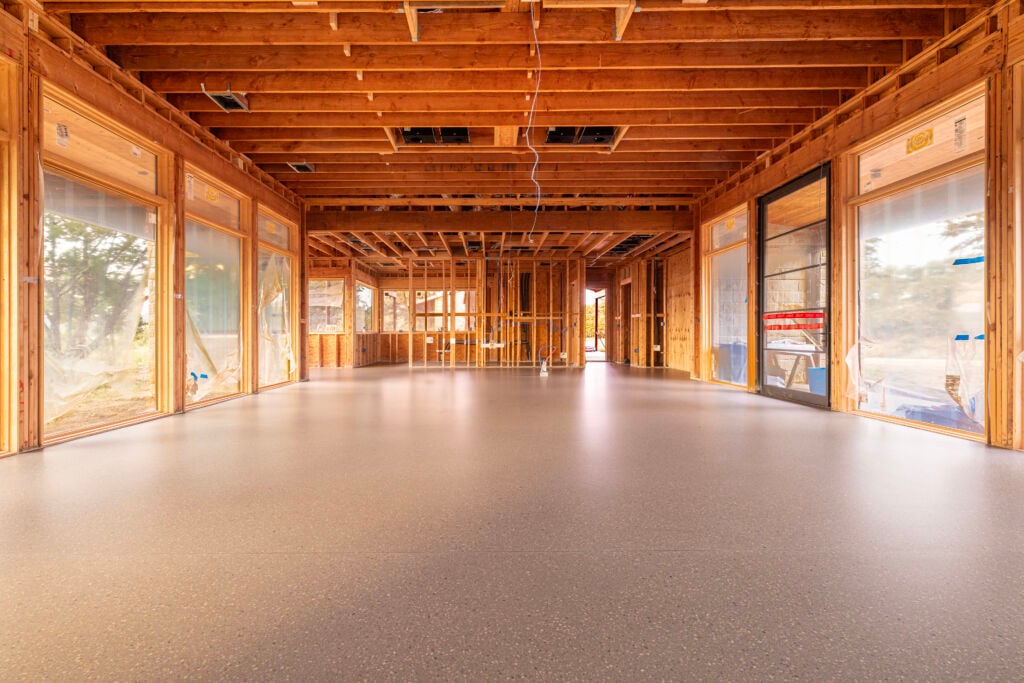
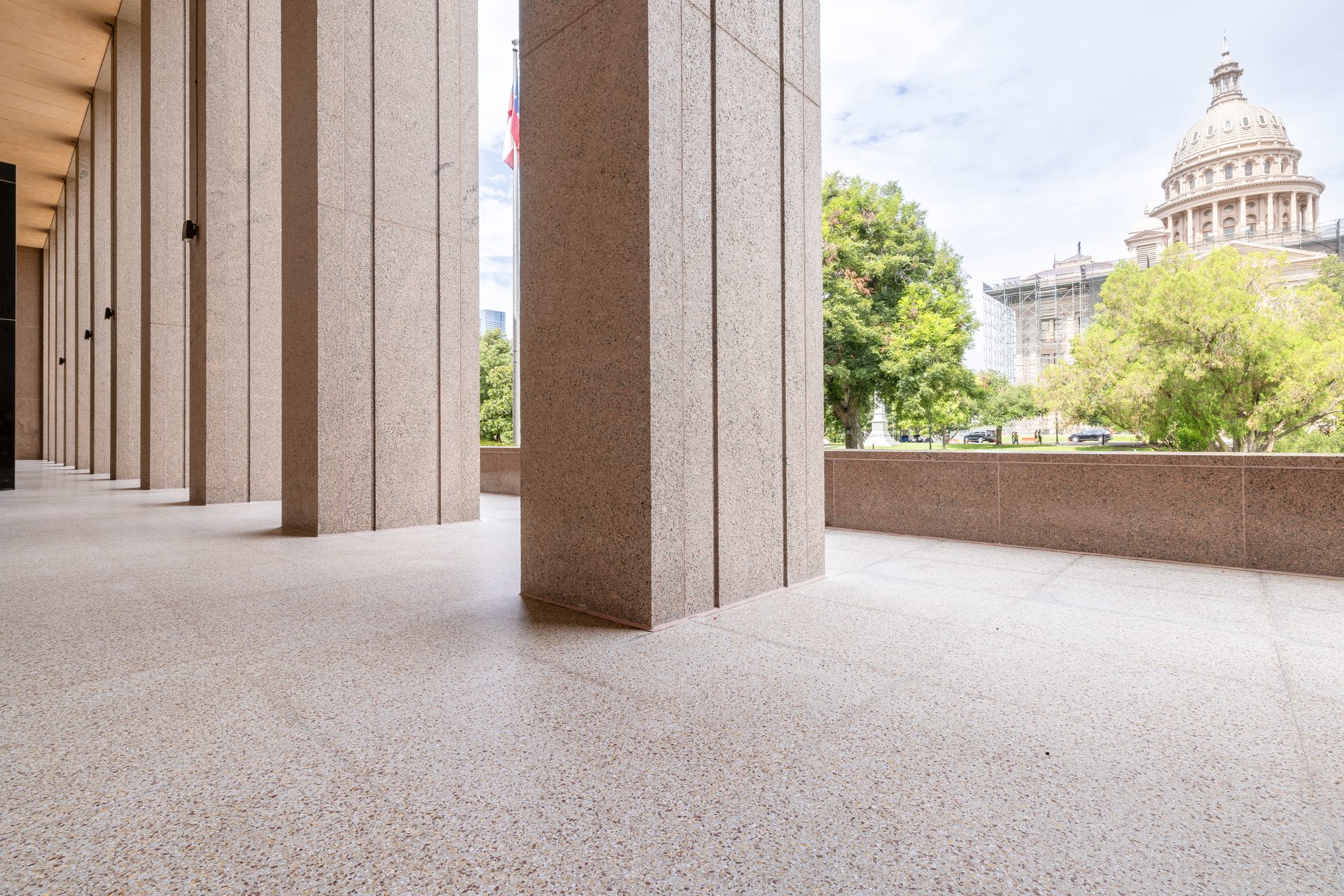
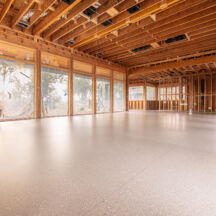
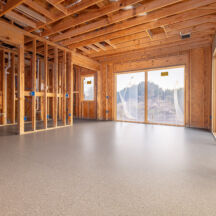
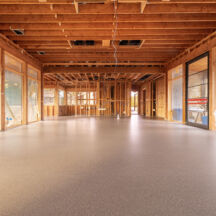
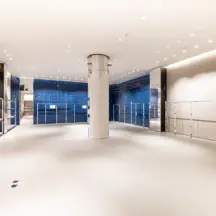
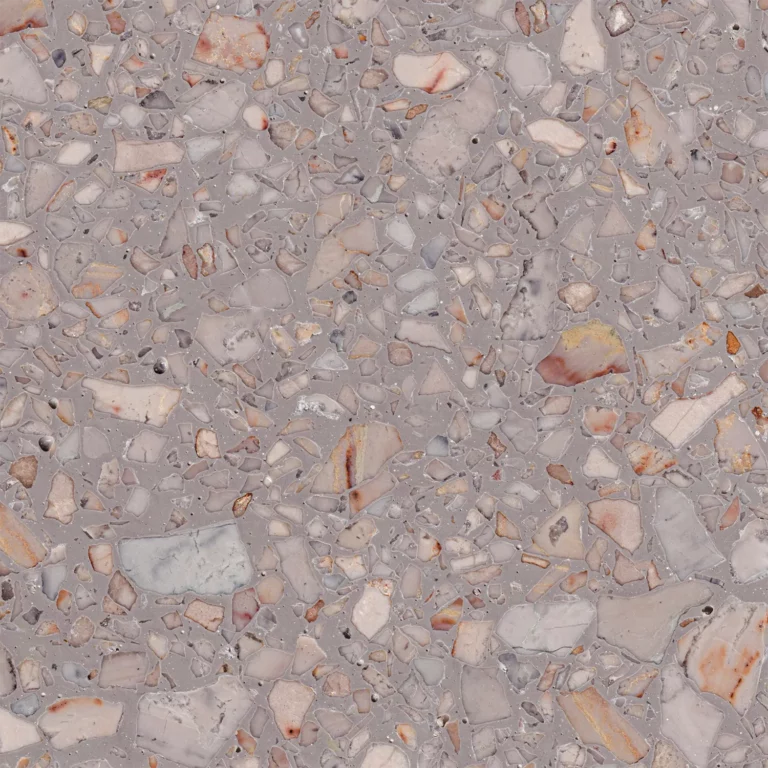
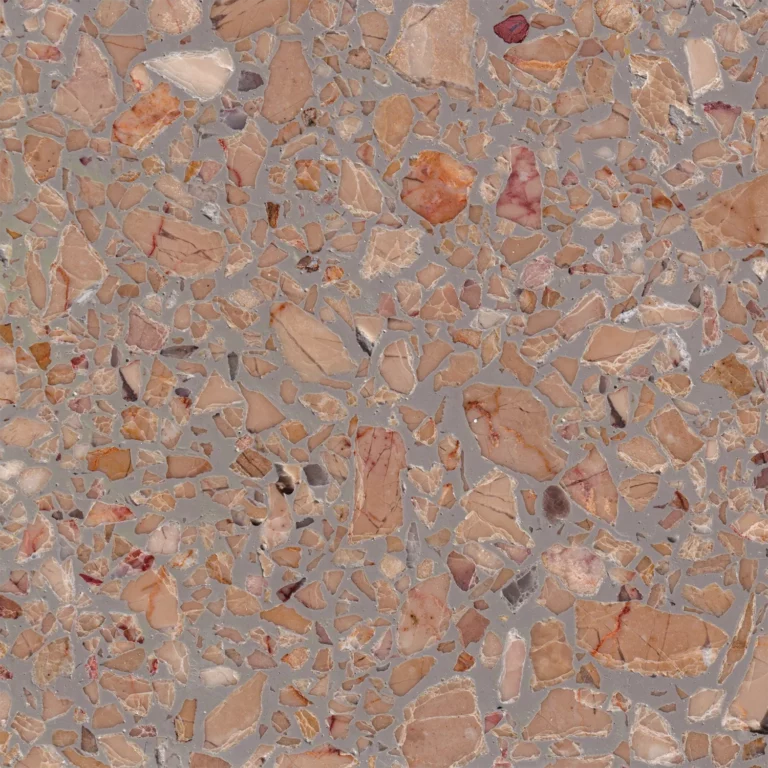
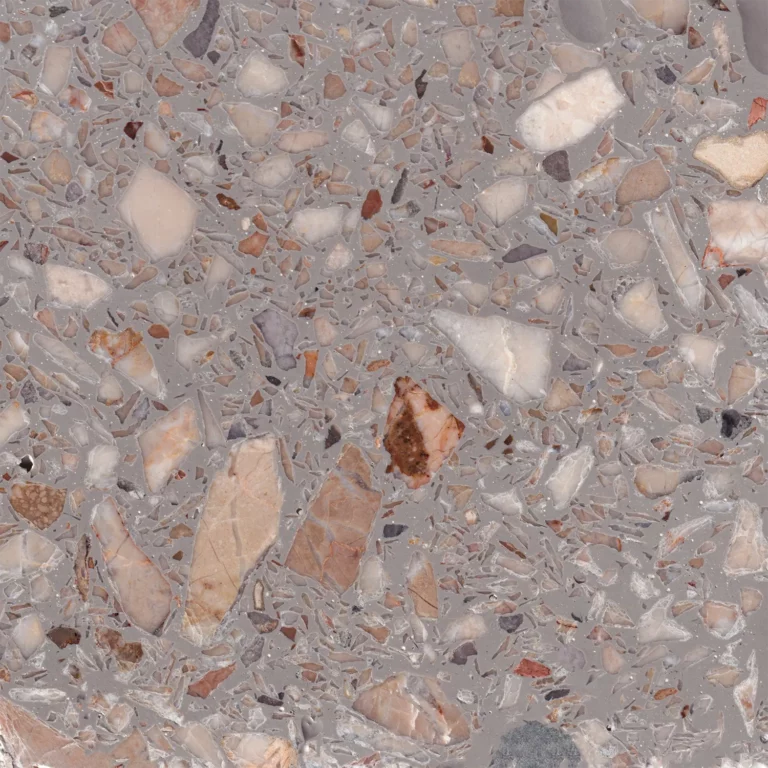
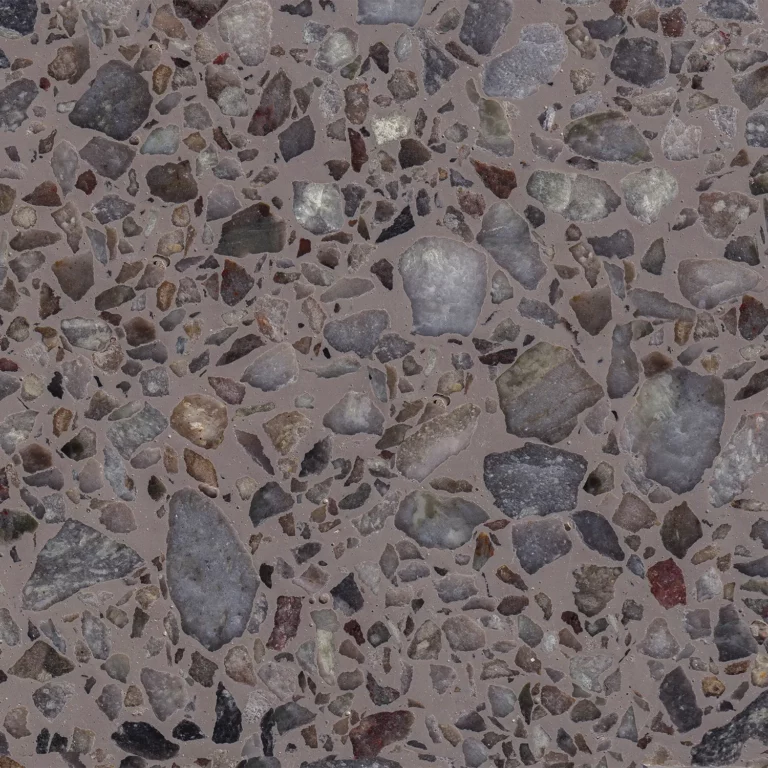
Terrazzo Floors Gallery


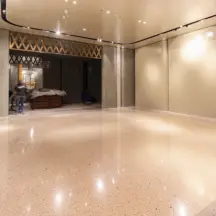
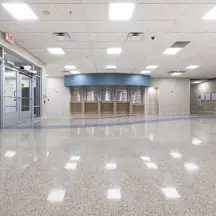
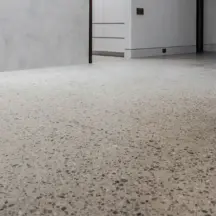
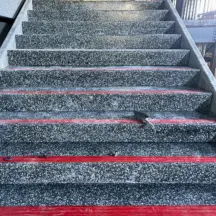
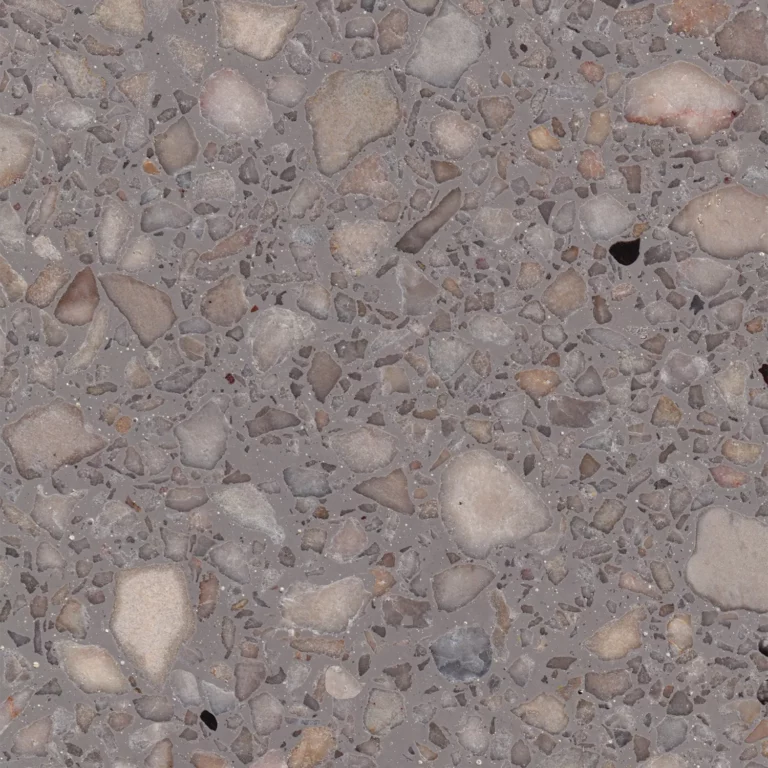
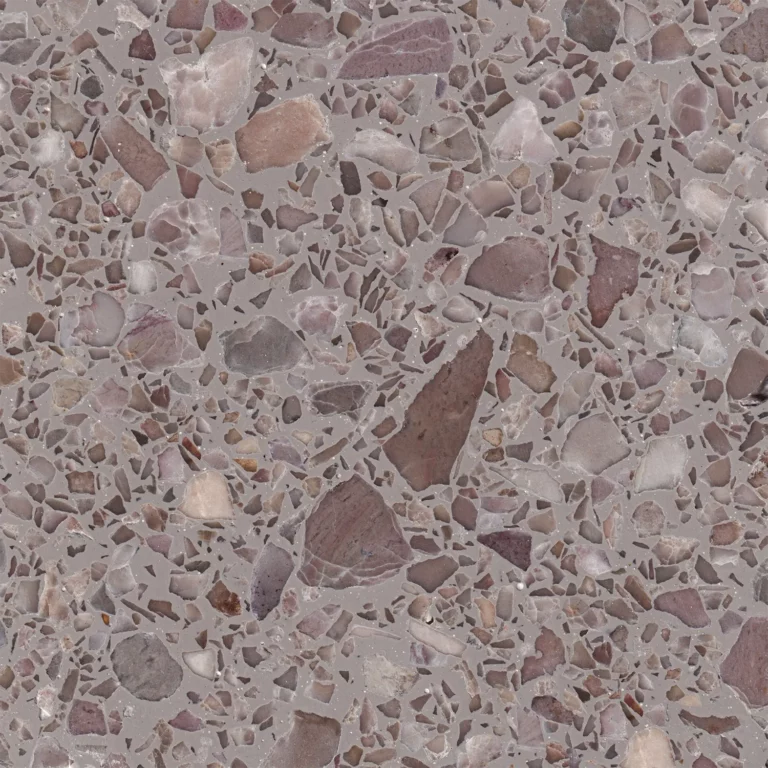
Terrazzo Samples
Request a Proposal
Submit project parameters for preliminary analysis. Commercial estimates typically returned within 24 hours.
Cleaning, Buffing, Honing, Refinishing, or Restoration: Matching the Service to the Floor
Terrazzo cleaning and polishing are different answers to different problems, and the right service depends on how deep the problem goes. From lightest touch to heaviest:
When cleaning is all the floor needs
A dirty floor and a worn floor look similar from standing height, so start by separating soil from wear. If the gloss is intact under the grime, a compatible pH-neutral cleaning program restores the appearance — no machine work required. A useful field test: a floor that looks rich while wet but flat and gray once dry is usually worn, not dirty, because water temporarily fills the micro-scratches and previews what repolishing would restore. Day-to-day products, routines, and schedules are covered in depth in the terrazzo cleaning and maintenance guide; daily care belongs to the facility team, and no mechanical service can compensate for the wrong cleaning chemistry.
Buffing and burnishing: upkeep between mechanical services
Buffing and burnishing restore sheen through high-speed pad friction rather than abrasive refinement. On a wax-free terrazzo program, periodic burnishing keeps a polished floor bright between mechanical services; on coated floors, it maintains the film itself. The limits matter: friction can brighten a lightly dulled surface, but it cannot remove scratches, etching, or wear — once the finish is cut or worn through, the floor needs honing, not a harder buff. If burnishing no longer brings the shine back, that is the signal the floor has moved down this list.
Repolishing and full refinishing
Repolishing is the service most sound floors need: the terrazzo is structurally healthy, but entrances, corridors, and checkout lanes have gone dull, so the worn areas are honed and polished back to match the original finish. Refinishing is the deeper reset — a full regrind for floors with heavy coating buildup, widespread deep wear, staining that honing cannot reach, or uneven earlier work, followed by the complete progression back to the target sheen. Existing terrazzo can often be re-ground and repolished when its condition permits, which is one of the material’s chief economies: the surface renews instead of being replaced. The assessment decides which service applies, and floors with structural problems move to repair first.
When repair or restoration comes first
Cracks, chips, gouges, failed patches, loose or missing divider strips, moisture staining, and missing sections are not polishing problems. They call for repair: matched patching, crack work, and color and aggregate matching, followed by a finish rebuilt across old and new material so the floor reads uniform. GSA’s historic-terrazzo guidance calls for project-specific patching, crack repair, aggregate matching, and color matching. Its governing preservation principle is to select the cleaning or repair method that causes no damage, or the least unavoidable damage. That discipline is worth applying to any older floor, historic or not. The full scope, including how repairs are matched and sequenced, lives on the terrazzo restoration and repair page, with existing-terrazzo color and aggregate matching available when patch blending is the concern.
Poured floors, terrazzo tile, and precast elements
Poured terrazzo — epoxy or cementitious — is ground and polished in place as one monolithic surface, which is the format this page assumes and the format explained on the main terrazzo hub. Terrazzo tile behaves differently. On qualifying large-format commercial tile projects, Craftsman performs the grinding-flat and polishing scope in collaboration with the setting contractor, which is the mechanical work that makes large tiles read as a monolithic floor. Small-format terrazzo tile is a budget-oriented product whose appearance and upkeep are defined by its grout joints, and it is not a product Craftsman installs or services. Format trade-offs are covered on the terrazzo tile page. Precast terrazzo elements — stairs, cove base, countertops — are cast, ground, and polished in Craftsman’s own shop before installation, so their finish arrives with them.
How Craftsman Delivers Terrazzo Polishing Nationwide
Most “terrazzo polishing near me” searches surface local stone-care shops. Craftsman runs a different model: one national company, its own crews, and one finish standard across every site it serves.
Crews and coverage
The crews grinding and polishing your floor are Craftsman employees trained on the equipment, systems, and finish decisions the work requires. That retained experience is how one operating standard reaches a lobby in one state and a campus in another. Pre-bid walkthroughs are available based on project requirements, timing, and resource availability, and remote specification review is standard for multi-region work, so distributed portfolios do not wait on travel to get scoped. The floors themselves are the familiar territory: the airports, schools, municipal buildings, and commercial lobbies where terrazzo has always earned its keep.
Repolishing as a facility program
Terrazzo does not need mechanical service on a fixed calendar — traffic, entry design, grit load, and the cleaning program set the pace, and condition makes the call. Entrances and main circulation lanes dull first, so repolishing only the worn zones between full-floor services is a normal, budget-conscious pattern. Between mechanical visits, the floor holds its finish through the facility team’s pH-neutral cleaning program and periodic burnishing, using the practices in the care guide. For repeat and multi-location accounts, a Master Service Agreement and one contract vehicle can carry recurring polishing work across the portfolio, so each site gets the same scope language and the same finish standard.
What terrazzo polishing costs
Polishing is priced from the floor’s actual condition, so the starting point is what drives the number: total area and layout, the terrazzo system installed, how much coating and wear must be ground off, the gloss target, any repair scope — which is assessed and priced with restoration work — and the access and scheduling windows the building allows. Occupied buildings that need work sequenced around operations price differently than empty ones.
To get a real number quickly, share the approximate square footage, the system if known, photos of current condition, and the schedule: a project specialist responds within one business day, and commercial estimates are typically returned within 24 hours, though complex or multi-site bids can take longer. Initial consultation and specification help are available at no cost. If you are budgeting a new floor rather than renewing one, the terrazzo installation cost guide covers new-installation economics; when you are ready to talk through a specific floor, schedule a consultation.
Residential terrazzo polishing
Much of America’s residential terrazzo sits in mid-century homes on cement-based systems, often under decades of wax. The renewal process is the same one used on commercial floors — strip what is on it, hone out the wear, polish to the sheen you want, protect it — and when the slab and topping are sound, these floors can often be brought back rather than replaced. Craftsman’s work is primarily commercial and institutional, but homeowners with existing terrazzo can start with the same consultation to find out what their floor needs; for routine home care between services, the cleaning and maintenance guide covers the day-to-day.
Terrazzo Knowledge Center
Resource links
Restoration & Maintenance
Project Planning & Delivery
Systems & Selection
Where Terrazzo Is Used
Design & Specification
Performance, Safety & Sustainability
Frequently Asked Questions
First separate dirt from wear. If a proper pH-neutral cleaning brings the gloss back, the finish is intact and the cleaning program was the problem. If the floor stays flat and gray after cleaning — or looks rich when wet and dull once dry — the finish itself is worn, and no cleaner or mop-applied product will rebuild it. The fix is mechanical: honing out the fine scratches and repolishing the stone to the target sheen.
Polishing renews the finish on a structurally sound floor. Restoration addresses the floor itself: cracks, chips, failed patches, and missing sections are repaired with matched aggregate and color, and the finish is then rebuilt across old and new material together. If a floor has damage beyond surface wear, restoration leads and polishing is its final stage.
A mechanically finished terrazzo floor is not maintained with shine products. Its gloss comes from the ground and polished stone, kept up with pH-neutral cleaning and periodic burnishing or repolishing. Mop-applied polishes and waxes carry the shine in a film instead, and that film commits the floor to recurring stripping and re-coating. Penetrating protection is a different category from either, and the right treatment depends on the system and finish — the manufacturer’s current data sheet governs.
Routine care and even light buffing are well within reach of a facility team or homeowner. Full honing or refinishing is different work: weighted planetary grinding machines, sequenced diamond abrasives, dust management, and judgment about how deep to cut — and grinding too far or unevenly creates problems that are expensive to reverse. Most owners handle upkeep in-house and bring in a specialist crew when the finish itself is worn.
There is no fixed interval. Traffic, entry design, grit load, and the cleaning program set the pace; entrances and main lanes dull first, and repolishing just those zones between full-floor services is common. A floor kept under a compatible pH-neutral program with periodic burnishing holds its finish longer between mechanical services. Condition, not the calendar, makes the call.
Gloss level alone does not determine traction. The published sealer reference guide directs designers to the sealer supplier for the applicable coefficient-of-friction data and test method. Installed traction also depends on finish, contamination, moisture, and maintenance. Where a project carries a specific traction requirement, the finish and protection are selected to meet that specification.
Price follows the floor: total area and layout, the system installed, how much coating and wear must be ground off, the gloss target, any repair scope, and the access and scheduling the building allows. Because those variables differ between buildings, pricing starts with a short assessment — share approximate size, system, condition, and schedule, and a project specialist responds within one business day, with commercial estimates typically returned within 24 hours; complex or multi-site bids can take longer. Initial consultation is available at no cost.
Craftsman’s work is primarily commercial and institutional, but the same mechanical process renews residential terrazzo — especially the mid-century cement-based floors found under decades of wax. When the slab and topping are sound, these floors can often be re-ground and repolished in place. Homeowners can start with the same consultation used for commercial projects.
Blog
Craftsman Publishes 2026–2027 ESD Flooring Technical Guide
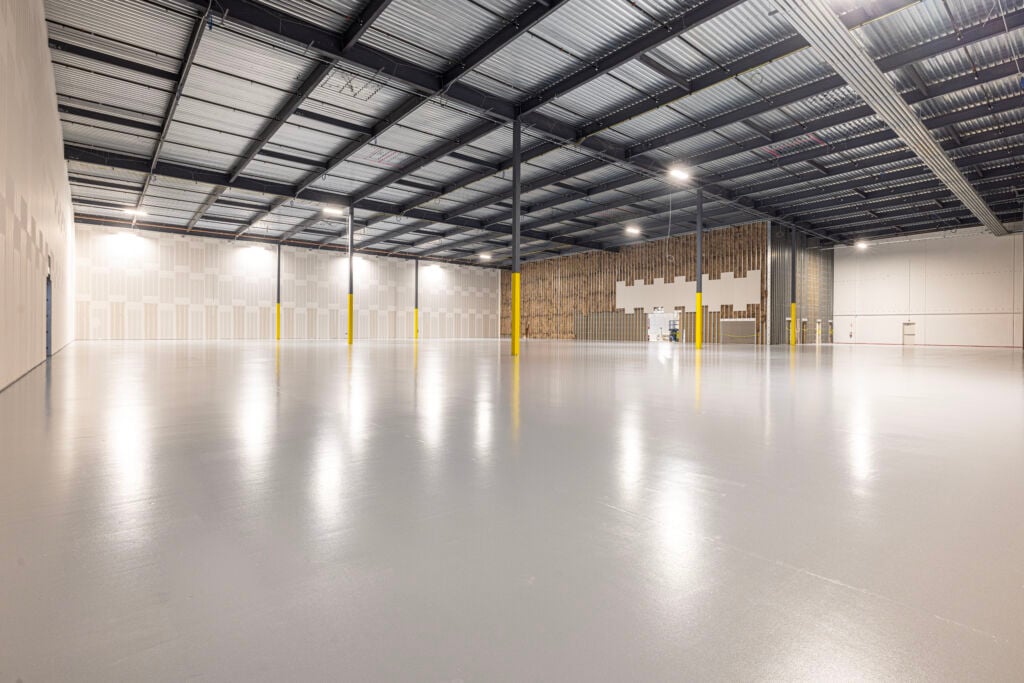
ESD Epoxy Flooring Case Study: 34,000 SF Dallas, TX