- Founded in 1999 • National commercial & industrial technical flooring contractor
- High-spec systems: ESD/static-control flooring, urethane cement, terrazzo, polished concrete, resinous flooring & coatings, and concrete overlays
- In-house W-2 installation crews provide national service coverage
- W-2 installers, not 1099 day-labor • Trained, insured, and accountable to you
- The same core workforce model, installation leadership, training system, documentation path & safety accountability can carry across phased and multi-site programs
- Since current ownership began in 2018, zero OSHA-reportable incidents and no workplace injury requiring medical treatment beyond first aid
- Current prequalification documents available through controlled review, including COI, W-9, safety information & other current qualification records
- Commercial estimates are typically returned within 24 hours; complex bids may take longer
Company: Craftsman Concrete Floors
Phone: +1 (844) 687-1961
Email: projects@craftsmanconcretefloors.com
Headquarters: 1011 Folsom Street, Dallas, TX 75208
Hours: Mon–Fri 8 am–5 pm
Terrazzo is not inherently slippery, and it is not inherently safe. Traction on an installed terrazzo floor depends on the finish it was ground to, how clean and dry the surface is at any given moment, what has contaminated it, how it is maintained, and the requirements the project set for it. Two floors poured from the same aggregate and binder can behave very differently underfoot because those conditions differ.
That puts most of the outcome under the buyer’s control. A specifier chooses the finish level, surface texture, and sealer before installation; the facility team controls entrance conditions, contamination, cleaning chemistry, and maintenance afterward. Craftsman Concrete Floors installs, polishes, restores, and maintains commercial terrazzo nationwide, and the decisions on both sides of that split are laid out here in the order a project encounters them.
Our Clients




















What Sets a Terrazzo Floor’s Traction Before Anyone Walks on It
Traction lives in the installed surface, not the material sample
A friction question about terrazzo cannot be answered from a sample chip, because traction is a property of the finished, in-service surface rather than of the material itself. The same terrazzo delivers different grip depending on the finish it received, how clean the surface is, whether it is dry or wet, what has been tracked or spilled onto it, and how it has been maintained since installation. The project’s own requirements complete the picture: a hospital corridor, a covered lobby, and an exposed transit platform place different demands on the same material family.
This is why blanket slip claims about terrazzo, favorable or unfavorable, are unreliable. A single friction number cannot describe a floor across every finish, contaminant, and maintenance state it will pass through in service.
Finish level and texture set the starting point
A ground-and-polished terrazzo floor can be finished anywhere from a low-sheen matte to a high-gloss polish, and that choice establishes the surface a shoe actually meets. Appearance terminology and traction measurement answer different questions, though: matte, gloss, and polish level describe how the surface handles light, not how it grips a sole. A glossy floor is not automatically unsafe, and a matte or textured floor is not automatically safe. What a candidate finish and treatment deliver in a given condition is established by applicable product data or testing for that installed system, so the finish is selected area by area against the project’s stated requirement rather than against how the surface looks.
Public owners handle finish selection the same way, by tying it to a stated requirement. LA Metro’s exposed-platform criteria favor rusticated terrazzo where wet-weather slip requirements apply, and its maintenance observations describe dense divider layouts as potentially supporting localized replacement after damage, according to the agency’s station surfaces and materials white paper. Those criteria belong to LA Metro’s stations; the right texture, tested traction, and divider layout for another project remain project-specific decisions.
Sealers and treatments decide which surface is actually in service
Once a sealer or treatment is applied, the product on top becomes part of the wear surface, so its behavior matters as much as the finish beneath it. NTMA describes silicate-based penetrating densifiers as one post-polishing approach for reducing porosity and helping repel stains and soils. This is not equivalent to every penetrating stain guard or topical sealer, as the published sealer reference guide makes clear, and the distinction is practical: a penetrating product works within the floor’s own surface, while a film-forming topical product substitutes its own surface for the polished terrazzo underneath.
Which product family fits depends on the installed system and the finish, so sealer selection belongs in the specification conversation rather than being left to whoever holds the maintenance contract later.
Wet behavior belongs to the finish and the moment, not the material
Water changes how a floor behaves underfoot, and how much it changes a particular terrazzo floor is a property of that installed surface: its texture, its treatment or sealer, the contaminant involved, the footwear in use, and how quickly standing water is removed. Wet-condition performance is evaluated for the actual installed surface under the applicable test condition rather than inferred from gloss, sheen, or any other appearance cue. The same lobby floor that performs well through a dry week can become hazardous during a storm if entrance control fails and water is left standing.
No universal wet or dry rating exists for terrazzo as a category. A floor’s wet behavior is evaluated for its actual finish and sealer, under its actual operating conditions.
The Operating Conditions That Move Slip Risk Day to Day
Contamination changes traction faster than any other variable
Tracked-in water, oils, drink spills, and fine dust each form a film between the shoe and the floor, and any of them can change a floor’s behavior in minutes. A surface that measured well yesterday says little about the moment after a spill. For a facility team, this makes response speed a genuine safety variable: how quickly a spill is flagged, contained, and removed does more for hour-to-hour traction than any property of the flooring material.
Entrances and transitions concentrate the exposure
Most of the water and grit a floor receives arrives at its doors. Walk-off matting in good condition captures moisture before it reaches the hard floor; a saturated, curled, or missing mat delivers that moisture directly onto the interior floor. Transitions deserve the same attention, because a shoe moving from carpet to a hard surface changes grip mid-stride. Canopies, vestibules, matting length, and mat maintenance are operational decisions about the entrance, not properties of terrazzo, yet they govern the wettest, most slip-prone zone the floor will ever have.
Cleaning residue can make a clean-looking floor slick
A cleaning product that does not rinse fully leaves a film, and that film can turn slippery the next time the surface is damp. General terrazzo cleaning may include routine dry-soil removal and a compatible pH-neutral cleaning program; the exact chemistry, pads, and schedule depend on the installed system and its condition. When a terrazzo floor feels slick even though it looks clean, the cleaning program is the first suspect, and switching products without addressing the accumulated residue rarely solves it. Product and program detail by system is covered in the terrazzo cleaning and maintenance guide.
A consistent maintenance program keeps traction predictable
Maintenance is one of the conditions traction depends on, not an afterthought to it. Traffic lanes wear differently than the surrounding field, sealers wear off on their own schedule, and a finish that has polished smooth under years of traffic behaves differently than the day it was accepted. The right maintenance interval is a condition judgment made floor by floor; no universal inspection, sealing, or repolishing schedule applies to terrazzo as a category. When the finish itself has worn past what cleaning can address, mechanical refinement is the correction, described in depth on the terrazzo floor polishing page.
Terrazzo Floors Gallery

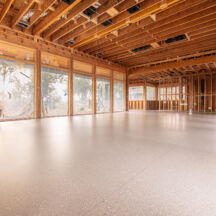
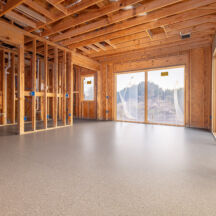
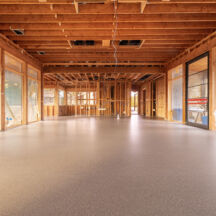
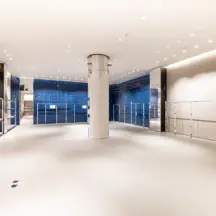

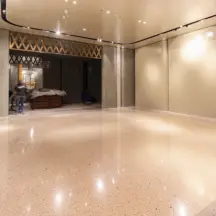
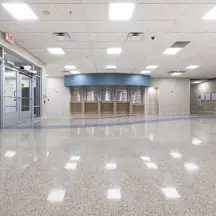
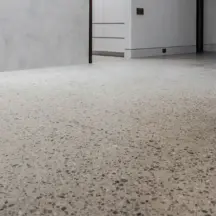
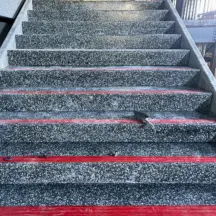
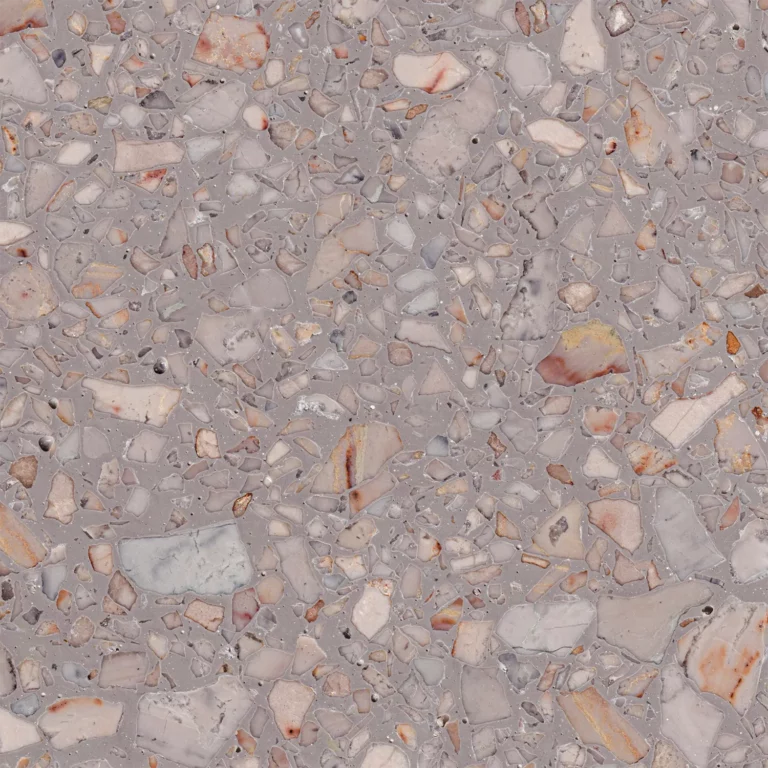
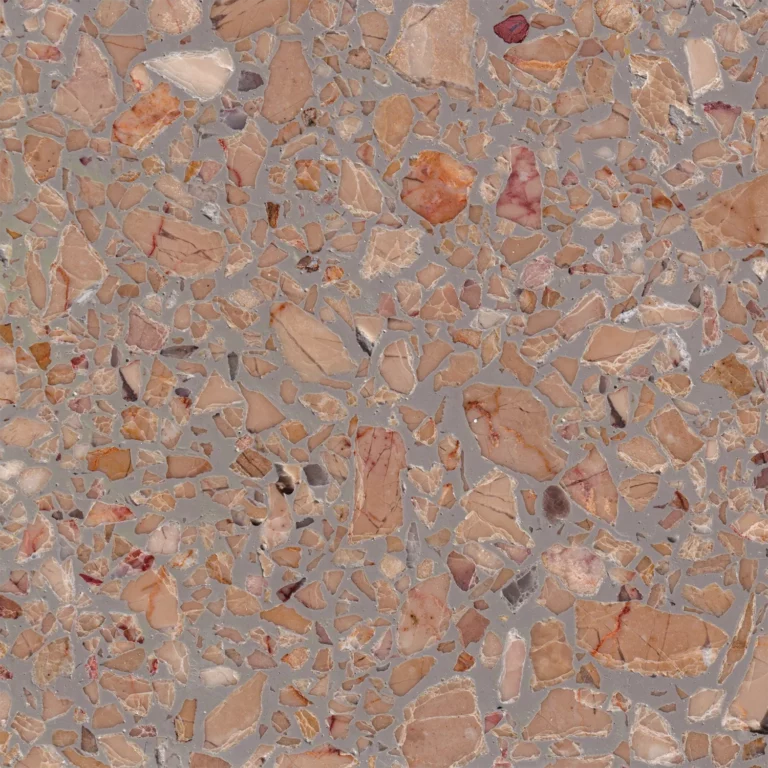
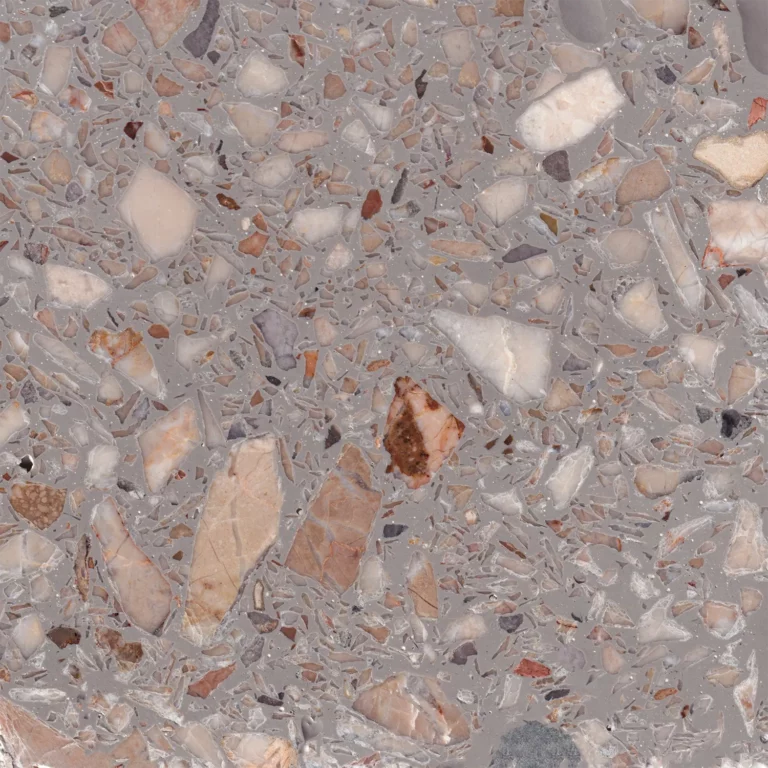
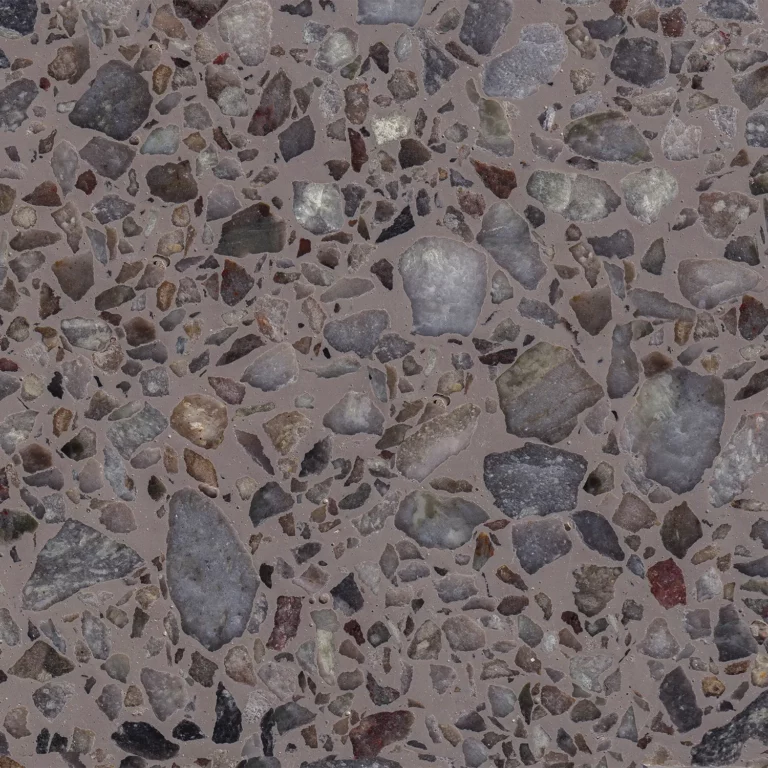
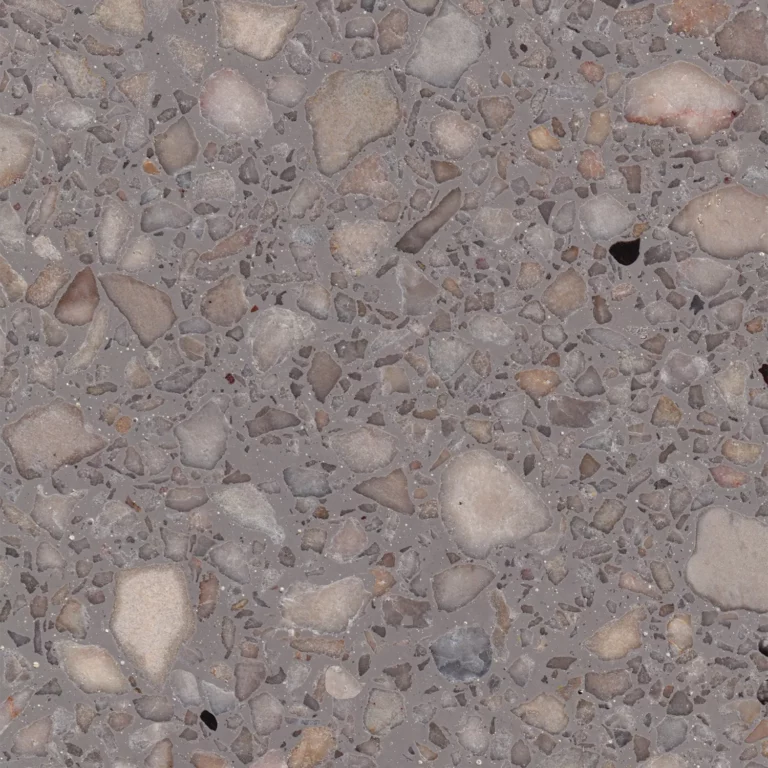
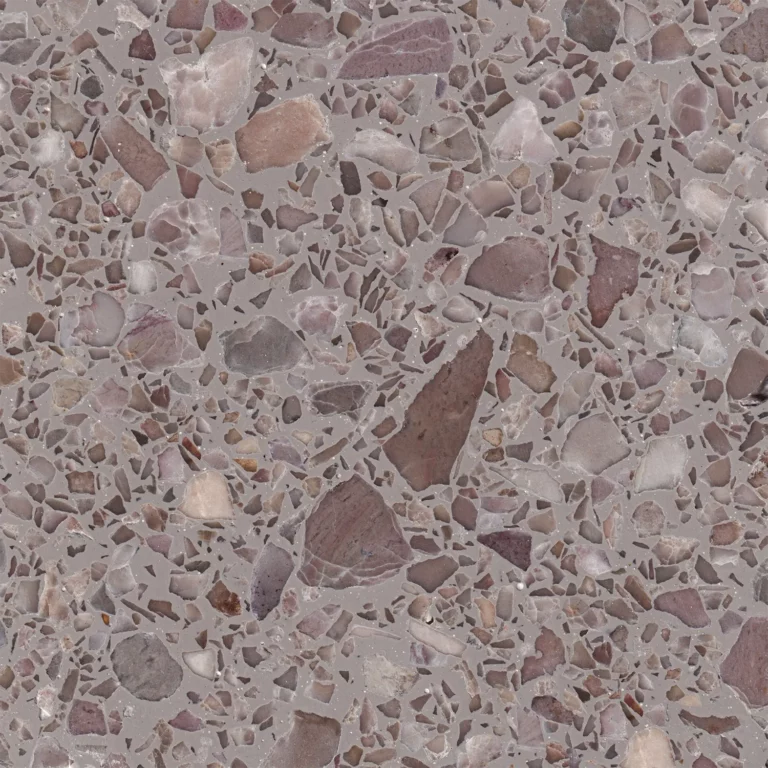
Terrazzo Samples
Request a Proposal
Submit project parameters for preliminary analysis. Commercial estimates typically returned within 24 hours.
Measuring and Specifying Traction, and the Limits of a Test Number
Traction data comes from the finish and sealer suppliers
Specifiers often ask for a friction value for terrazzo as though one existed for the material category. The published sealer reference guide directs designers to the sealer supplier for the applicable coefficient-of-friction data and test method. Installed traction also depends on finish, contamination, moisture, and maintenance. The supplier’s data is the authoritative starting point because the sealer defines the surface being measured.
A coefficient-of-friction result should be read for exactly what it is: a measurement of a particular surface, under a defined test method and contaminant condition, at the time of the test. It is strong evidence about that tested condition. It is not a permanent property of the floor, and it does not describe the same floor after the sealer wears, residue accumulates, or the finish changes under traffic. Treating a laboratory or field result as universal real-world slip performance is the most common mistake in flooring safety conversations.
A specification states the requirement; the finish and sealer meet it
Handled well, traction runs through the project documents rather than through assumptions about the material. The workable sequence is short: define each area’s exposure, from protected dry lobby to weather-exposed entry to wet-service space; state the traction requirement for that exposure; select a candidate finish and its sealer or treatment; confirm through the supplier’s current product data or testing that the combination supports the required condition; and record the requirement so the installed surface can be checked against it at acceptance. Initial specification assistance from Craftsman is available at no cost for projects working through those selections.
Flooring selection sets the surface; operations keep it safe
Selection decides the starting surface: system, finish level, texture, and sealer. It cannot decide how fast spills are cleaned up, whether entrance mats are maintained, whether cleaning products are fully rinsed, or whether anyone monitors traffic-lane wear. Those belong to the facility’s operating program, and no flooring selection removes slip risk on its own.
Traction requirements come from the project rather than from the material. The building’s use, the owner’s safety program, and the requirements governing that facility determine what the surface must do, and the installed, maintained floor is what gets evaluated against them. A buyer who expects the material choice alone to settle floor safety is assigning the flooring a job that operations must share.
Correcting a Terrazzo Floor That Has Become Slippery
Diagnosis comes before any fix
A slippery terrazzo floor has a short list of plausible causes to investigate: contamination, cleaning residue, the condition of the sealer or treatment in service, entrance water, and surface wear. The pattern of the problem suggests where to start looking, not what the answer is. Slickness near doors in wet weather puts entrance water and contamination at the top of the list; a floor that turns slick when damp despite regular cleaning makes residue worth checking; a problem that tracks the treatment’s age or a maintenance-product change puts the film in service on the list; a change concentrated in traffic lanes makes wear a candidate.
None of these can be established from appearance or location alone, and more than one can be present at once, which is why the cause is confirmed before a correction is chosen. Applying another sealer coat over an unconfirmed residue problem can stack film on film.
Some corrections are operational; some reset the surface
Contamination and residue problems are addressed operationally: tighten entrance control, change to a compatible cleaning product, and rinse fully so no new film accumulates, with program specifics in the terrazzo cleaning and maintenance guide. Sealer problems are corrected by removing or replacing the product in service according to its supplier’s guidance.
When the finish itself is the cause, existing terrazzo can often be re-ground or repolished to a different finish level or texture, provided its condition permits; condition decides, and regrinding is not always the available or right answer. The terrazzo restoration page covers repair and refinishing decisions for floors with underlying damage, and the polishing page covers mechanical refinement of sound floors.
An assessment identifies which case you have
Where included in the project scope, Craftsman can review substrate and site conditions on an existing floor before corrective work is chosen, which keeps the fix matched to the actual cause rather than to the most visible symptom. Initial consultation carries no cost, and a project specialist responds within one business day. The useful information to have ready: where the floor is slippery, when it happens, what products the cleaning program uses, and the age of the current finish and sealer.
Terrazzo Knowledge Center
Resource links
Performance, Safety & Sustainability
Systems & Selection
Project Planning & Delivery
Where Terrazzo Is Used
Design & Specification
Restoration & Maintenance
Frequently Asked Questions
A wet terrazzo floor can offer noticeably less traction than the same floor dry, and how it actually behaves is a property of the specific installed surface rather than of terrazzo as a category. Wet-condition performance is evaluated for the actual installed finish and treatment under the applicable test condition; texture, sealer, contaminant, wear, footwear, and how quickly standing water is removed all contribute, and gloss or appearance alone predicts none of it. Entrance matting and fast water removal matter as much as the finish itself.
Often, once the cause is investigated and confirmed. Contamination and cleaning-residue problems are addressed through entrance control and a compatible, fully rinsed cleaning program; a poorly performing sealer is removed or replaced according to its supplier’s guidance; and a finish whose surface has changed under wear can often be re-ground or repolished when the floor’s condition permits.
No flooring material is automatically compliant with OSHA, ADA, or building-code slip requirements, terrazzo included, and Craftsman does not represent terrazzo as automatically compliant. Traction expectations are set project by project, documented in the specification, and evaluated against the installed surface in its actual operating condition. Coefficient-of-friction data for a specific finish or sealer comes from that product’s supplier.
Blog
Craftsman Publishes 2026–2027 ESD Flooring Technical Guide
ESD Epoxy Flooring Case Study: 34,000 SF Dallas, TX