- Founded in 1999 • National commercial & industrial technical flooring contractor
- High-spec systems: ESD/static-control flooring, urethane cement, terrazzo, polished concrete, resinous flooring & coatings, and concrete overlays
- In-house W-2 installation crews provide national service coverage
- W-2 installers, not 1099 day-labor • Trained, insured, and accountable to you
- The same core workforce model, installation leadership, training system, documentation path & safety accountability can carry across phased and multi-site programs
- Since current ownership began in 2018, zero OSHA-reportable incidents and no workplace injury requiring medical treatment beyond first aid
- Current prequalification documents available through controlled review, including COI, W-9, safety information & other current qualification records
- Commercial estimates are typically returned within 24 hours; complex bids may take longer
Company: Craftsman Concrete Floors
Phone: +1 (844) 687-1961
Email: projects@craftsmanconcretefloors.com
Headquarters: 1011 Folsom Street, Dallas, TX 75208
Hours: Mon–Fri 8 am–5 pm
Terrazzo can be a defensible environmental choice, but it is never an automatic one. Its environmental performance on a real project is decided by conditions: the system and binder chemistry specified, the service life the floor actually delivers, how it is maintained, how often it is repaired or replaced, where its materials come from and how far they travel, and what the realistic alternatives are.
The strongest lever in terrazzo’s favor is conditional. Existing terrazzo can sometimes be renewed in place instead of replaced when its condition permits, which avoids the demolition, disposal, and new manufacturing that replacement requires. At the same time, the comparative studies that rank flooring materials are sensitive to their own assumptions, and some of their findings run against terrazzo. Both sides of that record belong in an honest specification.
Our Clients




















What Terrazzo Is Made Of, and Why the System Changes the Answer
A Composite of Aggregate, Binder, and Installed Finish
Terrazzo is decorative aggregate set in an epoxy or cementitious binder, placed over a prepared substrate, then ground and polished as the finished wear surface. That is a category-level description; individual terrazzo systems use different assemblies and carry different requirements.
The composite construction determines where environmental impacts arise. Embodied impacts are the resource use and emissions tied to producing and installing a floor before it ever carries traffic. For terrazzo, they accumulate in extracting and transporting the aggregate, in manufacturing the binder, and in preparing, grinding, and polishing the floor during installation. Each contribution changes with the products chosen and the project’s location, which is why the environmental question has no single category-wide answer.
Binder Chemistry and the Limits of Product Data
Epoxy binders and cementitious binders are different materials, and environmental documentation follows the specific product rather than the terrazzo category. A declaration or test report describes one manufacturer’s matrix under stated assumptions, so a figure generated for one epoxy product does not describe a cementitious system, and it does not describe other epoxy products either.
In practice, that makes terrazzo too broad a unit for environmental measurement. When a supplier presents environmental data, match it to the actual binder, product, and system being specified before it enters a submittal, and treat any figure that arrives without its product name, date, and assumptions as marketing rather than measurement.
Recycled-Content Claims and Their Boundaries
Recycled content is a property of specific products and aggregate blends, never of terrazzo as a category. A recycled fraction declared for one matrix or one aggregate source does not transfer to another product, and no universal recycled-content figure for terrazzo is supportable.
For a project that must document recycled content, the workable path runs through the products themselves. Require the declared recycled fraction for the actual binder and aggregate proposed, in current documentation from those suppliers, and keep that documentation with the submittal. If a supplier cannot state a figure for the specific product, the honest assumption is that no figure exists.
Where Sourcing and Transportation Enter the Result
Lifecycle comparisons account for producing raw materials and moving them to the project, so aggregate origin, binder supply chains, and haul distance are built into any credible environmental result. Those inputs differ from project to project, which is one reason a single national ranking cannot settle the question for a specific building.
Sourcing stories deserve the same discipline as recycled-content claims. A shorter supply chain may reduce transport impacts, but a claim of measurable carbon advantage from domestic or local sourcing requires measurement specific to the products and the actual transport involved, and no such measurement should be assumed. When a supplier presents an environmental product declaration, ask what transportation assumptions it contains and whether they resemble the project’s geography.
Service Life, Renewal, and the Replacement Question
Time drives most flooring environmental math. The longer a floor genuinely stays in service, the more years its embodied impacts are spread across, and the longer the impacts of replacement are deferred.
How Institutions Plan for Flooring Service Life
Several public owners evaluate flooring beyond first cost: Florida educational-facility guidance models flooring over a 50-year building service life; Texas A&M RELLIS calls for NIST-based lifecycle-cost analysis; University of Illinois guidance directs teams to weigh installed cost against long-term ownership cost; and Washington requires lifecycle-cost analysis for certain state facilities larger than 20,000 square feet. Each of those practices belongs to the named owner or jurisdiction, with its own dates, thresholds, and assumptions.
USDA Rural Development’s capital-needs guidance assigns terrazzo in multifamily common areas an expected useful life of 50 years or more for planning purposes. That figure appears in USDA’s capital needs assessment reference, and it is a planning category, not a warranty and not a universal service-life promise. Outside scoped planning references like these, no numeric service life for terrazzo in general is a supportable claim; what a floor actually delivers depends on the installed system, the substrate beneath it, the use it absorbs, and the upkeep it receives.
Renewing an Existing Floor Instead of Replacing It
Existing terrazzo can sometimes be renewed in place instead of replaced when the floor’s condition permits. The environmental logic is direct, because a floor that stays avoids the demolition and disposal of the old assembly along with the manufacturing and transport of a new one.
The limits matter as much as the logic. Renewal is a condition question, answered by inspecting the actual floor rather than by the material’s reputation, and repairability does not convert into a quantified environmental savings figure without project-specific measurement. When renewal is not viable, replacement carries its full impacts regardless of how renewable the category is in principle.
For an existing floor, the practical sequence starts with an assessment. Terrazzo restoration covers evaluation and repair decisions in depth, and terrazzo floor polishing addresses mechanical refinishing where the surface remains sound.
The Maintenance Assumptions Inside Long-Life Claims
Maintenance enters the environmental question twice. The recurring inputs are real, since cleaning water, chemistry, energy, pads, and labor accumulate across every year of service, and a comparison that leaves maintenance out is silent about impacts that repeat for the life of the floor. Maintenance also protects the service life that the environmental case depends on, and the right program is not generic; cleaning chemistry, methods, and frequency depend on the installed system and its condition.
Care practices for installed floors are covered in terrazzo cleaning and maintenance. For environmental review, the useful discipline is to ask what maintenance program any flooring comparison assumed, for every material in it, over what horizon.
Terrazzo Floors Gallery

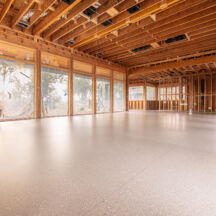
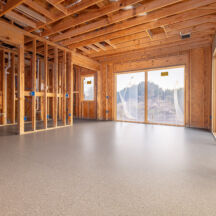
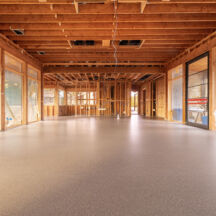
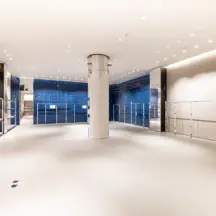

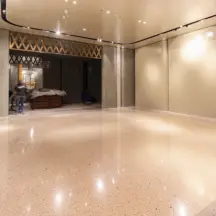
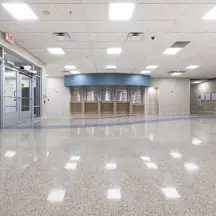
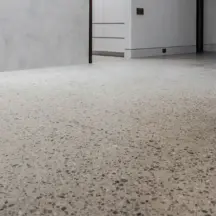
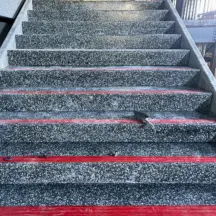
Terrazzo Samples
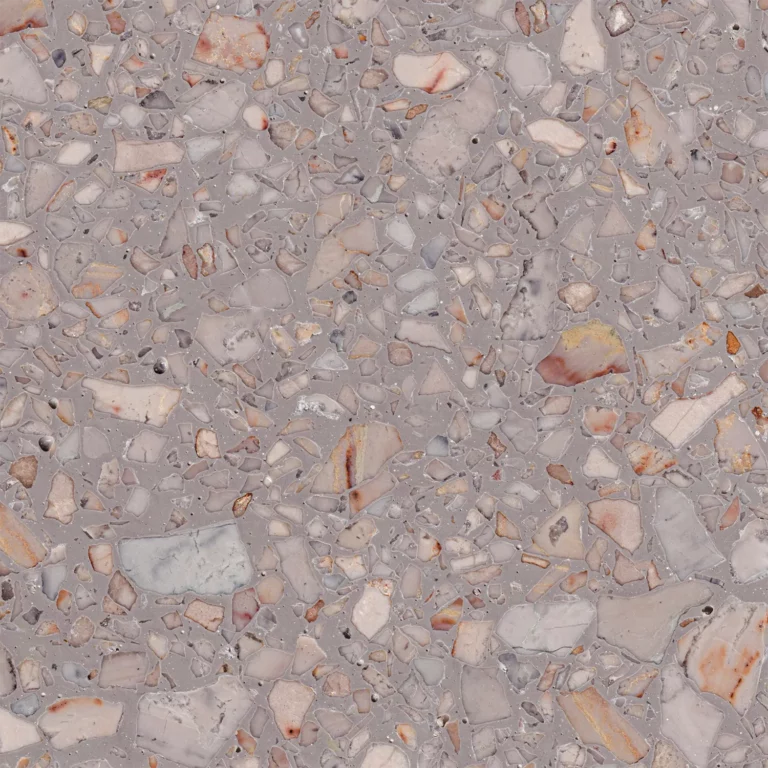
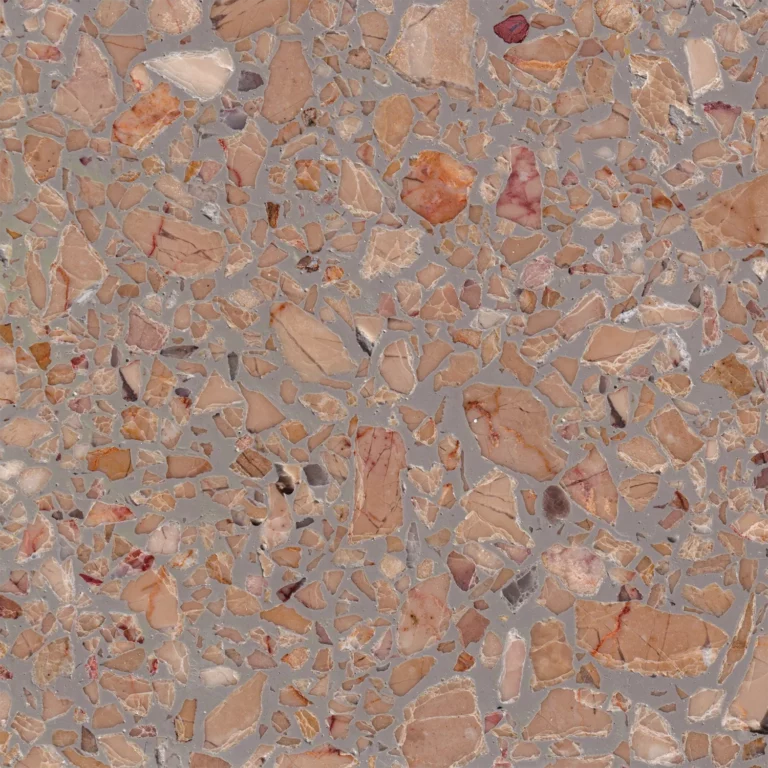
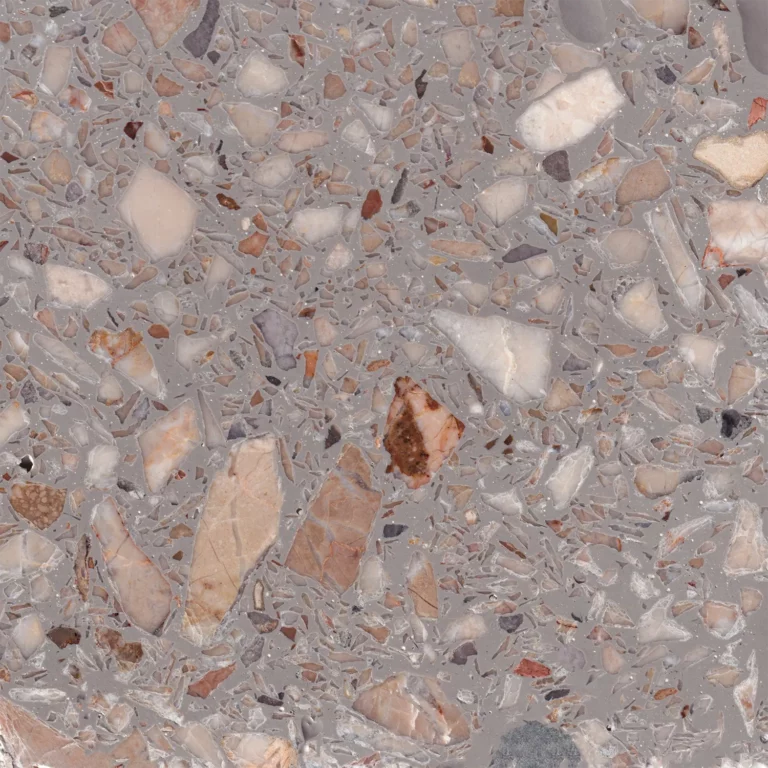
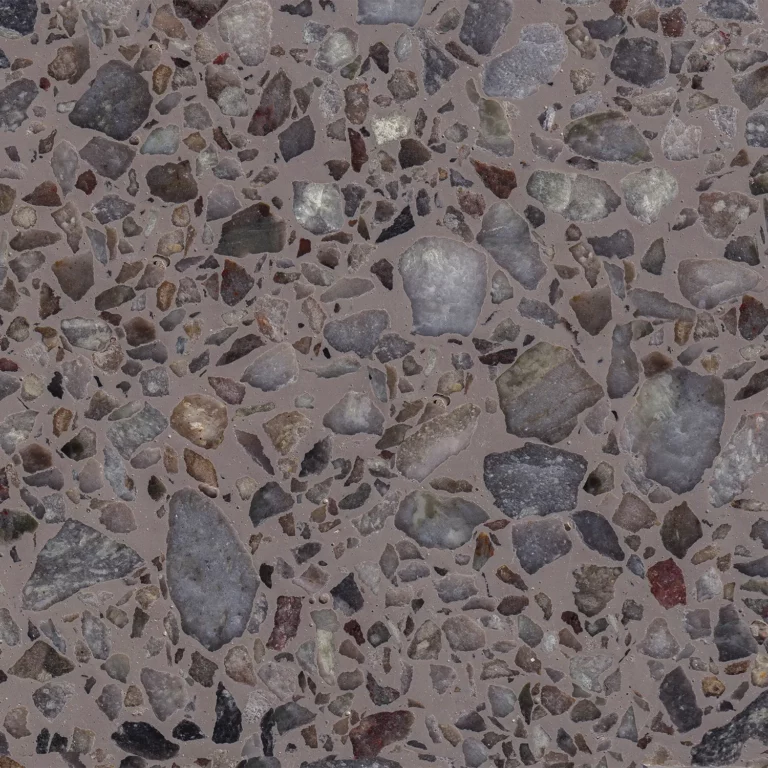
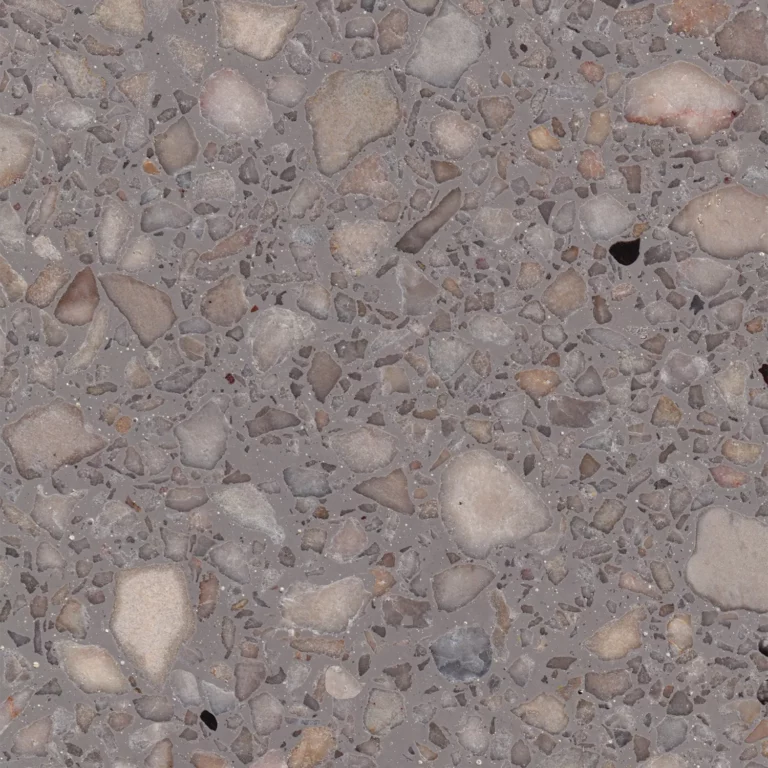
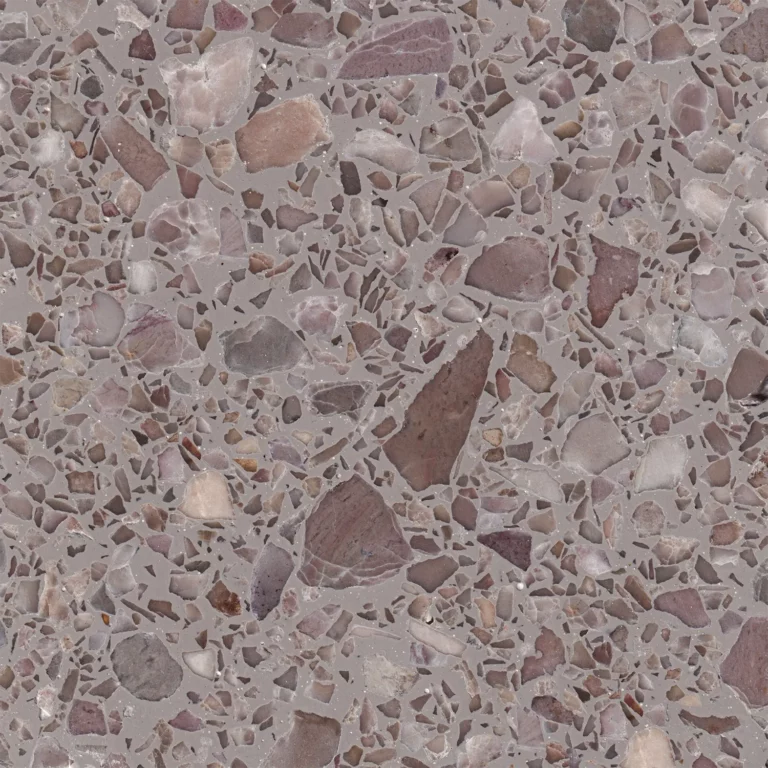
Request a Proposal
Submit project parameters for preliminary analysis. Commercial estimates typically returned within 24 hours.
What Comparative Studies Show, and Where They Stop
Published comparisons involving terrazzo exist, and none of them is unconditional. Reading their assumptions is not optional; the assumptions decide the results.
A Federal Comparison, Read With Its Assumptions
In one NIST BEES comparison using 2011 data, a generic 3/8-inch epoxy-terrazzo product ranked sixth of nine flooring alternatives overall under the study’s weighting method. The model assumed a 75-year life and excluded routine cleaning and maintenance. The comparison is summarized with its tables in a Dovetail Partners review of flooring alternatives.
The scope deserves equal weight. This is one older model of one generic product, not a universal environmental ranking of terrazzo, and the study did not include wood flooring among the alternatives it compared. A middle-of-the-pack rank in an assumption-laden model argues for neither a green halo nor a dismissal. It argues for requesting the current declaration for the actual product proposed and checking whether the model’s service-life, maintenance, and end-of-life assumptions resemble the project.
Emissions, VOCs, and Operating Conditions
A micro-chamber screening study found that emissions from one unspecified terrazzo sample increased when temperature rose from 26°C to 35°C. The study, published in Buildings in 2024, tested a cut-edge laboratory sample with no adhesive and no installed assembly, from one unidentified product, so it does not establish that all terrazzo, or all products marketed as low-VOC, behave the same way.
What it does establish is caution. Emissions behavior can vary with product and conditions, so no terrazzo configuration should be described as zero-VOC or universally low-VOC on category reputation. A project pursuing indoor-air-quality goals should require current product-level emissions documentation for each component of the specified system, including the binder and any membranes or sealers in the assembly, rather than accept a single claim for the finished floor.
Lifecycle Cost Is Not a Lifecycle Assessment
Lifecycle-cost studies and environmental lifecycle assessments answer different questions, and conflating them flatters whichever result happens to be convenient. A cost model tallies dollars over a horizon, while an environmental assessment tallies resource use and emissions. A floor can score well in one and poorly in the other.
The cost literature includes results that run against terrazzo. An NWFA-sponsored study modeled 18 flooring types over 75 years using ASTM E917 and found poured epoxy, VCT, and sheet vinyl cost more than the other tested floors; in that model, terrazzo also cost more per year than solid and engineered wood. That result comes from an industry-sponsored study whose material service lives, geography, use assumptions, cost sources, discount rate, and 75-year horizon control the outcome, and it is a cost model, not an environmental lifecycle assessment.
Dollar-level treatment of installation and ownership economics belongs with the numbers themselves in the terrazzo floor installation cost guide.
LEED, Tax Credits, and Certification Claims
Terrazzo does not automatically earn LEED credits, and neither does any other flooring material. Whether an installation contributes to a rating-system goal depends on the rating system and version in force, the specific products and their documentation, and how the project team pursues each credit, so those determinations belong with the project’s own sustainability consultant working against current requirements. The same restraint applies to tax credits and incentive programs, which are jurisdiction-specific and should never be assumed from a material choice.
Certification and declaration documents earn their place by being current, product-specific, and clearly bounded. An environmental product declaration describes one product under stated assumptions, and that is exactly what makes it useful. Requiring those documents from suppliers, and reading their assumptions, does more for a project’s environmental accounting than any category-level claim about terrazzo.
Working With Craftsman When Sustainability Is in the Specification
Evaluation Before Specification
Early project support is available before any commitment. Initial consultation is available at no cost, and so is initial design and specification assistance, which is the right stage to weigh a renewal scope against a replacement scope for an existing floor or to line up product documentation for a new installation. With basic project size, system, condition, and schedule inputs, Craftsman can usually provide a preliminary installed-cost range during the initial call or within a few hours. A preliminary range is not a formal proposal, a final scope, or a guaranteed price.
Pre-bid walkthroughs are available based on project requirements, timing, and resource availability, and remote specification review is standard for multi-region work, so distributed project teams can put the environmental question on the table before bidding rather than after.
Company Operations, and What They Do Not Prove
Craftsman’s facilities use 100% renewable electricity. That is a statement about company operations, and it stops there, because how a contractor powers its facilities does not make any flooring system sustainable or environmentally preferable. System-level conclusions require system-level evidence, and the two kinds of claim should never be traded for each other.
The Next Step for a Project Team
For an existing terrazzo floor, start with condition, since an assessment determines whether renewal in place is realistic before any environmental benefit is claimed for it. For a new installation where environmental documentation matters, bring the specification, the candidate products, and the rating-system targets into the first conversation so documentation requirements are visible before procurement. A project specialist responds within one business day, and an overview of Craftsman’s nationwide terrazzo installation services covers systems, design support, and installation.
Terrazzo Knowledge Center
Resource links
Performance, Safety & Sustainability
Systems & Selection
Project Planning & Delivery
Where Terrazzo Is Used
Design & Specification
Restoration & Maintenance
Frequently Asked Questions
No. LEED contributions are determined by the rating system and version in force, the specific products proposed, and the project’s own documentation, never by a flooring category. Ask suppliers for current product-level documentation and let the project’s sustainability consultant map it to the credits actually being pursued.
Neither can claim that title categorically. The two binder families are different materials with product-specific documentation, and comparative results depend on a model’s assumptions about service life, maintenance, transportation, and end of life. The supportable comparison is between the specific products proposed for a specific project, using their own current declarations.
Only when the specific products in the specified system document a recycled fraction. Recycled content is a product property rather than a category property, and a figure declared for one matrix or aggregate blend does not transfer to another. If the proposed product’s documentation does not state a recycled fraction, do not claim one.
Blog
Craftsman Publishes 2026–2027 ESD Flooring Technical Guide
ESD Epoxy Flooring Case Study: 34,000 SF Dallas, TX