What can we help you with?
Technical flooring, delivered directly
- ESD flooring, urethane cement, terrazzo, and polished concrete
- In-house W-2 installation crews and experienced field leadership
- National service coverage with project-specific staffing plans
- Testing, documentation, and defined project closeout
- Dedicated support for corporate procurement and multi-site contracting
Phone: +1 (844) 687-1961
Urethane Cement Flooring Cost Per Square Foot
Urethane cement flooring cost per square foot runs $4 to $17 installed, depending on project size, system thickness, and substrate condition. Project size moves the number most. A floor under 3,000 square feet prices at $11-14/sqft installed; the same system at 50,000 square feet prices at $4-8/sqft installed, because mobilization and surface-preparation setup are largely fixed costs that large continuous pours spread across more footage. The spread is not negotiation room. This page publishes the full size-band table from real bid data, the drivers that move a quote inside each band, what the installed price includes, and how integral cove base prices by the linear foot.
Cementitious urethane cost behaves differently from thin-film coatings because the system is a mortar rather than a paint. Standard duty places 3/16 to 3/8 inch of material over concrete prepped to an ICRI 310.2 profile, with moisture verified in-situ per ASTM F2170 before anything is mixed, and that scope is why the urethane cement price on this page always carries the installed qualifier. Material alone tells you almost nothing. The bands below hold across verticals; food plants and pharmaceutical suites move a quote within its band on detailing, while the band itself is set by footage.
Urethane Cement Cost by Project Size
Under 3,000 Square Feet — $11-14/sqft Installed
Small floors carry the highest unit rate because the fixed scope does not shrink with the room. A walk-in cooler or a single kitchen line still requires full mobilization, grinding equipment, moisture testing, and a crew scheduled against an off-hours window, and spread across limited footage those costs land at $11-14 per square foot installed. Small jobs in remote markets can price past $15/sqft installed. That outlier tail is what sets the top of the envelope at $17/sqft installed.
3,000 to 10,000 Square Feet — $8-12/sqft Installed
Between 3,000 and 10,000 square feet, the price lands at $8-12/sqft installed, the range where most standalone processing rooms and full commercial kitchens sit. Mobilization stops dominating the math here. System selection takes over as the main variable. A 3/16-inch self-leveling build sits near the bottom of the band; a 3/8-inch trowel-applied system with broadcast aggregate and a specified topcoat sits near the top.
10,000 to 50,000 Square Feet — $5-9/sqft Installed
Plant-scale floors run $5-9/sqft installed. Crews work full production days at this footage and prep equipment stays on site through the schedule, so per-unit cost keeps falling. Phasing is the variable to watch. A plant floor installed zone-by-zone around live production prices higher per foot than the same floor placed in one shutdown window, because every phase re-stages containment and equipment.
50,000+ Square Feet — $4-8/sqft Installed
Above 50,000 square feet, the rate reaches $4-8/sqft installed, the lowest urethane cement hits at commercial scale. At this footage the quote is mostly material and placement labor running at full crew-day utilization. Volume does the discounting. This is also where urethane cement pricing overlaps standard epoxy’s typical installed range, which changes the lifecycle comparison for large plants; the service-life section below runs those numbers.
Thickness, Substrate, and Cove Base: The Other Cost Drivers
System Thickness and Finish — Slurry to Trowel-Applied
Thickness moves the urethane cement price per square foot within a band more than any other specification decision. Light-duty slurry builds start near 1/8 inch; the standard range runs 3/16 to 3/8 inch, and trowel-applied systems at the top of it carry more material and placement labor plus a longer cure window, 48-72 hours to return to service against 24 hours for self-leveling. Broadcast aggregate for slip texture and the topcoat selection add material line items. The placement schedule barely moves.
Substrate Condition — New Slab vs Failed-Coating Demo
A clean new slab and a slab under a failed epoxy coating are different projects at the same footage. Standard scope preps the concrete to an ICRI 310.2 surface profile and verifies moisture in-situ per ASTM F2170 before installation begins, while repair beyond that profiling prices as separate line items. Failed-coating removal and spall or crack repair are where two quotes on the same floor most often diverge. Moisture results matter too. Urethane cement tolerates substrate moisture that would push an epoxy scope into vapor-mitigation add-ons.
Integral Cove Base — Priced Per Linear Foot
Urethane cement cove base cost is quoted per linear foot as an adder to the floor price, not inside the per-square-foot rate. The cove is formed in place from the same mortar during the same installation, monolithic with the floor, and its cost scales with the linear footage of wall it climbs. A washdown room with four coved walls carries a materially different adder than an open warehouse edge at identical floor area. Cove height and radius detailing move the linear-foot number; construction and termination detail lives on the integral cove base page. Send the cove footage with the floor area. One proposal prices both.
Vertical Duty — Where Food Plants and Pharma Move a Quote
The cost of installing resinous floors in food plants lands in the same size bands as any other facility. Washdown rooms add cove footage and drainage tie-ins, and pharmaceutical suites add finish and documentation requirements, each priced as a line item inside the band rather than a premium on top of it. Duty-specific system selection is vertical-page territory. This page holds the numbers.
What the Installed Quote Includes
Standard Inclusions in the Per-Square-Foot Price
Every per-square-foot installed quote covers surface preparation to an ICRI 310.2 profile, in-situ moisture verification per ASTM F2170, primer, the urethane cement mortar at specified thickness, integral cove base at the floor-to-wall transition, the specified topcoat, and the closeout documentation package. The closeout package ships with every project, carrying the moisture logs and surface-profile records an auditor expects to see. Watch the exclusions. A quote that leaves out prep or moisture testing is a different scope at a lower number.
Quoted Separately — Repair, Drainage, Relocation, Specialty Finish
Line-item scopes price outside the square-foot rate on every project where they apply. These are substrate repair beyond standard profiling (spall repair, crack injection, coating removal); drainage modification or new trench drain installation; equipment relocation and trade coordination around the install; and specialty topcoats beyond the standard system. Itemizing them is deliberate. Folding demolition or drainage into a blended square-foot rate hides where the money goes and makes two quotes impossible to compare on scope.
From Numbers to a Proposal — What to Send
An accurate proposal needs the square footage, the vertical the floor serves, current substrate condition (new slab, existing coating, or bare worn concrete), drainage requirements, and the linear footage of integral cove base in scope. Lead time runs 1-3 weeks from contract execution, driven by material availability. In-house W-2 crews provide national service coverage. Phased zone-by-zone installation around active operations is standard practice, with 24-hour cure-and-return-to-service on self-leveling systems, so a working facility prices the schedule it needs instead of a shutdown it cannot take. Pre-bid walkthroughs are available based on project requirements, timing, and resource availability; remote spec review is standard for multi-region rollouts.
Cost Over the Service Life: Urethane Cement vs the Alternatives
Standard Epoxy — $4-8/sqft Installed, Replaced on a Cycle
Standard epoxy installs at $4 to $8 per square foot, lower upfront than urethane cement everywhere except the largest pours, where the bands overlap. The gap closes in service. In washdown and thermal-cycling duty, a 150°F+ surface differential exceeds what the rigid resin film can absorb at the concrete interface, and delamination follows within 12-24 months. Even in milder duty, the same room is recoated or replaced at least twice across the 15-20+ years one urethane cement installation stays in service, and each replacement carries demolition, downtime, and remobilization the first quote never showed.
Quarry Tile — $12-25/sqft Installed with Maintenance Built In
At $12 to $25 per square foot, quarry tile costs more upfront than urethane cement, and the grout is an ongoing expense afterward. Grout joints absorb organic acids and harbor bacteria at exactly the seam a monolithic floor eliminates; repointing is periodic maintenance a production schedule has to absorb. Tile also fails point-first. One cracked unit or open joint lets moisture reach the substrate while the rest of the floor looks intact. Urethane cement replaces the joint grid with a seam-free pour and an integral cove base at the wall.
One Installation Across 15-20+ Years
A urethane cement floor at $4-17/sqft installed is one installation and one production shutdown across a 15-20+ year service life. Which chemistry fits a given duty is the urethane cement vs epoxy page’s question. This page prices the outcome. Sealed or polished concrete reads cheapest of all on install day and carries no thermal or chemical protection — in active production zones the topical densifier wears through within 12-18 months and the surface starts absorbing what the process spills.
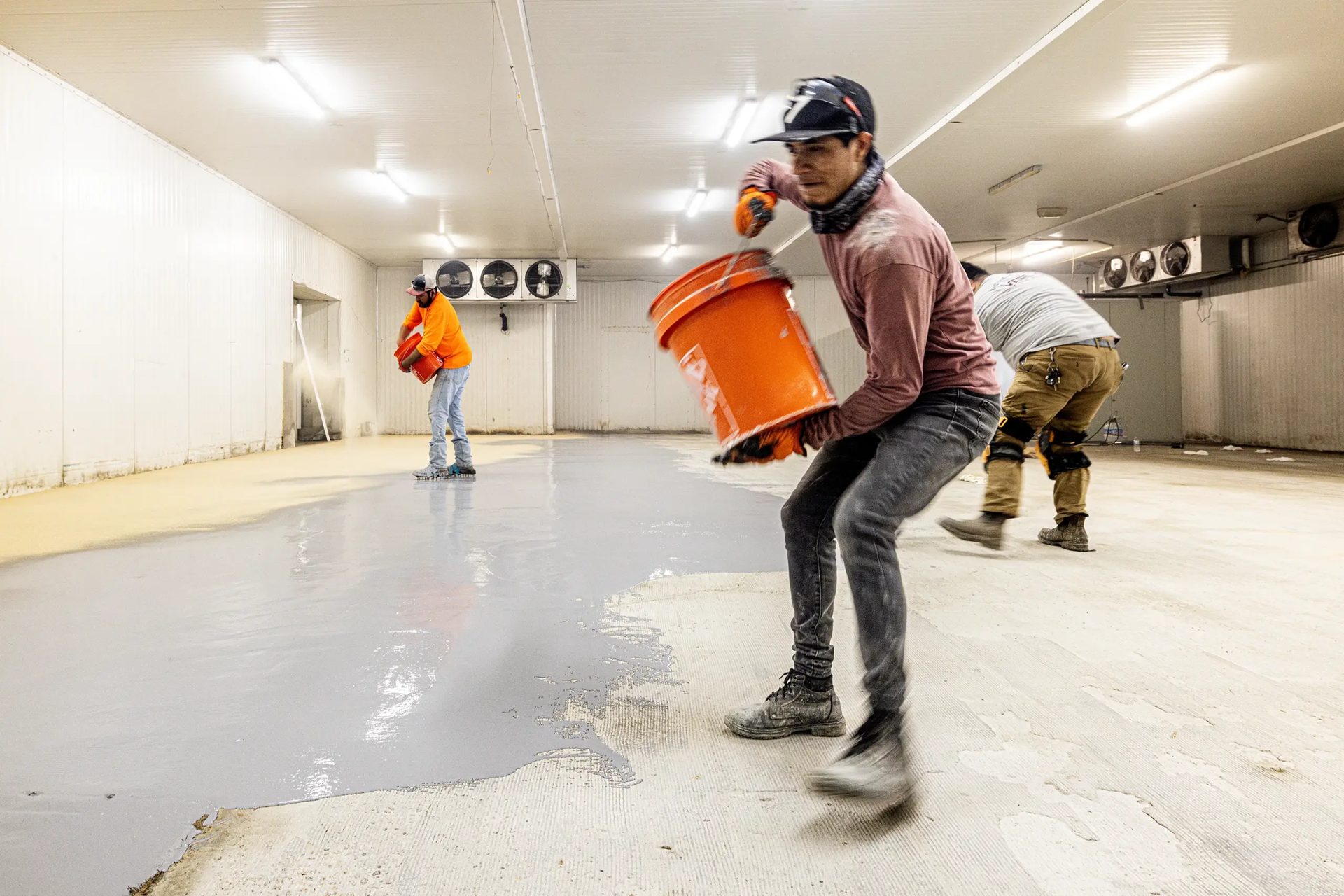
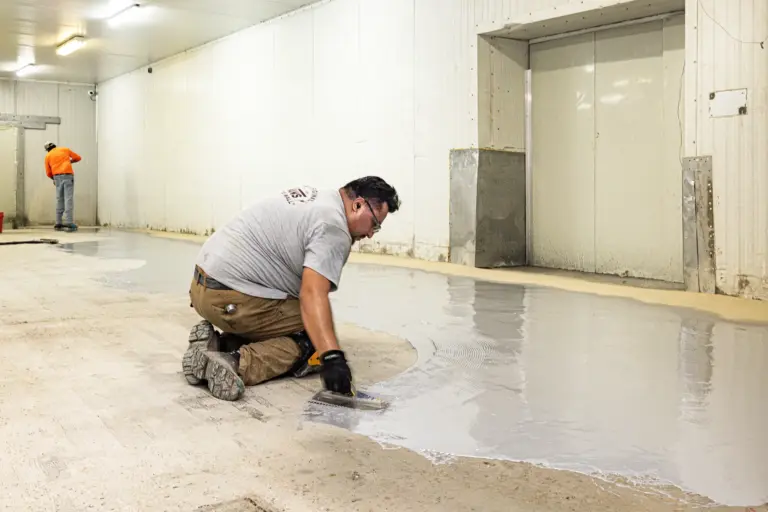
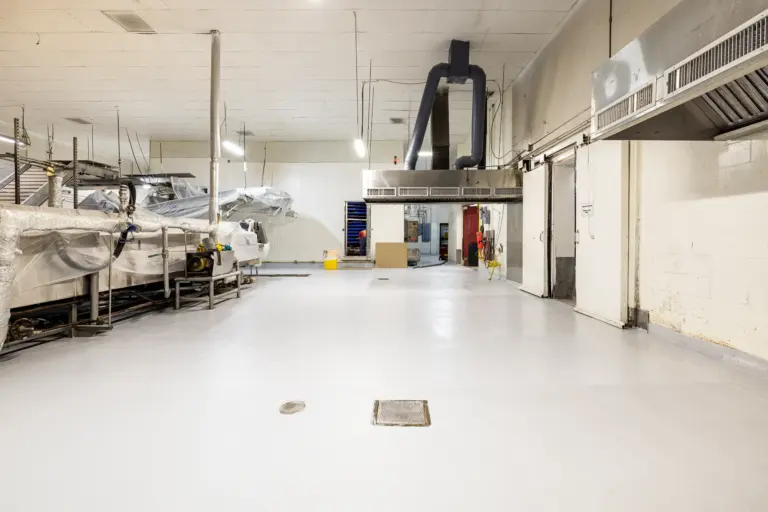
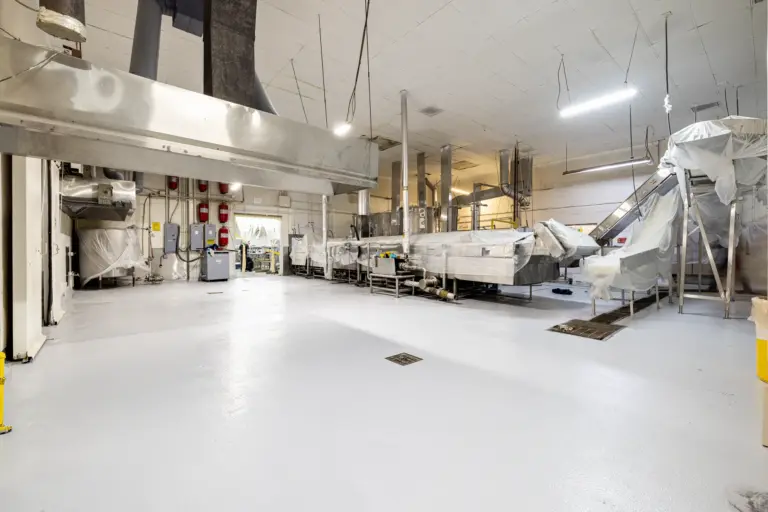
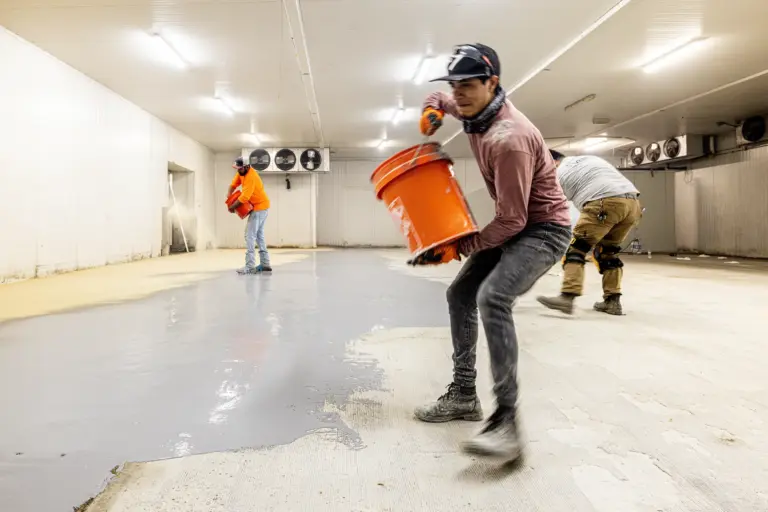
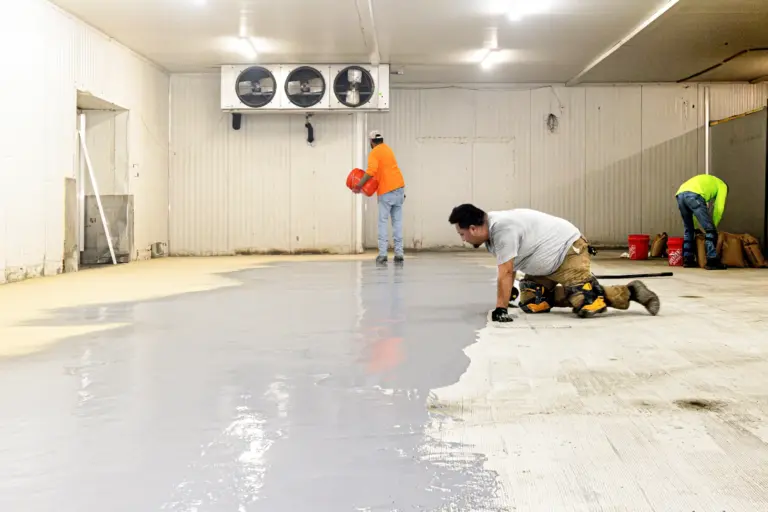
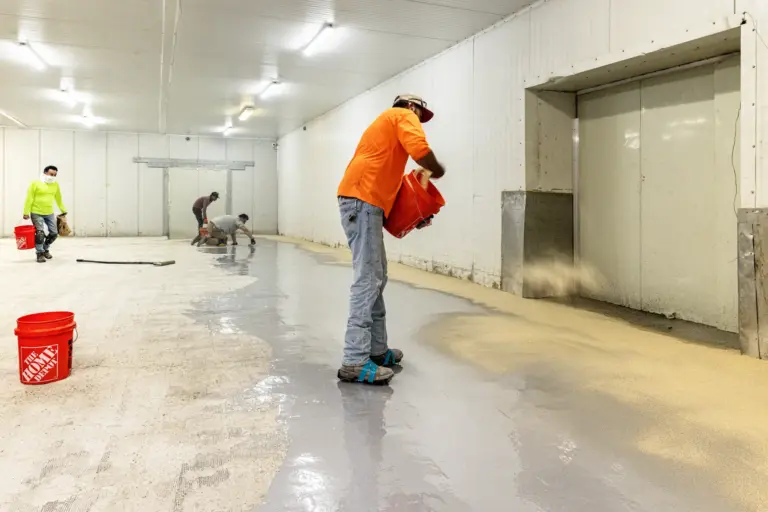
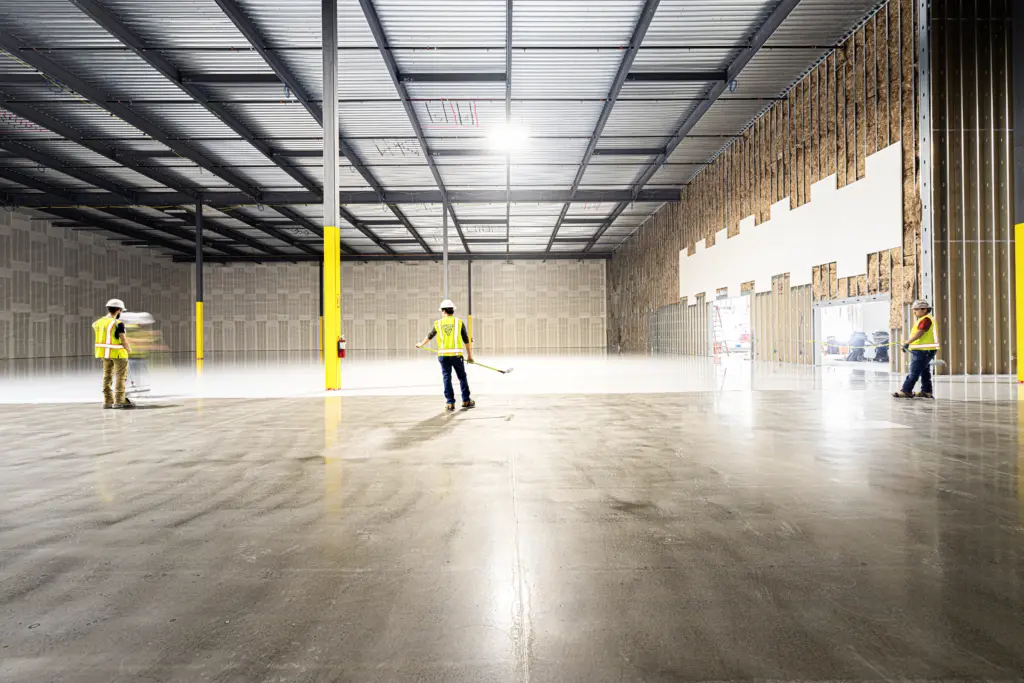
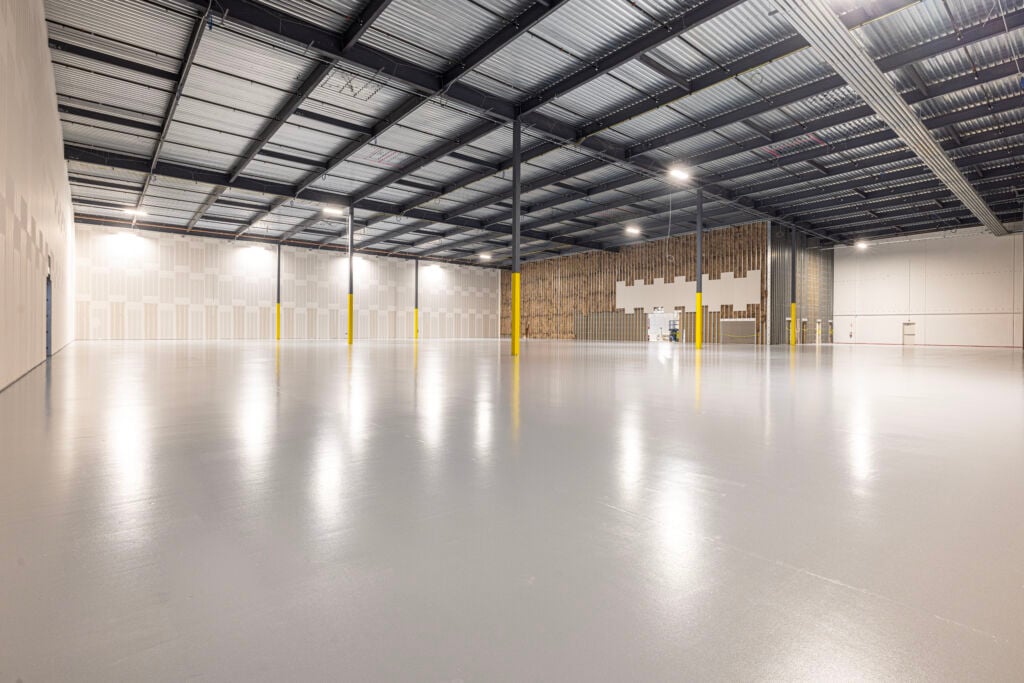
urethane Cement Installation Gallery
Frequently Asked Questions
Urethane cement flooring costs $4-17 per square foot installed, depending on project size, system thickness, and substrate condition. Project size moves the number most. Floors under 3,000 square feet price at $11-14/sqft installed, and the rate steps down band by band to $4-8/sqft installed at 50,000 square feet and up.
Yes. Larger continuous areas cost less per square foot because mobilization and prep setup spread across more footage, while fragmented rooms and phased scheduling raise the unit rate. The bands from real bid data run $11-14/sqft installed under 3,000 square feet, $8-12/sqft installed from 3,000 to 10,000, $5-9/sqft installed from 10,000 to 50,000, and $4-8/sqft installed at 50,000 and above.
Scope separates most urethane cement quotes before margin does. The usual differences are surface preparation depth, cove base and drainage detailing, system thickness, whether ASTM F2170 moisture verification is included, and how removal of an existing coating is handled. A quote that excludes prep or moisture testing reads cheaper and delivers a different floor.
Urethane cement installs higher than standard epoxy, at $4-17/sqft installed against a typical $4-8 per square foot for epoxy. In washdown and thermal-shock duty the comparison inverts over the floor’s life, because epoxy delaminates at the resin-concrete interface within 12-24 months under 150°F+ differentials and gets replaced at least twice across the 15-20+ years one urethane cement floor stays in service. The chemistry decision lives on the urethane cement vs epoxy page.
Integral cove base is quoted per linear foot as an adder to the floor price, separate from the per-square-foot rate. Cove height and total linear footage set the adder, and the cove is formed in place from the same mortar as the floor during the same installation. Include the cove footage when requesting a proposal. The quote then prices floor and cove together.
Every installed quote covers surface preparation to an ICRI 310.2 profile, moisture verification per ASTM F2170, primer, the mortar at specified thickness, integral cove base, the specified topcoat, and closeout documentation. Substrate repair beyond standard profiling, drainage modification, equipment relocation, and specialty topcoats are quoted separately as line items.
Lead time runs 1-3 weeks from contract execution, driven by material availability. Self-leveling systems return to service 24 hours after placement and trowel-applied systems in 48-72 hours, so phased zone-by-zone installation keeps the rest of the facility in production while each zone cures.
Knowledge Center
Resource links
Cost, Comparisons & Legacy Names
Selection & Standards
Technical Performance
Industries Served
Sherwin-Williams Poly-Crete Systems
Sika Ucrete Systems
Blog
Craftsman Publishes 2026–2027 ESD Flooring Technical Guide
ESD Epoxy Flooring Case Study: 34,000 SF Dallas, TX