- Founded in 1999 • National commercial & industrial specialty flooring contractor
- Systems: Sika Ucrete & Sherwin-Williams High Performance Flooring Poly-Crete and Hybri-Flex urethane cement systems
- In-house W-2 crews provide national service coverage
- Single-contract multi-site programs under a Master Service Agreement
- Phased installation in occupied facilities — night and weekend shutdown-window execution
- Experience Modification Rate (EMR) below the industry average
- Authorized Sherwin-Williams High Performance Flooring installer; Sika installer; Westcoat certified
- Pre-install moisture and substrate testing & audit-ready closeout documentation
- Facility assessments, compliance inspections & lifecycle maintenance programs
- Licensed • Insured • Bonded • Enterprise vendor prequalification package available (COI, W-9, capabilities statement & supporting documentation)
- System thickness: 3/16″ to 3/8″ — slurry, broadcast, self-leveling & trowel-applied variants placed to manufacturer spec
- Return to service: 24 hours self-leveling • 48-72 hours trowel-applied
- Integral cove base: formed monolithic with the slab to a typical 4-6 inches — no caulked wall-floor seam
- Compliance:
- – FDA 21 CFR 175.300 incidental food contact
- – HACCP, SQF & GFSI program compatible
- – FSIS sanitation performance standards (9 CFR 416) supported
Phone: +1 (844) 687-1961
The urethane cement installation process runs in a fixed sequence: substrate verification, primer, mortar placement with integral cove base, topcoat, and a cure window of 24 hours on self-leveling systems or 48-72 hours on trowel-applied mortars before the area returns to service. Each step gates the next. Primer does not go down until ASTM F2170 moisture probes have been read and the slab carries the ICRI 310.2 profile the specified system requires, because a mortar placed over laitance or unverified moisture delaminates regardless of whose name is on the bag. Most urethane cement failures trace to a shortcut in this sequence rather than to the material itself. The urethane cement installation steps below describe how urethane cement is installed, in order, with the standard or number that governs each one.
Craftsman Concrete Floors has placed urethane cement in food plants, breweries, distilleries, dairies, commercial kitchens, and pharmaceutical facilities since 1999, with in-house W-2 crews that provide national service coverage. Mortar placement is never subcontracted. The foreman who walks the site for the estimate runs the install. Lead time is 1-3 weeks from contract execution, driven by material availability, and on-site work runs as a phased zone-by-zone install around active operations. Pre-bid walkthroughs are available based on project requirements, timing, and resource availability; remote spec review is standard for multi-region rollouts.
Our Clients




















The Urethane Cement Installation Process Starts Below the Mortar
ASTM F2170 Moisture Probes, Read Before Primer
In-situ relative humidity probes go into the slab per ASTM F2170 and are read at 72 hours minimum before any primer is placed. The reading is a hold point the schedule waits on. Primer bond is the one step in the sequence that cannot be inspected after the floor is finished, and unverified slab moisture is how a system that looked right at handover delaminates at the primer line months later. Every probe reading is logged and carries into the closeout package.
Mechanical Profile to ICRI 310.2, Never a Chemical Etch
Shot blasting takes the slab to the ICRI 310.2 concrete surface profile the specified system calls for, typically CSP 4-6, with laitance, curing compounds, and prior coatings removed to sound concrete. Chemical etch is not a substitute. Urethane cement needs a mechanical profile to key into. Method selection, profile depth, and moisture remediation carry real depth of their own, and that depth lives on the surface preparation page so this one stays on sequence.
Repairs and Tolerances Checked Against ACI 302.1R
Cracks are routed and filled, spalls are patched, and control joints are honored or treated per the project spec before any coating material opens, while a defect still costs a line item instead of a floor. Substrate flatness and tolerance checks run against ACI 302.1R. Repair belongs at this stage because repair after primer is rework.
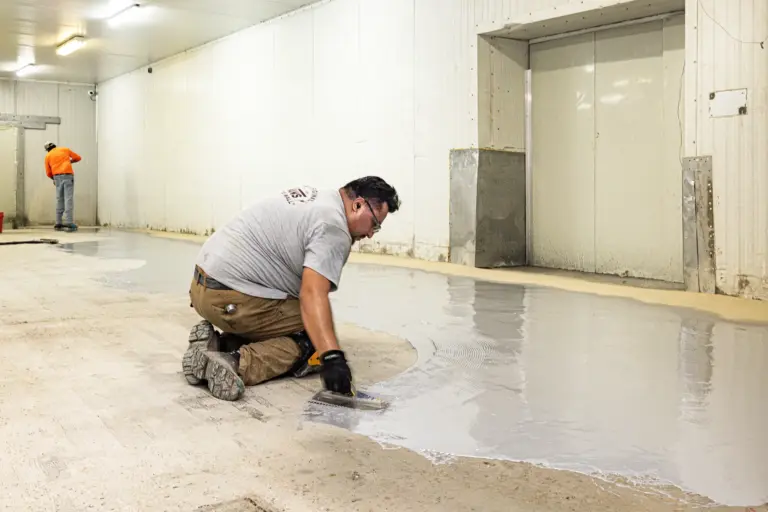
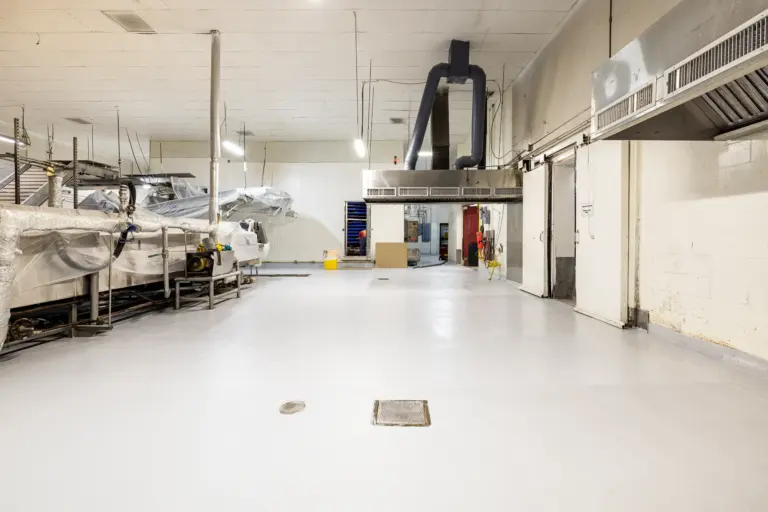
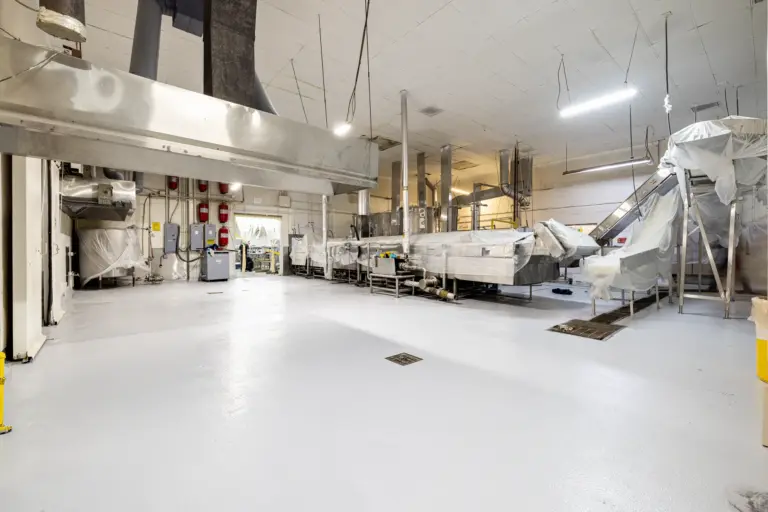
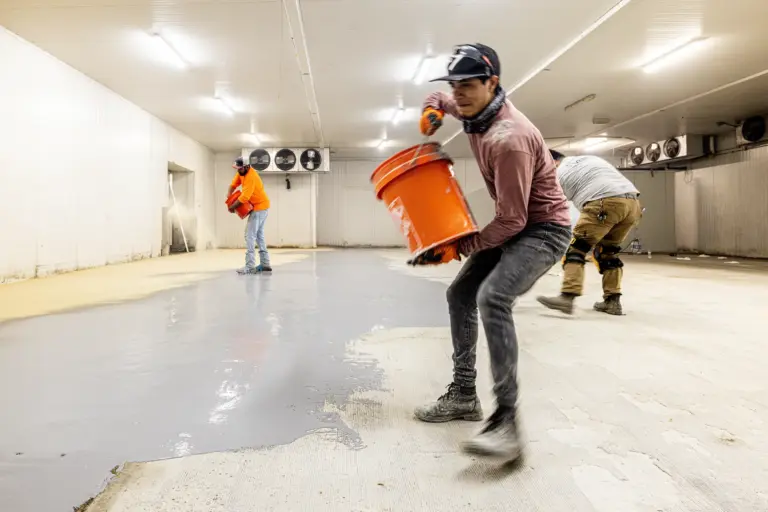
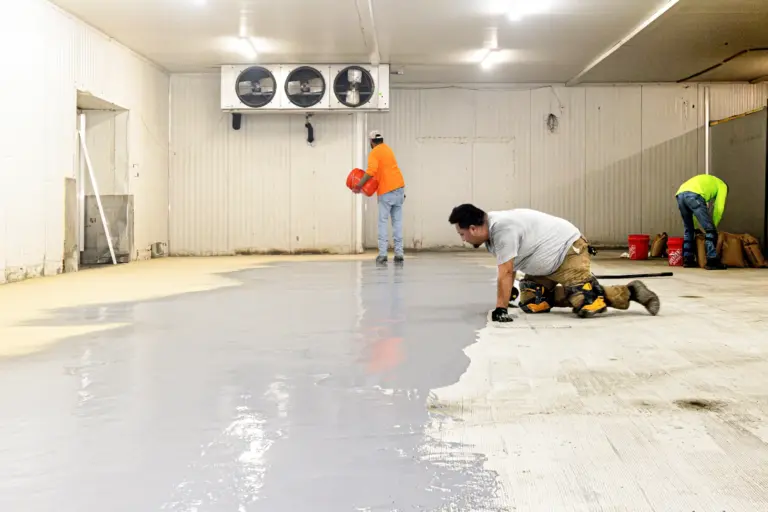
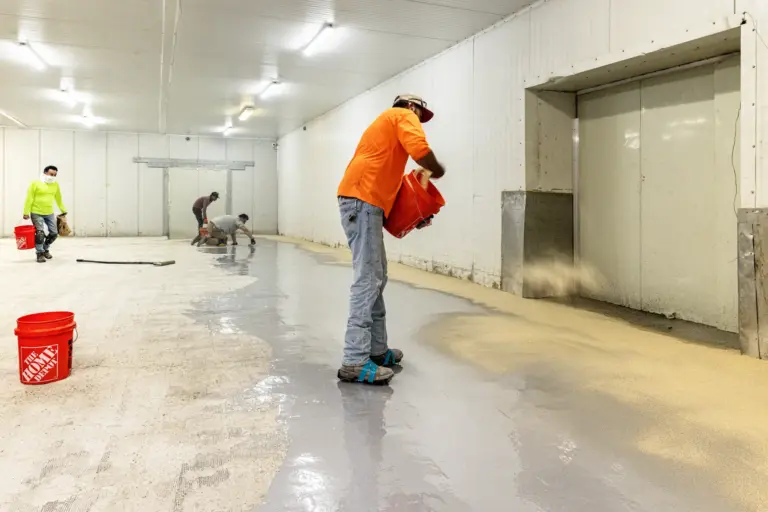
urethane Cement Installation Gallery
Request a Proposal
Submit project parameters for preliminary analysis. Commercial estimates typically returned within 24 hours.
Placement — Mixing, Cove Base, and Terminations
Mixed On Site, Placed Against a Wet Edge
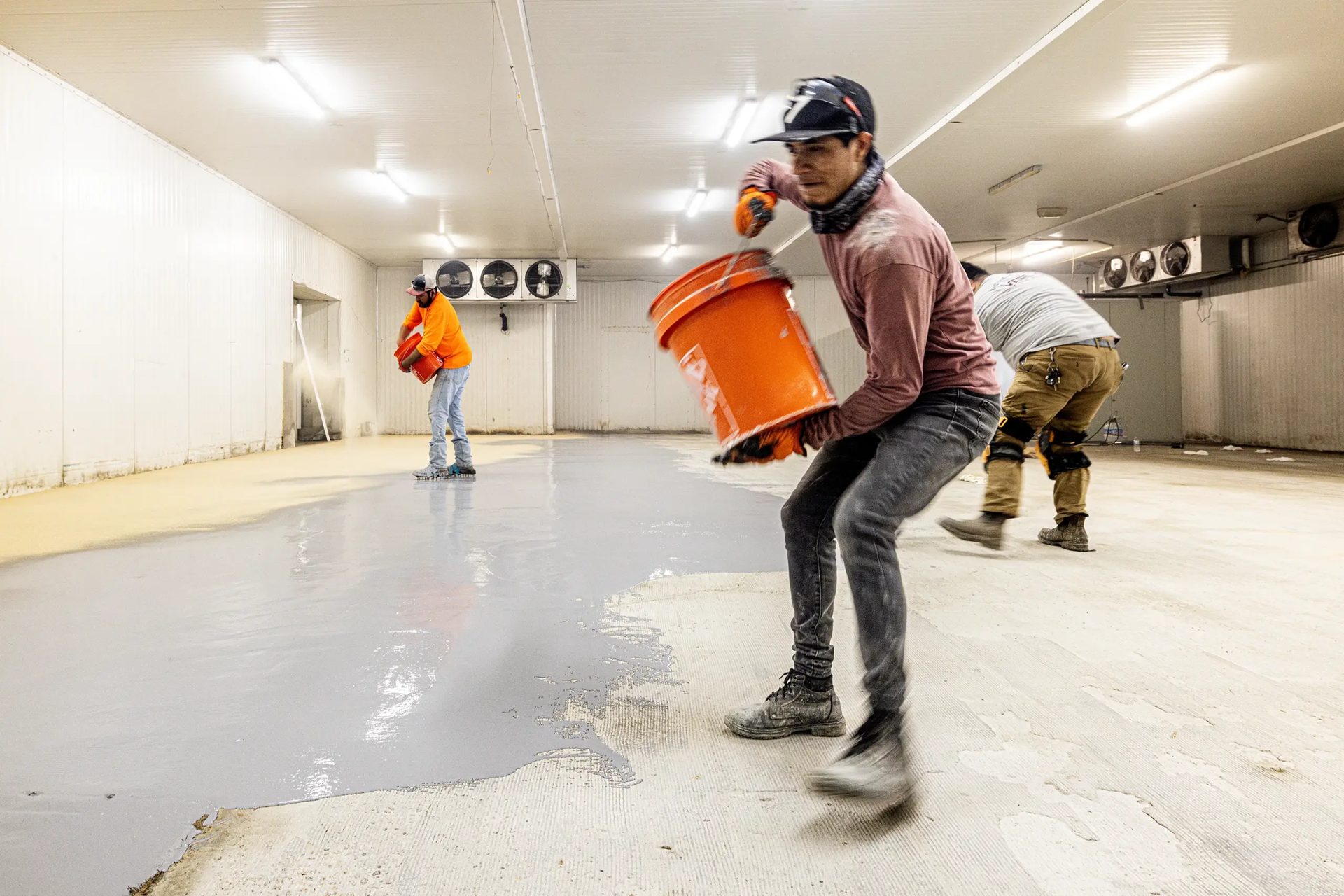
Urethane cement arrives as urethane binder and graded mineral aggregate. It becomes a floor in the mixer. Batches run on a continuous cycle so the wet edge never sets against cured material, which is what keeps the finished slab monolithic instead of cold-jointed. Ratio drift between batches is a known failure mode, so mixing stays with the same crew for the full pour. Systems place as self-leveling slurry, broadcast, or trowel-applied mortar at 3/16″ to 3/8″ depending on the specified system and its service conditions.
Integral Cove Base Goes In With the Pour, Not After It
Integral cove base is formed monolithic with the floor to a typical 4-6 inches up the wall during the same placement, from the same mortar. Nothing is caulked in afterward. No quarter-round covers a joint, which is why there is no wall-floor seam for washdown water or a bacterial audit to find. Cove radius, termination heights, and detail options are covered in depth on the integral cove base page, which carries the detail this sequence page routes out.
Drains and Penetrations, Sealed to Survive Washdown
Drains, conduits, floor sinks, and equipment pads are sealed to the system with terminations built for washdown service, and drain bodies get worked wet so there are no pinholes at the transition. Penetration count is one of the quiet drivers of install duration; a bay dense with drains takes longer than a clean rectangle of the same square footage. Every termination is inspected before the topcoat locks it in.
Cure Windows, Return to Service, and Phased Sequencing
Urethane Cement Cure Time — 24 Hours Self-Leveling, 48-72 Hours Trowel-Applied
Self-leveling urethane cement systems return to service in 24 hours. Trowel-applied mortars take 48-72 hours. Full chemical service typically returns within 72 hours of the final coat, with the manufacturer cure schedule for the specific system governing. Cure windows run from the final coat rather than the first day of the project, and no return window gets promised shorter than the system data sheet allows.
Phased, Zone by Zone, Around Active Production
Work sequences one production area at a time in phased install windows per area, coordinated with plant maintenance and sanitation leads on shutdown windows, drain protection, equipment isolation, and air handling. Each zone is back in service before the next one opens. Night and weekend shutdown-window execution covers facilities that cannot give up daytime floor space. How phasing maps onto a specific operation — sanitation cycles in a processing plant, service hours in a kitchen — is covered on each vertical page at its own depth.
Closeout Documentation the Next Audit Can Use
The floor leaves behind an audit-ready closeout package covering ASTM F2170 moisture readings, ICRI 310.2 profile verification, integral cove base completion photos, and batch records for the material placed. HACCP, SQF, and GFSI program records ship in the same package. For federally inspected food facilities, the documentation addresses FSIS sanitation performance standards under 9 CFR 416, and FDA 21 CFR 175.300 incidental food contact status is recorded where the facility requires it.
urethane Cement Flooring Knowledge Center
Resource links
Selection & Standards
Technical Performance
Industries Served
Sherwin-Williams Poly-Crete Systems
Sika Ucrete Systems
Cost, Comparisons & Legacy Names
Frequently Asked Questions
Five steps in fixed order: substrate verification with ASTM F2170 moisture probes and an ICRI 310.2 profile, primer, urethane cement mortar placement with integral cove base, topcoat, and cure. A typical area runs prep and probes first, primer and body coat next, topcoat last. No step starts until the one before it passes.
Urethane cement is mixed on site from urethane binder and graded mineral aggregate, then placed as a self-leveling slurry, broadcast system, or trowel-applied mortar at 3/16″ to 3/8″ depending on the specified system. Placement runs continuously to hold a wet edge, and the cove base is formed from the same mortar in the same pour, so no joints or seams remain in the slab. The result is one monolithic floor.
Self-leveling systems return to service in 24 hours; trowel-applied mortars take 48-72 hours. Full chemical service typically returns within 72 hours of the final coat, with the manufacturer’s published cure schedule for the specific system governing the exact window. The clock starts at the final coat, not day one.
Each area’s install window covers prep and moisture probes, primer and body coat, topcoat, and cure — 24 hours self-leveling, 48-72 hours trowel-applied — before the area reopens. Lead time to mobilization is 1-3 weeks from contract execution, driven by material availability. Areas run one at a time. Total calendar time on a multi-area facility depends on how many zones are in scope.
Yes. Work runs as a phased zone-by-zone install around active operations, one production area at a time, with each zone back in service in 24 hours on self-leveling systems or 48-72 hours trowel-applied before the next opens. Night and weekend shutdown windows cover facilities that cannot give up daytime floor space. Drain protection and equipment isolation are coordinated with plant maintenance before placement starts.
Because the mortar bonds to whatever the primer bonded to. Slab moisture is the variable that defeats that bond, so ASTM F2170 in-situ probes are set in the slab, read at 72 hours minimum, and cleared before any primer is placed. How probes are placed and read, and what remediation looks like when a reading fails, is covered in depth on the surface preparation page.
An audit-ready closeout package with ASTM F2170 moisture readings, ICRI 310.2 surface profile verification, integral cove base completion photos, and batch records for the material placed. The same package carries HACCP, SQF, and GFSI program support records, and for federally inspected food facilities it speaks to FSIS sanitation performance standards under 9 CFR 416.
Blog
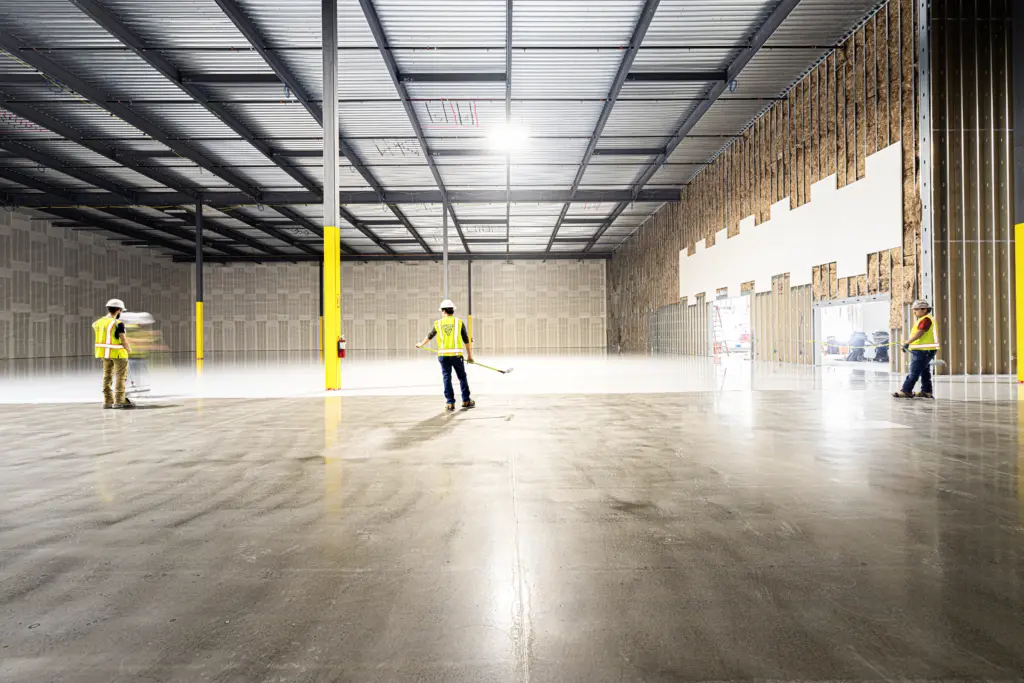
Craftsman Publishes 2026–2027 ESD Flooring Technical Guide
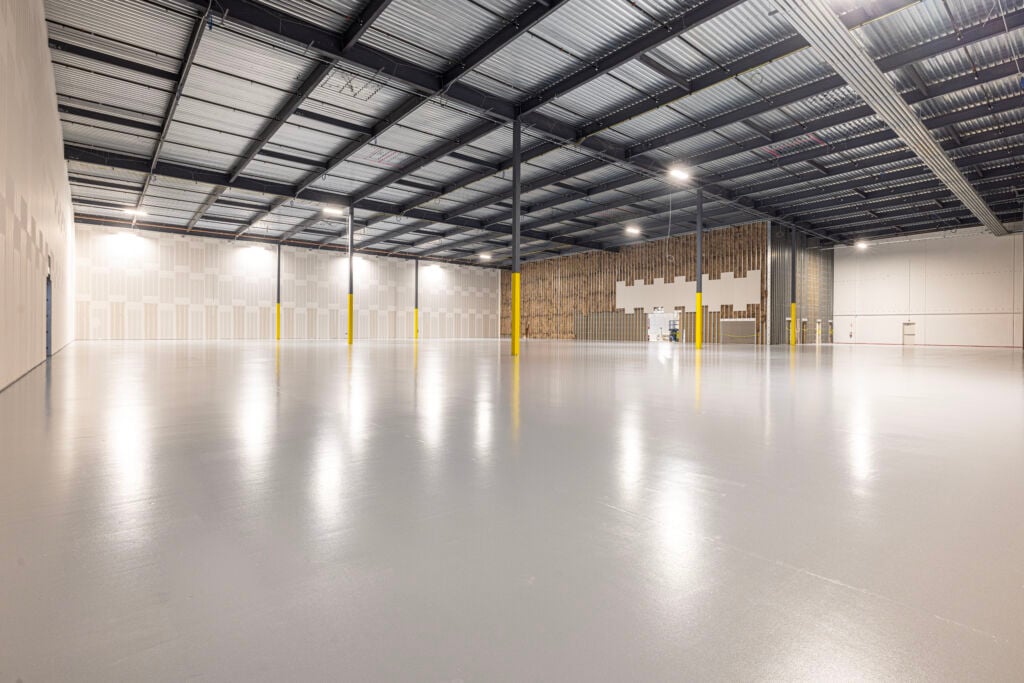
ESD Epoxy Flooring Case Study: 34,000 SF Dallas, TX