- Founded in 1999 • National commercial & industrial specialty flooring contractor
- Systems: Sika Ucrete & Sherwin-Williams High Performance Flooring Poly-Crete and Hybri-Flex urethane cement systems
- In-house W-2 crews provide national service coverage
- Single-contract multi-site programs under a Master Service Agreement
- Phased installation in occupied facilities — night and weekend shutdown-window execution
- Experience Modification Rate (EMR) below the industry average
- Authorized Sherwin-Williams High Performance Flooring installer; Sika installer; Westcoat certified
- Pre-install moisture and substrate testing & audit-ready closeout documentation
- Facility assessments, compliance inspections & lifecycle maintenance programs
- Licensed • Insured • Bonded • Enterprise vendor prequalification package available (COI, W-9, capabilities statement & supporting documentation)
- Texture:
- – Silica or aluminum oxide broadcast aggregate locked in the body coat
- – Profile zoned by duty — washdown, wet process & dry areas
- – Confirmed on sample panels against ANSI A326.3 use classifications
- Return to service: 24 hours on self-leveling systems • 48-72 hours trowel-applied
Phone: +1 (844) 687-1961
Slip resistant industrial flooring is engineered at installation, not applied afterward. In a urethane cement system, traction comes from silica or aluminum oxide aggregate broadcast into the wet body coat and locked in place by a pigmented urethane topcoat, so the texture is part of the wear surface itself. That construction separates broadcast aggregate flooring from topical anti-slip coatings, which abrade under foot traffic and strip under caustic washdown chemistry. Most slip-resistance projects start with an incident. A worker goes down on a wet shift, the report names the floor, and the replacement budget follows.
Every texture decision is a trade between traction and cleanability. A more aggressive profile holds grip under grease and washdown chemistry, and the same profile holds soil against the sanitation crew that scrubs it every night. Craftsman engineers that trade zone by zone — an aggressive broadcast where the floor runs wet, a finer profile where carts roll and cleaning speed matters. The metrics behind slip resistance specifications, SCOF and DCOF, are defined on the SCOF vs DCOF page; this page covers how a floor is built to meet them.
Our Clients




















How Slip Resistance Is Engineered Into Urethane Cement
Broadcast Aggregate, Locked Into the Body Coat
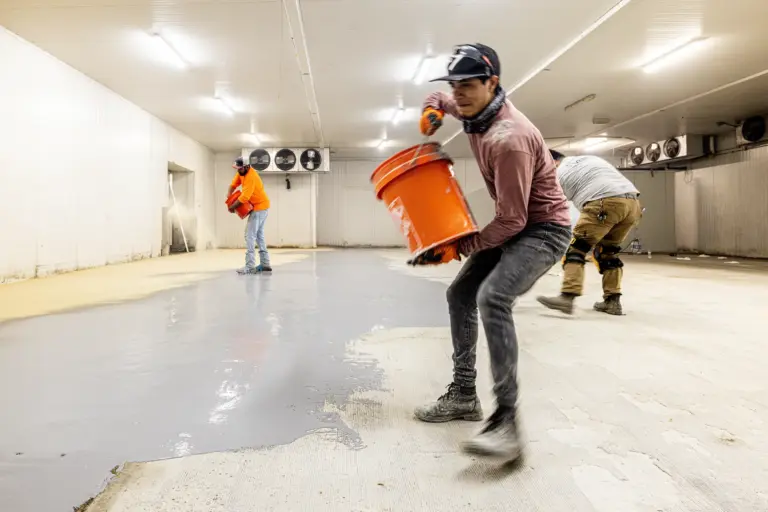
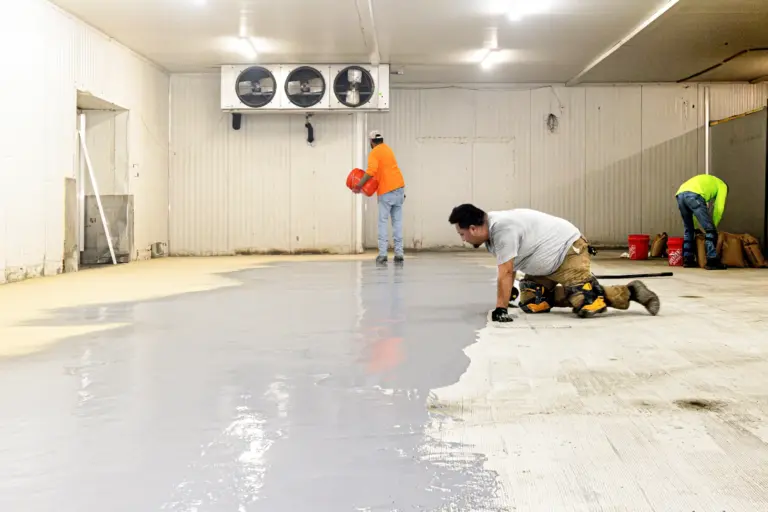
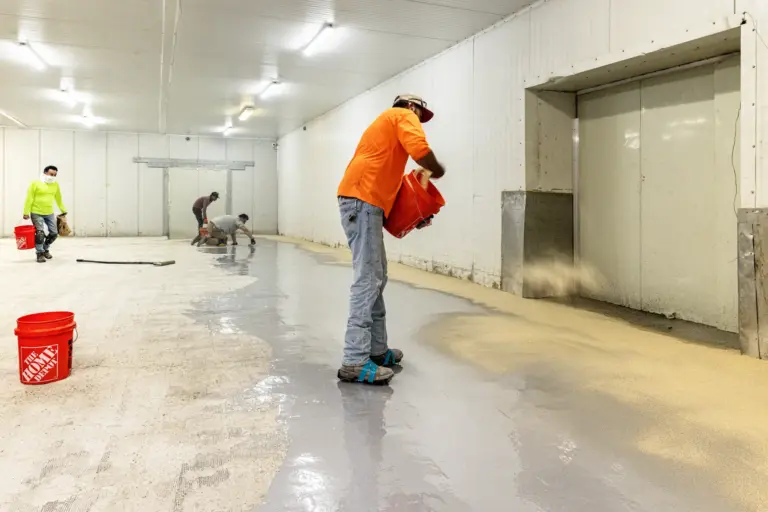
Traction is built by broadcasting silica or aluminum oxide aggregate into the wet body coat of the mortar system, then locking it under a pigmented urethane topcoat. The aggregate sits in the wear layer, so the profile survives the foot traffic and caustic CIP chemistry that strip topical treatments. Nothing about it is topical. Anti-slip floor texture produced this way is a specified property of the system: aggregate type and broadcast rate are written into the drawings for each zone, alongside thickness.
Aggregate Size and Broadcast Rate Set the Profile
Coarser aggregate at a heavier rate cuts a more aggressive profile. Finer aggregate at a lighter rate produces a smoother surface that still grips under occasional wetting. Where grease and washdown chemistry run daily, on kill floors, in dish rooms, and in brewery cellars, the spec calls for the aggressive end. Texture targets tie to the use classifications of ANSI A326.3, including its 0.42 wet DCOF acceptance criterion for level interior floors walked on when wet; the SCOF vs DCOF page defines those thresholds and the test methods behind them.
More Traction Costs Cleanability
An aggressive profile that grips under fat and wort also holds soil against a floor scrubber. That is the real design decision on every slip-resistant floor, and pretending otherwise produces a floor that fails one duty or the other. Too smooth, and the texture cannot protect a wet shift. Too sharp, and the sanitation crew misses its cleaning windows while the profile traps soil the protocol was supposed to remove. The honest spec names the zone’s cleaning protocol first, then sets the most aggressive profile that protocol can maintain.
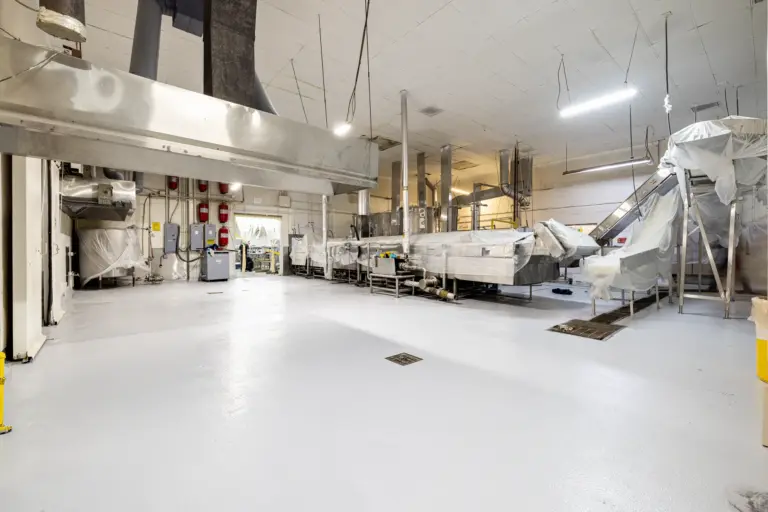
urethane Cement Installation Gallery
Request a Proposal
Submit project parameters for preliminary analysis. Commercial estimates typically returned within 24 hours.
Texture by Zone
Slip Resistant Industrial Flooring in Washdown Zones
Slip resistant flooring for wet areas has to survive the chemistry as well as the water. Grease, fat, blood, lactic acid, wort, and caustic and quat sanitizers all reach the floor during a wet shift, and a geometric profile keeps working under every one of them because traction comes from aggregate standing proud of the matrix rather than from surface chemistry. That is what slip resistance in washdown environments means in practice. These zones take coarse aggregate at a full broadcast rate, with slope engineered to move water and chemistry to the drains.
Dry Storage and Packaging Run a Finer Broadcast
Dry-process zones trade profile for cleaning speed. Packaging lines, dry storage, and prep areas take finer aggregate at a lighter rate, with enough texture to hold traction under an occasional spill and a surface smooth enough that auto-scrubbing moves fast. Thickness follows duty the same way. Wet-process mortar zones typically run 3/8 inch, while dry areas can run 3/16 inch self-leveling with the finer broadcast.
Pedestrian Aisles and Zone Transitions
A monolithic pour can change texture without changing floors. Aggregate profile steps down at zone boundaries inside one continuous urethane cement system, so a pedestrian aisle between a washdown room and dry storage carries an intermediate broadcast instead of forcing one compromise profile across the whole slab. Transitions are mapped during layout and confirmed on sample panels before material goes down.
Holding Texture Over Service Life
Why Topical Anti-Slip Coatings Fail First
Topical anti-slip additives live on the wear surface, and the wear surface is where foot traffic and caustic CIP do their work. Broadcast into a sealer or sprayed on afterward, they read smoother within a year of installation. Integral broadcast aggregate wears on a different clock. The profile is embedded in a urethane cement flooring system with a 15-20+ year service life, and losing it would mean wearing through the topcoat and body coat that carry it.
Substrate Prep Decides Whether Texture Stays Bonded
A texture profile is only as durable as the bond under it. Before primer, the slab is shot blasted to an ICRI 310.2 CSP 4-6 profile and probe-tested for moisture per ASTM F2170, because a debonding floor takes its texture with it. Substrate tolerances are verified against ACI 302.1R. The surface preparation page carries the full method.
Maintenance and the Closeout Record
Cleaning equipment interacts with texture. Pad selection and scrubber settings for a broadcast floor are covered on the maintenance page. Phased zone-by-zone install around active operations keeps the rest of the facility running during a replacement, with 24-hour cure-and-return-to-service on self-leveling systems and 48-72 hours for trowel-applied. At closeout, the documented aggregate type and broadcast rate give the safety office an audit-ready record of the finish each zone received.
urethane Cement Flooring Knowledge Center
Resource links
Technical Performance
Selection & Standards
Industries Served
Sherwin-Williams Poly-Crete Systems
Sika Ucrete Systems
Cost, Comparisons & Legacy Names
Frequently Asked Questions
$4-17/sqft installed depending on project size, system thickness, and substrate condition. Broadcast aggregate and the topcoat that locks it are part of the standard system build rather than an add-on line item, so slip-resistant texture prices inside that envelope. The full size-band table by project square footage lives on the cost page.
Silica or aluminum oxide aggregate is broadcast into the wet body coat and locked under a pigmented urethane topcoat. The texture is a structural part of the wear layer, which is why it survives the foot traffic and caustic washdown chemistry that strip topical treatments. Aggregate type and broadcast rate are set per zone in the project spec. Sample panels confirm the profile before installation.
Topical anti-slip products are surface treatments, and the surface is exactly what foot traffic abrades and caustic CIP chemistry strips. Within a year, the floor reads smoother than at install. Integral broadcast aggregate avoids that failure mode entirely, because the texture is embedded in the body of the mortar system itself rather than applied to a surface that traffic and chemistry are actively removing.
Yes. An aggressive profile that grips under grease also holds soil against scrubbers and squeegees. The working answer is zoning: set the most aggressive profile each zone’s cleaning protocol can maintain, and give the dry areas a finer broadcast that cleans fast. Sanitation crews should see the sample panel before the spec locks.
Zoning texture is standard practice on a broadcast aggregate floor. Kill floors, dish rooms, and brewery cellars take coarse aggregate at a full broadcast rate; packaging and dry storage take a finer, lighter broadcast; pedestrian aisles can carry an intermediate profile. All of it runs inside one monolithic urethane cement pour, so the texture changes without a joint or a material change.
Texture life is wear-layer life. On a urethane cement system that means a 15-20+ year service life, because the aggregate rides in the body coat under the topcoat that locks it, and losing the profile would mean wearing through both layers. Pad and scrubber selection affects wear rate, and the maintenance page covers that interaction.
In-house W-2 crews provide national service coverage. Craftsman has installed industrial flooring since 1999, and every slip-resistant broadcast system ships with closeout documentation naming the aggregate type, the broadcast rate, and the finish each zone received.
Blog
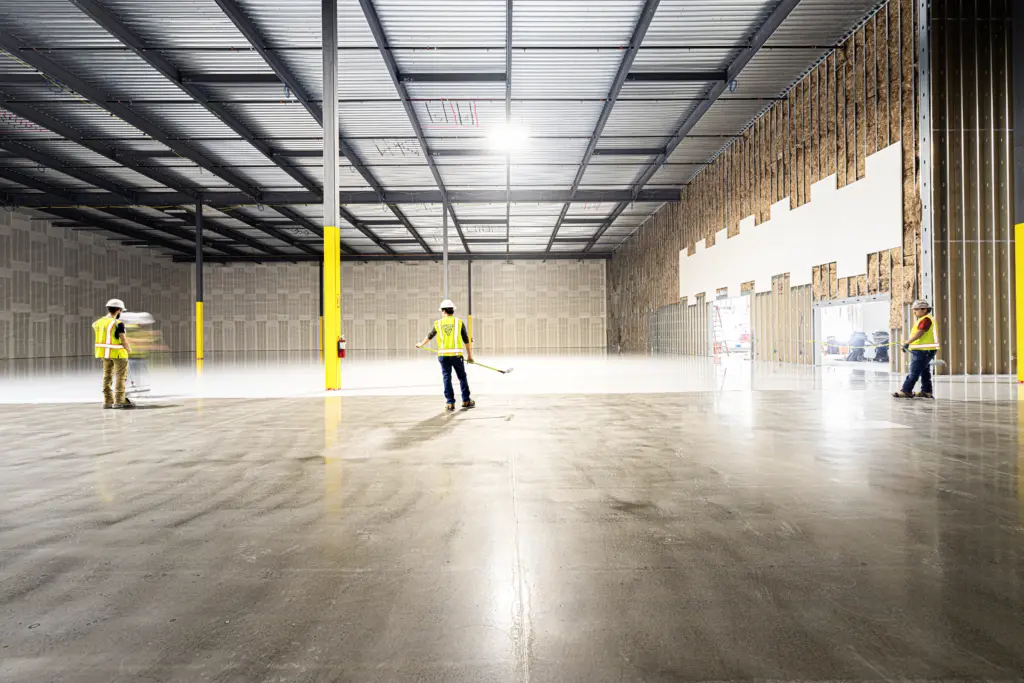
Craftsman Publishes 2026–2027 ESD Flooring Technical Guide
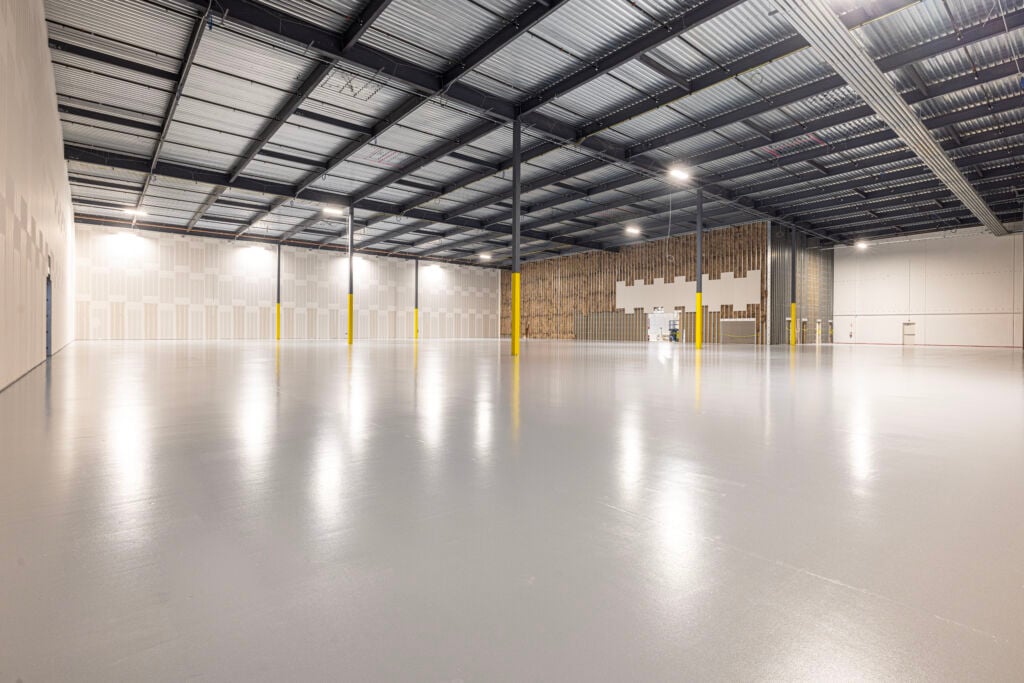
ESD Epoxy Flooring Case Study: 34,000 SF Dallas, TX