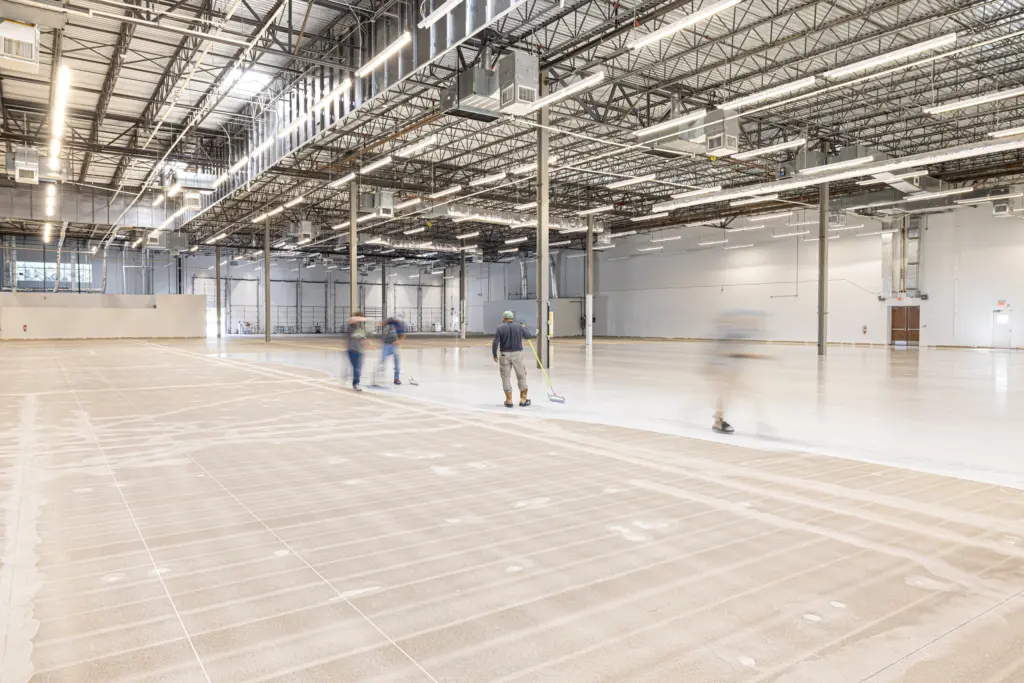
- Founded in 1999 • National commercial & industrial specialty flooring contractor
- Systems: Sika Ucrete & Sherwin-Williams High Performance Flooring Poly-Crete and Hybri-Flex urethane cement systems
- In-house W-2 crews provide national service coverage
- Single-contract multi-site programs under a Master Service Agreement
- Phased installation in occupied facilities — night and weekend shutdown-window execution
- Experience Modification Rate (EMR) below the industry average
- Authorized Sherwin-Williams High Performance Flooring installer; Sika installer; Westcoat certified
- Pre-install moisture and substrate testing & audit-ready closeout documentation
- Facility assessments, compliance inspections & lifecycle maintenance programs
- Licensed • Insured • Bonded • Enterprise vendor prequalification package available (COI, W-9, capabilities statement & supporting documentation)
- Installation to each manufacturer’s published procedure — primer chemistry, mortar thickness, broadcast media, topcoat sequence
- Integral cove base formed monolithic with the floor to a typical 4-6 inch height
- Closeout:
- – ASTM F2170 moisture logs delivered
- – ICRI 310.2 profile verification documented
- – Warranty-preserving installation records
Phone: +1 (844) 687-1961
A urethane cement contractor installs cementitious urethane mortar systems at 3/16″ to 3/8″ thickness over prepared concrete, in facilities where thermal shock, hot CIP washdown chemistry, and organic acid exposure exceed what epoxy tolerates. The system bonds chemically to the slab and moves with it through temperature cycling across a -40°F to 250°F operating range; a rigid epoxy film in the same duty delaminates at the resin-to-concrete interface. Chemistry sets the ceiling; execution decides whether the floor reaches it. Surface profile, substrate moisture, primer selection, mortar thickness, and cove detailing are installer decisions, and every one of them is a documented requirement in the manufacturer’s published installation procedure. A urethane cement installation performs to specification when the contractor holds each requirement and can prove it did.
Craftsman Concrete Floors has operated as an industrial flooring contractor since 1999, running in-house W-2 crews that provide national service coverage. Most buyers reach this page after the product decision is settled and the question has shifted to who places the system without voiding its warranty. Some arrive holding a specification that names Sika Ucrete or Sherwin-Williams Poly-Crete. Others hold an older spec written around a brand name that has since moved, or no brand commitment at all. The criteria below apply to any urethane mortar flooring contractors under evaluation, and each one is checkable from documents the contractor already has on file.
Our Clients




















What Qualifies a Urethane Cement Contractor
The fastest way to qualify a urethane cement contractor is to read a recent closeout package. Every urethane cement manufacturer publishes substrate and installation limits its warranty depends on, and a qualified installer generates the records proving those limits were met: moisture readings, surface profile documentation, batch numbers, and cove completion photos. Ask any candidate for that package before award. What it contains answers most evaluation questions faster than references do.
ASTM F2170 Moisture Logs Before Primer
In-situ relative humidity probes per ASTM F2170 measure moisture inside the slab, where the mortar’s bond lives, and the readings belong in writing before any primer is placed. Craftsman sets probes in the slab and reads them at 72 hours minimum, then holds the manufacturer’s published RH and MVER limits instead of negotiating around them to protect a schedule. Substrate moisture is the most common root cause in resinous flooring failures, and it is also the easiest defect to screen for during contractor selection. A candidate whose moisture file is a surface reading when the manufacturer’s procedure calls for in-slab probes is documenting the wrong number.
Surface Profile Separates Urethane Cement Contractors
Shot blasting to ICRI 310.2 CSP 4-6 is the preparation standard Craftsman holds for urethane cement mortars, with laitance, curing compounds, and prior coatings removed to sound concrete. The profile is verified and photographed before installation proceeds. Bond strength is set in this step. A mortar placed over a smooth or contaminated slab can look correct at handover and disbond within months of thermal cycling, which is why preparation records tell you more about an installer than finished-floor photos do.
The Closeout Package Registers the Warranty
Manufacturer batch numbers, ASTM F2170 readings, surface preparation documentation, cove completion photos, and current product datasheets ship together in Craftsman’s closeout package. That file registers the system warranty with the manufacturer, and it gives a food-safety auditor working under a HACCP, SQF, or GFSI program the installation evidence an audit asks for. It also protects the owner years later, when a claim turns on whether the installation followed the manufacturer’s instructions. A contractor who cannot produce this package for past projects will not produce it for yours.
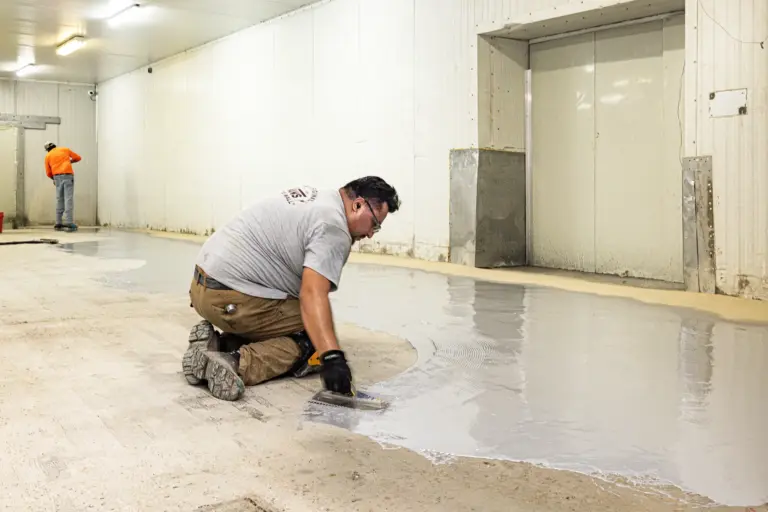
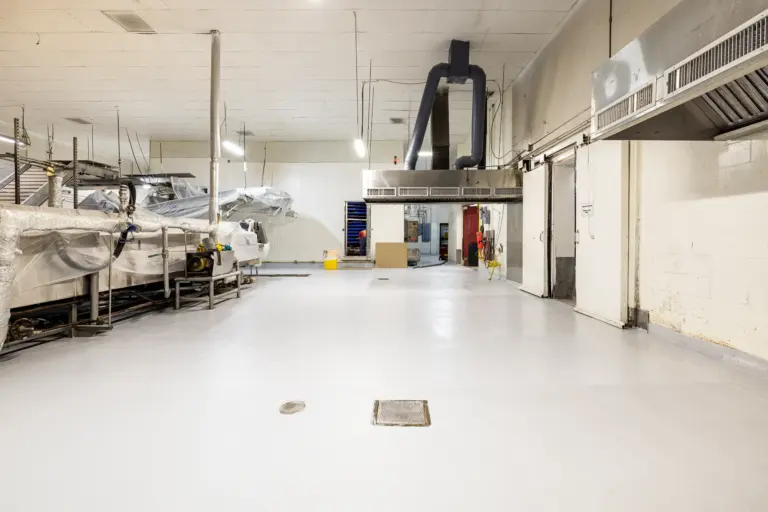
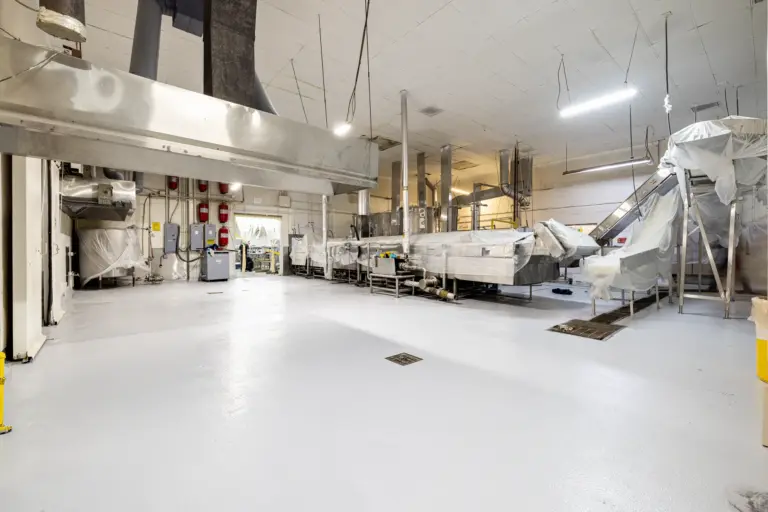
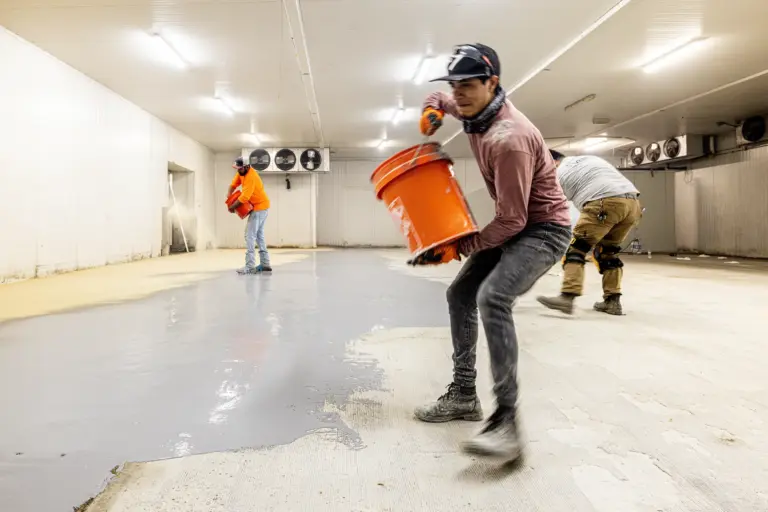
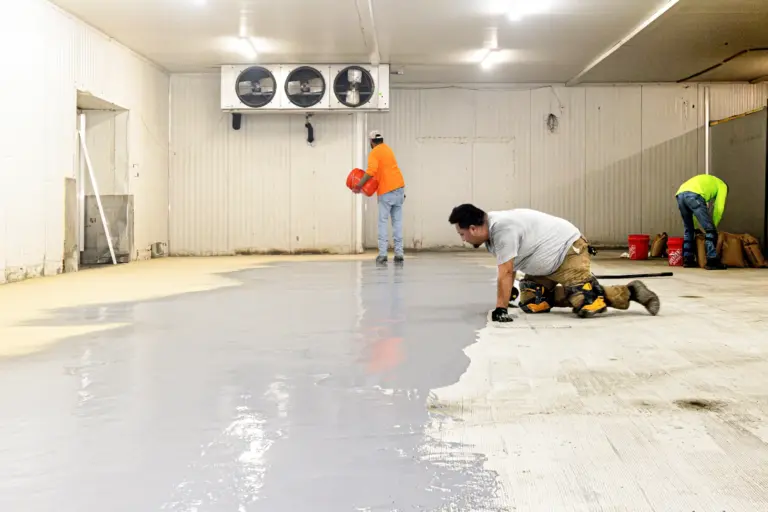
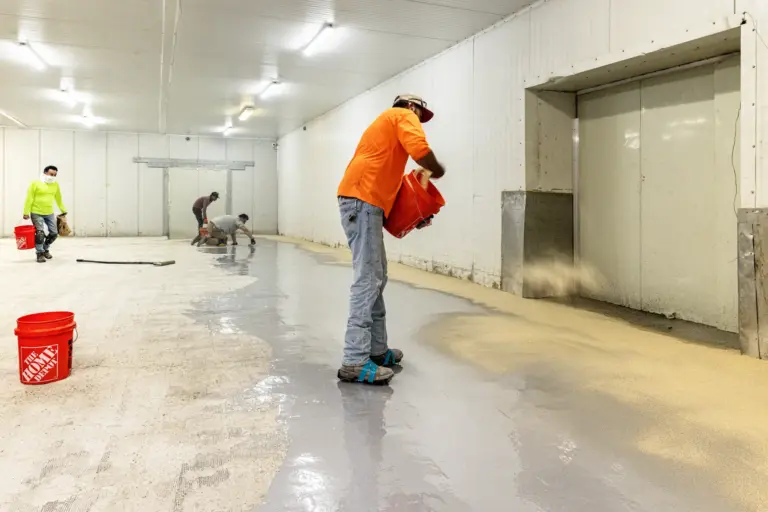
urethane Cement Installation Gallery
Request a Proposal
Submit project parameters for preliminary analysis. Commercial estimates typically returned within 24 hours.
Manufacturer Certification and the Warranty Behind the Floor
Certification decides who backs the system warranty. Manufacturers register urethane cement warranties only when a recognized installer places the product to its published procedure, which makes credential status the first thing to confirm with any cementitious urethane installer under consideration. Craftsman is certified across four urethane cement manufacturers — Sherwin-Williams High Performance Flooring, Sika, PIP, and Westcoat.
Credentials Verified With One Call to the Rep
Craftsman holds Sika Certified + Authorized Sherwin-Williams High Performance Flooring installer credentials, and both are verifiable through the regional manufacturer rep before award. Verification matters because certification connects workmanship to the system warranty. When a certified installer places Ucrete or Poly-Crete to spec, the manufacturer registers the warranty. When an unrecognized crew places the same material, a failed floor is routinely classified as a workmanship issue outside the material warranty, and the owner carries the replacement. Asking the rep takes one phone call and removes the largest unknown in installer selection.
A Spec That Names an Old Brand Still Routes to a Current Product
Specifications written before the industry’s ownership changes still circulate. General Polymers FasTop specs route to current Sherwin-Williams High Performance Flooring Poly-Crete and Hybri-Flex products, and BASF Ucrete and Sikafloor PurCem specs route to the current Sika Ucrete family. Each legacy code maps to one current product, documented per code on this site’s Sika and Sherwin-Williams datasheet pages, and Craftsman prices the current product the code routes to. Holding an old spec is normal in urethane cement work. Installing from it without the mapping is how the wrong product gets placed.
When the Specified System Has a Supply Problem
When a specified system has a lead-time or supply problem, Craftsman can propose and price an approved-equal urethane cement system from a second manufacturer, subject to the specifier’s approval. That option exists because the certification bench spans manufacturers rather than depending on one. The approved-equal path stays inside the specification process. The specifier reviews the substitution against the performance requirements the original product was selected for, and the warranty analysis is rerun for the substituted system before anything is placed.
Crew Composition and Accountability
The crew model is the largest structural difference among urethane cement contractors. Mortar placement is a skilled trade with a short working window, and the prevailing industry approach staffs it with subcontractors and temporary labor hired against each project. Craftsman self-performs placement with its own employees. W-2 installers, not 1099 day-labor. Trained, insured, and accountable to you.
Same Foreman on the Estimate and the Install
Your estimate and your install run under the same foreman, and mortar placement is never handed to a subcontractor in between. That continuity works as an accountability mechanism, because the person who priced the substrate condition owns the surprise when grinding uncovers something different. Warranty denials coded as workmanship problems trace back to subcontracted placement often enough that crew composition belongs at the top of the evaluation criteria, ahead of price.
Skill Concentration Through the Seasonal Cycle
Craftsman retains its skilled core through the slow season and adds seasonal W-2 hires under it — skill concentration stays high at every point in the cycle, while the prevailing model’s collapses exactly when workload peaks. That staffing decision shows in the safety record. Craftsman’s Experience Modification Rate (EMR) is below the industry average, a direct consequence of skilled, long-tenured W-2 crews, and the current figure is available in the vendor prequalification package alongside the COI and W-9.
Phased Installation Around Active Production
Phased zone-by-zone install around active operations. 24-hour cure-and-return-to-service on self-leveling systems. Trowel-applied systems return to full service in 48-72 hours, and night and weekend shutdown windows cover areas that cannot come offline during a shift. Lead time is 1-3 weeks from contract execution, driven by material availability. Pre-bid walkthroughs are available based on project requirements, timing, and resource availability; remote spec review is standard for multi-region rollouts. The phasing plan is built at the estimate around production bays and sanitation cycles and ships with the proposal.
urethane Cement Flooring Knowledge Center
Resource links
Selection & Standards
Technical Performance
Industries Served
Sherwin-Williams Poly-Crete Systems
Sika Ucrete Systems
Cost, Comparisons & Legacy Names
Frequently Asked Questions
Four criteria decide it. Ask whether the company self-performs mortar placement with its own employees or subcontracts it, since subcontracted placement is where workmanship-related warranty denials tend to originate. Confirm shot blast capability to ICRI 310.2 CSP 4-6; diamond grinding works edges and terminations, and chemical etching does not reach the profile at all. Ask for ASTM F2170 moisture documentation from a recent project, and check installation history in your vertical, because a food plant install and a decorative floor are different scopes.
Certification means the manufacturer recognizes the installer and registers the system warranty on floors that installer places to the published procedure. An uncertified crew placing the same material leaves the owner exposed when a failure is classified as workmanship rather than material. Verification is one phone call. Ask the regional manufacturer rep about the contractor before award; Craftsman’s credential status with any manufacturer it installs is confirmable that way.
A flooring warranty is only as durable as the companies behind it: manufacturer system warranties are backed by the manufacturers themselves, independent of any single installer network — and Craftsman has stood behind its workmanship since 1999. In practice that means two warranties with two counterparties. The system warranty covers material and is registered by the manufacturer when a recognized installer documents the installation, and the workmanship warranty belongs to the contractor who placed the floor. The closeout package with batch numbers and moisture readings keeps both enforceable.
Batch numbers, ASTM F2170 moisture readings, ICRI 310.2 surface profile documentation, integral cove completion photos, and current product datasheets make up a complete closeout package. Those records register the system warranty and give quality and food-safety auditors the installation evidence they ask for. Craftsman delivers this package as standard scope on every urethane cement installation.
Yes. Specs that read General Polymers FasTop route to current Sherwin-Williams High Performance Flooring Poly-Crete and Hybri-Flex products, and specs that read BASF Ucrete or Sikafloor PurCem route to the current Sika Ucrete family. Each legacy code maps to one current product, documented on this site’s Sika and Sherwin-Williams datasheet pages. Craftsman prices the current product the code routes to and records the mapping in the submittal, so the specifier approves exactly what gets placed.
$4-17/sqft installed depending on project size, system thickness, and substrate condition. Project size is the dominant driver, which is why the range is wide. The urethane cement cost page on this site carries the full size-band breakdown; budget numbers for a specific facility come out of a pre-bid walkthrough or a remote spec review with drawings.
In-house W-2 crews provide national service coverage. Mortar placement is never subcontracted, and Craftsman has installed industrial flooring since 1999. Enterprise buyers can request the vendor prequalification package, including COI, W-9, and capabilities statement, ahead of any award.
Blog
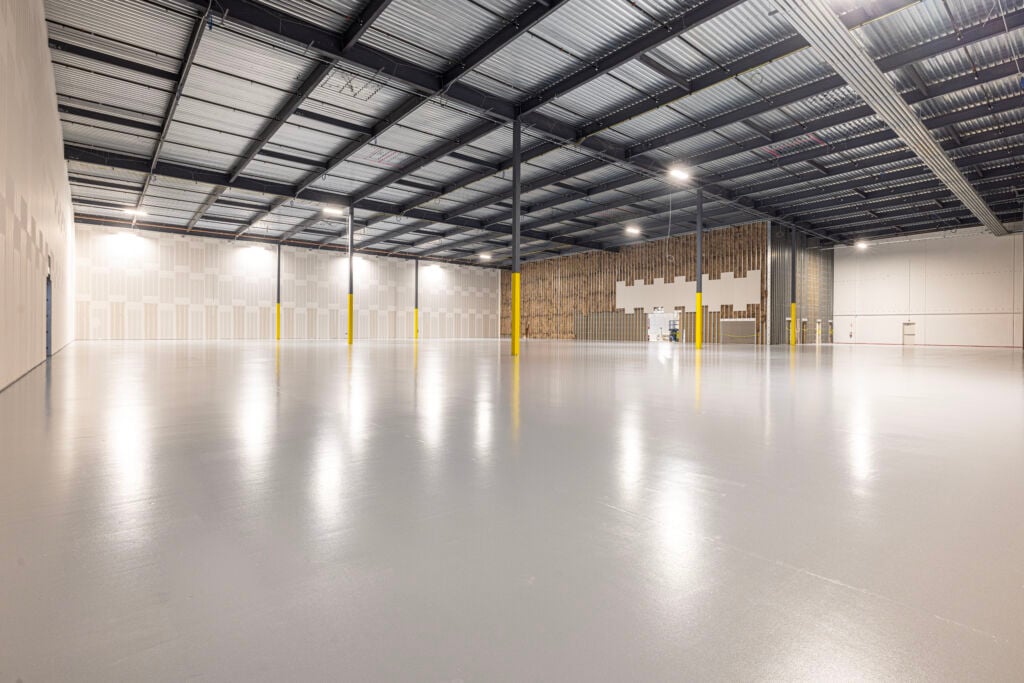
ESD Epoxy Flooring Case Study: 34,000 SF Dallas, TX

Residential Terrazzo Floors in Fort Worth, Texas