- Founded in 1999 • National commercial & industrial specialty flooring contractor
- Systems: Sika Ucrete & Sherwin-Williams High Performance Flooring Poly-Crete and Hybri-Flex urethane cement systems
- In-house W-2 crews provide national service coverage
- Single-contract multi-site programs under a Master Service Agreement
- Phased installation in occupied facilities — night and weekend shutdown-window execution
- Experience Modification Rate (EMR) below the industry average
- Authorized Sherwin-Williams High Performance Flooring installer; Sika installer; Westcoat certified
- Pre-install moisture and substrate testing & audit-ready closeout documentation
- Facility assessments, compliance inspections & lifecycle maintenance programs
- Licensed • Insured • Bonded • Enterprise vendor prequalification package available (COI, W-9, capabilities statement & supporting documentation)
- Failure diagnosis: bond-line delamination, moisture vapor blistering, chemical attack & thermal-shock cracking
- Demolition scope: shot blast or scarification through the failed coating — cove base, drain seals & joint sealants assessed
- Replacement systems: urethane cement at 3/16″ to 3/8″ with integral cove base — 24-hour return to service on self-leveling systems
Phone: +1 (844) 687-1961
Failed epoxy floor replacement starts with a diagnosis, because the new floor has to answer the specific cause of the failure or it inherits it. An epoxy floor peeling at the drains, blistering mid-slab, or cracking along washdown paths failed for one of four reasons: surface preparation that never reached sound concrete, substrate moisture the original install ignored, resin chemistry wrong for the chemical exposure, or thermal shock the rigid film could not absorb. In washdown environments, epoxy floor failure typically shows within 12-24 months of installation. The diagnosis usually takes one site walk.
Craftsman Concrete Floors has replaced failed industrial flooring since 1999, with demolition, substrate correction, and the replacement install handled as one scope by in-house W-2 crews. Replacing a failed epoxy floor with urethane cement is the most common outcome. Exposure drives that choice. Hot washdown, organic acid exposure, and substrate moisture kill epoxy fastest, and all three are conditions cementitious urethane tolerates by chemistry rather than by margin. Where none of them is present, the honest answer is sometimes new epoxy over correct preparation.
Our Clients




















Diagnosing Epoxy Floor Failure
Every failed epoxy floor announces its cause in the failure pattern, and the diagnosis dictates the demolition method, the substrate work, and the replacement system. Vertical-specific failure patterns in bottling plants, bakeries, and walk-in coolers are covered on their own pages; this page carries the diagnosis and the replacement process common to all of them.
Bond-Line Delamination — Prep That Never Reached Sound Concrete
Epoxy holds only as well as the surface it was given. When chemical etching or hand grinding substitutes for mechanical profiling, the coating bonds to laitance — the weak cement paste at the slab surface — and traffic works it loose starting at drains, transitions, and forklift paths. Peeling that lifts in sheets with gray dust on the underside is the signature. The corrective is mechanical profiling to ICRI 310.2 during the rebuild, verified before any primer goes down.
Moisture Vapor Blistering — the Skipped Moisture Test
Blisters that weep liquid when cut open mean vapor lifted the coating from below. Epoxy film is vapor-impermeable, so when the slab’s moisture vapor emission rate exceeded the product’s limit (the value ASTM F1869 measures) and no ASTM F2170 probes went in before installation, the pressure had nowhere to go but up. No recoat fixes this mode. Any new impermeable coating over the same slab meets the same vapor drive, which is why replacement starts with fresh readings from the slab that exists now.
Chemical Attack — Standard Epoxy in an Organic-Acid Environment
A matrix that softened, discolored, or etched under production chemistry points at the specification rather than the installer. Standard epoxy resins degrade under sustained organic acid exposure (lactic, acetic, citric) and daily caustic CIP chemistry, and a recoat from the same resin family fails in the same service. This is the mode where the system category has to change. Chemical attack converts to urethane cement replacement more often than any other diagnosis.
Thermal-Shock Cracking Along Washdown Paths
Cracking that maps to hose routes and washdown zones is thermal shock, not structural movement. A 150°F+ differential between hot washdown water and a cool slab moves the concrete surface faster than a rigid epoxy film can follow, and the coating cracks at the bond line, often within the first 50-100 washdown cycles. Each crack becomes a water path to the substrate. Delamination spreads from every one. Urethane cement survives the same duty because the mortar flexes with the substrate through temperature cycling.
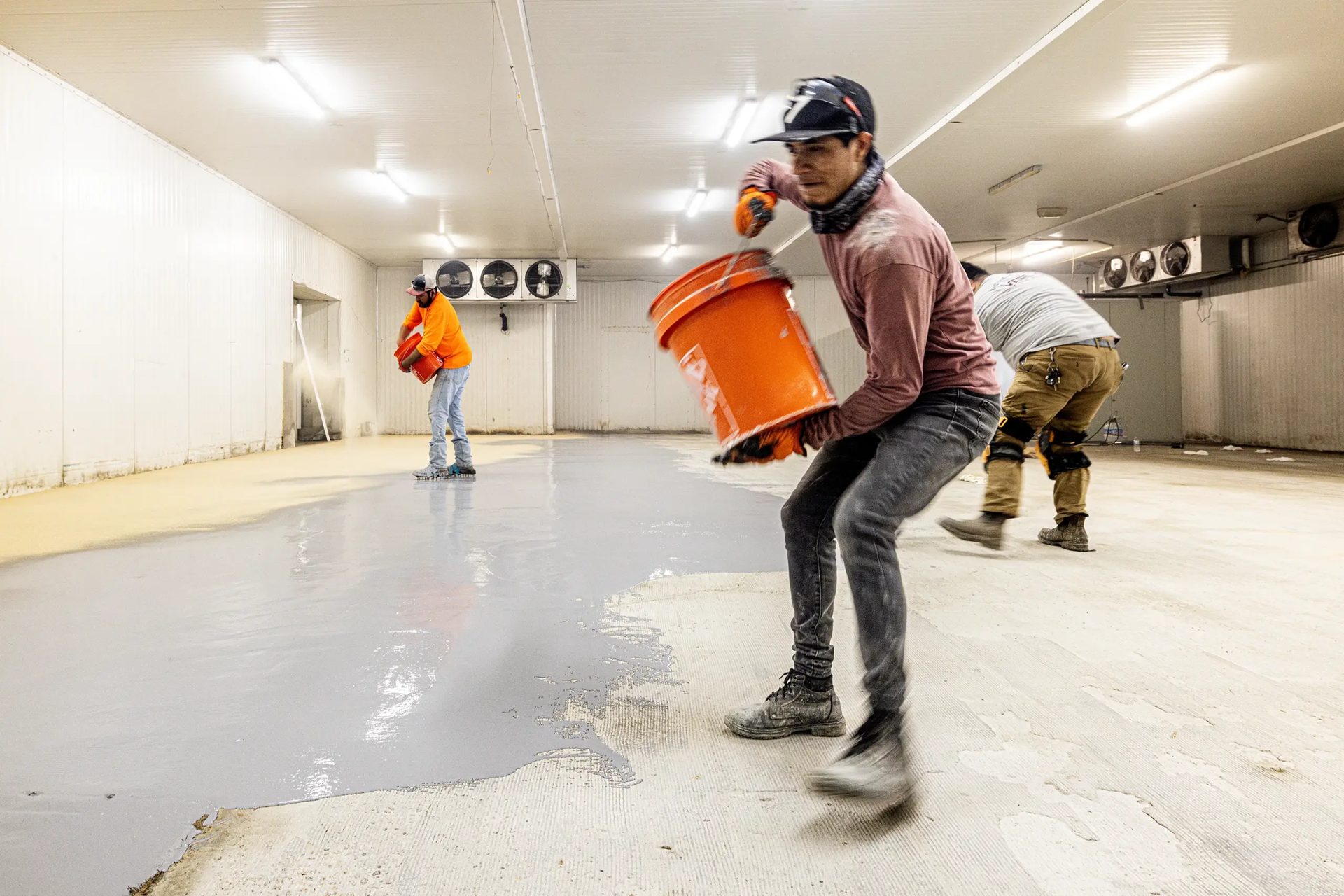
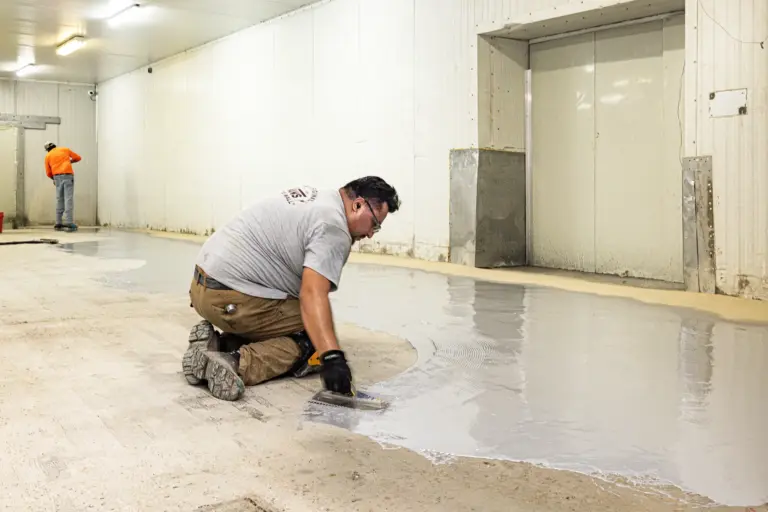
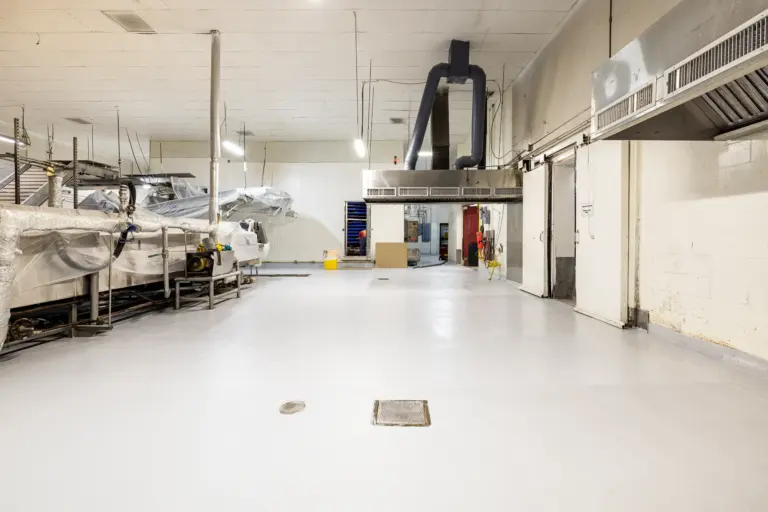
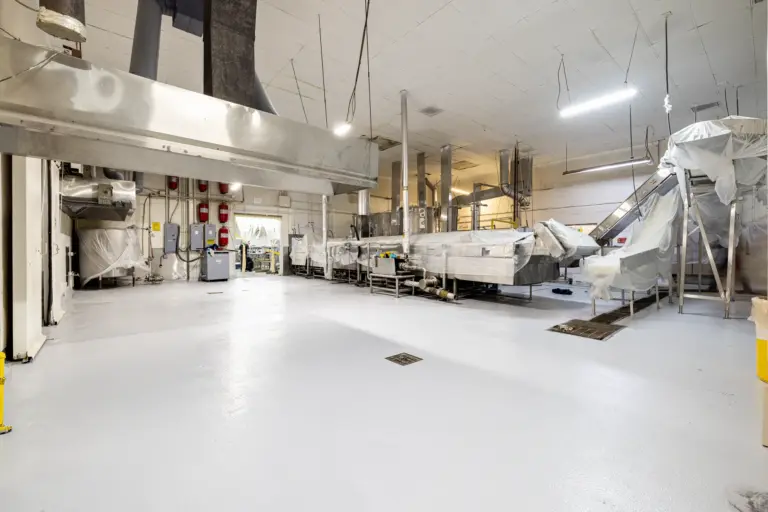
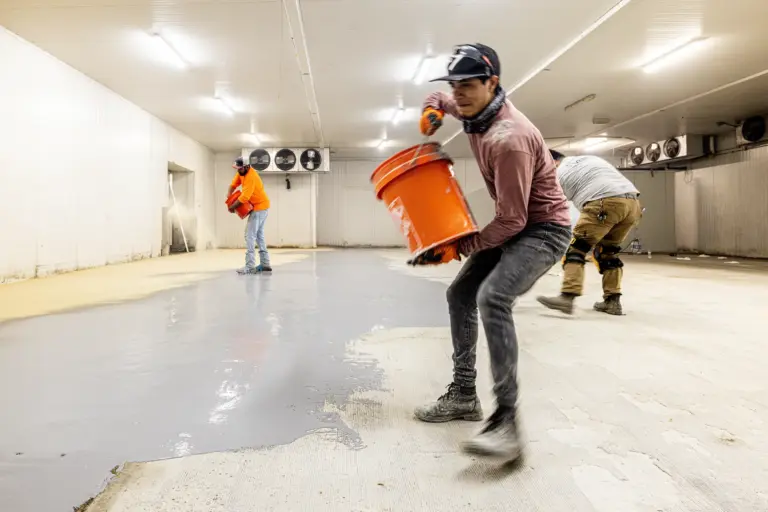
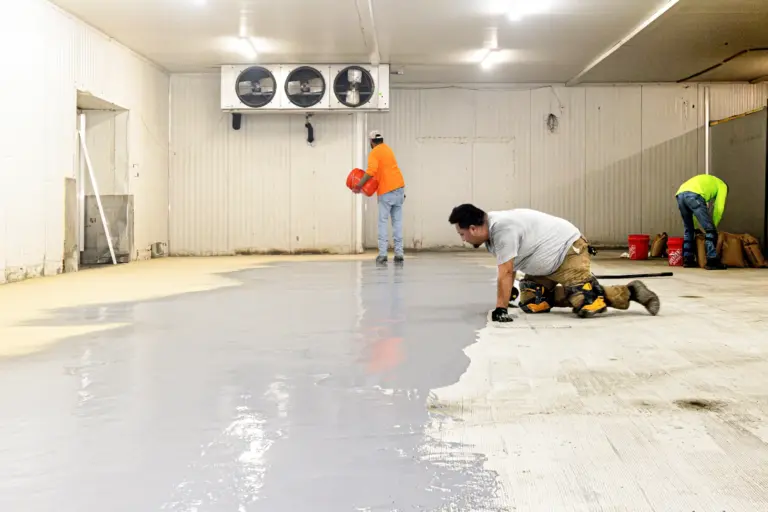
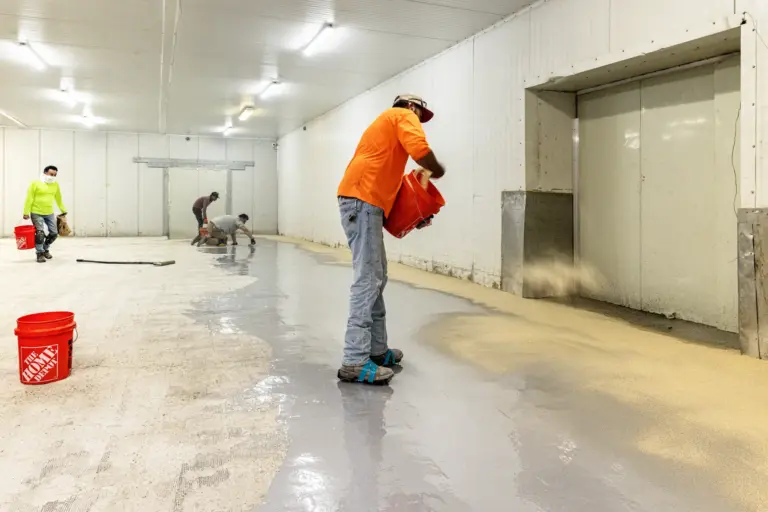
urethane Cement Installation Gallery
Request a Proposal
Submit project parameters for preliminary analysis. Commercial estimates typically returned within 24 hours.
Recoat, Repair, or Replace
Why Recoating Over Failed Epoxy Repeats the Failure
A recoat inherits everything that killed the first floor. New epoxy over old bonds to the existing coating’s failure plane, an unaddressed vapor drive keeps pushing from below, and the contamination and opened cracks under the intact-looking sections stay sealed where nobody assessed them. A facility pricing a recoat over failed epoxy is usually pricing the next failure on a shorter clock. Recoating is legitimate in exactly one scenario: a sound, well-bonded floor being resurfaced for wear ahead of failure.
When Localized Repair Holds
Repair is defensible when the failure is mechanical and contained. Bond failure at a drain, a transition, or a single trench line can be cut out, profiled, and re-coated while the surrounding floor stays in service, provided the cut-back edges reach well-bonded material. Widespread delamination, slab-wide blistering, or a chemically attacked matrix are not repair candidates; patching them defers the same failure by months because the cause is still in the floor.
When New Epoxy Is Still the Right Answer
New epoxy is the right rebuild for workmanship failures. A dry warehouse aisle or an ambient packaging area that failed from bad surface prep did not fail because epoxy was the wrong category, and new epoxy over a correct ICRI 310.2 profile is the cheaper legitimate rebuild there. Urethane cement earns the swap where thermal shock, substrate moisture, or sustained chemical exposure drove the failure. The urethane cement vs epoxy page carries the full head-to-head comparison; this page matches the replacement to the diagnosed cause.
What Failed Epoxy Floor Replacement Involves
Demolition — Through the Coating, Not Only the Loose Sections
Demolition removes the coating everywhere, not only where it let go. Shot blast through the coating or scarification, chosen by film thickness and bond condition, takes the floor to bare concrete, because visually intact epoxy above a compromised bond plane fails next. Existing caulked cove base, drain seals, and joint sealants come out for assessment in the same pass. Laitance, contamination, and opened cracks surface during demolition on most failed installs, and they set the real scope of the substrate work.
Substrate Re-Verification Before Any Primer
The slab gets re-verified as if the original install never happened. Fresh ASTM F2170 in-situ relative humidity probes go in after demolition, cracks are routed and filled, control joints are honored or treated per the new system’s specification, and substrate tolerances are checked against ACI 302.1R. Surface profiling to the ICRI 310.2 CSP the replacement system requires runs across the full area rather than the failed zones alone. Every reading and profile verification lands in the project record.
The New System — Urethane Cement with Integral Cove Base
Matched to the exposure that killed the epoxy, the replacement system installs at 3/16 inch to 3/8 inch. Heavier trowel-applied builds go under impact and thermal extremes. Self-leveling slurries cover chemical and washdown duty. The old caulked cove joint is replaced by an integral cove base formed in place from the same mortar, so the wall-floor seam that sanitation flagged as a harborage point no longer exists. Closeout documents the failure diagnosis, demolition scope, moisture readings, profile records, and batch numbers in an audit-ready package.
Phased Replacement Around Active Production
Replacement runs zone by zone. The facility keeps operating around the work, with self-leveling systems returning to service in 24 hours, trowel-applied builds running 48-72 hours, and night and weekend shutdown-window execution covering areas that cannot close during production. Lead time runs 1-3 weeks from contract execution, driven by material availability. In-house W-2 crews provide national service coverage, and the crew that walks the failure assessment is the crew that runs the replacement.
urethane Cement Flooring Knowledge Center
Resource links
Technical Performance
Selection & Standards
Industries Served
Sherwin-Williams Poly-Crete Systems
Sika Ucrete Systems
Cost, Comparisons & Legacy Names
Frequently Asked Questions
One of four causes explains nearly every failed epoxy floor. The coating bonded to laitance instead of sound concrete, moisture vapor lifted the impermeable film from below, the resin chemistry was wrong for the acids or caustics in service, or thermal shock from 150°F+ washdown differentials cracked the rigid film. Delamination concentrated at drains usually means prep; blistering means moisture; a softened matrix means chemistry; crack lines along hose routes mean thermal shock.
Repair holds only when the failure is contained and mechanical. A delaminated patch at a drain or transition can be cut out, profiled to ICRI 310.2, and re-coated if the surrounding floor is well bonded. Widespread delamination, blistering across the slab, or chemical attack of the resin call for full replacement; a patch over any of them fails again because the cause stays in the floor.
Urethane cement, wherever the failure traces to thermal shock, moisture, or chemistry — it bonds to concrete and flexes with the slab through the 150°F+ differentials and organic acid service that destroy rigid epoxy. Where the environment stays dry and at ambient temperature with no chemical exposure, new epoxy over correct mechanical preparation is the cheaper answer. The urethane cement vs epoxy page carries the full comparison.
No, not over a floor that is actively failing. A recoat bonds to the old coating’s failure plane and inherits the moisture path, contamination, and substrate defects sealed underneath it, so the new surface fails on a shorter schedule than the original 12-24 month window. New epoxy is legitimate only after full removal and correct preparation, and only when the original failure was workmanship rather than chemistry.
The replacement urethane cement system runs $4-17/sqft installed depending on project size, system thickness, and substrate condition, with demolition and substrate repair scoped separately once the failure mode is diagnosed at the site walk. A clean delamination over sound concrete needs far less substrate work than a moisture failure with opened cracks and contamination. Size banding by project square footage is on the cost page.
Lead time runs 1-3 weeks from contract execution, driven by material availability, and the install itself is phased zone by zone around production so the facility keeps running. Self-leveling systems return to service in 24 hours; trowel-applied builds run 48-72 hours. The schedule firms up after diagnosis. Demolition and substrate repair are scoped to the failure condition.
Usually not. Epoxy warranty denials cluster around workmanship findings, where the manufacturer attributes the failure to the installer’s prep, moisture testing, or placement conditions, and out-of-spec findings, where the operating environment exceeded the product’s published limits; both shift the cost to the facility owner. Replacement documentation, including the failure diagnosis, fresh ASTM F2170 readings, and surface profile records, supports a claim against the original install but should never be assumed to fund the new floor.
Blog
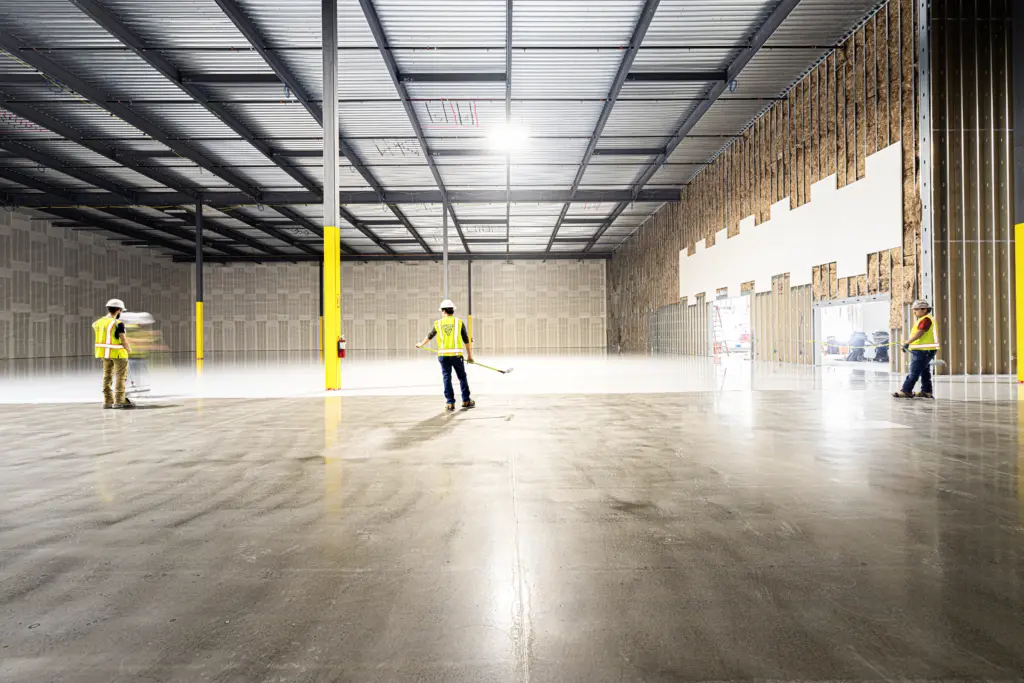
Craftsman Publishes 2026–2027 ESD Flooring Technical Guide
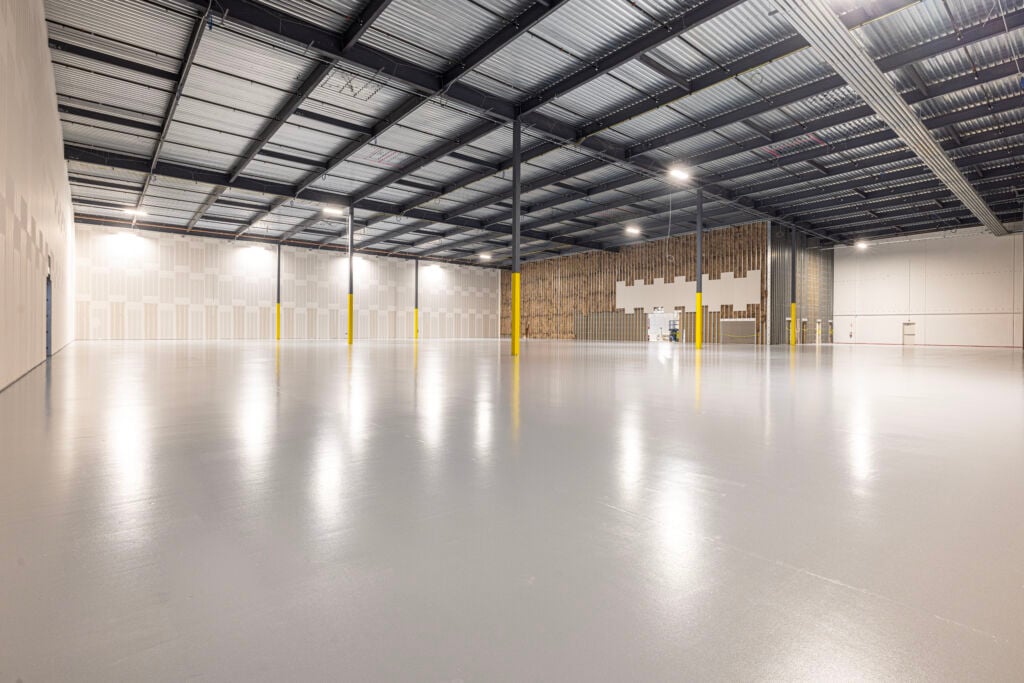
ESD Epoxy Flooring Case Study: 34,000 SF Dallas, TX