- Systems: Static dissipative and conductive ESD epoxy — Authorized SW + PIP + Sika installer
- Compliance:
- – ANSI/ESD S20.20 program standard
- – STM7.1 resistance testing
- – STM97.1 system resistance + STM97.2 body voltage testing
- – MIL-STD-1686 and IEC 61340-5-1 program alignment
- – AS9100 quality-record documentation support
- Resistance:
- – Static dissipative: 1 × 10⁶ to 1 × 10⁹ ohms
- – Conductive: below 1 × 10⁶ ohms
- – Body voltage under 100V per STM97.2
- Pricing: $3.34-13.55/sqft installed depending on system type, thickness, and substrate condition
- Crews: In-house W-2 crews provide national service coverage; cleared-facility and ITAR access protocols
- Timeline: 1-3 weeks lead from contract execution; 24-72 hour cure-and-test window
Phone: +1 (844) 687-1961
Aerospace ESD flooring carries contractual weight that most commercial static-control work does not. Requirements flow down from prime contracts into supplier quality clauses, and the floor is verified against ANSI/ESD S20.20. MIL-STD-1686 still appears in legacy defense specifications. AS9100 sits alongside those standards as the quality management system that audits whether the ESD program is documented; it is not a source of resistance values. The floor itself is tested per ANSI/ESD STM7.1 for material resistance and as a full system per STM97.1, with body voltage measured per STM97.2 against the 100V program threshold. Craftsman Concrete Floors installs static dissipative and conductive ESD epoxy for aerospace and defense facilities nationwide, with closeout documentation an AS9100 quality lead can file without rework.
The band split matters in defense work. Avionics ESD flooring for component handling and electronics integration runs static dissipative, in the 1.0×10⁶ to 1.0×10⁹ Ω range, while energetics and munitions areas require conductive flooring below 1.0×10⁶ Ω under the same S20.20 program. Both bands reach ground through a conductive primer and straps tied to the building steel. Since 1999, Craftsman has installed industrial floors with in-house W-2 crews that provide national service coverage, including into cleared environments where escort, badging, and site-specific safety packages govern crew access.
Our Clients




















Aerospace ESD Compliance Requirements
ESD-control requirements in aerospace rarely originate at the facility. They flow down from prime contracts into supplier quality clauses, and the flooring line item lands on whoever owns the site’s S20.20 program. ESD flooring for aerospace facilities is one element of that program, but it is the element that gets walked on daily, audited annually, and re-tested for the life of the contract. Getting the specification and the verification record right the first time costs less than answering a corrective action request.
Where Aerospace ESD Flooring Requirements Originate
Most aerospace ESD flooring specifications trace to ANSI/ESD S20.20, the program standard that defines qualification and compliance verification, and to MIL-STD-1686, the legacy military ESD-control program still cited in defense contracts and older weapon-system specs. IEC 61340-5-1 appears where international program alignment matters. Contract language typically calls for S20.20 compliant flooring plus documented periodic verification, which is why the closeout package carries as much weight as the coating itself. Definitions for each test method live on the compliance standards page in the Knowledge Center.
What AS9100 Requires From the Floor
AS9100 is a quality management system standard. It publishes no ESD floor resistance value, so a floor is never certified to AS9100 by itself — in practice, an AS9100 ESD flooring requirement resolves to a floor specified under ANSI/ESD S20.20 or the contract’s MIL-STD-1686 language, with objective evidence in the quality record. Craftsman’s closeout package supplies that evidence, pairing STM7.1 material-resistance logs with STM97.1 system-resistance and STM97.2 body-voltage results, and AS9100 program references are added on request.
ESD Flooring Gallery









Request a Proposal
Static Dissipative and Conductive Areas in Defense Facilities
A single defense campus often carries both resistance bands, and the two are not interchangeable. Avionics and electronics areas run static dissipative floors. Energetics and munitions areas require conductive flooring built to a tighter resistance ceiling. Specifying one band across both area types produces a floor that passes the wrong test in half the building, and the nonconformance surfaces at the next program audit.
Static Dissipative Floors for Avionics Handling
Component handling benches, board-level repair stations, integration labs, and functional test cells run static dissipative floors in the 1.0×10⁶ to 1.0×10⁹ Ω range, verified per STM7.1. The dissipative band bleeds charge to a building-steel-tied ground fast enough to protect ESD-sensitive assemblies while staying resistive enough for personnel safety around powered equipment. On a compliant system with compliant footwear, body voltage stays under the 100V S20.20 threshold measured per STM97.2. Auditors ask for that number first.
Conductive Flooring for Energetics and Munitions Areas
Defense ESD flooring in energetics and munitions handling runs the conductive band, below 1.0×10⁶ Ω. The hazard is ignition, not component damage. Charge has to move off a person before it can arc in a flammable or explosive atmosphere, and the dissipative band moves it too slowly for that duty. Which band a given area needs is a program decision; the conductive vs dissipative selection guide in the Knowledge Center walks through it, and Craftsman installs both.
Cleared-Facility Installation and FOD Control
Working Inside Cleared and ITAR Facilities
Crews entering a cleared or ITAR-controlled facility work under escort and badge-access protocols, with site-specific safety packages executed before mobilization; the installer page details the cleared-environment access capability. Craftsman staffs this work with W-2 installers, not 1099 day-labor. Trained, insured, and accountable to you. Access clearance happens once, the named crew that badges in on day one stays through closeout, and a phased ESD install runs zone-by-zone so production areas stay live while adjacent zones cure.
FOD Control and Seamless Monolithic Construction
Foreign object debris programs treat flooring as a particle source. Tile floors earn the treatment. Each grout line and panel seam collects debris and sheds fragments as edges wear, and every joint interrupts the conductive plane the ESD rating depends on. Poured ESD epoxy in aerospace work is monolithic — seam-free construction gives a FOD program nothing to shed and gives the ground path no discontinuity to bridge. Resistance readings taken per STM7.1 hold across the slab instead of varying panel to panel.
Verification and Closeout Documentation
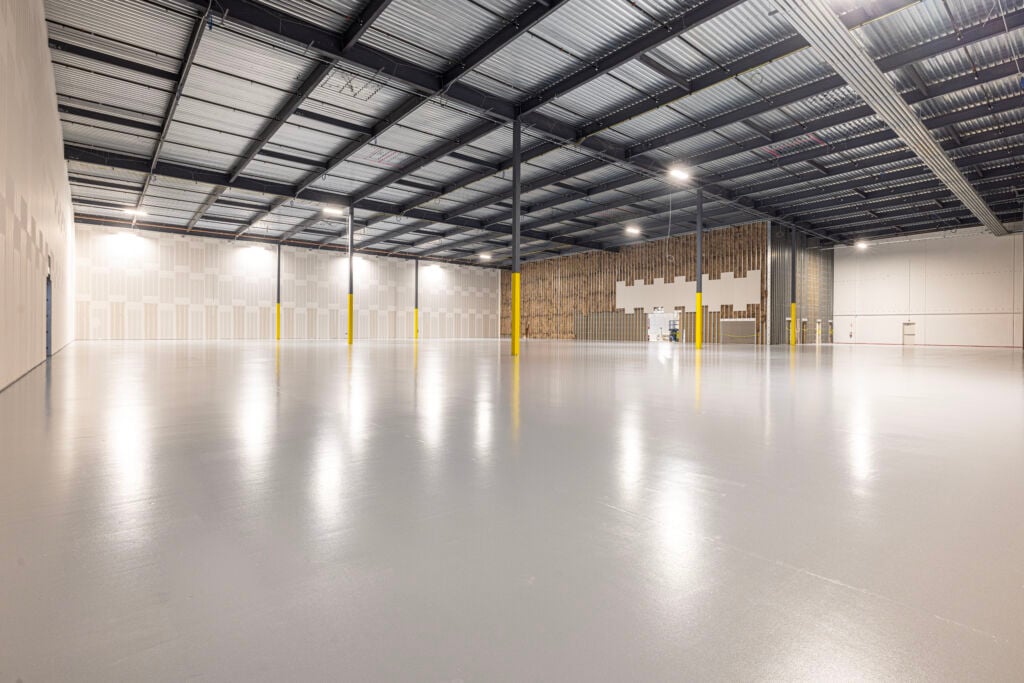
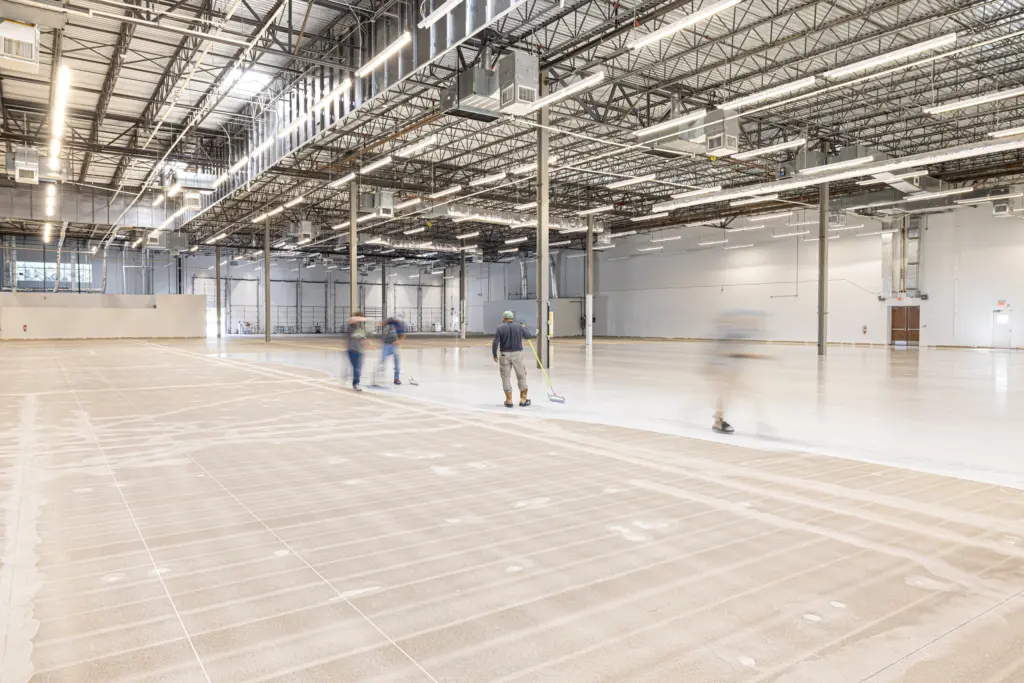
Resistance verification runs 24 to 72 hours after the final coat, once the resin has cured enough for reliable STM7.1 readings. The closeout package pairs material-resistance data with STM97.1 system-resistance and STM97.2 body-voltage results, formatted for the S20.20 program file and the AS9100 audit trail. For scale reference, recent commercial ESD work includes a 67,000 sq ft hyperscale-grade installation in Houston and a 34,000 sq ft Fortune 500 facility floor in Dallas. Aerospace projects follow the same protocol. Lead time runs 1-3 weeks from contract execution, driven by material availability.
ESD Flooring Knowledge Center
Resource links
Where ESD Flooring Is Used
Compliance Requirements & Testing
- ESD Testing Standards Reference
- ESD Requirements by Facility Type
- ESD Floor Testing Programs
- Repeating walking body-voltage tests — Distinguish periodic body-voltage testing recommendations from initial system qualification.
- Reading a walking-voltage report — Check which recorded peaks and summary values the method calls for in the report.
Systems & Selection
Project Planning & Delivery
- ESD Flooring Installation Process
- Static-Control Flooring Systems
- ESD Program Delivery Capabilities
- UFGS floor-and-footwear testing responsibilities — Clarify the guide specification’s scope before assigning combined-system testing on a defense project.
Maintenance & Troubleshooting
Manufacturer ESD Flooring Systems
Frequently Asked Questions
Aerospace ESD flooring runs $3.34-13.55/sqft installed depending on system type, thickness, and substrate condition, derived from real bid data on 250+ commercial ESD projects. Conductive systems for energetics areas usually price above thin-mil dissipative topcoats because the build-up is thicker and the grounding detail is denser. Cleared-facility access requirements add mobilization coordination but do not change the per-square-foot band.
No. AS9100 is a quality management system standard and publishes no floor resistance value; the resistance specification traces to ANSI/ESD S20.20 or to MIL-STD-1686 language in the contract. Craftsman supports the AS9100 quality record with STM7.1 resistance logs and STM97.2 body voltage data in the closeout package, with program references added on request.
Standard epoxy carries surface resistance above 10¹² Ω, well over the 10⁹ Ω upper bound of the static dissipative band, so charge on a person has no controlled path to ground. A walking person can carry several thousand volts back to an ESD-sensitive assembly, and mats protect only the localized work zone. A static dissipative floor tied to building steel through a conductive primer bleeds that charge continuously and provides permanent static control across the entire handling area.
Avionics component handling and electronics integration areas run static dissipative flooring at 1.0×10⁶ to 1.0×10⁹ Ω. Energetics and munitions areas require conductive flooring below 1.0×10⁶ Ω because the hazard is ignition in a flammable or explosive atmosphere. Many defense campuses install both bands under one ANSI/ESD S20.20 program, and the selection is documented area by area.
Verification starts 24 to 72 hours after the final coat, once the resin has cured for reliable readings. STM7.1 measures the floor material’s resistance. STM97.1 then measures resistance as a system with footwear and a person in the circuit, and STM97.2 measures body voltage generated during a standardized walk against the 100V program threshold, with the full data set formatted for S20.20 program files and AS9100 audits.
Lead time runs 1-3 weeks from contract execution, driven by material availability, and most installations complete in 3 to 5 days plus the 24-72 hour cure-and-test window before resistance verification per STM7.1. Phased zone-by-zone install around live operations keeps production areas running while adjacent zones cure. Badging and escort coordination for cleared facilities is handled during the lead-time window so it does not extend the floor schedule.
Craftsman installs aerospace and defense ESD flooring nationwide using directly employed W-2 crews, including work in cleared and ITAR-controlled facilities under project-specific escort and badge-access protocols. Personnel and equipment are assigned companywide according to geography, schedule, system requirements, experience, availability, access requirements, equipment needs, and concurrent workload. Craftsman’s offices are service and accountability points, not fixed crew or equipment origins. Each proposal identifies the project-specific staffing, equipment, mobilization, travel assumptions, and schedule. The personnel who complete required facility-clearance procedures remain accountable through Craftsman’s direct chain of command.
.
Case Studies
ESD Epoxy Flooring Case Study: 34,000 SF Dallas, TX
ESD Epoxy Flooring Case Study: 67,000 SF | Houston, TX