Can I DIY Polish Concrete Floors?
As the largest installer of residential polished concrete floors in Texas, we often get the question “can I polish a concrete floor myself?” Polished concrete offers a modern, shiny, and easy-to-maintain floor at an affordable price. This blog post will discuss the limitations and possibilities of polishing a concrete floor yourself.
Our Clients




















Commercial Gallery




Residential Gallery
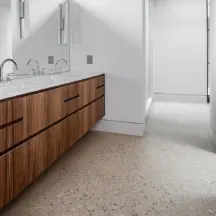
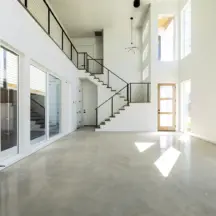
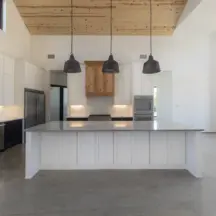



Diy Concrete Polishing
New Construction vs Renovation
The first thing to consider is whether you’re going to be polishing a newly poured concrete slab or replacing flooring on an existing slab. Polishing a concrete slab that has previously had another style of flooring installed requires a much higher level of skill than new construction. The reason for this is that a renovation will require more aggressive tooling to remove contamination from the surface of the floor. Aggressive tooling requires more skill to achieve a consistent finish and will create significant amounts of airborne dust.
Dust Control
One of the most important safety issues related to concrete polishing is the capture of fine dust that is the byproduct of concrete grinding. In our installations, we use large, specialized HEPA vacuums that capture over 99.9% of airborne dust particles. This is very important, as excessive concrete dust exposure can cause respiratory disease. Most equipment that is available for DIY rental has no mechanism for integrating a vacuum or dust control system.
Equipment Availability
Concrete is polished with large, planetary grinders that can weigh upwards of 1500 pounds. This type of equipment is expensive, difficult to transport, requires a specialized power supply, and can be dangerous to operate without training. Most DIY projects are executed with floor buffers from retail tool rental stores such as Home Depot. While it is possible to polish a newly poured concrete slab with a rental buffer, Its relatively low weight will limit the amount of polishing pressure applied to the floor, creating a lower gloss finish.
Tooling Cost
Concrete is polished with tools made from diamonds. A complete assortment of tools required to polish a floor costs many thousands of dollars. These tools have variable life depending on how aggressive they are and the hardness of the concrete slab, but they’re generally engineered to last for several residential projects. In most cases, the tooling cost requirements will offset any DIY savings.
Can I polish concrete floors myself?
The answer to “can I polish concrete floors myself” is yes, but only in a limited set of circumstances. DIY projects should only be attempted on newly poured slabs that are clean and in good condition.
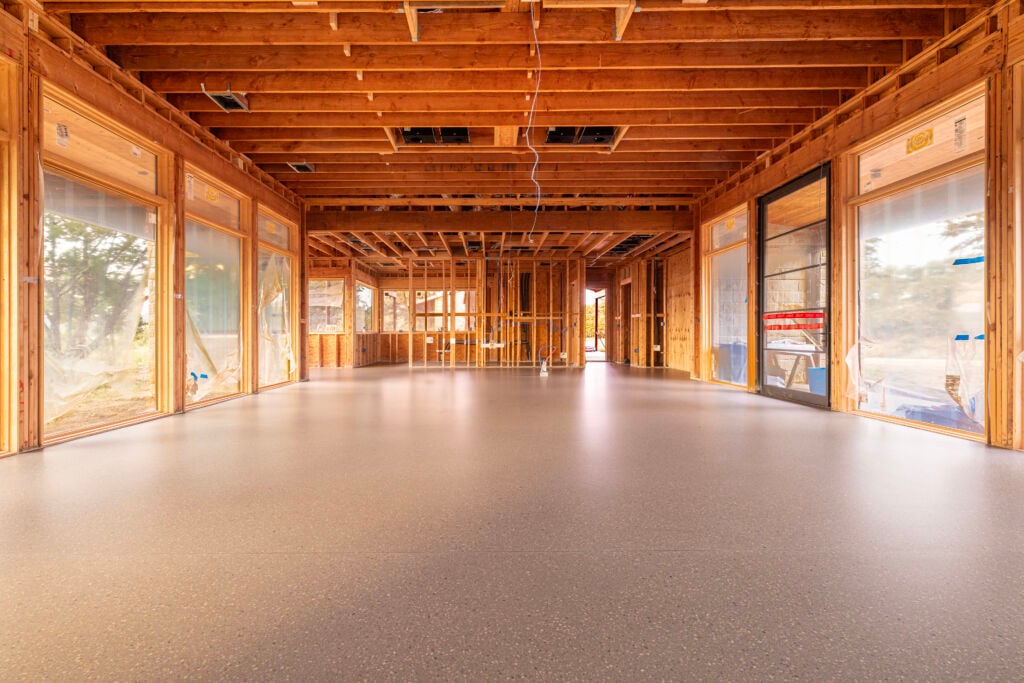
The answer to “can I polish concrete floors myself” is yes, but only in a limited set of circumstances. A matte finish is also preferable, as fewer sets of diamond polishing tools will be required. Finally, DIY polishing should be done before windows and drywall are installed. A wet polishing technique is required to control dust with a rental style swing buffer and will sling dirty that can damage finishes away from the buffer.
Request a Proposal
Submit project parameters for preliminary analysis. Commercial estimates typically returned within 24 hours.
Polished Concrete Knowledge Center
Resource links
Performance & Safety
Design & Aesthetics
Installation Guidance
Economics & Sustainability
Maintenance & Aftercare
Comparative & Decision-Making
Frequently Asked Questions
Polished concrete installation is a multi-step process that includes grinding the concrete slab flat, adding a penetrating liquid that reduces the porosity of the concrete, and then polishing the surface to the desired level of reflectivity.
Because polished concrete floors utilize the structural slab of a building, they’re extremely durable. Properly installed polished concrete floors are abrasion and stain resistant and should last decades with little to no maintenance.
Most polished concrete floors cost between $2.50 and $9 per square foot. For extremely small or large jobs, pricing may be outside of this range.
Polished concrete floors require little maintenance. They should be dust-mopped and cleaned regularly with a pH-neutral cleaner. For commercial floors that receive extremely high traffic, periodic repolishing may be required.
Polished concrete floors are considered non-slip. Excessive water on polished floors can reduce traction. For high-traffic areas, walk-off mats can be incorporated at doorways to reduce water intrusion onto the floor.
Concrete can crack over time due to settlement and thermal movement. Cracking can be limited by installing control joints at intervals specified by a structural engineer.
Yes. Polished concrete is considered eco-friendly because it utilizes the existing concrete slab to create a finished floor. Reduced maintenance waste and reduced lighting requirements due to reflectivity also contribute. LEED credits may be available for polished concrete floors.
Absolutely. At Craftsman Concrete Floors, we’ve installed thousands of residential polished concrete floors and guide you through every step, from pouring the slab to coordinating with finish carpentry and millwork. Polished concrete offers a sleek, modern look that’s durable and low-maintenance for residential spaces.
Low-gloss polished concrete can be a durable, attractive finish for outdoor spaces like patios. It’s comfortable underfoot, easy to clean, and stain-resistant when properly specified.
Yes. Any concrete can be polished, but the final appearance depends heavily on slab quality, flatness, and the level of aggregate exposure.
Yes, polished concrete has a similar temperature to tile. Its thermal mass allows it to retain heat well, making it ideal for in-floor heating systems.
We install polished concrete nationwide.
Blog
ESD Epoxy Flooring Case Study: 34,000 SF Dallas, TX
Residential Terrazzo Floors in Fort Worth, Texas