What can we help you with?
Technical flooring, delivered directly
- ESD flooring, urethane cement, terrazzo, and polished concrete
- In-house W-2 installation crews and experienced field leadership
- National service coverage with project-specific staffing plans
- Testing, documentation, and defined project closeout
- Dedicated support for corporate procurement and multi-site contracting
Phone: +1 (844) 687-1961
Required report information
A dynamic coefficient of friction (DCOF) report needs more than an average number. Under ANSI A326.3-2021, it must identify the floor tested, its condition, the equipment used, the validation results and the individual measurements behind the reported averages. Our slip-resistance guide explains how DCOF results fit a floor’s intended use.
Craftsman Concrete provides the DCOF test report as part of the project’s closeout documentation when friction testing is included in our scope. The report identifies the tested areas, floor conditions and results so the owner can understand the findings and locate the same areas for future testing.
This checklist covers ANSI A326.3-2021, released in February 2022.
Section 11 of ANSI A326.3-2021 requires the following information:
| Report item | What to record |
|---|---|
| Surface identity | Surface type and a unique identifying name or number |
| Test conditions | Temperature during testing; relative humidity when testing dry |
| Testing device | Device used and its calibration due date |
| Testfoot | Testfoot material |
| Cleaning chemicals | Chemicals used |
| Wetting solution | SLS water concentration for wet DCOF testing |
| Wet results | Individual and average wet DCOF values for each specimen or test area |
| Dry results, if tested | Individual and average dry DCOF values for each specimen or test area |
| Validation | Procedure, actual validation-surface readings before and after testing, and whether each fell within the applicable range |
Under ANSI A326.3-2021, the validation statement must contain the actual readings, not simply “equipment passed.” Our DCOF equipment-verification guide explains those checks and their limits.
Document and interpret field results
For field testing, the report should record more than averages: whether each area was cleaned or tested under prevailing conditions, descriptions or photographs sufficient to relocate the test areas, and readings tied to their locations. The standard’s wet-method precision data comes from tile surfaces, so present it as context, not as a concrete-specific tolerance.
Make field-test locations identifiable
For field testing, the report must also record:
- Whether each area was tested after cleaning or under prevailing, “as-is” conditions.
- Descriptions or photographs sufficient to relocate the test areas.
- General environmental conditions, including relevant contaminants, coatings or sealers, traffic, maintenance equipment and walk-off mats.
A result from a cleaned floor describes a different condition from a result obtained under prevailing conditions. Identify that distinction clearly.
If obvious solid contaminants were removed before prevailing-condition testing, note what was removed. That requirement appears in the field procedure in Section 9.2. Our cleaning-before-slip-testing guide explains the preparation choices.
Retain the readings behind each average
For wet field testing, each sample result is the average of four recorded measurements. A single instrument reading is not the sample result defined by the method.
Keep the readings and sample results associated with their locations. Our DCOF test-location and sampling guide explains the relationship between test areas, locations, samples and readings.
Keep the precision statement in context
The standard’s wet-method precision statement comes from an interlaboratory study of seven tile surfaces. The study included polished porcelain, but no concrete or polished concrete.
That study does not establish measurement uncertainty for polished concrete or provide a pass/fail allowance for its results. Do not present the tile-based precision data as a concrete-specific tolerance.
Project Gallery




Frequently Asked Questions
No. ANSI A326.3-2021 also requires surface identification, test conditions, equipment information, validation readings and individual results. Field reports need enough information to relocate the tested areas and distinguish cleaned from prevailing conditions.
Yes. The report must state the actual values measured on the ANSI A326.3 validation surface before and after testing and whether each fell within the applicable range.
As ≥1.00. ANSI A326.3-2021 identifies 1.00 as that device’s upper measurement limit.
No. The cited study used tile surfaces, not concrete. It does not establish a polished-concrete measurement uncertainty or a pass/fail allowance.
Polished Concrete Knowledge Center
Resource links
Performance & Safety
Design & Aesthetics
Installation Guidance
Economics & Sustainability
Maintenance & Aftercare
Comparative & Decision-Making
Blog
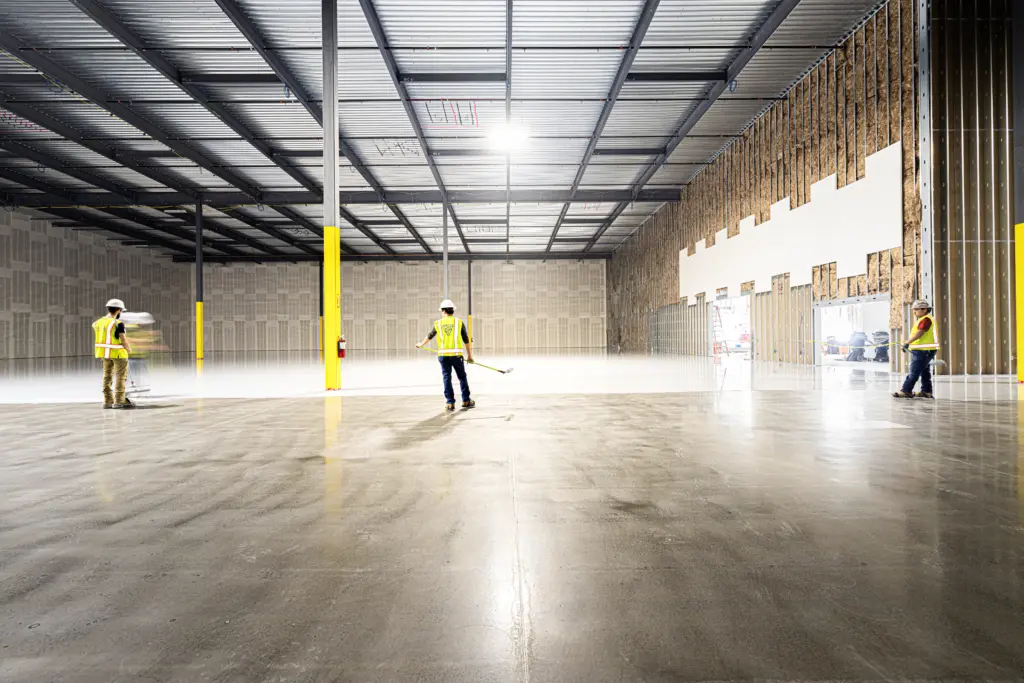
Craftsman Publishes 2026–2027 ESD Flooring Technical Guide
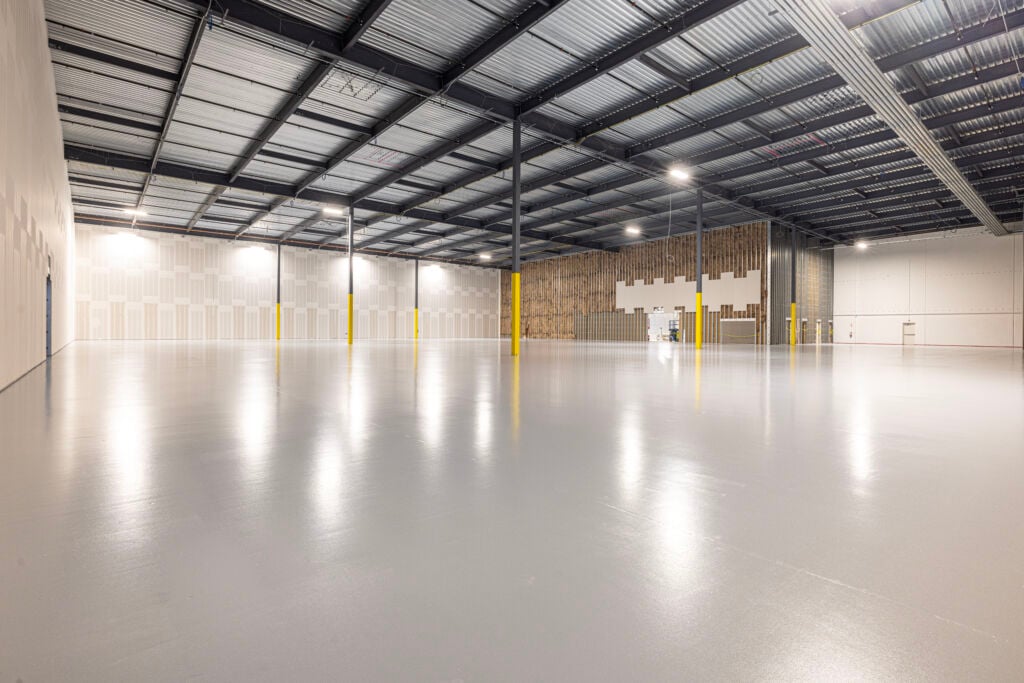
ESD Epoxy Flooring Case Study: 34,000 SF Dallas, TX