What can we help you with?
Technical flooring, delivered directly
- ESD flooring, urethane cement, terrazzo, and polished concrete
- In-house W-2 installation crews and experienced field leadership
- National service coverage with project-specific staffing plans
- Testing, documentation, and defined project closeout
- Dedicated support for corporate procurement and multi-site contracting
Phone: +1 (844) 687-1961
Testing After Treatment
Under ANSI A326.3-2021, when testing data are required after a qualifying coating is applied, use the coating manufacturer’s specified test method—or the standard’s dry procedure if none is suggested. A result measured before coating describes the uncoated floor; it does not supply data for the later coated condition.
That provision applies to treatments meeting the standard’s definition of a coating. It does not automatically classify every concrete densifier or stain guard as one.
Establish whether the treatment is a coating
ANSI A326.3-2021 defines a coating as a surface application, usually polymer-based, typically intended to protect or enhance the surface. It covers applications after firing, fabrication or installation of the flooring.
The definition excludes:
- Grout release agents.
- Grout sealers.
- Products not intended to be permanent applications.
The standard does not classify individual polished-concrete densifiers or stain guards. Assess the actual treatment against the definition rather than deciding from the product category alone.
Our polished concrete stain-guard guide explains the treatments used to protect polished floors.
Identify the test method for the coated surface
Where the treatment qualifies as a coating and testing data are required after application:
| Manufacturer’s direction | Testing route under ANSI A326.3-2021 |
|---|---|
| Manufacturer specifies a test method | Use that method |
| Manufacturer suggests no test method | Use the standard’s dry testing procedure |
A result from the uncoated floor does not supply data for the later coated condition. Record the treatment present when testing so the result remains tied to the surface evaluated.
Our DCOF reporting guide covers recording coatings, floor conditions and test results.
Confirm suitability for the intended conditions
Under ANSI A326.3-2021, flooring with a treatment that meets its coating definition is limited to areas that can be kept dry unless the coating manufacturer declares otherwise.
Regardless of the declared product-use classification, the standard assigns the specifier responsibility for determining suitability for the project’s conditions. Our polished concrete slip-resistance guide explains the broader relationship between testing and intended use.
Project Gallery








Frequently Asked Questions
No. The standard does not classify every stain guard or densifier. The actual product must be assessed against its coating definition and exclusions.
When testing data are required after application, use the coating manufacturer’s specified method. If the manufacturer suggests none, ANSI A326.3-2021 directs use of its dry testing procedure.
Under ANSI A326.3-2021, flooring with a treatment meeting its coating definition is limited to areas that can be kept dry unless the coating manufacturer declares otherwise. The specifier must still determine suitability for the project’s conditions.
Polished Concrete Knowledge Center
Resource links
Performance & Safety
Design & Aesthetics
Installation Guidance
Economics & Sustainability
Maintenance & Aftercare
Comparative & Decision-Making
Blog

Craftsman Publishes 2026–2027 ESD Flooring Technical Guide
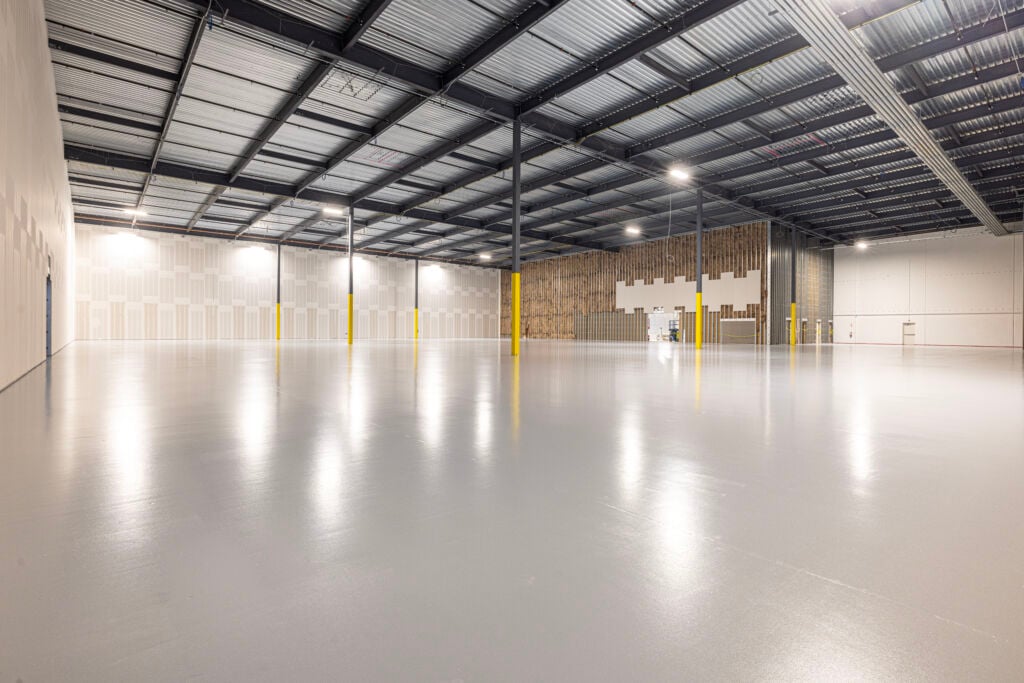
ESD Epoxy Flooring Case Study: 34,000 SF Dallas, TX