What can we help you with?
Technical flooring, delivered directly
- ESD flooring, urethane cement, terrazzo, and polished concrete
- In-house W-2 installation crews and experienced field leadership
- National service coverage with project-specific staffing plans
- Testing, documentation, and defined project closeout
- Dedicated support for corporate procurement and multi-site contracting
Phone: +1 (844) 687-1961
Terrazzo vs. Polished Concrete
Terrazzo is a separate decorative topping, while mechanically polished concrete refines the structural slab into the finished wear surface. Terrazzo sets aggregate in an epoxy or cementitious binder over a prepared substrate; polished concrete uses densification and bonded-abrasive refinement while the concrete remains the wear layer.
That assembly choice affects design control, relationship to the slab, transitions, maintenance, repair, and cost logic. Select between the systems by the project specification, slab or substrate condition, moisture, exposure, design intent, intended use, schedule, and maintenance plan.
The Structural Difference Between Terrazzo and Polished Concrete
Terrazzo Is an Installed Topping or Fabricated System
Terrazzo is decorative aggregate set in an epoxy or cementitious binder, placed over a prepared substrate, then ground and polished as the finished surface. The topping is its own wear layer, distinct from the structural slab. Aggregate selection, binder color, divider-strip layout, and an approved physical sample give the design team control while allowing for natural variation.
Principal formats include poured epoxy terrazzo, poured cementitious terrazzo, precast terrazzo elements, and terrazzo tile; they are not interchangeable. Plan terrazzo installation around the selected format, project specification, substrate and moisture conditions, exposure, design, intended use, and maintenance plan.
Mechanically Polished Concrete Turns the Slab Into the Finished Floor
Mechanically polished concrete uses the structural slab as its finished wear surface. Densification and bonded-abrasive refinement develop the floor, and Craftsman completes the system with a penetrating stain guard. The concrete remains the wear surface; there is no separate topping.
The penetrating stain guard does not turn the floor into a grind-and-seal system. Grind-and-seal is a separate system in which a film-forming sealer becomes the wear surface; in polished concrete the refined concrete remains the wear surface, and the stain guard protects it without covering it.
Because the slab remains the wear surface, polished concrete floors inherit appearance and exposure limits from the concrete itself. Slab mix, aggregate distribution, placement, finishing, flatness, repairs, and field conditions influence the result, so the accessible slab must be evaluated as part of system selection.
Thickness, Floor Height, and Transitions
Door clearances, thresholds, ramps, and adjacent finishes turn floor height into an early coordination item. Terrazzo adds a separate assembly above the substrate, while polished concrete refines the slab without a topping. The published epoxy-terrazzo reference describes nominal 1/4-inch options with #0 and #1 aggregate and a nominal 3/8-inch option with #2 aggregate, at approximately 3–4 pounds per square foot; those values apply to the referenced system options, not every terrazzo project.
Other terrazzo assemblies add different depths: monolithic cement terrazzo uses a nominal 1/2-inch topping, while a sand-cushion assembly is approximately 2 1/2–3 inches thick. Polished concrete adds no topping; verify actual elevations and transition details for the project.
| System | Published nominal thickness | Published weight and notes |
|---|---|---|
| Epoxy terrazzo | Nominal 1/4 inch with #0 and #1 aggregate; nominal 3/8 inch with #2 aggregate | Approximately 3-4 pounds per square foot general system weight |
| Monolithic cement terrazzo | Nominal 1/2-inch topping, direct-bonded interior system | Performance depends heavily on slab flatness and crack-control design |
| Sand-cushion terrazzo | Approximately 2 1/2-3 inch full assembly including a nominal 1/2-inch topping | Approximately 25-30 pounds per square foot |
| Polished concrete | No topping added; the refined slab is the finished floor | Verify actual elevations and transition details for the project |
Appearance Control, Aggregate and Color Design, and the Slab
Terrazzo Appearance Is Specified Before Installation
With terrazzo, the design team can specify aggregate selection, binder color, divider-strip layout, and an approved physical sample before installation. Those controls establish the intended palette and layout while the physical sample provides the comparison reference. Because poured decorative material varies naturally, the approved sample is a standard for judgment, not a promise of chip-for-chip replication.
Review terrazzo design services when the project needs to coordinate aggregate selection, binder color, divider-strip layout, and an approved physical sample. Natural variation should remain part of the acceptance discussion because a poured decorative material will not reproduce a sample with perfect uniformity.
Polished Concrete Appearance Comes From the Slab You Already Have
Polished concrete appearance starts with the slab rather than a selected topping palette. Cream, salt-and-pepper, and rock-cut finishes expose increasing amounts of aggregate, but slab mix, aggregate distribution, placement, finishing, flatness, repairs, and field conditions keep exposure from being perfectly uniform. Integral color or dye may be optional, while the underlying concrete still controls the floor’s character.
Review styles of polished concrete floors to compare aggregate exposure and appearance levels, then judge the proposed finish against an approved physical sample or representative onsite mockup. Marketing photography alone is not an acceptance standard.
Substrate Conditions Set Different Limits for Each System
Slab condition limits the appearance and exposure a polished floor can deliver. Before polishing, Craftsman evaluates accessible slab conditions and visible issues that may affect appearance, performance, schedule, or cost. Aggregate exposure depends on the slab mix, placement, finishing, flatness, repairs, and field conditions, so an approved sample or representative onsite mockup should define acceptance without promising perfect uniformity.
Terrazzo depends on its substrate differently. The topping requires a prepared base and a system matched to the substrate and moisture conditions. Divider strips placed for decoration do not prevent cracking, so movement-joint and crack-control requirements must be coordinated with the concrete and governing project documents.
Installation and Construction Sequencing
Terrazzo Installation Adds a Placement-and-Finishing Sequence
Poured terrazzo is placed as a wet system and finished mechanically. The aggregate-and-binder mix goes down over the prepared substrate to the specified design, cures, and is then ground flat. A conventional epoxy-terrazzo sequence may include rough grinding followed by color-matched epoxy grouting of pinholes and voids before final polishing, as described in published epoxy terrazzo installation procedures, though some proprietary systems report groutless installations.
Poured terrazzo requires placement, cure, grinding, and any system-specific grouting or final-polishing steps to be coordinated in the construction schedule. Precast elements shift fabrication away from the floor installation sequence. Craftsman casts, grinds, polishes, and installs its precast terrazzo in-house, with scope that may include stairs and treads, countertops, wall panels and cladding, cove base, and related elements.
Polished Concrete Is Refined in Place
Polished concrete is refined in place, with tooling and process selected for the slab, specified exposure, finish requirements, and project conditions. Densification and bonded-abrasive refinement develop the surface while concrete remains the wear layer, and Craftsman finishes the system with a penetrating stain guard. The sequence follows the existing slab and approved scope; no separate topping is placed or cured.
The slab’s construction history still affects the result. When possible, a slab intended for polishing should be coordinated before placement because mix, placement, finishing, curing, density, flatness, joints, penetrations, repairs, and protection all affect the finished floor. That makes slab protection and responsibility for repairs early project decisions, not details to settle after polishing begins.
New Construction and Renovation Change the Coordination Priorities
New construction exposes choices about mix, placement, finishing, curing, flatness, joints, penetrations, repairs, and protection before concrete is placed. For polished concrete, those decisions shape the final wear surface because the slab remains the floor; terrazzo adds a separate topping whose system still depends on substrate, moisture, design, use, and maintenance requirements.
Terrazzo gives the schedule a different shape because it creates a separate wear layer over a prepared substrate. The system still has to match the substrate, moisture conditions, exposure, design, intended use, and maintenance plan, and its placement and finishing sequence needs a defined installation window. In renovation, the choice begins with the existing slab: its condition may support polishing, or the project may require the separate decorative surface that terrazzo provides.
Maintenance, Repair, and the Cost of Ownership
Routine Maintenance and Operating Environment
Terrazzo cleaning may include routine dry-soil removal and a compatible pH-neutral program. Exact chemistry, pads, cadence, sealing, and restoration depend on the installed system and its condition; review terrazzo cleaning and maintenance when building the floor-specific plan.
Polished concrete upkeep centers on routine cleaning of the refined surface, with inspection, burnishing, repairs, or a stain-guard refresh selected by condition; high-traffic paths that lose sheen over years of service can be mechanically refreshed. Neither floor carries a universal maintenance schedule. On either floor, traction depends on the installed finish, cleanliness, moisture, contaminants, and maintenance, so wet-area or safety-critical traction requirements should be verified against the specific project’s conditions.
Repair and Renewal Depend on Existing Condition
Existing terrazzo may often be repaired, re-ground, or repolished when its condition permits. Restoration is not always possible or preferable, and patch, aggregate, and color matching remain project-specific judgments; no assessment should promise an invisible fix. Terrazzo restoration and terrazzo floor polishing cover the condition assessment and available work.
Polished concrete can often be cleaned, repaired, re-refined, and refreshed as conditions require. Repairs remain visually legible, and standard repair colors are approved by color family without an exact-match promise. The repair plan should separate serviceability needs from appearance expectations before work begins.
First Cost, Long-Term Ownership, and Lifecycle Planning
Cost comparisons fail when the two scopes are priced with different project assumptions. Terrazzo and polished concrete should be priced against the same size, slab or substrate condition, design or exposure, access, protection, repair, phasing, and schedule inputs. Terrazzo also responds to system, divider-strip complexity, and aggregate selection; review the terrazzo floor installation cost guide for those planning variables. These drivers do not support a universal first-cost winner.
Long-term ownership resists a one-line verdict. Published lifecycle models use different time horizons, service-life assumptions, geographies, discount rates, maintenance inputs, and cost sources, and they do not rank every floor the same way. A useful comparison therefore has to state the building, traffic, maintenance program, analysis period, and assumptions instead of transferring one model’s result to every project.
Choosing Between Terrazzo and Polished Concrete
Neither system is the default. The building, the slab, the design intent, and the ownership horizon make the decision, and the two floors win in different situations.
| Decision factor | Terrazzo | Polished concrete |
|---|---|---|
| Assembly | Installed topping of decorative aggregate in an epoxy or cementitious binder; the topping is the wear surface | The structural slab is ground, honed, and polished; the refined concrete is the wear surface |
| Appearance control | Aggregate, binder color, and divider-strip layout specified before installation against an approved physical sample | Appearance comes from the existing slab; exposure and optional dye work with what the pour contains |
| Added build-up | Adds a system-specific topping that must be coordinated at doors, thresholds, and transitions | Adds no topping; verify actual elevations and transition details for the project |
| Substrate dependence | Needs a prepared, compatible substrate; movement joints and crack control coordinated with project documents | Accessible slab conditions are evaluated; mix, placement, finishing, flatness, repairs, and field conditions affect the result |
| Repair and renewal | May often be repaired, re-ground, or repolished when condition permits | Can often be cleaned, repaired, re-refined, and refreshed; repairs remain visually legible |
| Cost drivers | System, design and divider-strip complexity, aggregate, square footage, access and schedule, substrate condition, removal or repair scope | Size, slab condition, access and logistics, exposure, appearance, repairs and joints, protection, phasing, schedule, selected products |
Terrazzo Fits Projects Requiring a Controlled Decorative Surface
Projects that need a deliberately specified decorative surface often favor terrazzo. The design team can define aggregate selection, binder color, divider-strip layout, and an approved physical sample before installation. The sample gives the project a comparison standard while preserving the natural variation expected in a poured decorative material. Terrazzo can also establish a separate finished wear layer when the existing slab’s appearance is not the intended design.
Some programs specify the finish directly. The 2021 U.S. Courts Design Guide directs certain public-circulation courtroom areas to terrazzo or stone and identifies polished concrete as unacceptable in those areas. That direction applies only to the specified court areas; it is not a general rule for civic or institutional buildings.
Polished Concrete Fits When the Existing Slab Supports the Intended Finish
Polished concrete fits when accessible slab conditions can be evaluated and the slab’s resulting character aligns with the program. Because the system refines existing concrete instead of adding a topping, it can suit projects that intend to keep the structural slab exposed. Pricing remains project-specific and depends on slab condition, repairs, exposure, protection, schedule, and selected products.
Polished concrete also fits when exposing the building’s concrete is the design intent. The selected aggregate exposure can range from little or no coarse aggregate to greater coarse-aggregate exposure, but the result still reflects the slab’s mix, placement, finishing, flatness, repairs, and field conditions. Terrazzo offers greater control over the topping’s matrix and aggregate palette when that control is part of the program.
Specification Risk Runs in Both Directions
A polished-concrete dispute can begin with an expectation failure. The specification should not assume perfectly uniform exposure or color, because the finished appearance depends on the slab’s mix, placement, finishing, flatness, repairs, and field conditions. Inspect the actual slab, define exposure and appearance with an approved sample or representative onsite mockup, and record the accepted range before production work.
Terrazzo specifications need explicit coordination of substrate and moisture conditions, movement joints and crack control, system thickness, transitions, and product format. Poured terrazzo, precast terrazzo, and terrazzo tile are distinct formats and should not be treated as interchangeable. Use an approved physical sample or representative onsite mockup, evaluate substrate and moisture conditions, and coordinate transitions and movement details in the project documents.
Compare Both Systems Against the Same Project Inputs
Craftsman installs both terrazzo and polished concrete, so the same project discussion can compare the systems against the building, slab, design intent, schedule, use, and maintenance plan. Initial consultation and initial design and specification assistance are available at no cost, and a project specialist responds within one business day.
With basic size, system, condition, and schedule inputs, Craftsman can usually provide a preliminary installed-cost range during the initial call or within a few hours. That preliminary range is not a final proposal; the actual scope and price still depend on the project information and field conditions. To put a specific slab and program in front of a specialist, request a consultation with the square footage, building type, and what is known about the existing concrete.
Terrazzo Floors Gallery

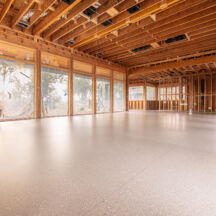
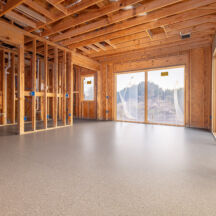
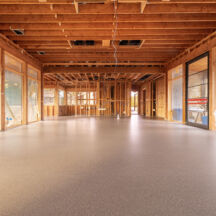
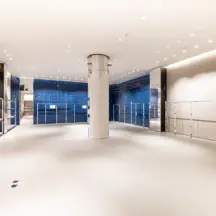

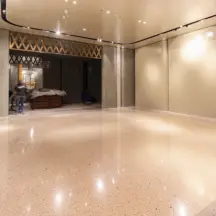
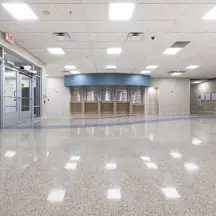
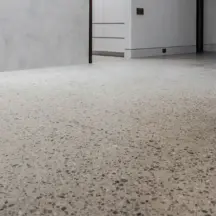
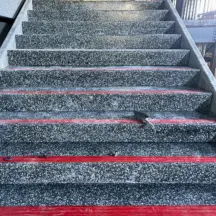
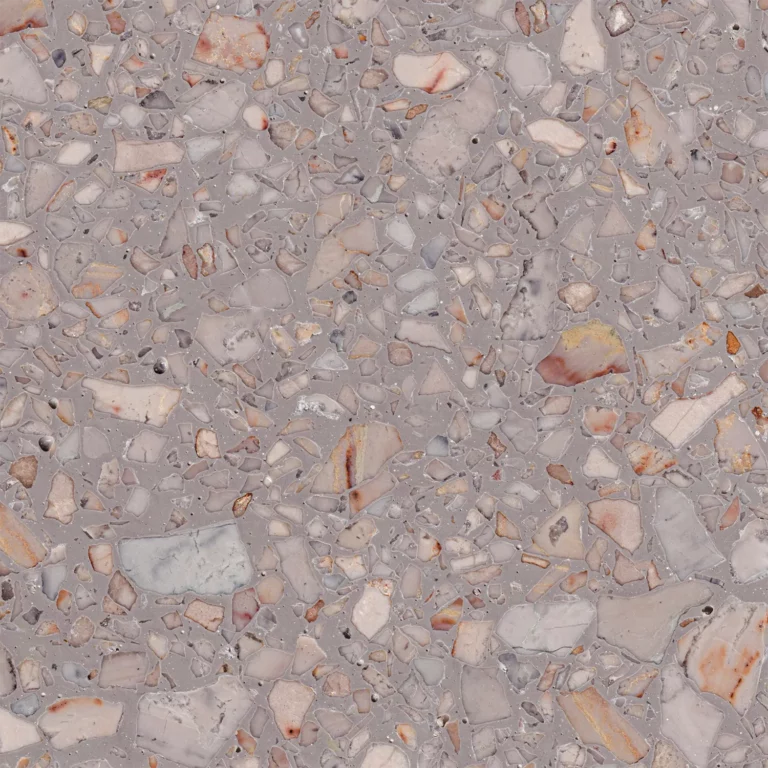
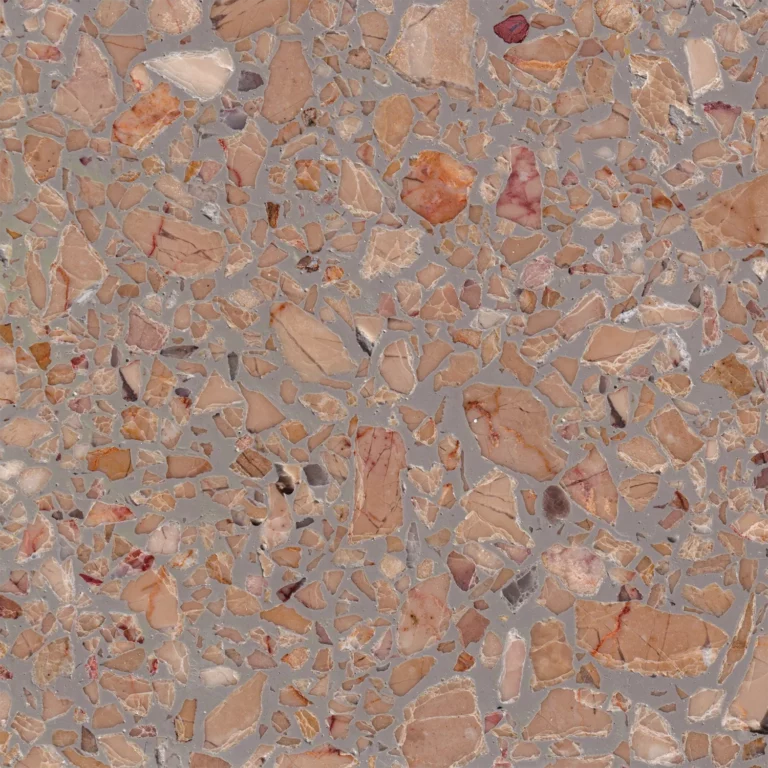
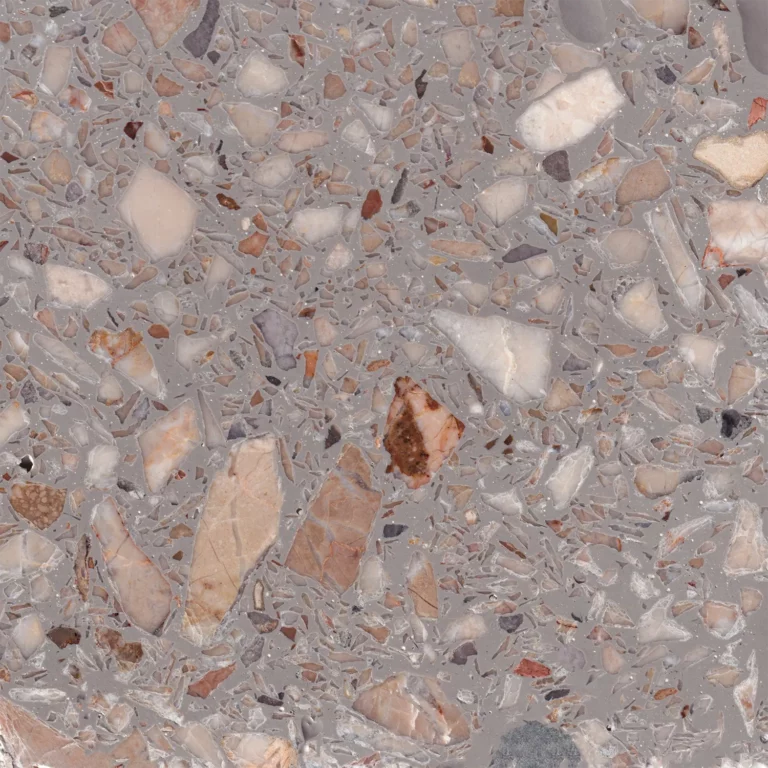
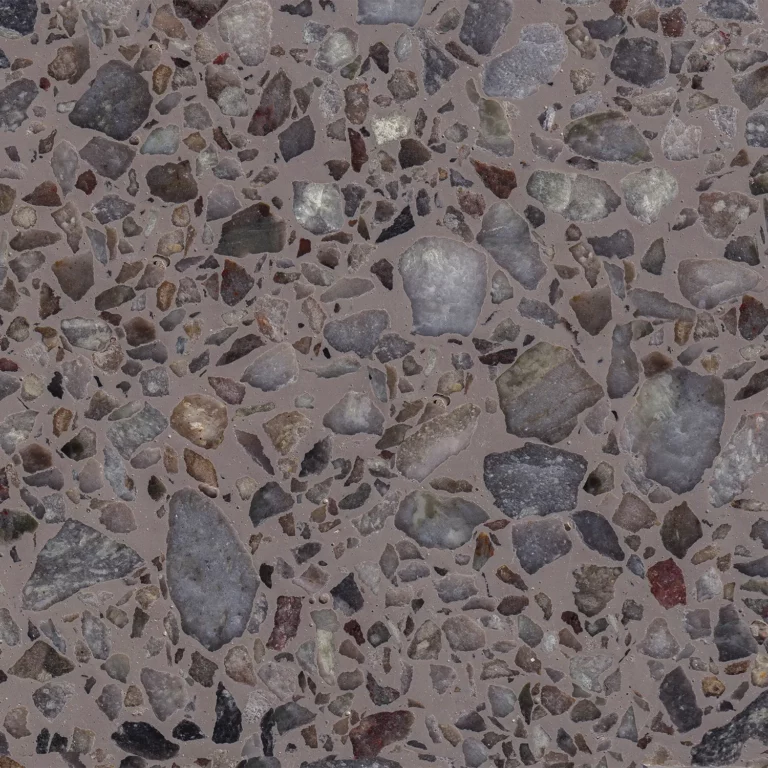
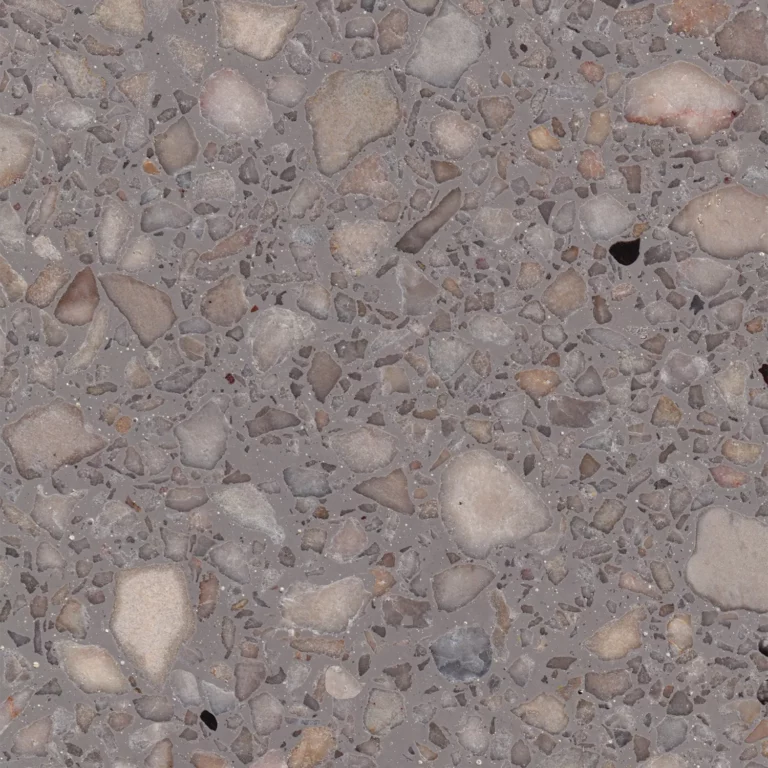
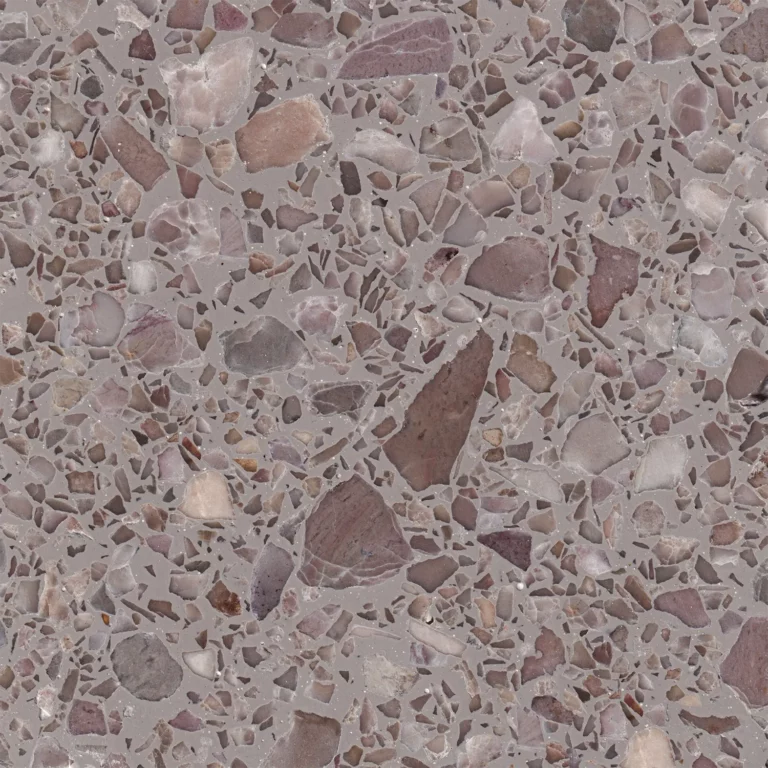
Terrazzo Samples
Frequently Asked Questions
No. Terrazzo is an installed topping of decorative aggregate in an epoxy or cementitious binder, ground and polished so the topping itself is the finished wear surface, while polished concrete is the structural slab refined into the finished floor; the two systems are specified, installed, and maintained differently.
Terrazzo can be installed over an existing concrete slab when the substrate is suitable and the selected system is compatible with the slab, moisture conditions, movement, transitions, intended use, and project requirements. Existing concrete does not make the installation automatically suitable; the project still needs substrate evaluation and system-specific preparation.
Existing terrazzo may often be repaired, re-ground, or repolished when its condition permits, though restoration is not automatically possible or preferable in every case; a condition assessment of the specific floor determines the answer.
Neither floor should be selected from one universal moisture or cure threshold. For terrazzo, moisture criteria come from the selected product and system; published guidance identifies polyacrylate terrazzo for projects where moisture-vapor conditions affect system selection, but does not establish a universal terrazzo limit. Polished concrete likewise has no universal minimum cure age or moisture threshold. The project specification controls required testing, and accessible slab conditions may trigger additional evaluation or changes to scope, schedule, or price.
Terrazzo is not governed by a universal interior-versus-exterior rule. System selection depends on the project specification, substrate and moisture conditions, exposure, design, intended use, and maintenance plan. Published rustic-terrazzo guidance prohibits sand-cushion rustic terrazzo outdoors where trapped water can freeze, but that restriction is not a ban on every exterior terrazzo system.
No. Cracking is normal in concrete and is not automatically a defect or polishing failure. Visible cracks are evaluated for safety, serviceability, edge protection, and degradation risk, while joint filling, crack repair, and edge rebuilding are performed only when the project specification or approved scope includes them. Completed repairs remain visually legible; standard repair colors are approved by color family and are not expected to match surrounding concrete exactly.
Not by default. Polished concrete is not a chemical-containment system, and concentrated acidic or alkaline spills or extended dwell time can damage the concrete and its treatment. Areas such as forklift battery charging or storage may require a purpose-designed chemical-resistant coating or containment system selected for the actual chemical, concentration, temperature, dwell, traffic, slip, containment, and operating conditions.
Often, yes. Craftsman supports phased work in active or occupied facilities and night and weekend shutdown-window work, and polished-concrete work can be scheduled around operating constraints 24 hours a day, seven days a week, nearly year-round, when the project schedule and committed resources support it. Occupancy constraints still shape phasing, protection, and access, so put them into the scope discussion at pricing, not after mobilization.
No. Craftsman does not set or install terrazzo tile as a standalone service, and small-format terrazzo tile is not a Craftsman service. On qualifying large-format commercial terrazzo-tile projects, Craftsman may perform grinding-flat and polishing in collaboration with the setting contractor; Craftsman performs the mechanical finish scope, not tile setting.
Neither system has a universal sustainability advantage. Polished concrete can reduce added finish materials and replacement-related waste by using the structural slab as the wear surface, while existing terrazzo can sometimes be renewed in place when condition permits. Project-level conclusions still depend on version, scope, calculations, documentation, and actual floor condition, and terrazzo repairability alone is not a quantified environmental result.
No. Executed project documents control the actual warranty obligations for either system. When project documents provide a manufacturer system warranty, the manufacturer backs that warranty, while Craftsman separately provides a one-year workmanship warranty in project closeout documents; later discretionary assistance does not extend the written term.
Terrazzo Knowledge Center
Resource links
Systems & Selection
Project Planning & Delivery
Where Terrazzo Is Used
Design & Specification
Restoration & Maintenance
Performance, Safety & Sustainability
Blog
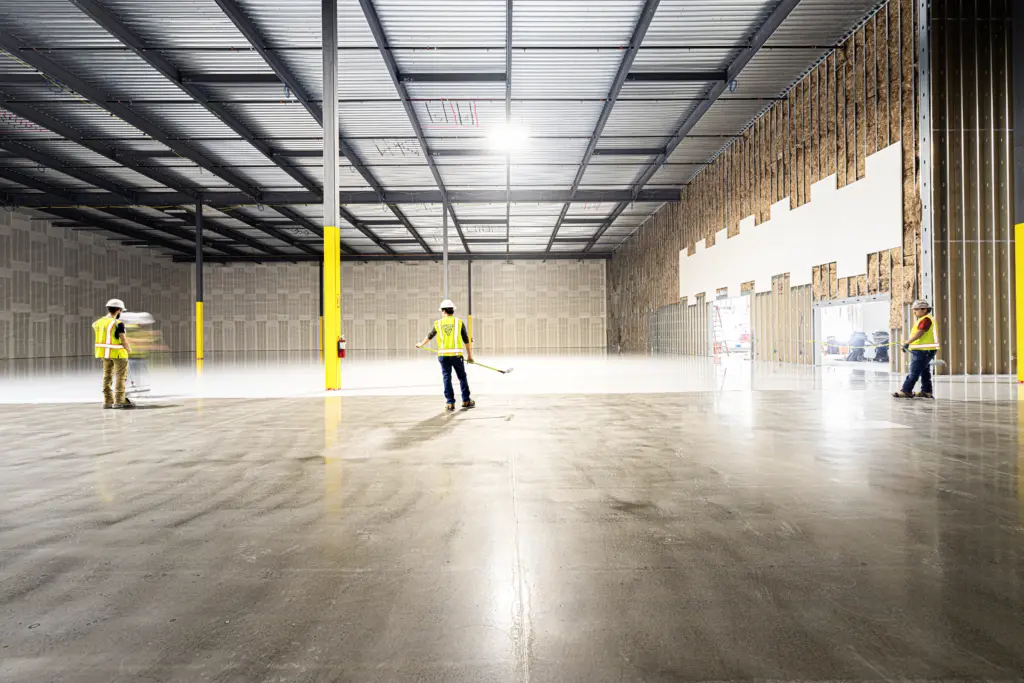
Craftsman Publishes 2026–2027 ESD Flooring Technical Guide
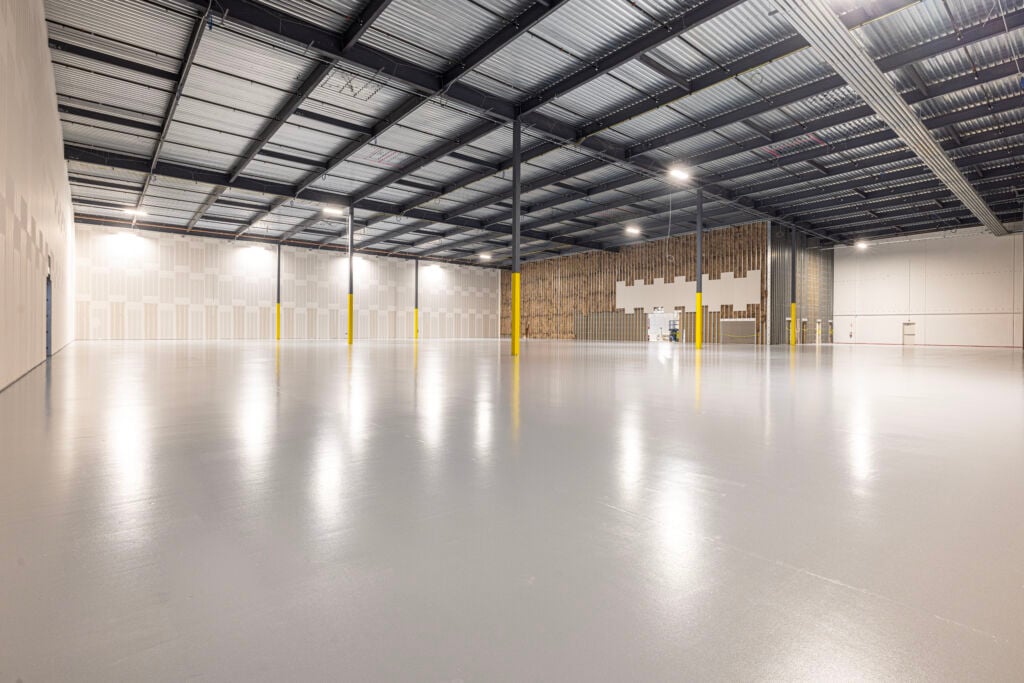
ESD Epoxy Flooring Case Study: 34,000 SF Dallas, TX