What can we help you with?
Technical flooring, delivered directly
- ESD flooring, urethane cement, terrazzo, and polished concrete
- In-house W-2 installation crews and experienced field leadership
- National service coverage with project-specific staffing plans
- Testing, documentation, and defined project closeout
- Dedicated support for corporate procurement and multi-site contracting
Phone: +1 (844) 687-1961
USDA Approved Flooring
USDA approved flooring names an approval that no longer exists. USDA eliminated its prior-approval program for establishment drawings, specifications, and equipment effective September 24, 1997 (62 FR 45016), and no USDA office has kept an approved or accepted flooring materials list since. What the phrase means in practice today is a floor that satisfies the FSIS sanitation performance standards at 9 CFR 416, verified by inspection of the floor in service rather than pre-clearance on paper. The system installed to meet that standard in federally inspected plants is monolithic urethane cement, a seam-free mortar poured at 3/16 to 3/8 inch, chemically bonded to the slab, with an integral cove base closing the wall-floor joint.
Two agencies share the space the phrase gestures at. USDA-FSIS staffs meat, poultry, and egg establishments every operating shift and evaluates floors as sanitation conditions; FDA regulates material chemistry, with 21 CFR 175.300 governing resinous coatings where direct food contact applies. Neither stamps approval on a floor product. Buyers searching usda compliant flooring, food grade flooring, or fda approved flooring are asking one underlying question about what installs today and passes inspection, and this page answers it. Craftsman Concrete Floors installs urethane cement flooring nationwide in federally inspected facilities and translates legacy USDA approved spec language into current-correct documentation before bid.
What USDA Approved Flooring Means Now
Specification masters are copied forward, not rewritten. A Division 9 section drafted in the early 1990s can survive three spec-software migrations with its USDA approved line intact, and vendors kept the phrase in brochures because buyers kept searching for it. The phrase now marks a spec as legacy language, and that is useful information. It tells the bidder a translation is required, and the four entries below are the translation.
Prior Approval Ended September 24, 1997
For decades, establishments applying for federal inspection submitted facility drawings and specifications to USDA, which held prior-approval authority over equipment and utensils used in preparing edible product. Flooring rode in on those submittals. Manufacturers turned acceptance histories into shorthand a spec writer could reuse, and FSIS eliminated the entire program in a final rule (Docket No. 95-032F, 62 FR 45016, published August 25, 1997, effective September 24, 1997). What existed was a pre-clearance process, and the agency never issued a product seal. That is why no one can produce the certificate a legacy RFP line item implies.
The 9 CFR 416 Standard That Replaced Approval
Sanitation performance standards replaced pre-clearance on October 20, 1999 (64 FR 56400), codified at 9 CFR 416. They state objectives rather than prescribing means, and they place responsibility on the establishment under HACCP. Inspection moved to the floor in service. An FSIS inspector evaluates whether the surface is impervious to moisture, cleanable without losing integrity, sloped so washdown water reaches drains, and maintained in sound condition under the plant’s sanitation SOPs. Specs calling out USDA compliant floor coatings ask for exactly these properties in a phrase the agency never uses.
FDA Approved Flooring Is a Search Phrase, Not a Status
FDA approved flooring is the most-searched phrase in this category and the least accurate one. FDA does not approve floors. The agency’s Food Code sets the model for retail and foodservice rules, and 21 CFR governs manufacturing, where section 175.300 covers resinous coatings that may contact food directly. The workable vendor answer names a material’s 175.300 status where contact applies and facility readiness everywhere else. A blanket FDA approved flooring claim overstates the regulation, and a QA manager who probes one finds out in front of an auditor.
Where the USDA Listing Function Went
Voluntary third-party programs absorbed the listing role the agency gave up. NSF describes its nonfood compounds registration as a continuation of the USDA product approval and listing program, and NSF/3-A standards now cover hygienic equipment design. Searches for nsf approved flooring usually mean NSF/ANSI 51, the food-contact materials standard, and the phrasing discipline matters. Urethane cement systems are specified as program compatible with NSF/ANSI 51 requirements. Certified is a stronger word. It belongs only to products whose current manufacturer documentation carries the listing, and auditors reading submittals know the difference.
The Floor That Passes Inspection
Every standard that replaced USDA approval converges on the same physical requirements in the finished floor. The requirements read simply. Holding them through years of caustic washdown at production temperature is the hard part, and it is where material selection decides the inspection outcome. Facility-scale specification for processing plants lives on the food processing flooring page; this block defines the system itself.
Monolithic Urethane Cement, Impervious by Construction
A urethane cement flooring system installs as a continuous mortar pour at 3/16 to 3/8 inch, chemically bonded to prepared concrete, with no grout lines and no welded seams. The matrix is non-porous, so validated sanitation chemistry sanitizes the surface instead of soaking into it. Thermal duty is where the chemistry earns its keep. The mortar’s thermal expansion coefficient tracks the concrete beneath it, which is how the system holds a -40°F to 250°F operating range and 150°F+ thermal shock differentials from daily hot washdown without delaminating. That performance is what food safe flooring means under duty.
Integral Cove Base and Slope to Drain
The wall-floor joint is a standing inspection point, which is why integral cove base appears in so many corrective actions. Formed in place from the same mortar during the pour, the cove is monolithic with the floor, so no seam exists at the wall to harbor organic material or to re-caulk between audits. Slope matters for the same reason. 9 CFR 416 expects washdown water to reach drains instead of pooling under equipment, and slope-to-drain correction is priced inside the system at bid rather than discovered later.
Where Grout, Film, and Bare Concrete Draw Citations
Quarry tile fails at the grout, where joints collect organic material and erode under organic acid attack faster than the tile wears. Epoxy fails as a film. Thermal and chemical cycling in washdown environments delaminates thin coatings on a 12-24 month pattern, and the chips land where HACCP says physical hazards cannot; searches for usda approved epoxy flooring are usually trying to fix that outcome. Bare and polished concrete absorb organic acids once the topical treatment wears through. Different mechanisms, same citation on the inspection report. The urethane cement vs epoxy page carries the full comparison.
From Bid Response to Closeout Binder
Translating the Legacy Line Item
A defensible response to a legacy USDA approved line item has three parts. State the fact first. Cite the 1997 elimination (62 FR 45016) so the bid never claims a certificate that cannot exist. Substitute the current package next, pairing the system’s manufacturer data sheet with a sanitation-design narrative tied to 9 CFR 416 that covers monolithic construction, integral cove base, and slope to drain. Attach third-party material certifications only where the manufacturer’s current documentation carries them. Craftsman runs this translation in pre-bid, with walkthroughs available based on project requirements, timing, and resource availability and remote spec review standard for multi-region rollouts.
The Closeout Package Auditors Pull
Every installation closes with one audit-ready documentation package. It contains substrate moisture logs per ASTM F2170, ICRI 310.2 surface profile verification with photos, cove base completion photos, primer and topcoat batch records, product data sheets, and warranty registration. SQF and GFSI certification audits sample installation records as closely as they walk the production floor, and a floor that arrives with documented substrate testing drops directly into HACCP verification files. The records exist before the first production shift runs.
Phased Installation by W-2 Crews
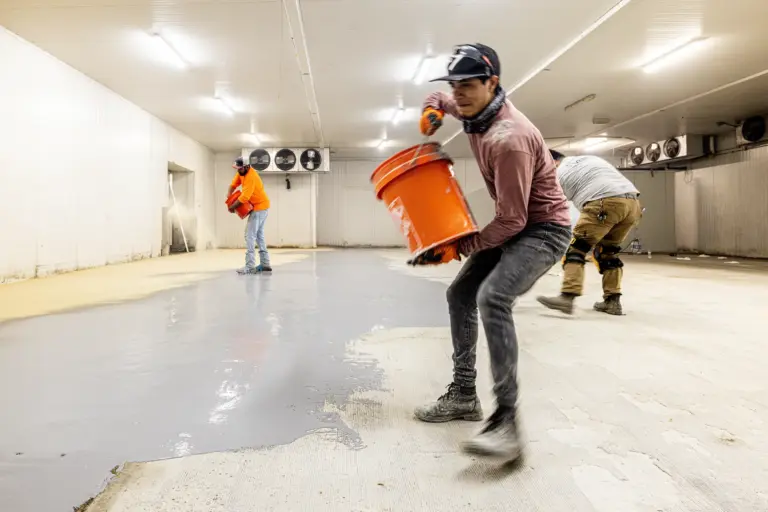
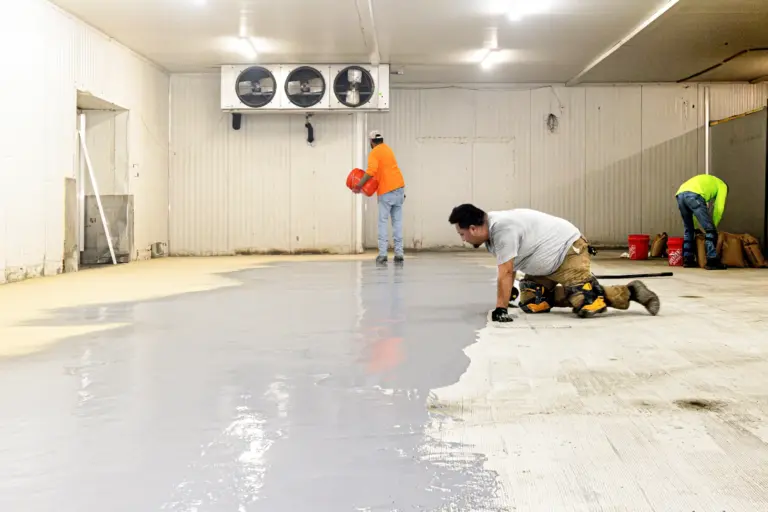
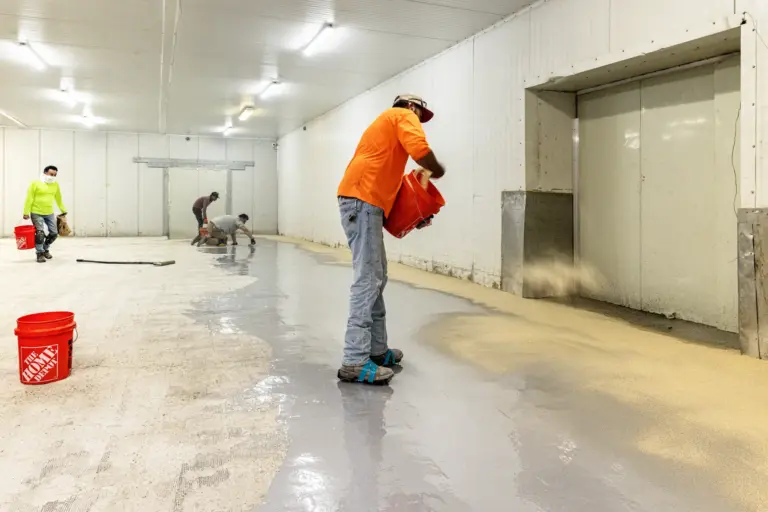
Inspected facilities rarely get a full shutdown, so installation is sequenced zone by zone against the production calendar and the sanitation schedule. Self-leveling urethane cement returns to service in 24 hours; a processing area can come offline after Friday sanitation and run Monday morning. Lead time runs 1-3 weeks from contract execution, driven by material availability. In-house W-2 crews provide national service coverage. Craftsman has installed industrial flooring since 1999 as a Sika Certified + Authorized Sherwin-Williams High Performance Flooring installer, and documented installation procedures preserve the manufacturer system warranty.
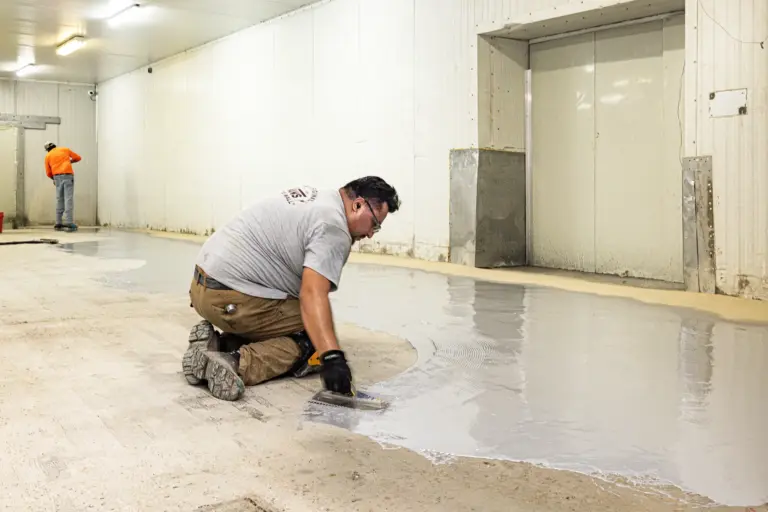
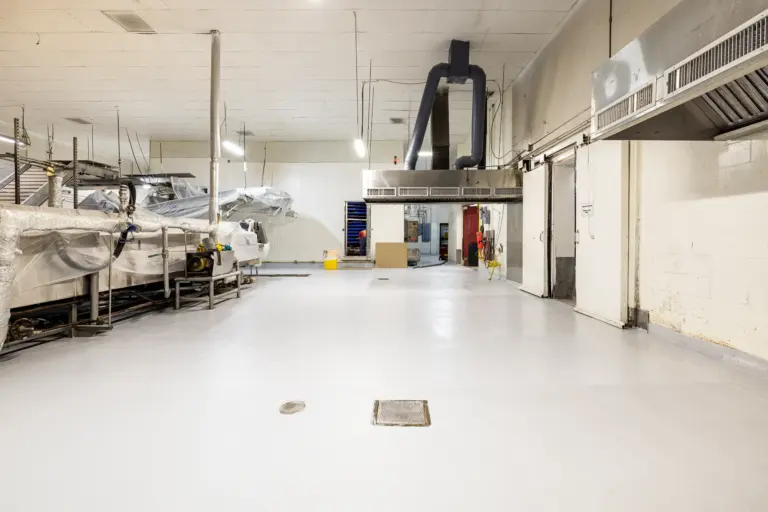
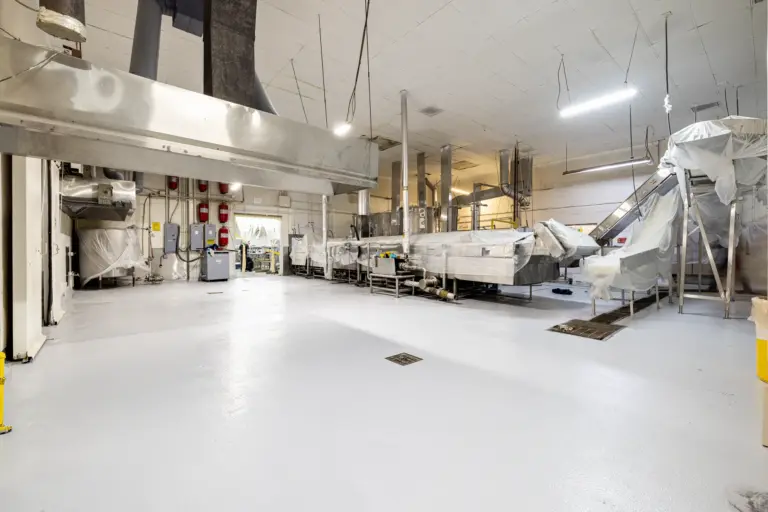
urethane Cement Installation Gallery
Frequently Asked Questions
No. USDA eliminated the prior-approval program for establishment drawings, specifications, and equipment effective September 24, 1997, and no USDA office has maintained an approval or acceptance list for flooring materials since. A spec or vendor citing USDA approved flooring is referencing that retired program. Compliance today runs through the FSIS sanitation performance standards at 9 CFR 416, verified by inspection of the installed floor.
Today the phrase works as shorthand for the FSIS sanitation performance standards at 9 CFR 416, which require a floor impervious to moisture, cleanable without losing integrity, sloped to drain, and kept in sound condition under the plant’s sanitation SOPs. The approval program itself ended in 1997. Monolithic urethane cement with an integral cove base meets those criteria structurally, which is why it is the system specified in federally inspected plants.
Respond with the translation rather than a claim you cannot document. Cite the 1997 elimination (62 FR 45016) and substitute the current package, pairing the system’s manufacturer data sheet with a sanitation-design narrative tied to 9 CFR 416 that covers the monolithic pour, the coved wall junction, and slope to drain. Third-party material certifications attach only where the manufacturer’s current documentation carries them. Craftsman runs this translation as standard pre-bid work, with remote spec review for multi-region rollouts.
No. FDA approves drugs and food additives, not flooring systems. What exists for floors is 21 CFR 175.300, which governs resinous coatings where direct food contact applies, alongside Food Code and facility requirements the floor helps a plant meet. Ask a vendor for the material’s 175.300 status and the installation documentation rather than an approval letter that cannot exist.
A floor that meets the 9 CFR 416 construction criteria in service. Inspectors check that surfaces are impervious, intact, sloped to drain, and free of joints that hold soil through a wash cycle; quarry tile draws citations at the grout and aging epoxy draws them at chips and delamination. A monolithic urethane cement floor with an integral cove base removes the grout lines and the wall-floor joint from the inspection conversation, because neither exists in the finished surface.
They name different things. USDA approval was a pre-1997 acceptance process for federally inspected meat and poultry plants; FDA compliance refers to a material’s status under 21 CFR, typically the 175.300 rule for resinous coatings that may contact food. The old program leaned on FDA ingredient compliance for material acceptability, which is why the two phrases blur together in legacy specs. FSIS inspects establishments; FDA regulates substances.
Food grade flooring covers two needs in a regulated facility. The surface must hold up under daily sanitation chemistry while staying impervious, seam-free, and cleanable, and the installation must arrive with records that drop into HACCP verification and SQF or GFSI audit files, starting with substrate moisture results per ASTM F2170. Urethane cement at 3/16 to 3/8 inch carries both, which is why searches for food safe flooring resolve to the same system.
Urethane cement flooring for inspected facilities runs $4-17/sqft installed depending on project size, system thickness, and substrate condition, with project size the dominant driver of where a project lands. Service life runs 15-20+ years. Compliance scope items such as integral cove base footage and slope-to-drain correction price inside the system rather than surfacing later as change orders, and the cost page breaks down how the range bands by square footage.
Knowledge Center
Resource links
Industries Served
Technical Performance
Selection & Standards
Sherwin-Williams Poly-Crete Systems
Sika Ucrete Systems
Cost, Comparisons & Legacy Names
Blog
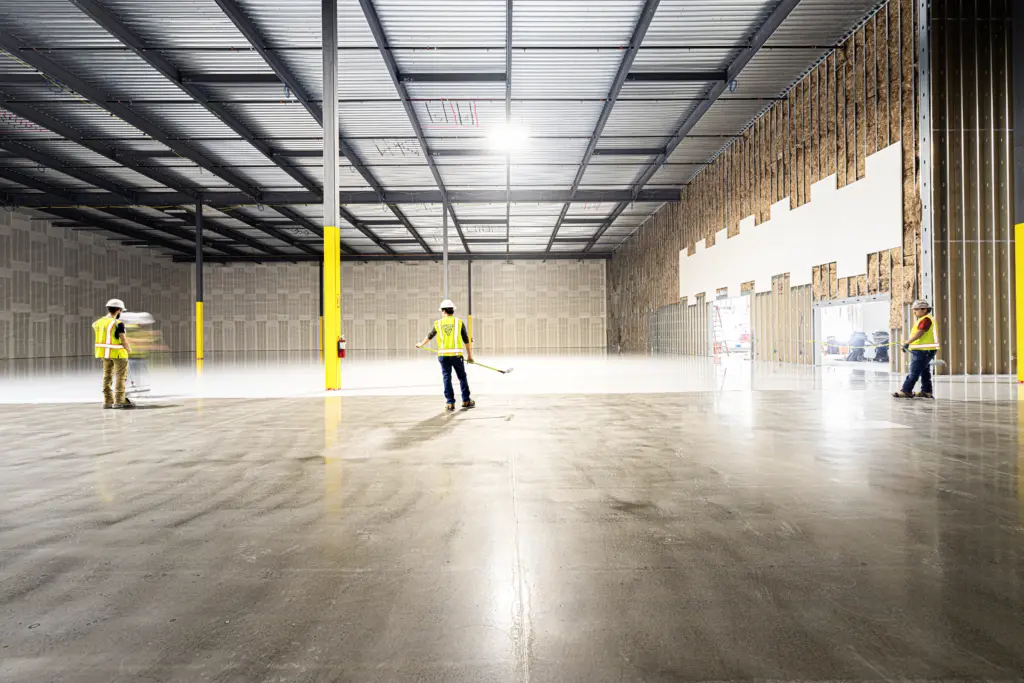
Craftsman Publishes 2026–2027 ESD Flooring Technical Guide
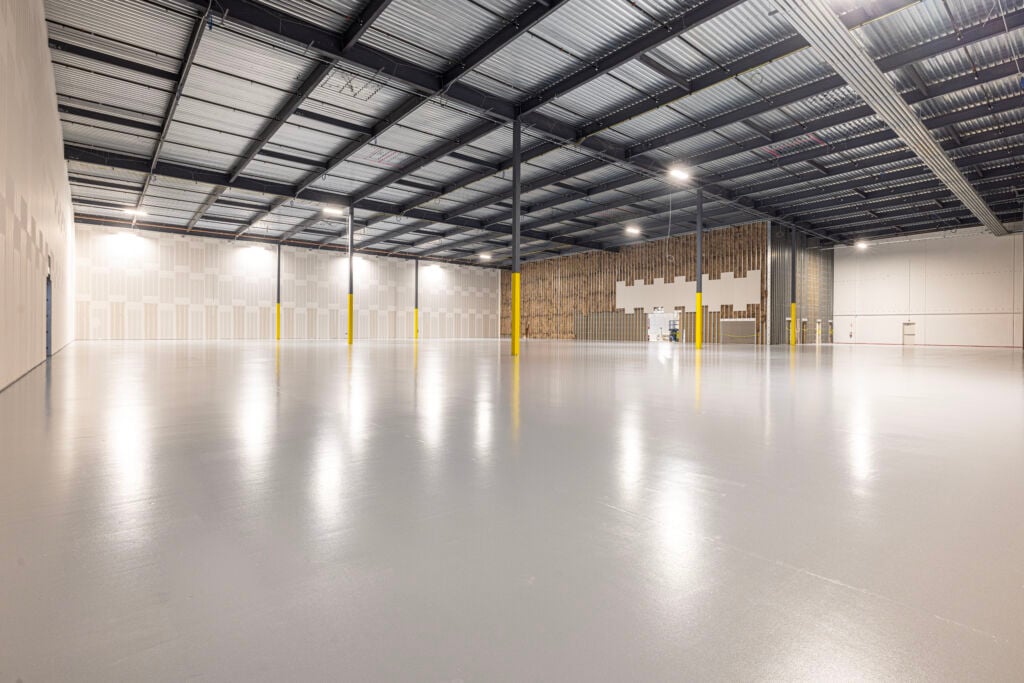
ESD Epoxy Flooring Case Study: 34,000 SF Dallas, TX