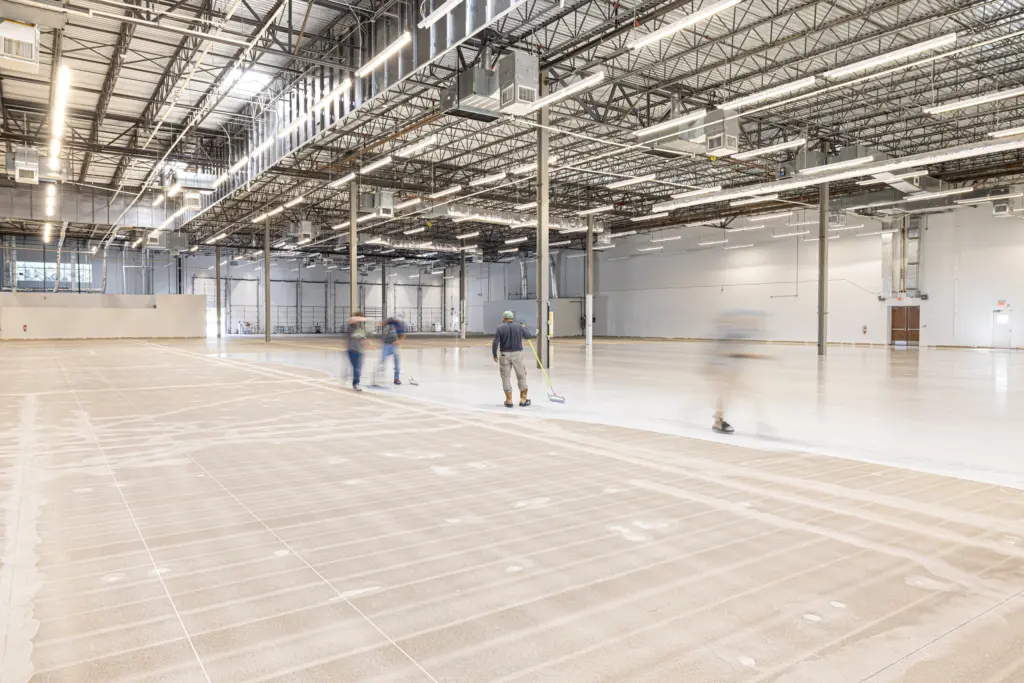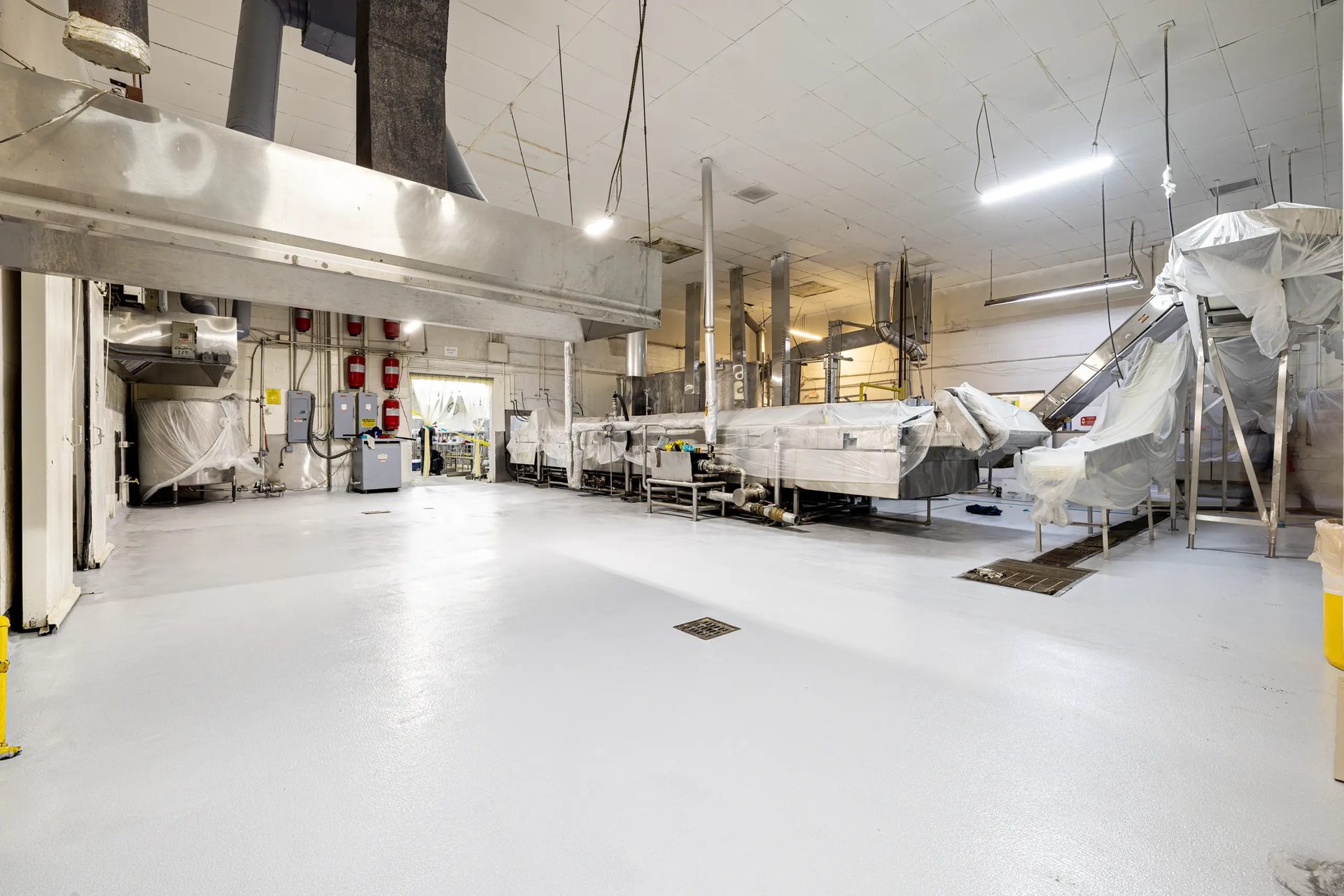
- Founded in 1999 • National commercial & industrial specialty flooring contractor
- Systems: Sika Ucrete & Sherwin-Williams High Performance Flooring Poly-Crete and Hybri-Flex urethane cement systems
- In-house W-2 crews provide national service coverage
- Single-contract multi-site programs under a Master Service Agreement
- Phased installation in occupied facilities — night and weekend shutdown-window execution
- Experience Modification Rate (EMR) below the industry average
- Authorized Sherwin-Williams High Performance Flooring installer; Sika installer; Westcoat certified
- Pre-install moisture and substrate testing & audit-ready closeout documentation
- Facility assessments, compliance inspections & lifecycle maintenance programs
- Licensed • Insured • Bonded • Enterprise vendor prequalification package available (COI, W-9, capabilities statement & supporting documentation)
- Thermal performance:
- – -40°F to 250°F operating range
- – 150°F+ thermal shock differential rating
- – Thermal expansion close to the concrete substrate’s rate
- System thickness: 3/16″ to 3/8″, selected by duty class
- Return to service: 24 hours self-leveling • 48-72 hours trowel-applied
Phone: +1 (844) 687-1961
Thermal shock resistant flooring survives rapid surface temperature swings without losing its bond to the concrete slab underneath. The stress is mechanical. When hot washdown water hits a floor running at ambient or refrigerated temperature, the surface layer expands faster than the slab below it, and the mismatch resolves as shear at the bond plane, the interface where the flooring adheres to the concrete. Urethane cement is the flooring category built for that load. It carries a -40°F to 250°F operating range and tolerates 150°F+ temperature differentials between washdown water and the running temperature of the slab it lands on.
What earns that tolerance is composition. Urethane cement is a cementitious mortar bound in a urethane resin matrix, installed as a monolithic, seam-free layer that bonds chemically to prepared concrete. Because the mortar is mostly cement and aggregate, the finished floor expands and contracts at close to the slab’s own rate, and thermal movement stops being a fight at the interface. Craftsman Concrete Floors has installed urethane cement flooring since 1999, and its in-house W-2 crews provide national service coverage. This page covers the mechanism; system selection and CIP chemistry each have their own page.
Our Clients




















How Thermal Shock Breaks a Floor
Differential Expansion at the Bond Plane
Most thermal shock flooring failures are bond-line failures, not surface wear. A surface layer heated by hot water expands against a slab still holding its running temperature, and the growth difference concentrates as shear stress exactly where the flooring adheres to the concrete. One cycle rarely does visible damage. Hundreds of cycles a month fatigue the interface until the bond gives — hairline debonding that spreads as water migrates into the void, until the floor lets go in sheets. The damage stays invisible until it is sudden, which is why thermal duty gets specified up front rather than patched after.
Washdown Bays, Fryer Lines, and Dock Thresholds
Thermal cycling concrete floors take the worst of it at hot-process and washdown zones: dairy and meat processing washdown bays, brewery hot-side rooms around the kettle and whirlpool, cook-chill lines in ready-to-eat plants, fryer lines in commercial kitchens, and dock thresholds where freezer air meets ambient. Each of those environments has its own page on this site. The brewery, commercial kitchen, and ready-to-eat pages carry the vertical duty in full; this page stays on the mechanism they all share.
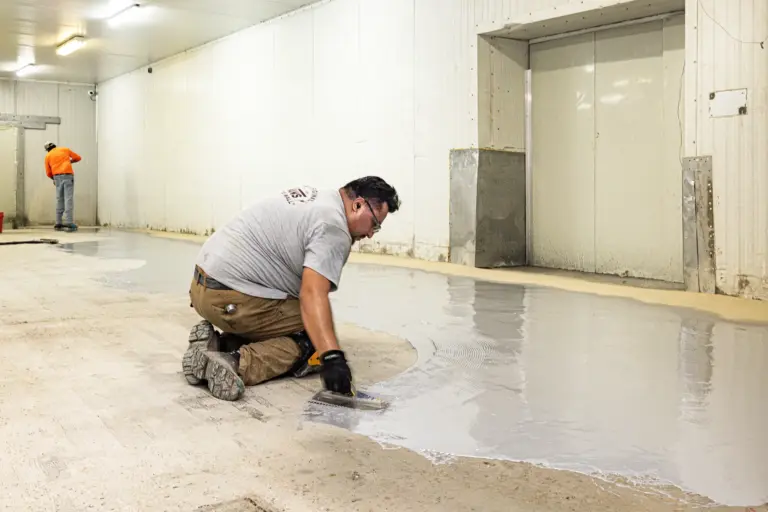
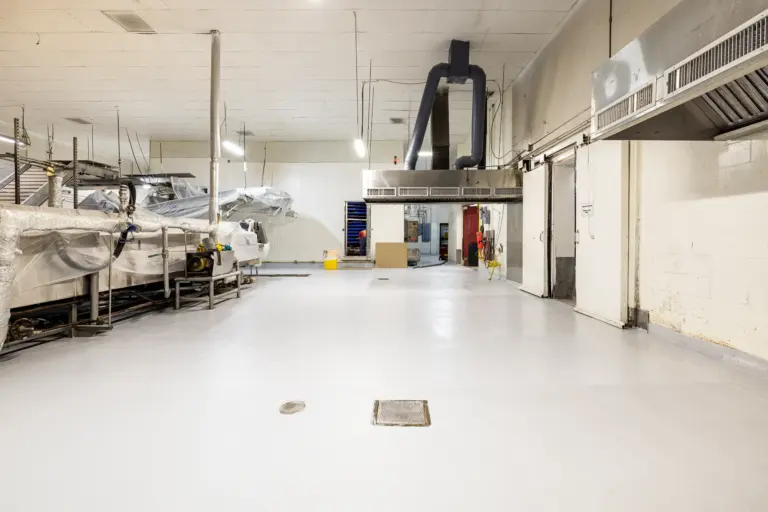
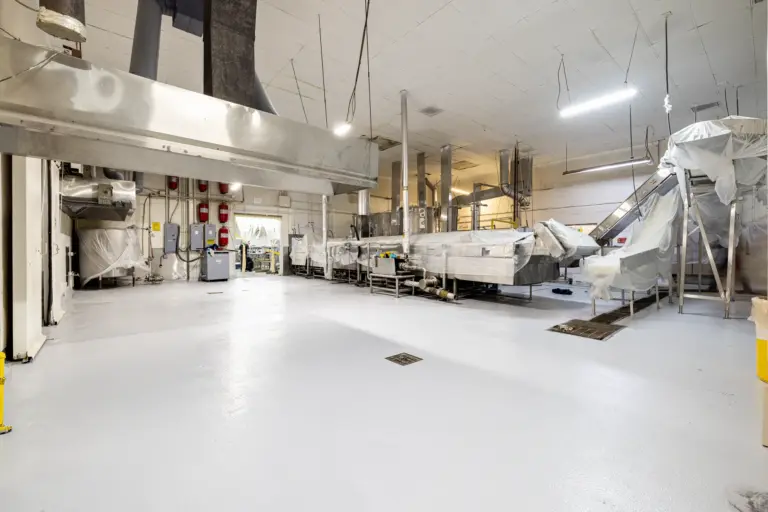
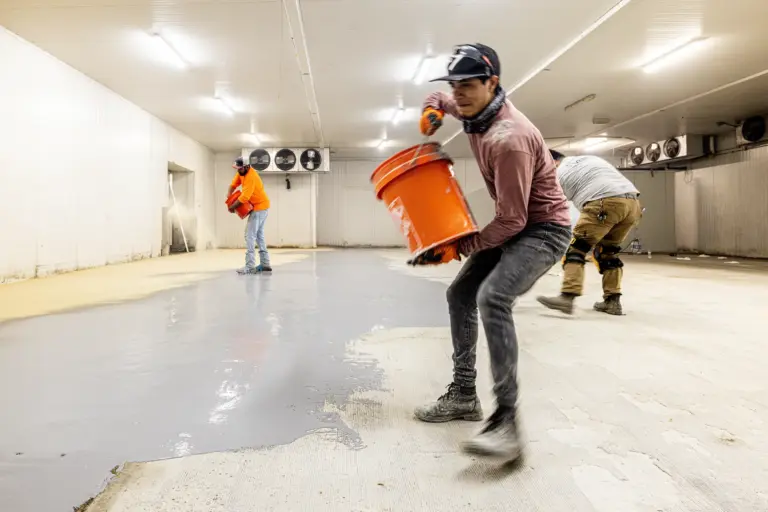
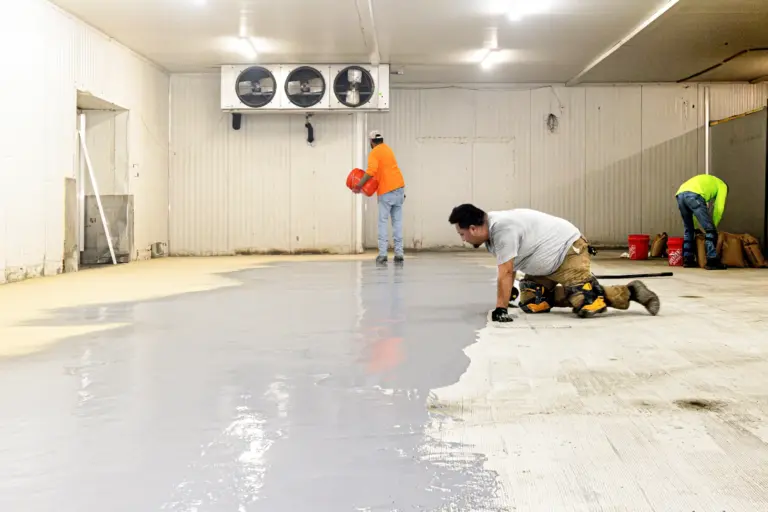
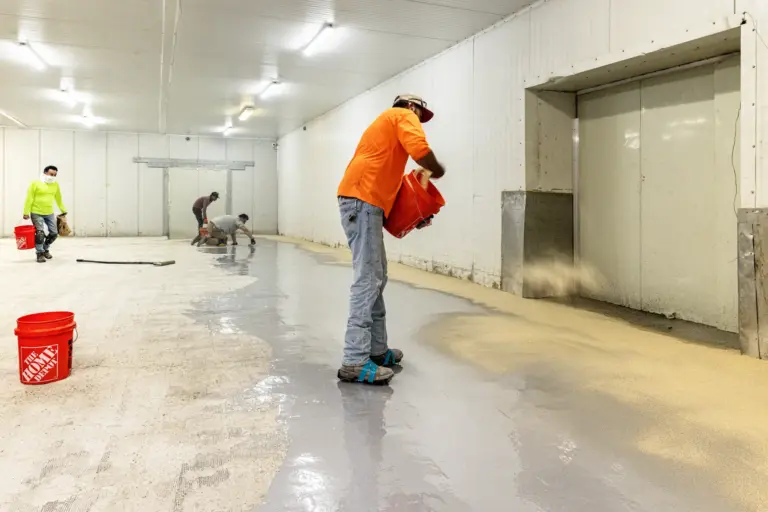
urethane Cement Installation Gallery
Request a Proposal
Why Epoxy Delaminates and Urethane Cement Does Not
Epoxy — Coefficient Mismatch at the Resin-Concrete Interface
Epoxy fails thermal shock because its coefficient of thermal expansion sits far from concrete’s and the cured resin film is too rigid to absorb the difference. Heat the surface and the epoxy tries to grow; the concrete refuses; the shear lands at the resin-concrete interface. In hot washdown flooring service, where the surface takes 150°F+ swings shift after shift, that loading delaminates standard epoxy within 12-24 months. Workmanship does not change that. A perfectly installed epoxy floor fails the same way, on a slightly longer clock. Which system a facility should buy is the urethane cement vs epoxy page’s question; this page owns the mechanism behind the answer.
Thermal Shock Resistant Flooring by Coefficient Proximity
Coefficient proximity changes where the stress goes. With expansion rates nearly matched, a surface swing moves floor and slab together, and the bond plane sees a fraction of the shear an epoxy interface takes from the identical cycle. The mortar matrix also flexes with the substrate through repeated cycling instead of accumulating fatigue at one plane. That is why the category tolerance is stated as a differential, 150°F+, rather than a maximum temperature. A floor at -40°F taking a hot wash and a floor at ambient taking hot process discharge are loaded the same way, and the system is rated for the swing itself.
CIP Chemistry Is a Different Duty
Hot washdown flooring carries two loads at once, and they fail floors differently. The thermal load is this page’s subject. The chemical load from caustic wash, acid rinse, and sanitizer cycles attacks the resin chemistry itself rather than the bond plane, and it is specified in depth on the CIP washdown page. A floor that survives the temperature swing but not the chemistry still fails, so both halves of the duty get specified together.
Installing for Thermal Duty
Bond Strength Starts With Substrate Prep
A bond plane that will take thermal shear for years has to start as a qualified substrate. Craftsman crews mechanically profile the slab to the ICRI 310.2 surface profile the system specifies and verify substrate moisture with in-situ relative humidity probes per ASTM F2170 before any material goes down. No resin chemistry recovers a bad bond. Skipping profile or moisture verification leaves the floor fighting every thermal cycle from a compromised interface, and prep is where the resistance is actually built.
Phased Zones and Return to Service
Installation runs zone by zone around live production, because thermal-duty floors usually go into facilities that cannot stop. Craftsman phases work through night and weekend shutdown windows, and self-leveling urethane cement systems cure for return to service in 24 hours per zone; trowel-applied systems run 48-72 hours. One zone cures while the next is prepped. Phased installation is the difference between a re-floor project and a production stoppage.
Audit-Ready Closeout on Every Zone
Documentation follows the floor out the door. Every installation closes with an audit-ready package: ASTM F2170 moisture logs, ICRI 310.2 surface profile verification photos, and the manufacturer warranty paperwork tied to a documented installation. For a spec engineer, that package turns a performance claim into a defensible line in the construction record. For a facility manager, it is what the next flooring bid or compliance review gets answered from.
urethane Cement Flooring Knowledge Center
Resource links
Technical Performance
Selection & Standards
Industries Served
Sherwin-Williams Poly-Crete Systems
Sika Ucrete Systems
Cost, Comparisons & Legacy Names
Frequently Asked Questions
Thermal shock resistant flooring survives repeated rapid surface temperature swings, 150°F+ differentials in industrial service, without debonding from the concrete slab beneath it. The load is differential expansion concentrated as shear at the bond plane, where the heated surface layer pushes against concrete that has not yet begun to move. Urethane cement is the standard system for that duty. Its cementitious matrix expands at close to concrete’s own rate.
Urethane cement is rated for 150°F+ thermal shock differentials across its full -40°F to 250°F operating range. That rating describes the size of the swing rather than a ceiling temperature, so a freezer-adjacent floor taking a hot wash and an ambient floor beside a fryer line are both inside the envelope.
No. Freeze-thaw is water freezing and expanding inside concrete pores, an outdoor slab mechanism that runs on moisture and the freezing point. Thermal shock is differential expansion between a floor’s surface and the slab under it, and it happens wherever a rapid swing lands on the surface, including well above freezing. A -40°F freezer aisle shows up here for the swing at its threshold, since an indoor slab never sees the moisture-driven freeze-thaw cycle.
Epoxy’s thermal expansion coefficient is far from concrete’s, and the cured film cannot flex enough to absorb the difference, so every hot cycle loads the resin-concrete interface in shear until it delaminates, typically within 12-24 months in hot washdown service. The failure is mechanical fatigue at the bond line. The full head-to-head, including where epoxy is the right answer, is on the urethane cement vs epoxy page.
Any zone where hot process water or discharge meets a cooler slab on a repeating cycle needs it. Dairy and meat washdown bays, brewery hot-side rooms, cook-chill lines in ready-to-eat plants, commercial kitchen fryer lines, and cold storage dock thresholds all take the same loading every production day. Each of those verticals has its own page on this site. This page covers the mechanism they share.
Thickness is selected by duty class, and urethane cement installs at 3/16 inch to 3/8 inch, with trowel-applied builds at the heavy end of that band going to floors that take thermal cycling and mechanical abuse together. Matching thickness to duty class is the system thickness page’s subject; the thermal rating itself comes from the chemistry rather than the depth.
Lead time runs 1-3 weeks from contract execution, driven by material availability, and the installation itself is phased zone by zone around production so the facility keeps running through the project. Self-leveling systems return each zone to service in 24 hours; trowel-applied systems take 48-72 hours. Night and weekend shutdown-window work is standard practice in occupied facilities.
Blog
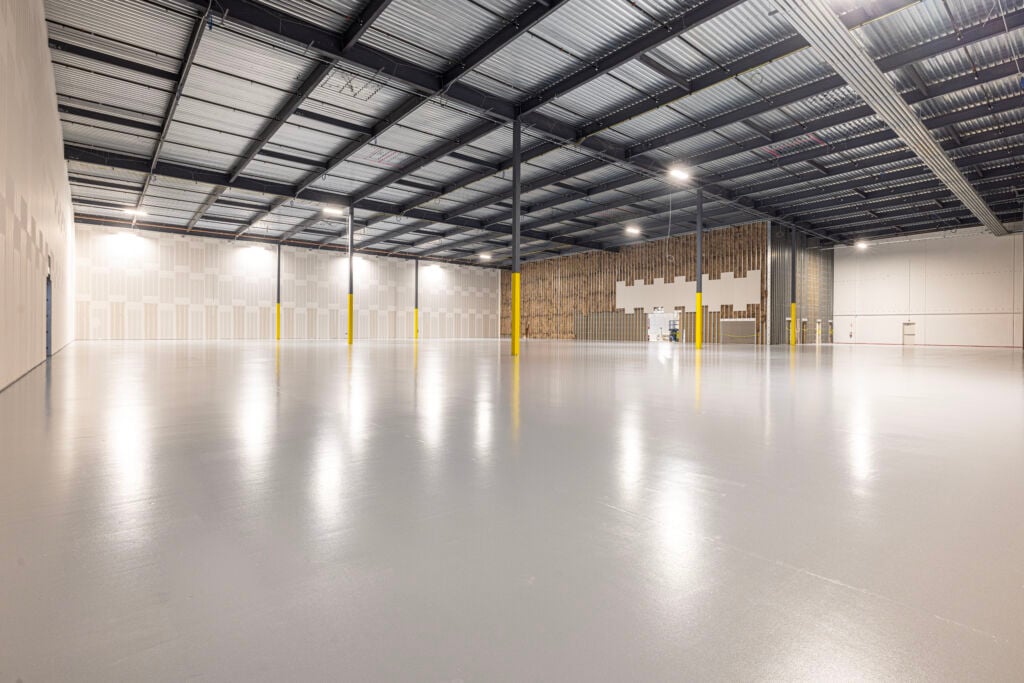
ESD Epoxy Flooring Case Study: 34,000 SF Dallas, TX
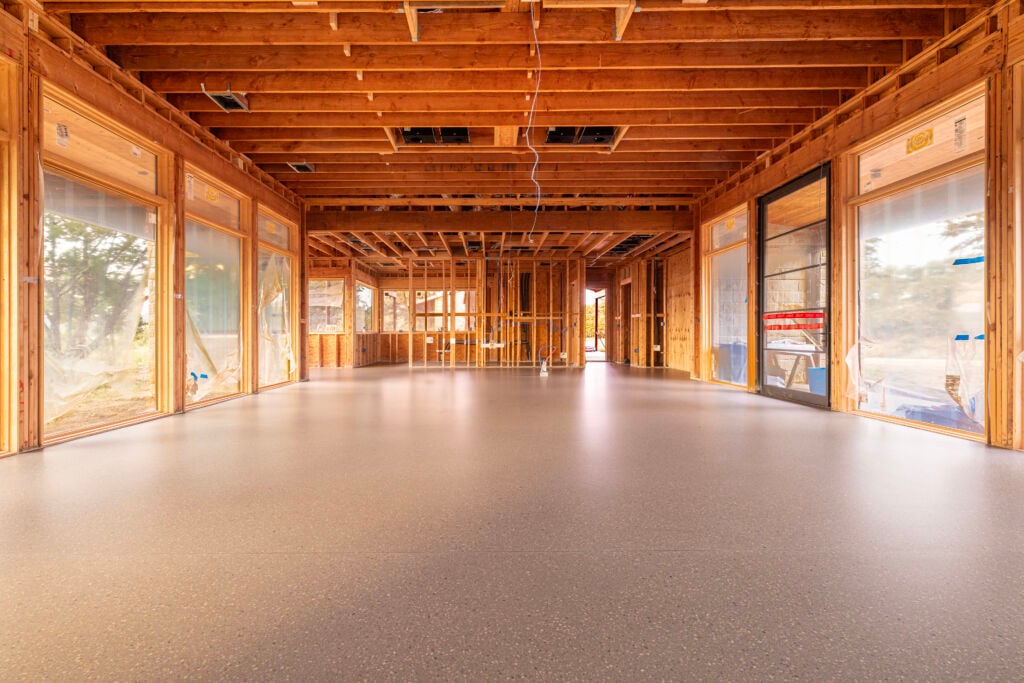
Residential Terrazzo Floors in Fort Worth, Texas