- Founded in 1999 • National commercial & industrial specialty flooring contractor
- Systems: Sika Ucrete & Sherwin-Williams High Performance Flooring Poly-Crete and Hybri-Flex urethane cement systems
- In-house W-2 crews provide national service coverage
- Single-contract multi-site programs under a Master Service Agreement
- Phased installation in occupied facilities — night and weekend shutdown-window execution
- Experience Modification Rate (EMR) below the industry average
- Authorized Sherwin-Williams High Performance Flooring installer; Sika installer; Westcoat certified
- Pre-install moisture and substrate testing & audit-ready closeout documentation
- Facility assessments, compliance inspections & lifecycle maintenance programs
- Licensed • Insured • Bonded • Enterprise vendor prequalification package available (COI, W-9, capabilities statement & supporting documentation)
- Compliance:
- – FSIS sanitation performance standards (9 CFR 416) where USDA inspection applies
- – FDA 21 CFR 175.300 incidental food contact
- – HACCP, SQF, GFSI & BRCGS program compatible
- Bakery chemistry: pan and dough-line oils, sugar, flour-and-water slurry, organic acids (lactic, acetic, propionic), yeast slurry
- Thermal duty: 150°F+ washdown differential at oven adjacency; -40°F to 250°F operating range
- Allergen zoning: color-coded pigmented topcoats in food-safe palettes
Phone: +1 (844) 687-1961
Bakery flooring takes a chemical load most resin systems were never formulated for: vegetable oils and shortenings from pan greasing and dough conditioning, sugar that pools and crystallizes at drains, flour-and-water slurry that wears a coating like wet sandpaper, and organic acids from sourdough and fermentation. The thermal side is just as hostile. Oven adjacency runs 120-160°F radiant heat in continuous operation, caustic washdown arrives at 140-180°F, and a bakery floor coating that ignores either load fails inside 24-36 months, usually first at the oven-line transition or the dough-line drains. Urethane cement is the commercial bakery flooring system specified against exactly this stack, because the cementitious mortar bonds chemically to the slab and flexes with it through every washdown cycle.
Craftsman Concrete Floors installs urethane cement bakery floors in commercial and wholesale production bakeries nationwide, from mixing floors and proofing rooms to oven lines, packaging halls, and freezer transitions. Systems install at 3/16 inch to 3/8 inch by zone duty, with slip aggregate broadcast into the body coat and an integral cove base poured monolithic with the slab. Pigmented topcoats in food-safe color palettes carry allergen zone color coding for wheat, nut, dairy, soy, egg, and gluten-free lines. Where USDA inspection applies to meat-containing bakery products, FSIS judges the floor under its sanitation performance standards.
Our Clients




















What Each Bakery Zone Puts on the Floor
Zone duty varies more inside a bakery than in most food plants. The mixing floor’s problem is flour slurry and allergen segregation, the oven line’s is heat, and the wash bay’s is chemistry. One monolithic urethane cement system covers all of them, with thickness and texture tuned per zone. This page covers bakery-specific zones; multi-line food processing plants that include baking operations are specified on our food processing page.
Mixing Floors and Flour Handling
Flour dust meets washdown water on a mixing floor and becomes an abrasive slurry that grinds at the wear surface shift after shift, while dough-conditioning oils and fermentation acids work on the resin chemistry underneath. Urethane cement’s mortar matrix absorbs that abrasion through the full depth of the body coat, so the wear mechanism that strips a thin-film coating has nothing to work on. Allergen segregation also starts here. Mixing and dough lines handling wheat, nut, or soy streams get color-coded floor zones, and most production areas in this duty run 1/4 inch mortar.
Oven Lines — 150°F+ Differentials Every Sanitation Cycle
An oven-adjacent floor runs 120-160°F from radiant heat and direct transfer off hot pan racks, then takes 140-180°F caustic washdown at the end of the shift. Rigid coatings delaminate at the bond line under that repeated 150°F+ swing because their thermal expansion does not track the concrete underneath. Urethane cement’s expansion coefficient stays close to the slab’s, so the differential moves through the system instead of shearing it off. Oven adjacency and hot-rack staging areas are specified at 3/8 inch heavy-duty mortar for this duty.
Wash Areas, Drains, and Packaging Halls
Drains are the first failure point on most bakery floors. Sugar migrates to low spots, crystallizes during washdown cycles, and concentrates with organic acids at the drain perimeter, which is why coating failures show up there before anywhere else. Urethane cement is sloped to drain and poured monolithic against drain hardware, leaving no bond line for crystallized sugar to lever open. In packaging halls the duty shifts to daily washdown and allergen control, and a 3/16 inch slurry with the same seam-free construction typically carries it.
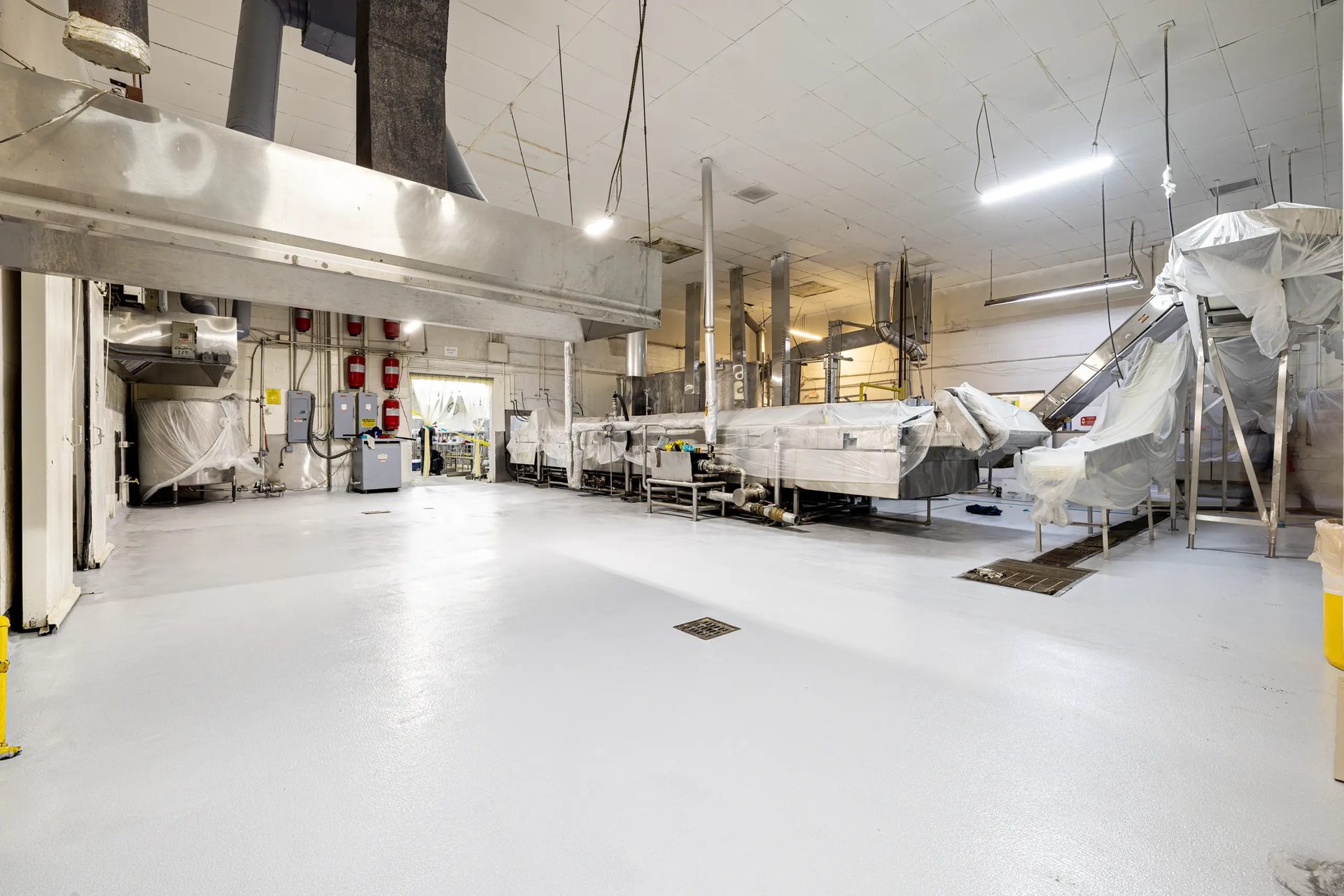
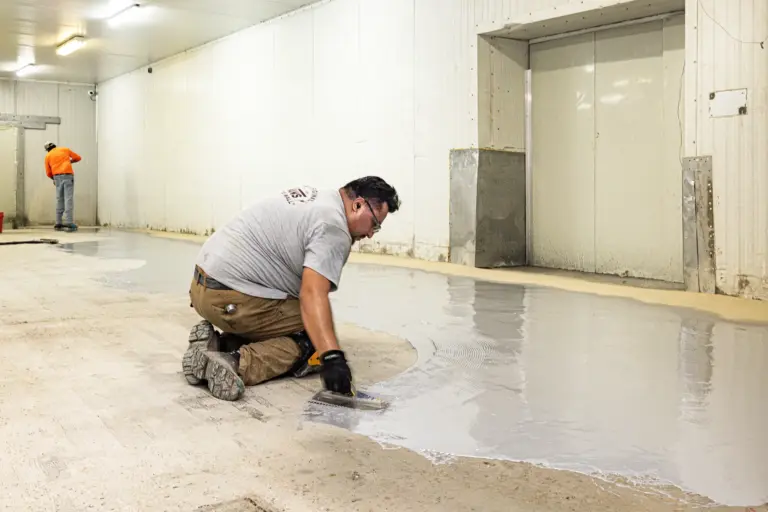
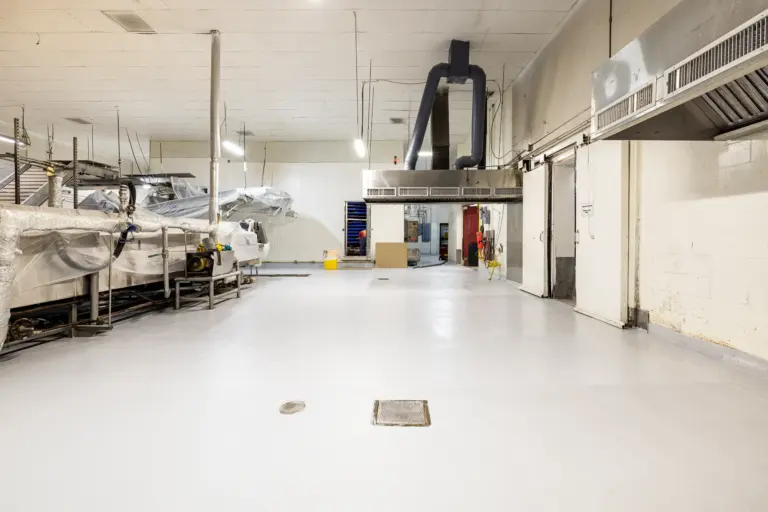
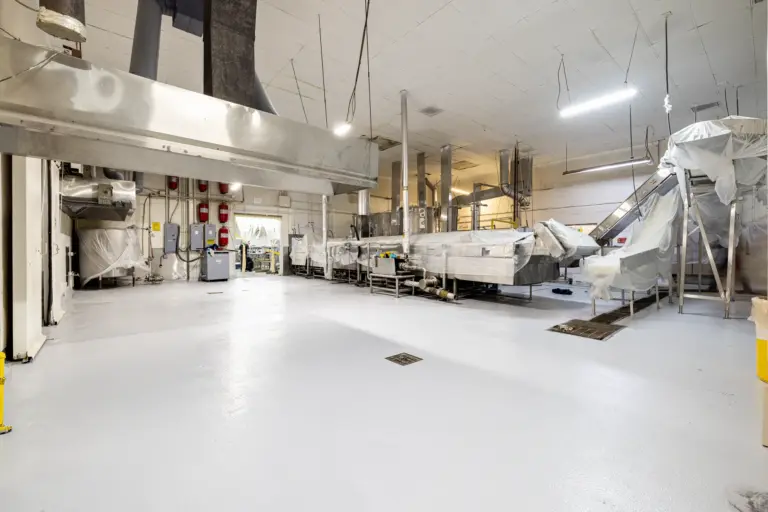
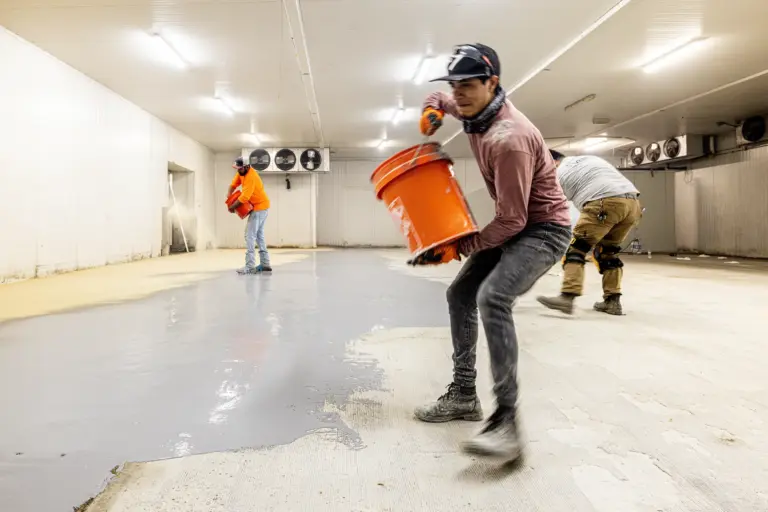
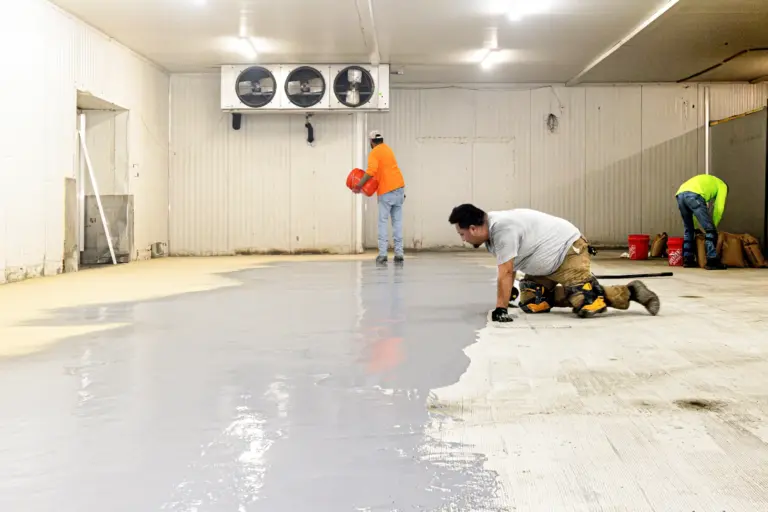
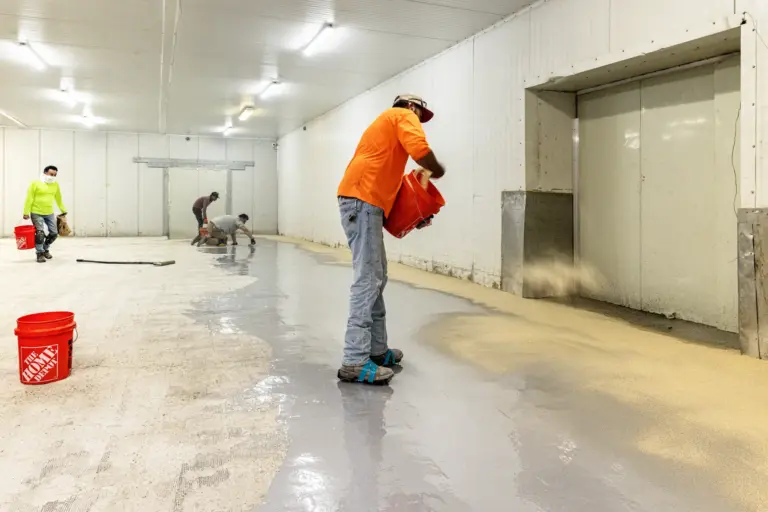
urethane Cement Installation Gallery
Request a Proposal
The Bakery Duty Specification
Sugar and Pan Oil Are Where Bakery Epoxy Fails First
Vegetable oils in continuous exposure (canola, palm, soy) penetrate an epoxy matrix and soften it from the inside over 12-18 months. Sugar chalks the surface as it crystallizes in seams during sanitation, and organic acids from sourdough and fermentation (lactic, acetic, propionic) attack the resin the same way they attack dairy plant floors. A cementitious urethane matrix is formulated against this chemistry. Yeast slurry on fermentation floors and flour-water paste on dough lines sit on it through full production weeks without softening the system.
Allergen Zone Color Coding in the Topcoat
Color-coded allergen zoning ships in the pigmented topcoat itself, not as a paint layer over the finished floor. Wheat, nut, dairy, soy, egg, and gluten-free lines each carry their own color in standard food-safe palettes, giving operators a visual segregation cue that third-party auditors can verify and document. Because the pigment is part of the wear surface, caustic sanitation chemistry and floor scrubbers do not strip the zoning the way they strip painted demarcation.
FSIS, FDA, and Audit-Program Compliance
USDA inspection applies to bakeries producing meat-containing products such as meat pies, sausage rolls, and breakfast sandwiches, and FSIS judges those floors under its sanitation performance standards (9 CFR 416), which require surfaces that stay impervious and cleanable with no harborage points. FDA 21 CFR 175.300 covers incidental food contact across every bakery sub-segment. The seam-free construction does the compliance work: a monolithic surface with a 4-6 inch integral cove base leaves no wall-floor joint for HACCP, SQF, GFSI, or BRCGS auditors to flag. What USDA approved flooring means since that program’s 1997 retirement is covered on our USDA approved flooring page.
Installation Around Live Baking Production
Phased Installation with Substrate Verification
Phased zone-by-zone installation keeps production running while the floor is replaced, sequenced one line at a time around sanitation cycles in night and weekend windows. Self-leveling systems return to service in 24 hours; trowel-applied mortar runs 48-72 hours. Before any material goes down, the slab is shot blast or diamond ground to ICRI 310.2 CSP 4-5, in-situ relative humidity is probed per ASTM F2170, and substrate tolerances are verified against ACI 302.1R — the documentation that later anchors the audit-ready closeout package.
Nationwide Crews and the Cost Range
In-house W-2 crews provide national service coverage, and the same crews that pour the floor form the cove base and set the drain details. Craftsman is a Sika Certified + Authorized Sherwin-Williams High Performance Flooring installer across the urethane cement lines bakeries specify. Multi-plant baking groups can contract a program of sites under a single agreement rather than per-site paper. Pricing runs $4-17/sqft installed depending on project size, system thickness, and substrate condition. Allergen color-coding scope and cove-and-drain detailing shape where a bakery lands inside that range, and the full size-band table lives on the urethane cement cost page.
urethane Cement Flooring Knowledge Center
Resource links
Industries Served
Technical Performance
Selection & Standards
Sherwin-Williams Poly-Crete Systems
Sika Ucrete Systems
Cost, Comparisons & Legacy Names
Frequently Asked Questions
Urethane cement bakery flooring runs $4-17/sqft installed depending on project size, system thickness, and substrate condition. Within that envelope, bakeries with extensive allergen color-coding, long integral cove runs, and high drain counts land higher than open-floor wholesale plants with simpler zoning. The full size-band breakdown lives on the urethane cement cost page.
Epoxy fails in bakeries through chemistry and thermal load acting together. Vegetable oils from pan greasing and dough conditioning penetrate the resin and soften it from the inside over 12-18 months, sugar crystallizes in seams and at drains during washdown, and organic acids from sourdough and fermentation attack the matrix. Then 140-180°F caustic washdown hits oven-adjacent floor already running 120-160°F, and the 150°F+ differential delaminates the rigid film at the bond line.
Yes — urethane cement supports every inspection regime a bakery operates under. Where USDA inspection applies to meat-containing products such as meat pies and breakfast sandwiches, FSIS judges the floor under its sanitation performance standards (9 CFR 416), and the impervious seam-free surface with integral cove base is built to those requirements. FDA 21 CFR 175.300 covers incidental food contact across all bakery sub-segments, and the construction supports HACCP, SQF, GFSI, and BRCGS programs. What USDA approved means since the 1997 program retirement is explained on our USDA approved flooring page.
Pigmented topcoats in standard food-safe color palettes carry the zoning, so wheat, nut, dairy, soy, egg, and gluten-free lines each get their own floor color. Operators use the color to segregate lines visually and to document allergen control during third-party audits. Because the pigment is part of the wear surface rather than a coating painted over it, caustic sanitation chemistry does not strip the zoning.
Every zone where production chemistry, thermal load, or washdown is part of daily operation: mixing floors and dough lines, proofing rooms, oven floors and adjacent zones, packaging halls, freezer entry transitions, ingredient storage, and wash bays. Oven adjacency and dough-line drains take the heaviest combined duty and are typically specified at 3/8 inch heavy-duty mortar, while lower-load areas such as ingredient storage run 3/16 inch slurry.
Phased zone-by-zone installation keeps the bakery running while the floor is replaced. Crews work one production line or zone at a time, typically in night and weekend windows sequenced around sanitation cycles, and self-leveling systems cure for return to service in 24 hours, with trowel-applied mortar at 48-72 hours. Lead time runs 1-3 weeks from contract execution, driven by material availability.
A urethane cement bakery floor runs 15-20+ years in continuous production, holding through the oven-line thermal cycling and washdown chemistry that end epoxy floors inside 24-36 months in the same zones. Documented installation preserves the manufacturer system warranty, and the substrate testing records in the closeout package support any future warranty claim.
In-house W-2 crews provide national service coverage. Craftsman has installed industrial flooring since 1999, and multi-plant baking groups can run an entire program of sites under one agreement.