- Founded in 1999 • National commercial & industrial specialty flooring contractor
- Systems: Sika Ucrete & Sherwin-Williams High Performance Flooring Poly-Crete and Hybri-Flex urethane cement systems
- In-house W-2 crews provide national service coverage
- Single-contract multi-site programs under a Master Service Agreement
- Phased installation in occupied facilities — night and weekend shutdown-window execution
- Experience Modification Rate (EMR) below the industry average
- Authorized Sherwin-Williams High Performance Flooring installer; Sika installer; Westcoat certified
- Pre-install moisture and substrate testing & audit-ready closeout documentation
- Facility assessments, compliance inspections & lifecycle maintenance programs
- Licensed • Insured • Bonded • Enterprise vendor prequalification package available (COI, W-9, capabilities statement & supporting documentation)
- CIP chemistry: 0.5-2.0% caustic wash in the 140°F-180°F band, nitric acid rinse & sanitizer cycling
- Thermal rating: 150°F+ shock differential • -40°F to 250°F operating range
- Washdown design: slope-to-drain at 1/8″ to 1/4″ per foot, integral cove base & skid-room containment curbs
Phone: +1 (844) 687-1961
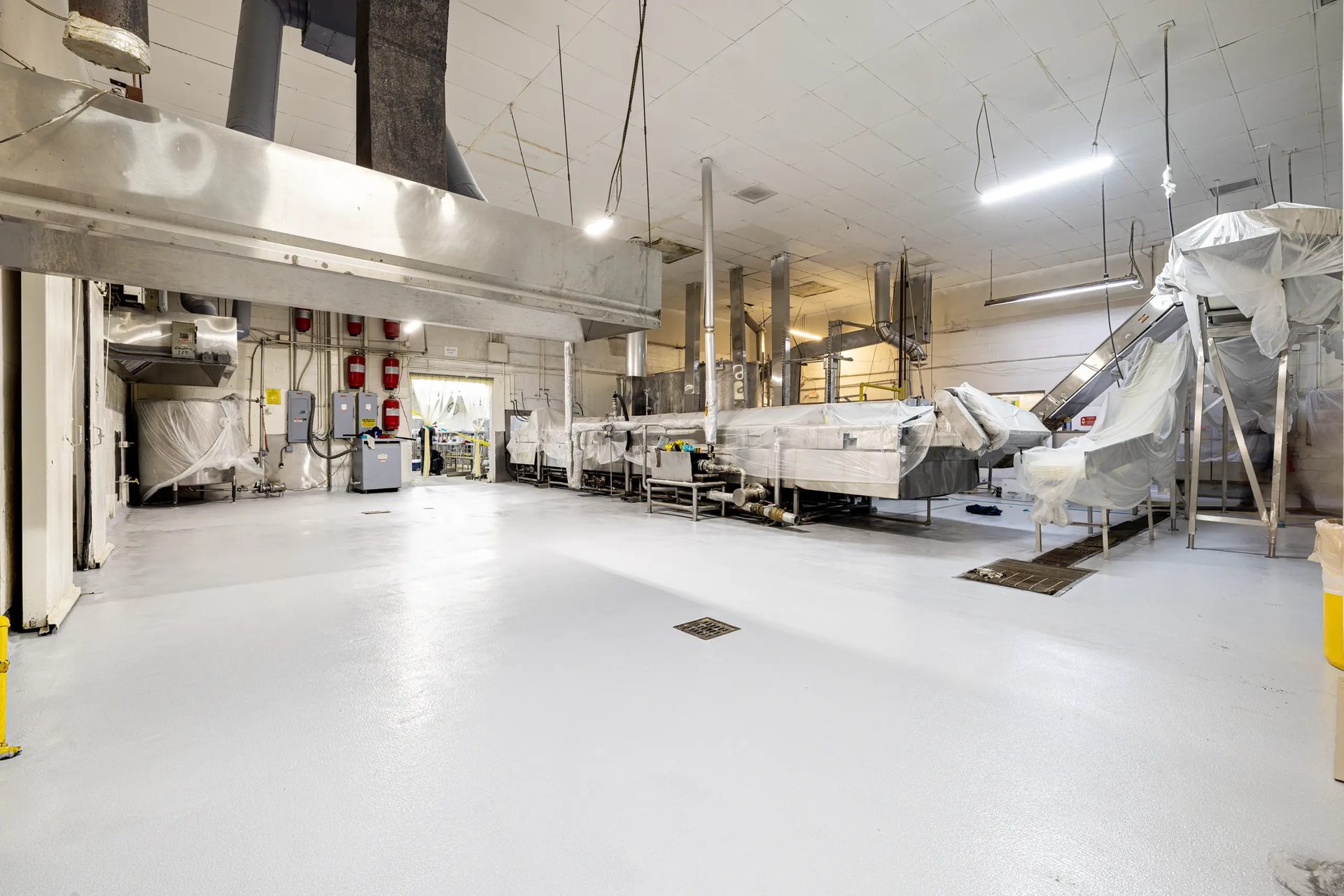
CIP washdown flooring takes the discharge side of a clean-in-place sanitation system — the floor under and around the tanks, kettles, process piping, and fill lines that automated wash cycles clean without teardown. Every cycle ends up on the slab. Discharge, hose-down, splash, and drain surcharge put wash chemistry on the floor at temperature, one or more times per production day, and the industry CIP band runs 140-180°F. Standard epoxy does not survive that duty. Urethane cement is the washdown-rated flooring that does, and this page covers why: the chemistry sequence, the thermal load, washdown zone design, and CIP skid rooms.
The load is identical in dairy and pharmaceutical plants. This page owns the mechanism layer both verticals route into, from wash chemistry through drainage geometry to the skid room itself, while compliance attribution stays on the vertical pages that own it. A spec engineer can lift the values here directly; a facility manager can read it as the checklist for why the last floor failed. In-house W-2 crews provide national service coverage and have installed CIP flooring in food and pharmaceutical plants since 1999.
Our Clients




















What a CIP Cycle Does to a Floor
The Chemistry Sequence, Step by Step
A standard CIP cycle runs pre-rinse, caustic wash, intermediate rinse, acid wash, final rinse, and sanitizer, and the floor sees every step. The caustic wash is 0.5-2.0% sodium hydroxide, run hot; the acid step is typically nitric at around 0.5%, run at 130-150°F to strip mineral scale; the sanitizer is peracetic acid or a hypochlorite solution, dosed at ambient temperature. No single step is extreme. The load is the cycling — alkaline to acid to oxidizer and back on the same square feet of slab, every production day, concentrated around drains and under equipment connections.
Thermal Cycling Is What Kills Epoxy
Wash discharge in the 140-180°F band lands on a slab that production holds far cooler, and the surface temperature differential is the load coatings actually fail under. Standard epoxy delaminates at the resin-to-concrete interface, typically within 12-24 months of daily cycling, because the rigid film expands at a different rate than the slab beneath it. Urethane cement absorbs a 150°F+ differential. Its cementitious matrix bonds chemically to the concrete and moves with it through each heating and cooling cycle.
CIP Washdown Flooring at 3/16 to 3/8 Inch
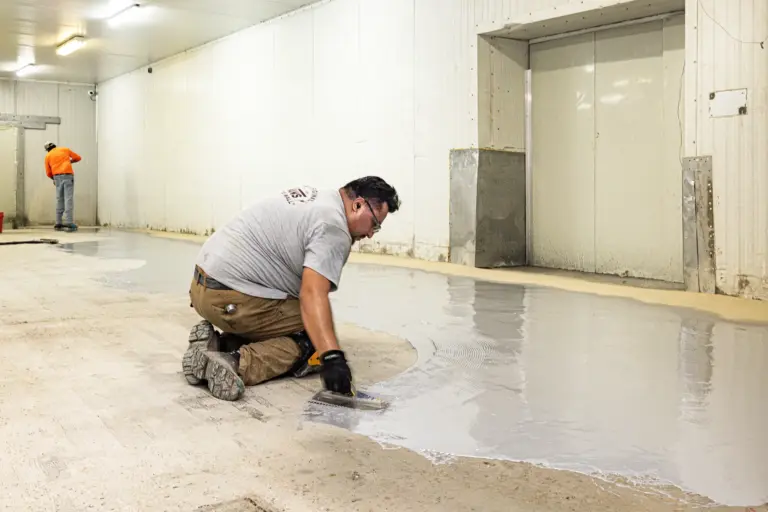
Specify urethane cement at 3/16 inch to 3/8 inch for CIP washdown zones. Self-leveling systems at the thinner end handle moderate duty and return to service in 24 hours; trowel-applied systems at the thicker end take heavy discharge and the concentrate exposure of skid rooms. The category operating range is -40°F to 250°F. One monolithic system covers the wash cycle and the chilled room it lands in. Where the decision is still urethane cement versus epoxy, the urethane cement vs epoxy page carries the full comparison, including the dry and decorative zones where epoxy remains the right call.
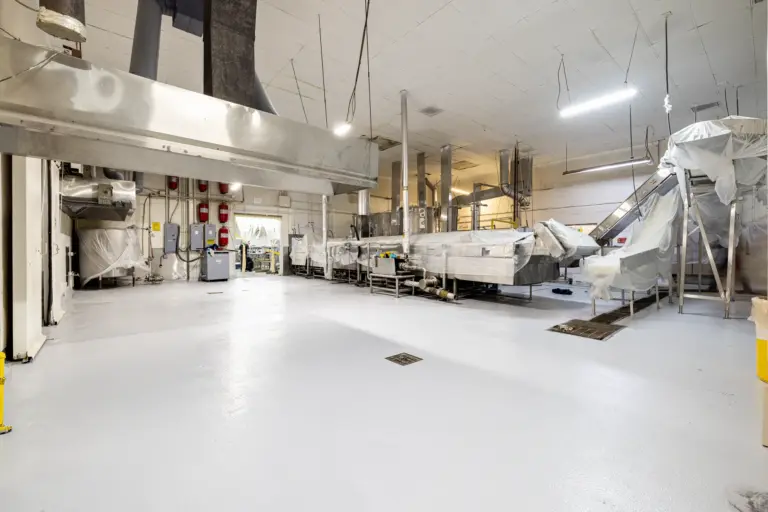
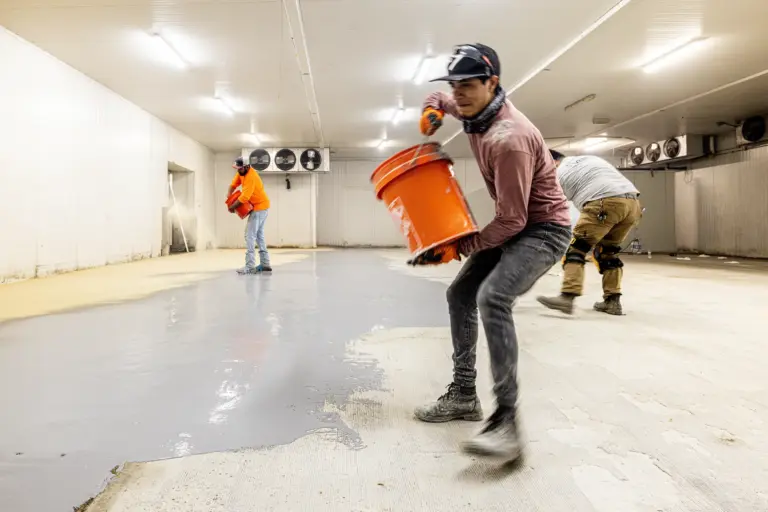
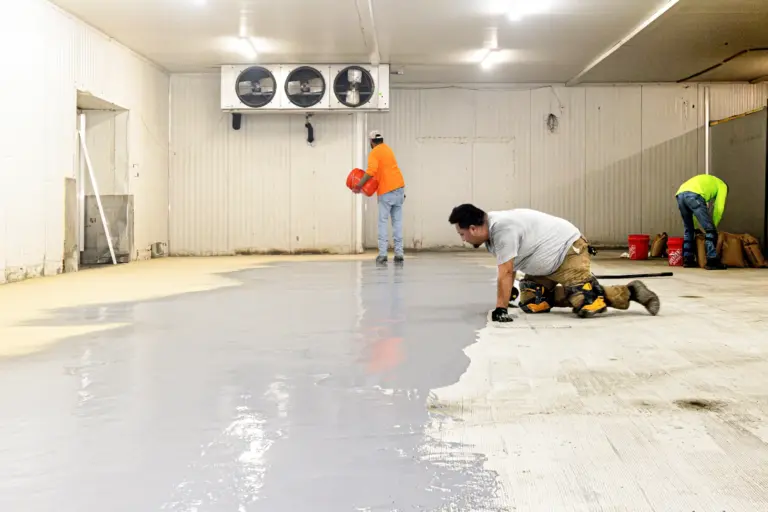
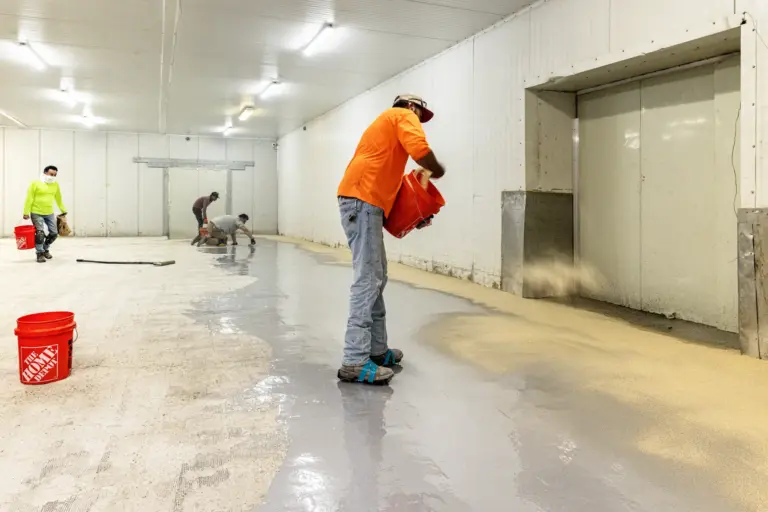
urethane Cement Installation Gallery
Request a Proposal
Submit project parameters for preliminary analysis. Commercial estimates typically returned within 24 hours.
Washdown Zone Design
Clean-in-place floor design is drainage design. The material survives the chemistry; the geometry decides whether water leaves the floor. Three elements do the work: slope, drains, and terminations. Get any one wrong and the zone holds standing water, which reads as a slip hazard to the safety officer and a harborage finding to whoever audits the room.
Slope-to-Drain at 1/8 to 1/4 Inch Per Foot
Washdown floors drain at a 1% to 2% grade. At 1/4 inch per foot, water reaches the drain with no assistance; at 1/8 inch per foot, it moves with squeegee help, so wet-processing zones belong toward the 2% end. Urethane cement carries an installation advantage on existing slabs. Because the mortar places at variable thickness, a flat or back-pitched floor can be re-graded to drain during the floor installation itself, with no concrete demolition, which on a working plant floor is often the difference between a weekend repitch and a slab replacement.
Drains Are Where Washdown Floors Fail First
The floor-to-drain joint takes more chemical and thermal cycling than any other square foot in the room. Every gallon of every cycle converges there at temperature. Specify trench drains under continuous discharge lines and point drains for general wash zones, then detail the interface so the mortar locks to the drain flange instead of butting against it. A drain sitting proud of the finished floor, or a bond line opening at the flange, is where undercutting starts.
Cove Base and Texture Terminations
Integral cove base closes the wall-to-floor joint by forming the cove from the same mortar as the floor, monolithic instead of applied as trim. Radius and termination detail are specified on the integral cove base page. Slip texture is the other termination decision, since a washdown zone needs wet traction without becoming uncleanable at the microtexture level; texture selection by duty is covered on the slip resistance page. Both are placed during the same pour as the floor.
CIP Skid Room Flooring
The CIP skid room holds the system’s tanks, pumps, heat exchangers, and chemical dosing lines, and its floor takes a harder exposure than the process floors the skid serves. Concentrated chemistry and standing heat land in one small room, usually behind a closed door. A leak can sit unnoticed there between sanitation cycles. A pharmaceutical suite and a dairy plant build this room to the same mechanics.
Concentrate Exposure at the Skid
Floor exposure at the skid is concentrate, not the 0.5-2.0% use-strength dilution the process floor sees. The room handles the drums, totes, and day tanks the system draws from, and pump seals and fitting connections weep between maintenance intervals. A spill here sits until someone opens the door. The heat exchanger and the hot supply and return piping add a standing thermal load on top of the chemistry, on a floor area small enough that all of it happens within a few feet of the drain.
The Floor as Secondary Containment
Design the skid room floor as secondary containment. Perimeter curbs form and cap in the same urethane cement mortar as the floor, so the containment boundary carries no bond line for concentrate to work open. Pitch runs to a dedicated drain or containment sump placed away from the door, so a spill routes to collection instead of toward the threshold and the corridor beyond it. Pipe and conduit penetrations seal at the floor line. That geometry keeps a full drum failure inside one room.
One Duty, Two Regulated Verticals
One floor serves both regulated verticals; only the paperwork splits by page. Food plants take sanitation and inspection framing on the food processing and the dairy and meat flooring pages. Pharmaceutical facilities take cGMP surface requirements and cleanroom classification depth on the pharmaceutical flooring page, which specifies its CIP skid rooms and washdown design here rather than duplicating them. Craftsman executes both rooms the same way. Installation is phased zone-by-zone in occupied facilities, with 24-hour return to service on self-leveling systems and 48-72 hours trowel-applied. Substrate verification runs ASTM F2170 moisture testing and an ICRI 310.2 surface profile before placement, and audit-ready closeout documentation files with the plant’s records.
urethane Cement Flooring Knowledge Center
Resource links
Technical Performance
Selection & Standards
Industries Served
Sherwin-Williams Poly-Crete Systems
Sika Ucrete Systems
Cost, Comparisons & Legacy Names
Frequently Asked Questions
CIP washdown flooring is flooring rated to take daily clean-in-place discharge, meaning 140-180°F wash temperatures, 0.5-2.0% caustic chemistry, acid rinses, and sanitizer exposure landing on the same slab every production day. Urethane cement at 3/16 inch to 3/8 inch is the default specification because its cementitious matrix tolerates both the chemistry and the 150°F+ thermal differential the cycles create.
Caustic wash steps run 140-180°F across the industry, and the acid step typically runs 130-150°F. The floor takes that heat as a surface temperature differential against a much cooler slab, and repeated 150°F+ differentials are what separate washdown-rated flooring from standard coatings.
Epoxy delaminates at the resin-to-concrete interface, typically within 12-24 months of daily cycling, because the rigid film expands at a different rate than the slab when hot discharge hits it. Urethane cement moves with the concrete through each cycle, which is why failed epoxy in washdown zones is replaced with urethane cement rather than recoated.
A CIP skid room floor needs concentrate-rated chemical resistance and containment geometry, because a spill at the skid is undiluted caustic or acid rather than the 0.5-2.0% use-strength wash the process floor sees. Specify perimeter curbs formed in the same urethane cement mortar and floor pitch to a dedicated drain or sump away from the doorway. Pipe and conduit penetrations seal at the floor line.
Washdown floors drain at a 1% to 2% grade. That is 1/8 to 1/4 inch per foot. Water reaches the drain unassisted at 1/4 inch per foot and needs squeegee help at 1/8 inch per foot, so wet-processing zones belong toward the 2% end. Urethane cement mortar can re-grade a flat slab to those pitches during installation without concrete demolition.
ASTM F2170 in-situ moisture testing and ICRI 310.2 surface profiling govern the substrate layer this page covers, and both are documented before any mortar is placed. Sanitation standards attach at the vertical level instead. USDA-FSIS expectations live on the dairy and meat and food processing pages, and cGMP surface requirements live on the pharmaceutical flooring page, both of which route their washdown design here.
Yes. Installation is phased zone-by-zone in occupied facilities, with 24-hour return to service on self-leveling systems and 48-72 hours trowel-applied. Night or weekend shutdown windows cover the zones a sanitation schedule cannot release during production, which is how a plant keeps lines live through a full floor replacement. Lead time runs 1-3 weeks from contract execution, driven by material availability.
Craftsman Concrete Floors self-performs CIP washdown flooring installation with in-house W-2 crews that provide national service coverage. Pre-bid walkthroughs are available based on project requirements, timing, and resource availability; remote spec review is standard for multi-region rollouts.
Blog
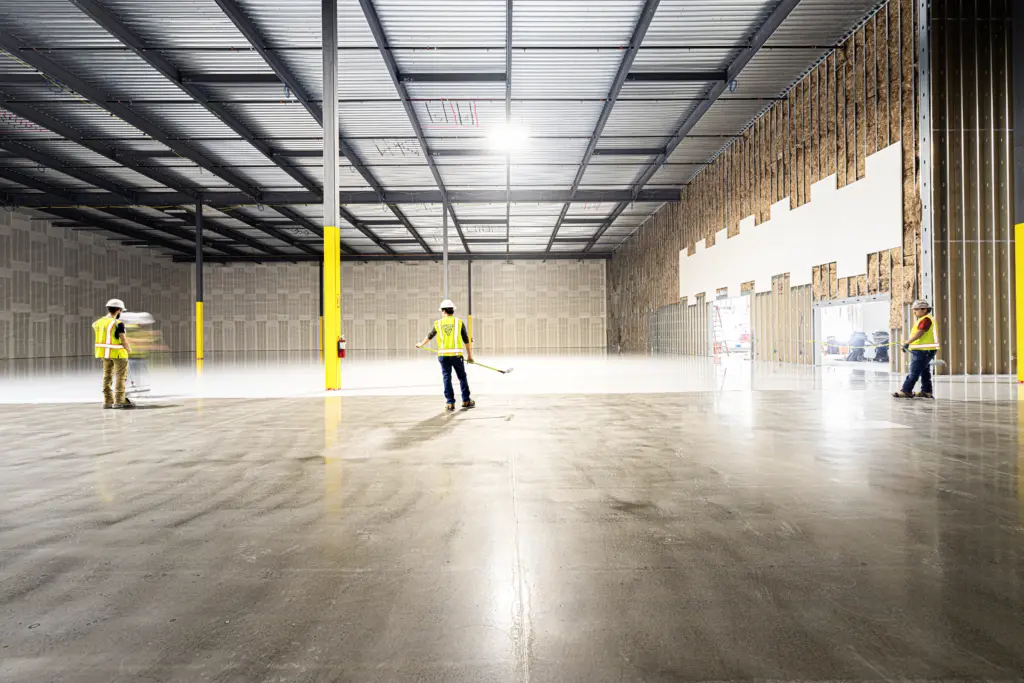
Craftsman Publishes 2026–2027 ESD Flooring Technical Guide
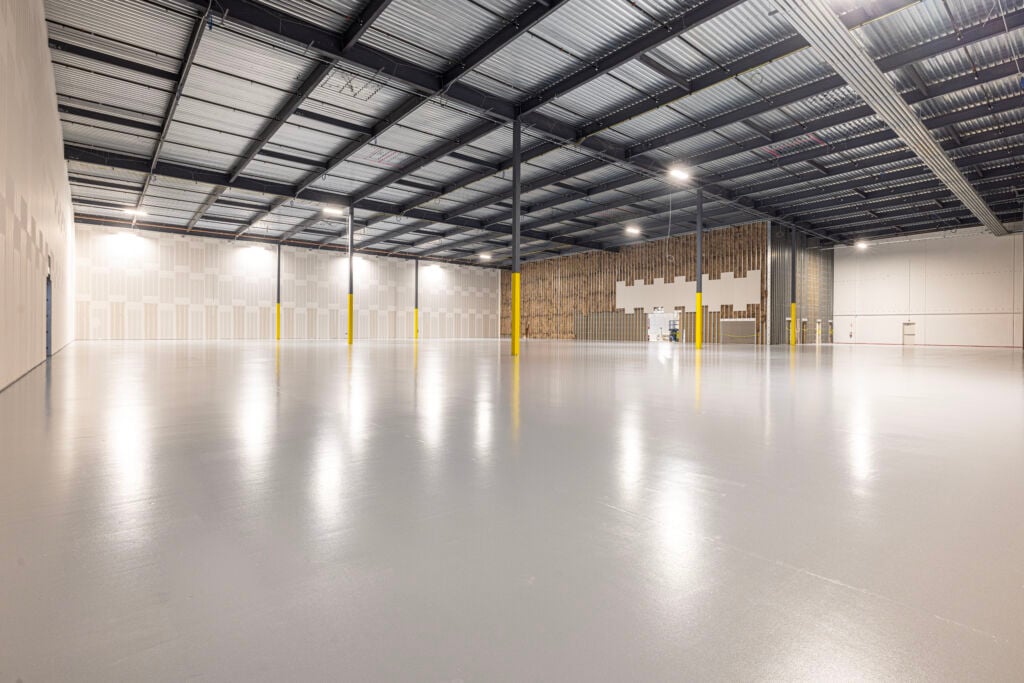
ESD Epoxy Flooring Case Study: 34,000 SF Dallas, TX