- Founded in 1999 • National commercial & industrial specialty flooring contractor
- Systems: Sika Ucrete & Sherwin-Williams High Performance Flooring Poly-Crete and Hybri-Flex urethane cement systems
- In-house W-2 crews provide national service coverage
- Single-contract multi-site programs under a Master Service Agreement
- Phased installation in occupied facilities — night and weekend shutdown-window execution
- Experience Modification Rate (EMR) below the industry average
- Authorized Sherwin-Williams High Performance Flooring installer; Sika installer; Westcoat certified
- Pre-install moisture and substrate testing & audit-ready closeout documentation
- Facility assessments, compliance inspections & lifecycle maintenance programs
- Licensed • Insured • Bonded • Enterprise vendor prequalification package available (COI, W-9, capabilities statement & supporting documentation)
- Decorative systems:
- – Quartz broadcast locked into the wearing surface
- – Flake broadcast on a cementitious urethane body coat (Hybri-Flex hybrid systems)
- – Urethane terrazzo — Sika Ucrete TZ at 9 to 12 mm
- Full duty retained under decorative finishes — -40°F to 250°F operating range, 150°F+ thermal shock differential
- 24-hour cure-and-return-to-service on self-leveling systems; 48-72 hours trowel-applied
Phone: +1 (844) 687-1961
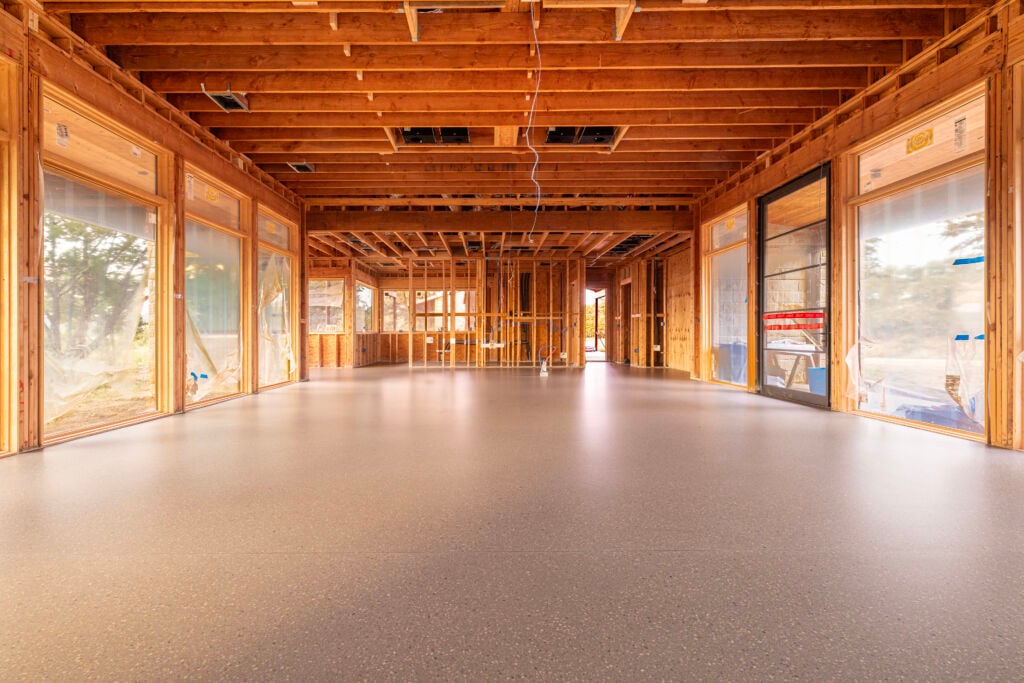
Decorative urethane cement puts color and texture into a floor system built for thermal shock and hot-washdown duty. The decorative layer rides inside the wearing surface: colored quartz or decorative flake broadcast into the wet system and locked under a clear topcoat, or aggregate carried through the full matrix in urethane terrazzo. The mortar underneath is the same cementitious urethane installed at 3/16″ to 3/8″, chemically bonded to the concrete substrate, with the same -40°F to 250°F operating range and 150°F+ thermal shock tolerance the solid-color systems carry. That placement is the point. A coating applied over a finished floor wears off. Aggregate locked into the wearing surface wears at the rate of the floor around it.
Demand for decorative urethane cement finishes arrives from two directions. Production facilities want color doing operational work, marking zones and traffic lanes on floors that get scrubbed nightly. Front-of-house spaces attached to production, taprooms and tasting rooms among them, want a floor that matches the room without giving up the duty rating next door. Both cases are covered below, along with the one thing a decorative selection never buys: relief from substrate preparation or cure windows.
Our Clients




















Broadcast and Terrazzo Systems Inside the Wearing Surface
Quartz Broadcast Flooring — Aggregate Color Locked Under the Topcoat
Quartz broadcast flooring seeds colored quartz aggregate into the wet urethane cement and seals it under a clear topcoat, so color and traction arrive in one operation. Sika builds the broadcast in at the system level with Ucrete SLB, where quartz blends are broadcast onto the wet screed. The aggregate does two jobs at once. Blended colors read as a uniform decorative surface from standing height, and the exposed grain carries wet traction that a smooth-troweled finish does not.
Flake Broadcast Urethane Cement Is a Hybrid Build
Flake broadcast urethane cement is a hybrid system, and pages that sell it should name it that way. Sherwin-Williams’ Hybri-Flex family pairs a cementitious urethane body coat with a decorative flake or quartz broadcast under a sealed resin topcoat, and the finished floor reads like the decorative flake systems buyers already know. The substrate story is different. A decorative epoxy flake floor in a washdown room delaminates at the resin-concrete interface within 12-24 months once surface temperature differentials exceed what the rigid film absorbs, while a Hybri-Flex broadcast keeps the moisture tolerance and thermal behavior of the cementitious urethane base underneath it.
Ucrete TZ — Decorative Terrazzo at 9 to 12 mm
The heaviest decorative option in the category is urethane terrazzo. Sika’s Ucrete TZ installs at 9 to 12 mm, above the 3/16″ to 3/8″ band standard systems occupy, and carries the terrazzo aesthetic on Ucrete chemistry with the category’s full operating range. Thickness is a quote driver. Specify TZ where the terrazzo look has to survive production duty, not a lobby’s foot traffic.
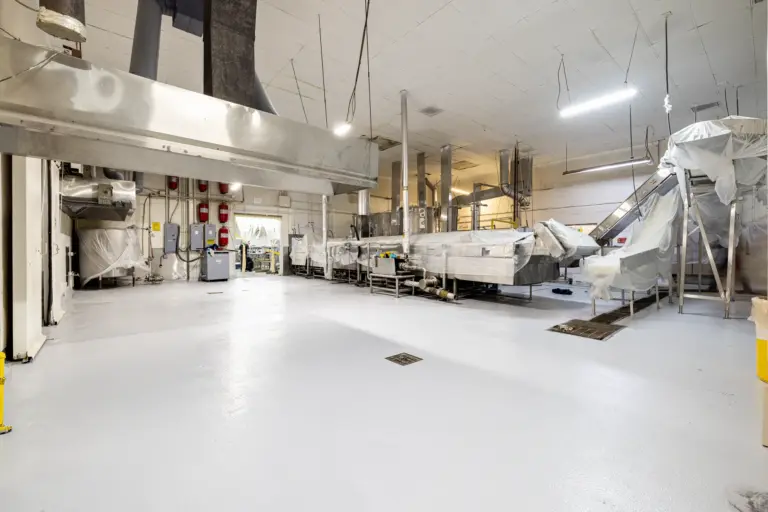
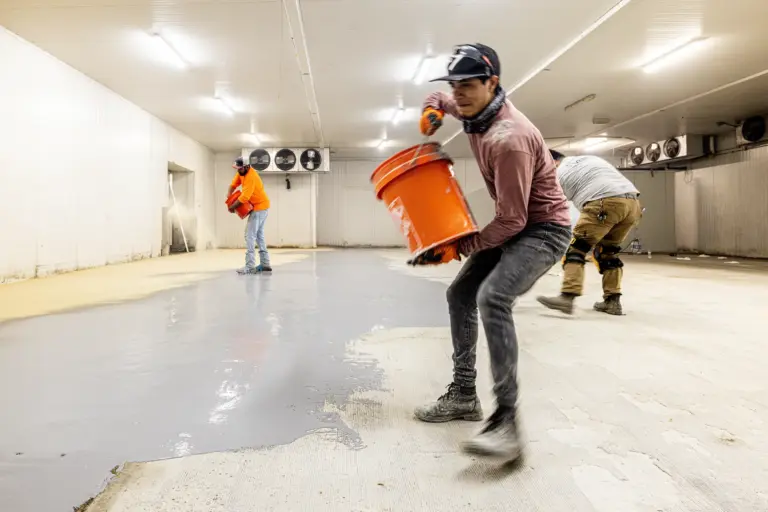
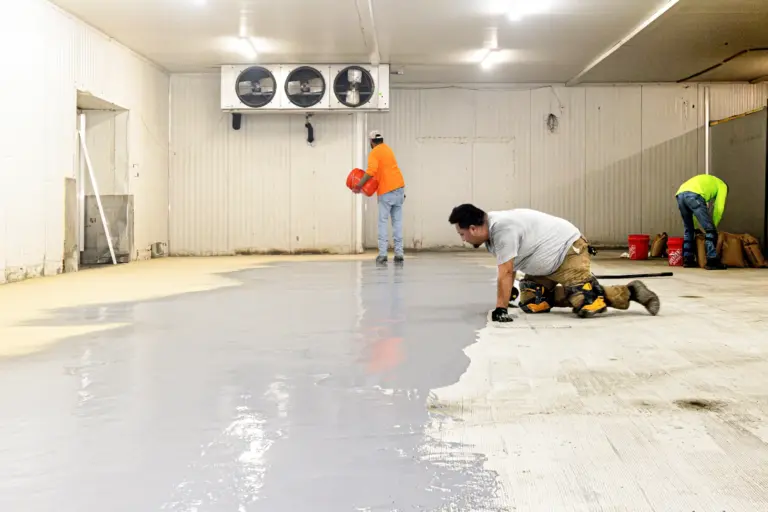
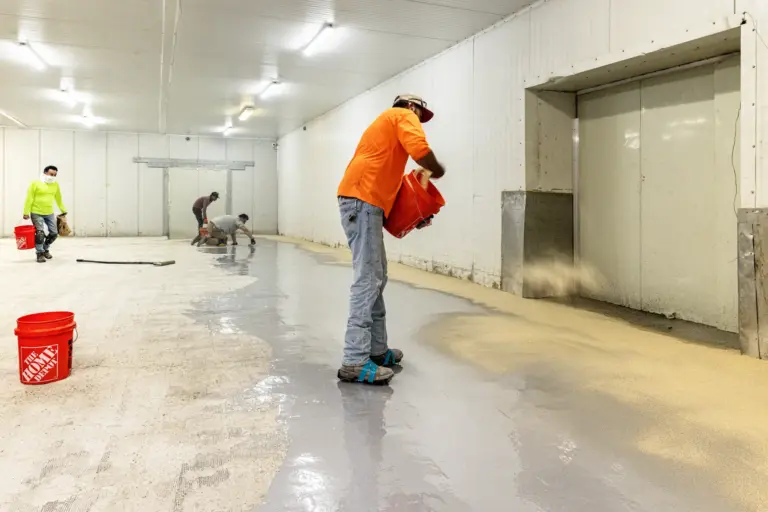
urethane Cement Installation Gallery
Request a Proposal
Submit project parameters for preliminary analysis. Commercial estimates typically returned within 24 hours.
Color at Production Altitude
Color as Zone Demarcation First
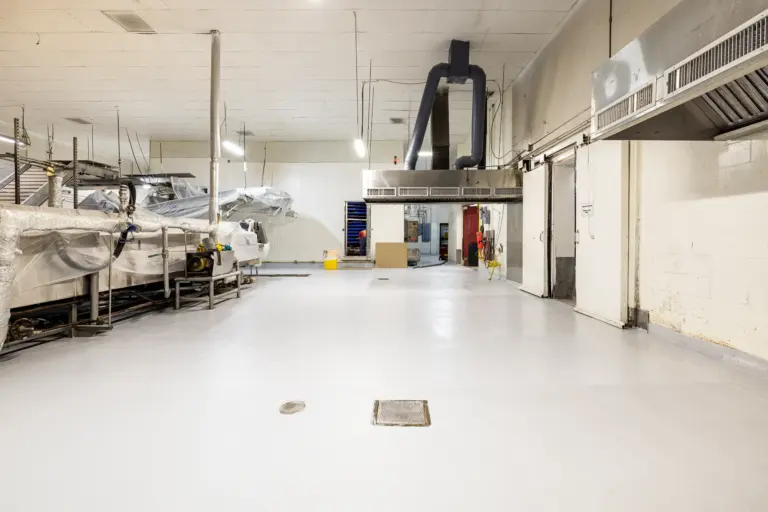
Color in a production facility earns its place as demarcation before it earns it as design. Solid-color mortars install zone-by-zone in distinct pigments, separating wet-process areas from dry staging and marking traffic lanes where painted striping wears off under floor scrubbers. Bakeries run the most developed version of this. Dedicated colors for allergen-segregated zones are working practice in commercial baking, and that application is specified on the bakery flooring page; this page carries only the generic form.
Appearance That Survives a Production Week
Multi-tone broadcast blends hide what solid colors show. Soiling and forklift scuffing read plainly on a uniform surface and disappear into a blended quartz or flake field, which is why broadcast finishes suit floors that must look maintained through a full production week between deep cleans. Traction moves with the same decision, since broadcast density sets the surface profile. Texture selection against wet-traction targets is covered on the slip resistance page.
Where Production Meets Hospitality
Breweries and wineries run production and hospitality on one slab, and the strongest decorative case is the doorway between them. A quartz or flake broadcast lets the same system run from the process floor to the bar without a transition strip or a duty downgrade at the threshold. The vertical specifics belong to their own pages. Taproom flooring is covered on the brewery flooring page, and tasting-room continuity on the winery flooring page.
What a Decorative Finish Does Not Change
Decorative Urethane Cement Keeps Its Duty Ratings
A decorative broadcast does not derate the system. The -40°F to 250°F operating range, the 150°F+ thermal shock differential, and the 15-20+ year service life belong to the mortar, and a broadcast finish changes none of it. The mortar still bonds chemically to the concrete and flexes with the slab through thermal cycling. Decorative systems price at $4-17/sqft installed depending on project size, system thickness, and substrate condition, and the decorative decision shows up in the number through media selection and thickness. The cost page carries the size-band breakdown.
Same Substrate Discipline, Same Cure Windows
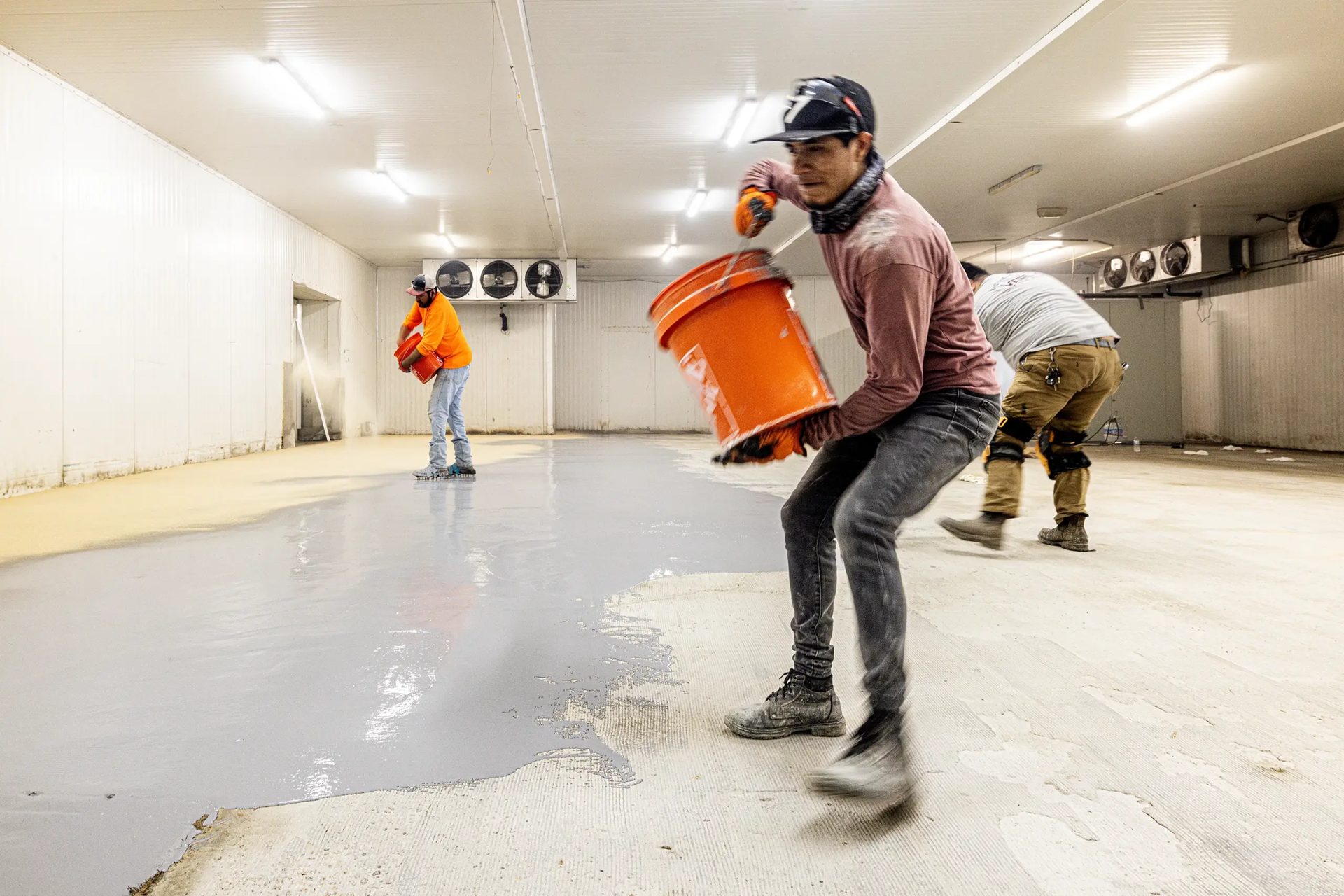
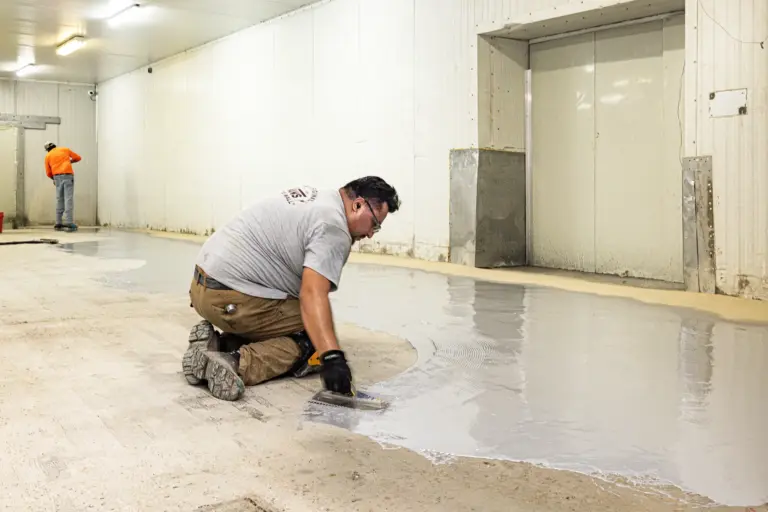
Substrate work is identical on decorative and solid-color installs. Concrete gets moisture-tested per ASTM F2170 and profiled per ICRI 310.2 before any system goes down, because a broadcast finish over a failing bond line fails with it. Phased installation runs zone-by-zone in occupied facilities, with night and weekend shutdown-window execution where production cannot pause. Return-to-service follows the system class at 24 hours for self-leveling and 48 to 72 hours for trowel-applied builds.
The Same Paper at Closeout
Documentation does not thin out because the floor is decorative. Moisture logs and surface-profile verification go into the same audit-ready closeout package a production install receives, and the file reads no differently to an auditor whether the wearing surface is gray or blended quartz. The installing crew carries the broadcast work itself. Decorative adds no second trade to the job and no second contract.
urethane Cement Flooring Knowledge Center
Resource links
Technical Performance
Selection & Standards
Industries Served
Sherwin-Williams Poly-Crete Systems
Sika Ucrete Systems
Cost, Comparisons & Legacy Names
Frequently Asked Questions
Decorative urethane cement is a standard cementitious urethane system finished with colored quartz or decorative flake broadcast into the wearing surface, or built as urethane terrazzo on Sika Ucrete TZ at 9 to 12 mm. The color rides in the system rather than on it, so the finish carries the same duty rating as a solid-color install.
No. Quartz and flake are locked into the wearing surface under the topcoat, and the mortar below is unchanged. The system keeps its 150°F+ thermal shock tolerance and its 15-20+ year service life with a decorative finish in place.
Yes. Solid-color mortars install zone-by-zone in distinct pigments, so wash areas and traffic aisles read at a glance without painted striping. Allergen-zone color-coding for bakeries is specified on the bakery flooring page.
Broadcast quartz raises wet traction because the exposed aggregate profile breaks up the water film underfoot. Broadcast density sets how aggressive that profile is, and texture selection against wet-traction targets is covered on the slip resistance page.
Decorative systems price at $4-17/sqft installed depending on project size, system thickness, and substrate condition. Broadcast media and topcoat selection sit inside that envelope rather than adding a separate premium. Urethane terrazzo runs thicker at 9 to 12 mm, and size banding by project square footage lives on the cost page.
Yes. The broadcast is sealed under the same topcoat that takes washdown duty on solid-color installs, and the -40°F to 250°F operating range with 150°F+ differential tolerance is unchanged. A decorative epoxy flake floor fails that duty at the resin-concrete interface; the flake look survives hot washdown only on a cementitious urethane base.
The crews that install solid-color urethane cement systems handle the broadcast work as well. In-house W-2 crews provide national service coverage, and lead time runs 1-3 weeks from contract execution, driven by material availability.
Blog
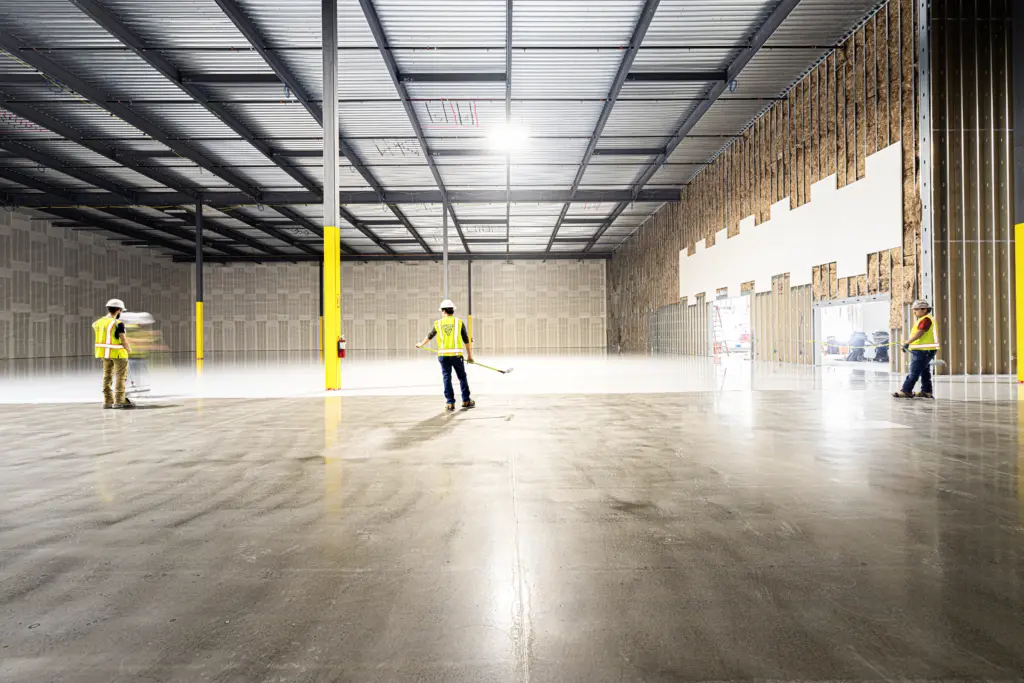
Craftsman Publishes 2026–2027 ESD Flooring Technical Guide
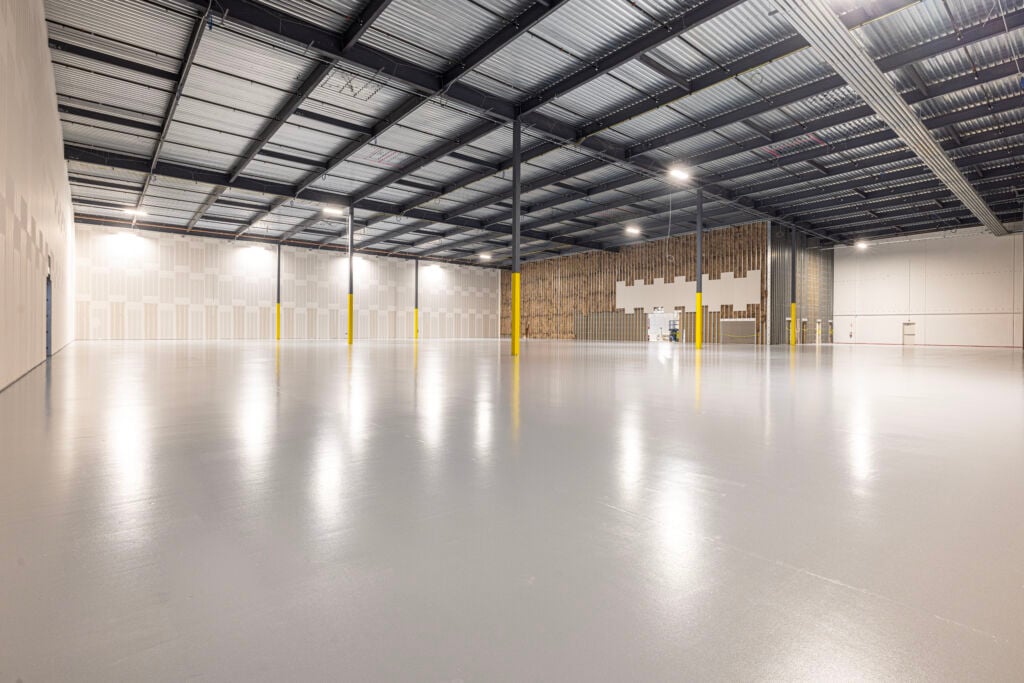
ESD Epoxy Flooring Case Study: 34,000 SF Dallas, TX