Stonhard and an independent urethane cement contractor such as Craftsman Concrete Floors sell two different operating models for the same category of work. A single-source flooring installer, with Stonhard as the best-known example, manufactures its own resinous systems and installs them through its own organization, so one company carries both the material and the workmanship. The independent model is a qualified contractor holding installer credentials across multiple manufacturers, contracting directly with the owner or general contractor, and self-performing installation through its own direct workforce. For a single facility already committed to one proprietary system, a manufacturer-installer may be the simplest path to unified product selection and installation responsibility. For a national or multi-site program, a qualified independent multi-manufacturer contractor may be the stronger operating model.
At multi-site scale the conditions that set the risk are approved-system flexibility, material availability, concurrent scheduling, consistent field execution, and crew redeployment. The table below states the decision by buyer condition.
| Buyer condition | Model that may fit better | What to verify |
|---|---|---|
| One facility, one proprietary system already selected | Single-source manufacturer-installer | Written warranty terms; schedule capacity for your window |
| National or multi-site program | Qualified independent multi-manufacturer contractor | Program references; direct-labor model; concurrent-site capacity |
| Specification names systems from more than one manufacturer | Qualified independent multi-manufacturer contractor | Current installer credentials for each named system |
| Approved-equal substitution may be required | Qualified independent multi-manufacturer contractor | The specification’s substitution procedure; the specifier approval path |
| Unified material-and-labor responsibility is paramount | Single-source manufacturer-installer | That a unified warranty exists in writing, and its conditions |
| Concurrent regional scheduling and crew redeployment | Capacity-backed independent multi-manufacturer contractor | Who employs the installers; redeployment between active sites |
| Competitive evaluation of compliant manufacturer systems | Qualified independent multi-manufacturer contractor | That the specification permits alternates; bid comparability |
What Single-Source and Independent Mean
Both models put urethane cement on concrete. They differ in who holds the contract, who employs the installers, and how many manufacturers’ systems can be considered. Those differences decide most of the comparison. Stonhard is the best-known manufacturer-installer, and every characterization of its model comes from Stonhard’s own published materials. Craftsman is the independent example.
The Manufacturer-Installer Model
Stonhard describes itself as a manufacturer and installer and calls its single-source, turnkey model “the core of who we are.” It formulates the systems, takes contractual responsibility for their installation, and gives the owner one point of contact from product selection through completion. System selection happens inside that company’s own portfolio, because the model installs what it manufactures. This is the structure most buyers mean by a single source flooring contractor. The one-point-of-contact benefit is not exclusive to a manufacturer-owned product line.
Where the Single-Source Model Wins
For one facility committed to one proprietary system, concentrated contractual responsibility is the model’s working advantage. The manufacturer controls the product line, holds the customer-facing installation agreement, and administers the written warranty. That can make the relationship simple to manage, but it does not establish that every installer is an employee of the manufacturer. Stonhard’s public materials describe both its own specially trained application crews and long-running Installation Partner relationships with family-owned businesses and their crews. Its single-source model therefore describes the customer’s contractual and warranty path. Buyers should still verify who employs, supervises, and insures the people performing their project. When manufacturer flexibility and competitive system evaluation are not priorities, the model can remain simple to administer.
The Independent Multi-Manufacturer Contractor
The qualified independent model holds current installer credentials across multiple manufacturers while remaining independent of any one of them. The contractor can evaluate more than one compliant urethane cement line where the specification permits and contract directly with the owner or general contractor, bound throughout by each manufacturer’s certification, submittal, and application requirements. Craftsman operates this model with in-house W-2 installation crews, and no installation labor is subcontracted.
How Project Scale Changes the Choice
At one site, the question is usually accountability, and single-source answers it well. Across a multi-region program, the constraints that decide the outcome are labor availability, concurrent scheduling, material supply, and execution consistency between regions, and those follow from how a contractor is structured rather than from any product line. The system-level comparison is on the urethane cement vs epoxy page.
Direct W-2 Labor at Program Scale
Who Employs the Installation Crew
Craftsman-employed W-2 crews provide national service coverage. The installers are trained and insured, and Craftsman does not staff installation with 1099 day-labor. The crew on site holds an employment relationship with the company that signed the contract, which is what keeps Craftsman’s training and field standards attached to the people doing the work.
Capacity-First Staffing
Craftsman staffs capacity-first: it retains a deliberately oversized core of skilled W-2 installers through seasonal underutilization, preserving the supervision and system knowledge required for rapid program ramps. The model carries a cost, and the company accepts it deliberately. Winter weeks run under capacity so that trained labor is available when a program’s calendar compresses, without a hiring scramble. Lower utilization is the price; crews that can move across a national schedule are what it buys.
Cross-Training and Surge Scaling
The skilled core is cross-trained across urethane cement, ESD, polished concrete, and resinous flooring installation, which keeps installers working across the company’s full workload between urethane cement programs. During surge periods, Craftsman can approximately double field installation capacity by adding mid-skilled W-2 installers beneath veteran leads—the skilled-supervision layer remains intact as crew capacity grows. Surge labor is W-2 labor under experienced Craftsman field leadership, and the work is not subcontracted.
Consistent Field Standards Across Regions
Across locations, a multi-site buyer is buying a repeatable operating standard. Because the labor model is direct employment, Craftsman carries one training standard, one installation leadership structure, one documentation path, and one escalation process across a program. That continuity belongs to the company’s operating structure; scheduling determines which crews appear at which sites. Program references are the record of how it has held from location to location.
urethane Cement Installation Gallery
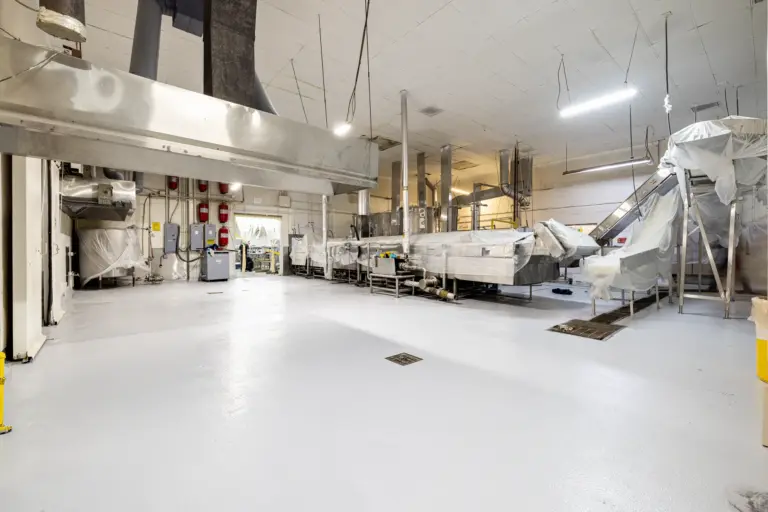
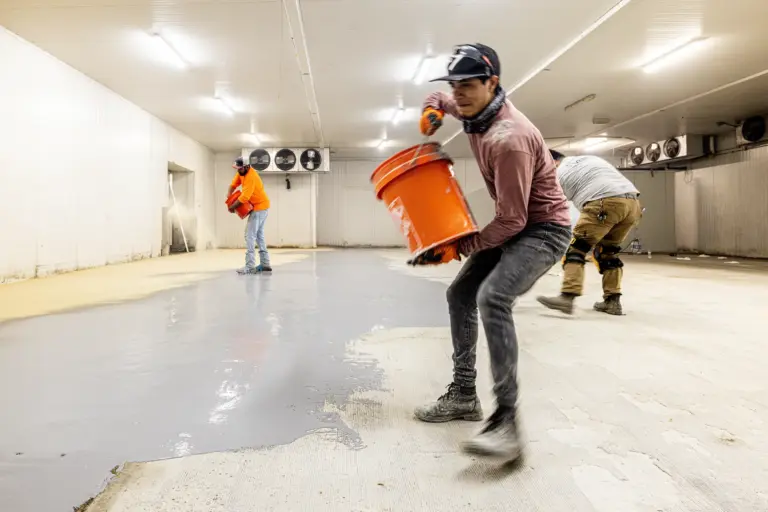
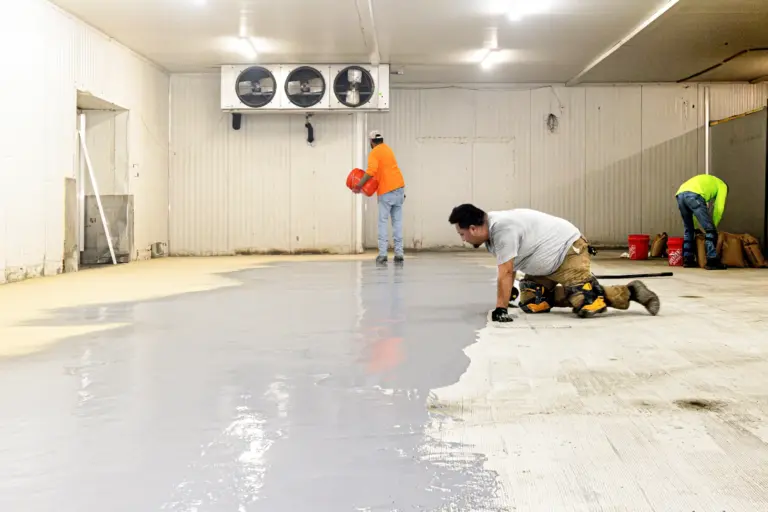
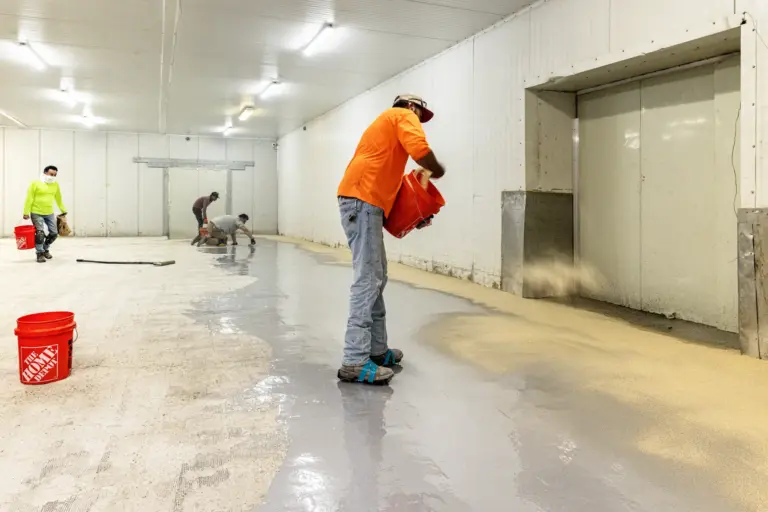
Phased Multi-Site Execution Since 1999
Since 1999, Craftsman has delivered phased and multi-site urethane cement installations, from local multi-location accounts through national programs. Over that period the workforce, field leadership, scheduling, documentation, and closeout structure have been exercised repeatedly across locations and operating environments.
A Long-Running Multi-Site Operating Model
Phased rollout work requires more than the ability to install one floor successfully. Craftsman carries direct W-2 crews, experienced field leadership, one safety and training system, and a consistent documentation path from the first location through the last. The individual roster and schedule can scale with each program, and installation responsibility remains with Craftsman throughout. Current national programs run on that same operating model.
What Repeat Locations Require
Repeat locations require capabilities that a single project never tests. Crews redeploy between scheduled sites, so retained W-2 capacity is what puts trained installers at the next location on the program calendar. When leads and crews return to the program, they can carry familiarity with the access rules, the operating constraints, and the documentation the program expects into later locations. Program-level communication stays on one path the whole way through. Restaurant and food-service kitchen work more broadly is covered on the commercial kitchen flooring page.
System Selection, Substitution, and Supply
Certified Across Four Manufacturers
Craftsman is certified across four urethane cement manufacturers — Sherwin-Williams High Performance Flooring, Sika, PIP, and Westcoat. As a Sika Certified Installer and Authorized Sherwin-Williams High Performance Flooring installer, Craftsman prices and installs competing compliant systems inside one bid process when the specification allows alternates. Certification status is one of the written conditions manufacturer warranty programs commonly attach. What certification means when evaluating an installer is covered on the urethane cement contractor page, and the current lineups are covered on the Sika and Sherwin-Williams manufacturer pages.
How Approved-Equal Substitution Works
When a specified system has a lead-time or supply problem, Craftsman can propose and price an approved-equal urethane cement system from a second manufacturer, subject to the specifier’s approval. The path runs through the specification’s substitution procedure, owner or design-team approval, material availability, system compatibility with the substrate and operating conditions, and the written warranty requirements of the substitute system. What the buyer gains is a priced second option where the project permits one; substitution is never a unilateral right. A single-source installer works the same problem inside its own portfolio, which can be sufficient when that portfolio holds an approved alternative and the schedule can wait for one.
How Multi-Site Pricing Is Built
When the specification permits qualified alternates, Craftsman’s independent multi-manufacturer model is generally more price-efficient for phased and multi-site programs. Craftsman can price compliant systems from competing manufacturers against the same scope, consolidate purchasing, and spread preconstruction, mobilization, scheduling, and closeout administration across the rollout rather than recreating them site by site. Direct W-2 installation keeps the work inside one company operating structure. Actual pricing still depends on the selected system, substrate, schedule, geography, volume, and warranty requirements, so buyers should compare equivalent scopes. Installed-cost ranges are published on the urethane cement cost page.
Warranty, Documentation, and the Decision
Manufacturer-Backed Warranty, Administered by Craftsman
The customer is not asked to manage the installer and the manufacturer as separate warranty contacts. When the selected system and project include a manufacturer warranty, Craftsman installs under the manufacturer’s requirements, assembles the required product, testing, and installation records, submits the warranty documentation, and delivers the applicable manufacturer warranty in the project closeout package. Craftsman separately stands behind its workmanship under the construction contract. If covered corrective work is required, the customer works through Craftsman. Craftsman coordinates with the manufacturer and performs the field work. The buyer therefore keeps one accountable operating path without requiring the installer to manufacture the product. Coverage, duration, and exclusions remain governed by the selected system’s written warranty and the project contract.
Consistent Closeout Across Locations
National accounts can run under a Master Service Agreement—one contract vehicle across every site in the program. Single-contract multi-site delivery replaces per-site paper, which matters most when sites run concurrently in different regions. Field documentation is uniform across locations. Pre-install moisture and substrate testing runs per ASTM F2170 or ASTM F1869, surface preparation is verified to the ICRI 310.2 profile the manufacturer’s system documentation requires, and every site closes with audit-ready closeout documentation that includes the applicable warranty record. Craftsman remains the customer’s point of contact for warranty administration and any covered field response. The phased sequence itself is detailed on the installation process page.
Choosing Between the Two Models
Choose a single-source manufacturer-installer when one proprietary system is already selected for a defined facility. It can also fit when one integrated material-and-installation relationship is the priority, when the applicable written warranty structure supports that preference, and when manufacturer flexibility and competitive evaluation are not priorities. Choose a qualified independent multi-manufacturer contractor when the program spans multiple sites or regions. That choice also fits when direct labor and consistent supervision matter, when more than one compliant system may need evaluation, and when approved substitution flexibility matters. It fits as well when concurrent scheduling or crew redeployment affects risk, or when one operating structure must carry across the whole program. Pre-bid walkthroughs are available based on project requirements, timing, and resource availability. Remote spec review is standard for multi-region rollouts. A project specialist responds within one business day.
- Founded in 1999 • National commercial & industrial technical flooring contractor
- Systems: Sika Ucrete & Sherwin-Williams High Performance Flooring Poly-Crete and Hybri-Flex urethane cement systems
- National service coverage • Installation performed by Craftsman-employed W-2 crews
- Repeat and multi-location accounts can run under a Master Service Agreement—one contract vehicle for recurring work across the program
- Phased installation in occupied facilities—night and weekend shutdown-window execution
- Experience Modification Rate (EMR) below the industry average
- Pre-install moisture and substrate testing • Audit-ready closeout documentation
- Authorized Sherwin-Williams High Performance Flooring installer; Sika installer; Westcoat certified
- Pre-bid walkthroughs are available based on project requirements, timing, and resource availability; remote spec review is standard for multi-region rollouts
- Enterprise vendor prequalification package available on request (COI, W-9, capabilities statement & supporting documentation)
Phone: +1 (844) 687-1961
Our Clients




















Request a Proposal
Submit project parameters for preliminary analysis. Commercial estimates typically returned within 24 hours.
urethane Cement Flooring Knowledge Center
Resource links
Industries Served
Technical Performance
Selection & Standards
Sherwin-Williams Poly-Crete Systems
Sika Ucrete Systems
Cost, Comparisons & Legacy Names
Frequently Asked Questions
A single-source installer manufactures the flooring system and takes contractual responsibility for its installation; Stonhard is the best-known example in urethane cement. The independent model is a qualified contractor that holds installer credentials across multiple manufacturers and self-performs installation under its own contract with the owner or general contractor. Not every independent installer is built this way. The practical difference shows up in how systems get selected and how labor is staffed across sites.
No. A qualified independent national urethane cement contractor with demonstrated direct labor and multi-site capacity can execute the same scope across regions. Craftsman has run phased and multi-site urethane cement programs since 1999 with direct W-2 crews and consistent field leadership. Most searches for Stonhard alternatives or Stonhard competitors mix manufacturers with installers. The working choice is between a manufacturer-installer and an independent multi-manufacturer contractor.
When one proprietary system is already selected for a single facility, single-source is often the simplest path, because material and workmanship responsibility sit with one organization under one point of contact. The applicable written warranty structure has to support that preference in practice. Different constraints become more important when a program needs approved-equal flexibility or concurrent regional scheduling.
When the specified line runs into a lead-time or supply problem, Craftsman can offer a priced approved-equal urethane cement system from a second manufacturer. The specification has to permit the alternate, and the specifier has to approve it. A manufacturer-installer works the same problem within its own product range.
Yes, when the specification permits alternates. Craftsman holds current installer credentials with multiple urethane cement manufacturers, including Sika and Sherwin-Williams High Performance Flooring, and can price competing compliant systems against the same scope in one bid. Additional options do not guarantee a lower price; what they give the buyer is alternates with data sheets and warranty terms that can be compared directly.
No—using Craftsman does not inherently void the manufacturer warranty. Where the selected system and project include one, Craftsman installs to the manufacturer’s written requirements, submits the required warranty documentation, and delivers the applicable manufacturer warranty with the project closeout package. The customer works through Craftsman for warranty administration, and Craftsman coordinates with the manufacturer and performs covered corrective field work. Exact coverage follows the selected system’s written warranty and Craftsman’s workmanship terms.
With retained W-2 capacity rather than project-by-project hiring. Craftsman keeps a deliberately oversized skilled core of W-2 installers employed year-round and accepts seasonal underutilization as that model’s carrying cost. Because the core is cross-trained across urethane cement, ESD, polished concrete, and resinous flooring installation, crews can redeploy between scheduled sites as a program’s calendar compresses. Craftsman has used this capacity model for phased and multi-site urethane cement work since 1999.
For phased and multi-site programs, generally yes—especially when a performance specification permits qualified systems from more than one manufacturer. Craftsman can competitively price compliant systems, consolidate purchasing, and spread preconstruction, mobilization, scheduling, and closeout administration across the rollout while using direct W-2 crews under one company’s field leadership. Those efficiencies can reduce total program cost without removing the applicable manufacturer warranty. Actual bids still turn on the specific system and project conditions, so the comparison should use equivalent scopes rather than generic per-square-foot claims.
No. One-point accountability comes from the contract and the operating responsibilities assigned under it, not from manufacturing the resin. Craftsman contracts directly, self-performs installation with W-2 crews, submits the applicable manufacturer-warranty documentation, delivers the warranty record in project closeout, and remains the customer’s point of contact for covered corrective work. The customer retains one accountable path for installation, documentation, warranty administration, and field response. Qualified systems from multiple manufacturers can still compete when the specification permits.
Its own public materials do not support that assumption. Stonhard refers to its own specially trained application crews, but its published Installation Partners material also describes family-owned installation businesses and their crews working within the Stonhard network. The single-source promise identifies the customer’s contract and warranty path. It does not prove the field crew’s employer on a particular project. Ask who legally employs and supervises the installers, whose insurance covers their work, and who performs corrective work. Craftsman self-performs installation with direct W-2 crews and remains responsible for closeout and warranty administration.
Yes. Every project has direct Craftsman field leadership, and Craftsman’s Safety and Operations leadership visits every job site. The managers responsible for this oversight bring decades of on-site construction and installation-management experience. Their role is to provide safety and operational review beyond the working foreman. That review covers documentation of existing site conditions, site-specific hazards and safety controls, substrate condition and preparation, product storage, handling and mixing, application details, concurrent-trade constraints, and closeout requirements. Conditions that may affect safety, schedule, scope, or finished performance are documented and addressed with the project team. Across a phased or multi-site program, the same company safety and operations structure carries from location to location.
Blog
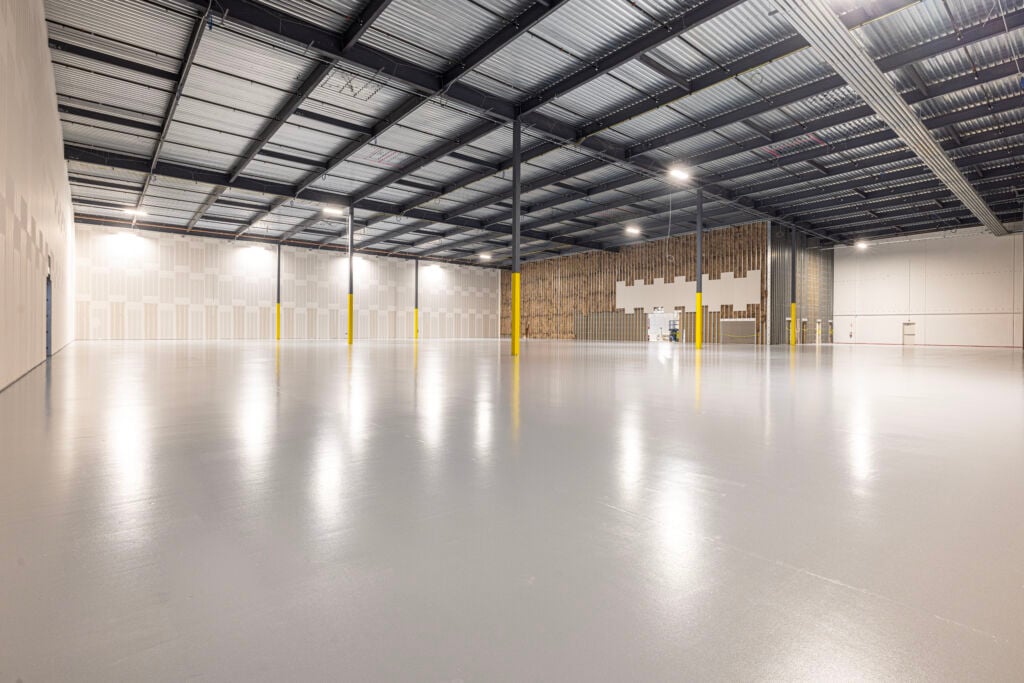
ESD Epoxy Flooring Case Study: 34,000 SF Dallas, TX
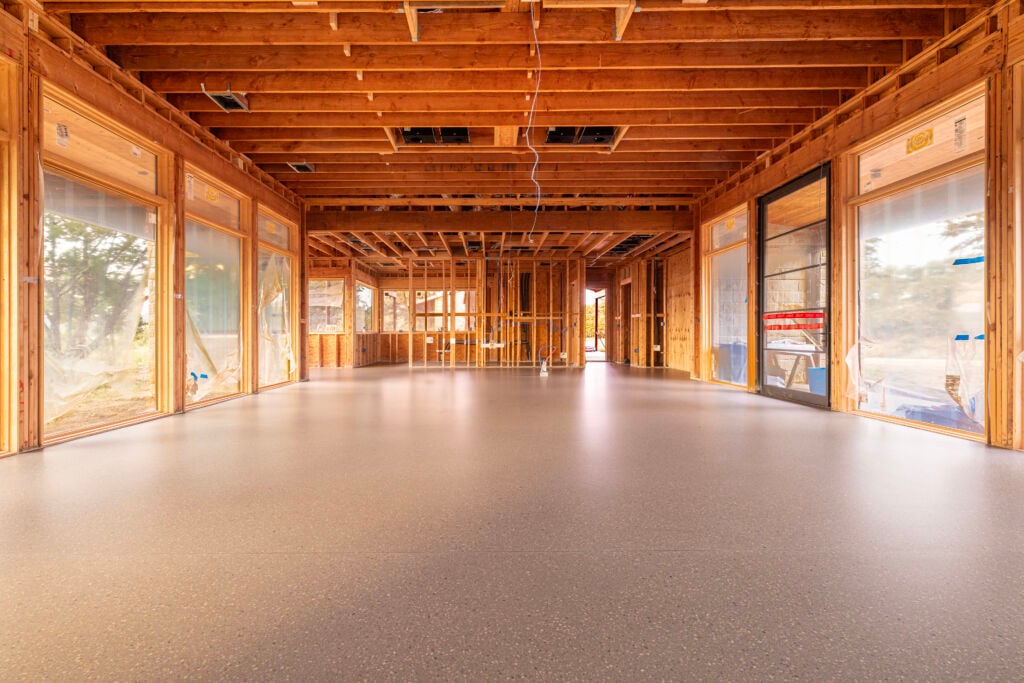
Residential Terrazzo Floors in Fort Worth, Texas