What can we help you with?
Technical flooring, delivered directly
- ESD flooring, urethane cement, terrazzo, and polished concrete
- In-house W-2 installation crews and experienced field leadership
- National service coverage with project-specific staffing plans
- Testing, documentation, and defined project closeout
- Dedicated support for corporate procurement and multi-site contracting
Phone: +1 (844) 687-1961
Urethane Cement Brewery Flooring
Brewery flooring fails from thermal shock before anything else. Boiling wort splashes a 60°F slab, hot CIP solution runs across cold concrete between batches, and spent grain acids sit on the surface until the next cleaning cycle. A rigid coating cannot absorb that duty. Urethane cement can, because it is a cementitious mortar with a urethane resin matrix that bonds chemically to concrete and flexes with the slab through temperature differentials of 150°F and above. Craftsman Concrete Floors installs urethane cement brewery flooring nationwide, from brewhouse and cellar to packaging hall and taproom, phased zone by zone around active brew schedules.
Chemistry is the second half of the load. Beer, sugars, organic acids from spent grain, caustic CIP chemistry, and commercial sanitizers all attack coated floors, and wet-dry cycling between washdowns works on every joint and seam. Brewery flooring systems built from urethane cement counter both loads, with slope to drain troweled in during installation and an integral cove base radiused up the wall. There is no grout joint to harbor yeast or bacteria and no seam to open under washdown.
Why Brewery Floor Coatings Fail
Brewery floor coating failures trace to the system, the prep, or the texture. A coating specified below the thermal load fails at the bond line; prep that skipped moisture and profile verification fails underneath the material; a topical slip texture wears away as wort and yeast saturate it.
Brewery Epoxy Flooring — Delamination in 12 to 24 Months
Standard epoxy fails in brewery service because thermal cycling breaks its bond to concrete. The cured film is rigid, with a thermal expansion coefficient far from the slab’s, so every hot-side event shears the resin-concrete interface. Boiling wort does it. So does hot CIP solution run across a cold floor between batches. In daily-washdown conditions, brewery epoxy flooring blisters, cracks, and delaminates within 12 to 24 months, and an operator pricing a replacement is usually pricing a second failure unless the system changes.
Most Brewery Floor Failures Are Prep Failures
Prep failures outnumber product failures on brewery floors because moisture and contamination defeat any system installed over them. Substrate moisture gets verified per ASTM F2170 and the surface gets profiled to the ICRI 310.2 CSP the system specifies before any material is mixed. On an operating brewery floor, prep usually means grinding years of absorbed wort and sugar out of the slab rather than coating over them, because contamination left in place resurfaces as a bond-line failure. The new floor gets blamed for it.
Slip Texture That Wears Off
A topical anti-slip grit is a wear item. As wort and cleaning chemistry saturate a coated floor, the broadcast layer polishes down and traction fades exactly where spills concentrate. Urethane cement carries its aggregate through the wear course instead, so the texture is part of the floor itself rather than a layer sitting on top of it. Traction does not degrade with wear because there is no separate layer to lose.
The Urethane Cement System for Breweries
Brewery Flooring at 3/16 to 3/8 Inch Thick
Urethane cement flooring is a mortar system installed at 3/16″ to 3/8″ in a single monolithic pour. The category operating range runs -40°F to 250°F with tolerance for 150°F+ thermal shock differentials, which covers cold-conditioning rooms and the steam-cleaned hot side in the same building. Chemical resistance holds against beer, wine, spirits, sugars, spent grain acids, CIP solutions, caustic cleaners, and commercial sanitizing agents. Service life runs 15-20+ years.
Slope to Drain, Troweled Into the Pour
Positive drainage is built during installation, not corrected afterward. Integral slope to floor drains is troweled into the urethane cement system while it goes down, so washdown water moves to the drain across the entire floor area instead of ponding at low spots. Drain installation and coordination sit inside the same scope of work as slab assessment and concrete repair.
Cove Base — Eliminating the Floor-to-Wall Joint
An integral cove base is formed in place during the pour, monolithic with the floor, radiusing the floor-to-wall transition so there is no joint to harbor yeast, bacteria, or mold. Most health departments require coved transitions in commercial food service; the requirement exists because the square wall joint is where cleaning fails. An applied cove base glued on afterward reintroduces that joint.
Installation Around an Active Brewery
Phased Installation — Zone by Zone Between Brew Cycles
Phased installation replaces a floor without stopping production. Work proceeds zone by zone in occupied facilities, with night and weekend shutdown-window execution where the schedule demands it. Self-leveling systems cure and return each zone to service in 24 hours; trowel-applied systems take 48-72 hours. Lead time runs 1-3 weeks from contract execution, driven by material availability, so a packaging-hall floor gets sequenced against the canning schedule rather than the other way around.
W-2 Crews and Four Manufacturer Certifications
In-house W-2 crews provide national service coverage. The installers are Craftsman employees, accountable to the contract they work under. Craftsman is certified across four urethane cement manufacturers — Sherwin-Williams High Performance Flooring, Sika, PIP, and Westcoat. Every installation closes with audit-ready closeout documentation, from ASTM F2170 moisture logs to cove base completion photos, and the company has installed this way since 1999.
Wineries, Taprooms, and Distilleries
Wineries — Covered on Their Own Page
Winery floors run fermentation acids and barrel-room wet-dry cycling against the same urethane cement system, and the winery flooring page owns that spec from crush pad to tasting room.
Taprooms — Front-of-House on the Same Pour
Taprooms take the same system at lighter duty. A front-of-house floor can carry a finer texture and a decorative finish without giving up the washdown cleanability the back of house demands, and the monolithic construction reads as one floor from brewhouse to bar. Distilleries run the same washdown chemistry at higher proof, so distillery builds are covered in full on the distillery flooring page.
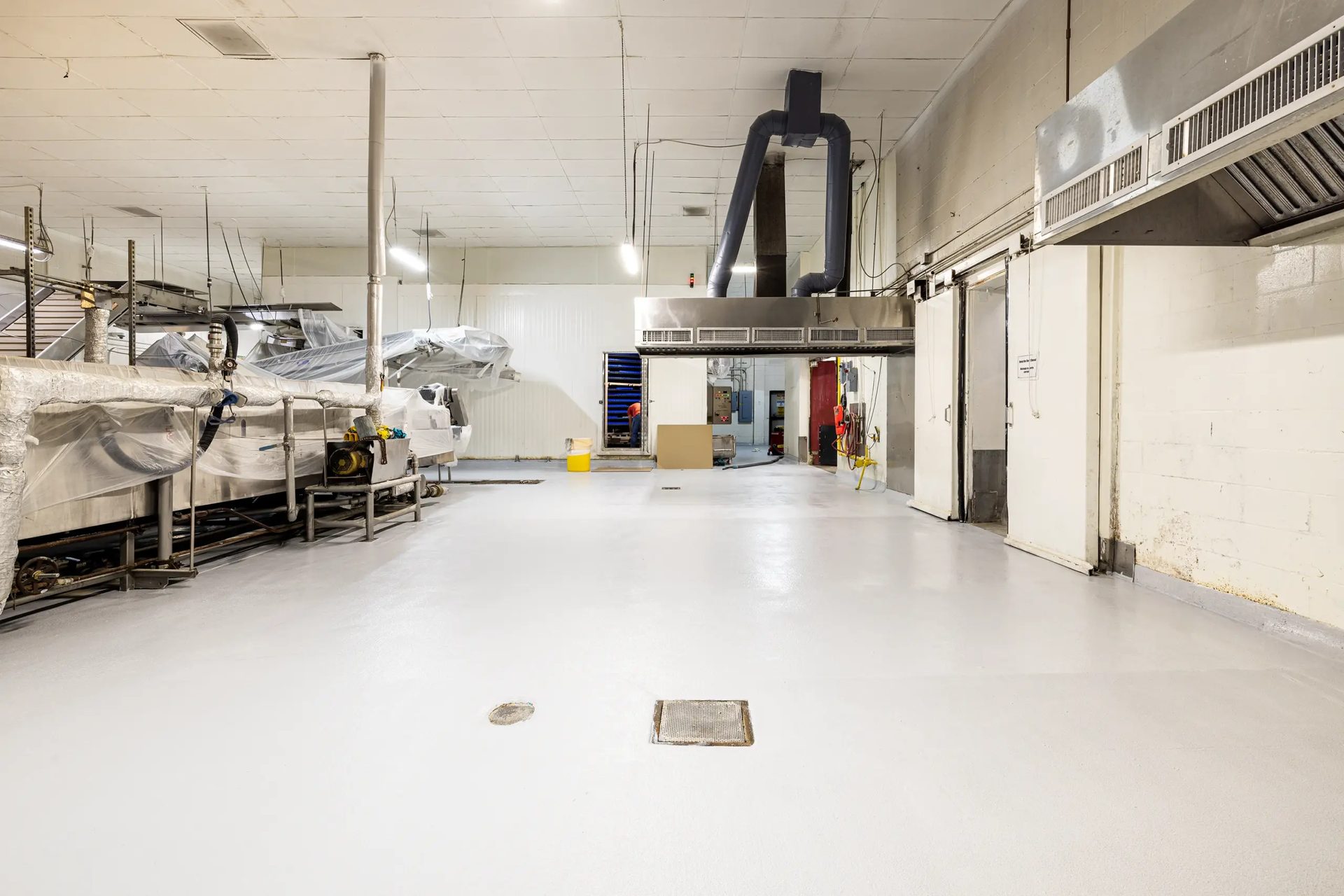
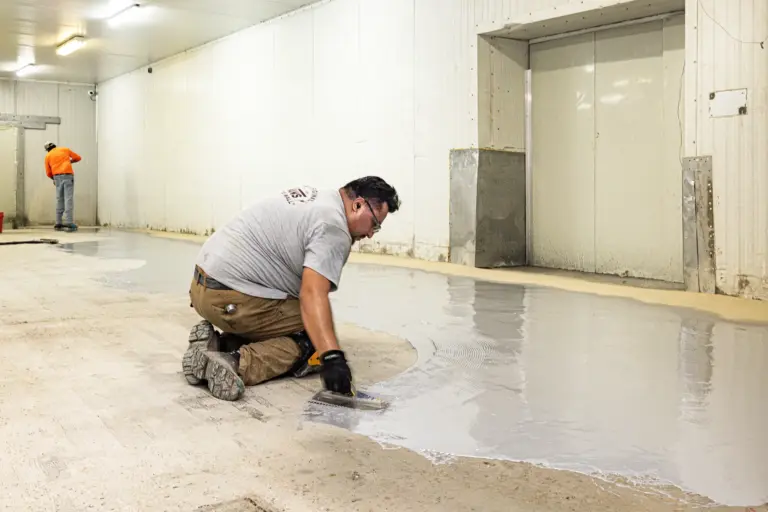
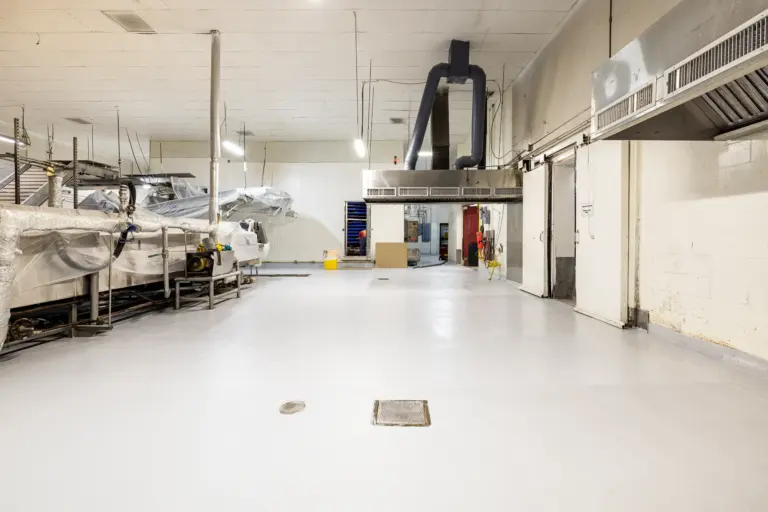
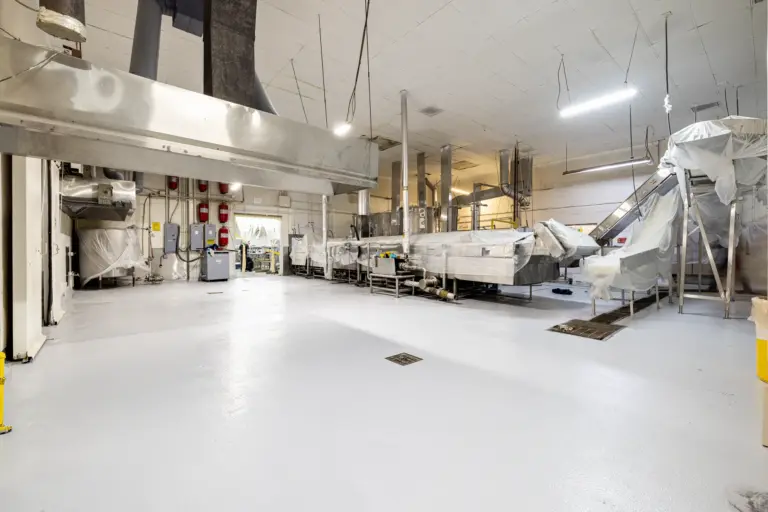
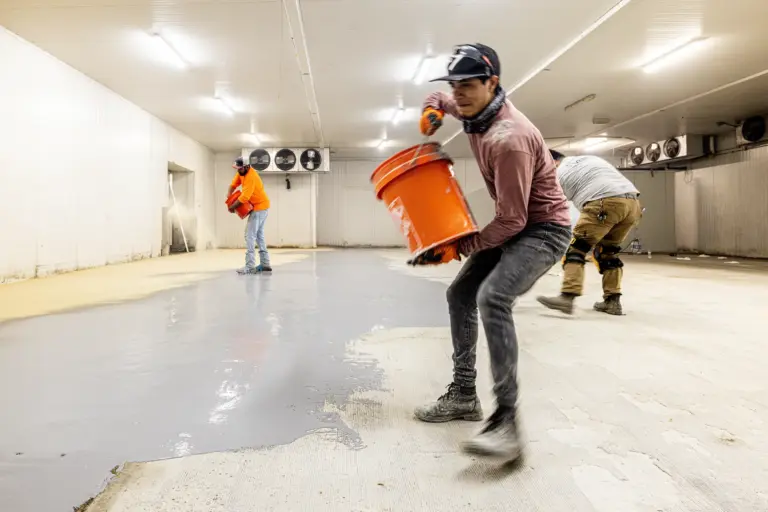
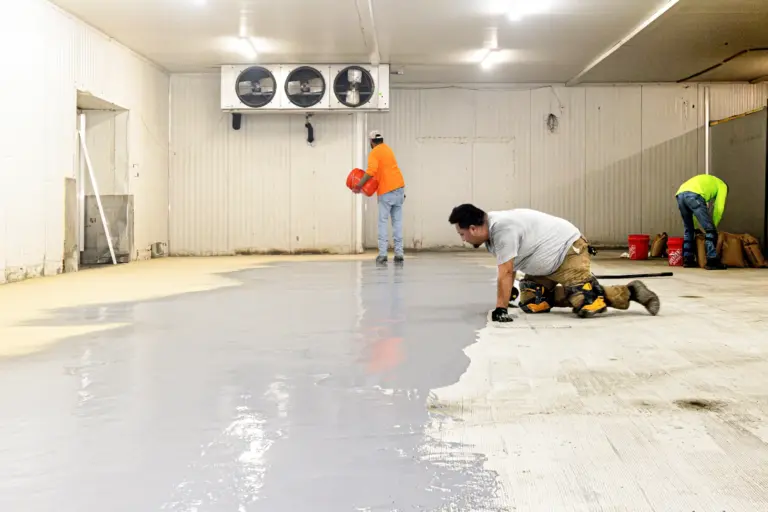
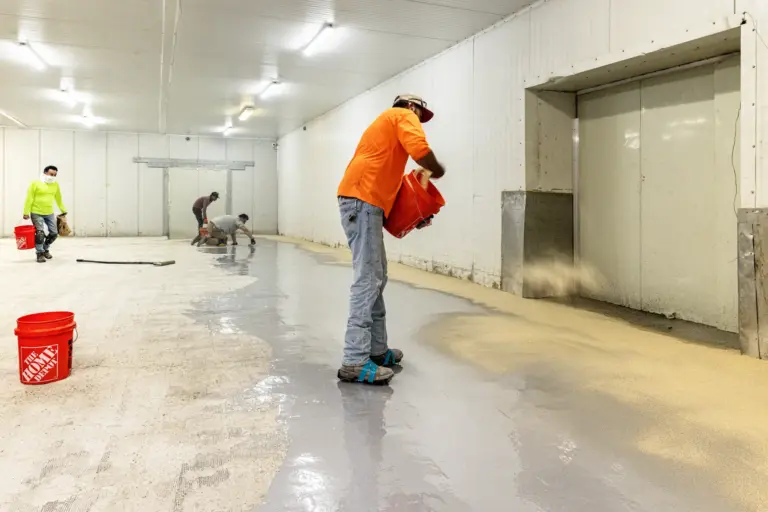
urethane Cement Installation Gallery
Frequently Asked Questions
Urethane cement brewery flooring runs $4-17/sqft installed depending on project size, system thickness, and substrate condition. Project size is the dominant driver, which is why the range is wide; the urethane cement cost page breaks the range down by square-footage band. Taproom-only work and full production-floor replacement land at opposite ends of it.
Not where hot-side processes or daily CIP washdown run. Epoxy delaminates within 12 to 24 months in brewery service because thermal cycling from boiling wort or hot CIP solution on a cold slab shears its bond to the concrete. Urethane cement holds through 150°F+ differentials because the mortar flexes with the slab. Epoxy stays reasonable in dry storage and office areas that never see hot washdown.
Lead time is 1-3 weeks from contract execution, driven by material availability. On site, self-leveling urethane cement returns each zone to service in 24 hours; trowel-applied systems need 48-72 hours. Phased scheduling keeps the brewhouse running while cellar or packaging floors are replaced.
Coved floor-to-wall transitions and a cleanable, non-porous surface, and that demand comes from the local health department rather than TTB. The federal Brewer’s Notice governs licensing and tax, not floor construction, so the local health code is the standard a brewery floor actually gets inspected against. Urethane cement meets it structurally. The pour is monolithic, the cove base is formed in place during installation, and no grout joint or seam is left to harbor yeast or bacteria.
Aggregate carried through the wear course keeps the texture working, because the traction is part of the floor rather than a grit layer on top of it. Coated floors lose their non-slip rating as wort and yeast saturate the surface; a urethane cement floor has no separate layer to lose. Texture depth is set during the slab assessment, matched to each area’s traffic and washdown pattern.
Brewery projects are staffed and priced from the accepted project plan. Crew assignment, lead time, equipment, travel, schedule, and pricing depend on the project’s location, scope, current deployment, access requirements, and committed workload; an office address does not establish a fixed crew origin or price.